
Kirjahaku
Etsi kirjoja tekijän nimen, kirjan nimen tai ISBN:n perusteella.
11 kirjaa tekijältä Martha Harris





Southern Bastards and Heroes: Short Stories of a Southern Struggle
Martha Harris
Createspace Independent Publishing Platform
2016
nidottu
Southern Bastards and Heroes Short Stories of the Southern Struggle Since I didn't want them to catch me watching, I carefully peeked around the corner of the house. It was obvious the boys were distracted and wouldn't notice me. They lined up behind a big block of wood-our chopping block-after carrying it to the center of the field. Our cow, which Dad hadn't got around to selling yet, was coerced into backing up to the right position in front of it. Dad was an alcoholic and sold everything of value-a new electric cook-stove, a four-acre cornfield, and a few other things of lesser value-to support his habit after Mom left. "What's a cow doing in this scene?" I thought out loud. A block of wood seems okay...but a cow? This picture was becoming more interesting with each passing moment. The first teenager, a dark-haired boy, dressed in a torn checkered shirt tied around his waist and faded blue jeans with bare feet, stepped onto the chopping block. Then down came his pants. I didn't see their faces; my eyes went straight toward their actions, leaving my own face full of shocking expressions. "Oh boy, what have I got myself into by choosing to stay here to watch?" To put it bluntly, he carried carnal knowledge to heights I'd only read about before. The rest of the boys were going to do the same. Okay, I thought. I've seen enough. I'd better get away from here fast. Tommy will kill me if he knew I'd stuck around here to watch. Leaving that scene behind, I took off running. Slipping and sliding down the red clay path to the spring, I couldn't get away fast enough. I knew Tommy would whip my ass if he caught me spying on him. I even forgot the bucket and ran back to get it. My thoughts rambled on and on. How could they do such a thing? There's a huge difference between girls and boys, including their minds. As I ran down the hill to the spring a book that I'd recently read, but couldn't remember exactly where I'd gotten it, helped spark my imagination. Our school had no such books. Most young boys read books like these with a bunch of friends. Since us girls were afraid to even discuss subjects like these, someone I knew had offered me a couple of books to read for myself. They were on sexual behavior. I suppose I was just trying to make excuses, to reason why my brother would do something so outrageous. One of the books was called Sexual Behavior in the Human Male, written in 1948 by Alfred Kinsey, a mid-western zoology professor. "Many traditionally forbidden sexual activities were common place," he wrote, "forty to fifty percent of boys raised on farms had had sexual contact with animals." According to the other book, "Many of Kinsey's findings may have been based on flawed methods and some were false." I didn't know what to make of these things.
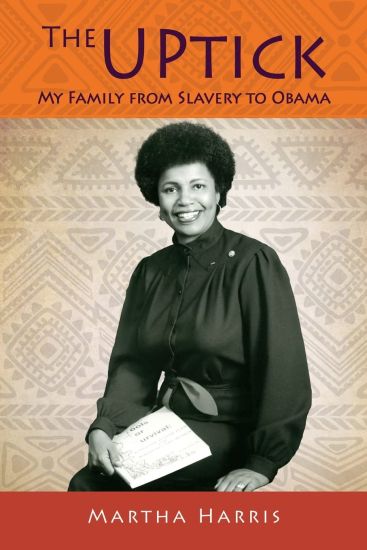
This autobiography recounts the author's journey in life to present-day, as well as the experiences of her family that included slavery on both sides. As the author details her experiences with racism, struggles with martial life, and raising children in an ever-changing world, she shows that these "upticks" were God's way of leading her forward. Martha Marie Harris founded Business Management Tools, Inc., a company that provided management services and training to major corporations, business, education and government. In 1984, she wrote the book, "Tools for Survival" that sold 6000 copies. She spent 40 years as an educator working first as a teacher, then becoming an administrator and program developer. Martha served as an elementary principal, director for professional development and assisted in the management of multimillion dollar educational innovation programs for the Colorado Department of Education. Martha lived and worked in eight states, married four times and had two children, Roslyn and Roy, one grandson, Ahmed and a great grand daughter, Sadaaqa. Martha is retired. In "The Uptick" she traces her life and family from slavery including chronicles of her life today.
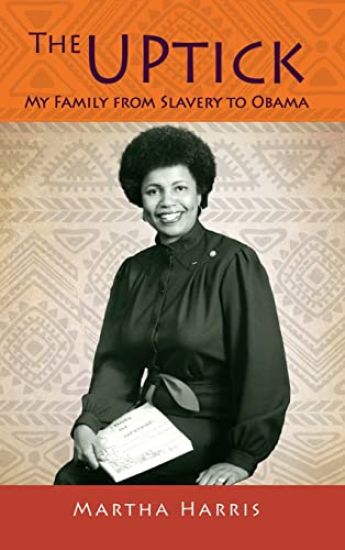
This autobiography recounts the author's journey in life to present-day, as well as the experiences of her family that included slavery on both sides. As the author details her experiences with racism, struggles with martial life, and raising children in an ever-changing world, she shows that these "upticks" were God's way of leading her forward. Martha Marie Harris founded Business Management Tools, Inc., a company that provided management services and training to major corporations, business, education and government. In 1984, she wrote the book, "Tools for Survival" that sold 6000 copies. She spent 40 years as an educator working first as a teacher, then becoming an administrator and program developer. Martha served as an elementary principal, director for professional development and assisted in the management of multimillion dollar educational innovation programs for the Colorado Department of Education. Martha lived and worked in eight states, married four times and had two children, Roslyn and Roy, one grandson, Ahmed and a great grand daughter, Sadaaqa. Martha is retired. In "The Uptick" she traces her life and family from slavery including chronicles of her life today.

The Teenager books by Martha Harris, originally published in 1969, take a similar approach to her long-term bestseller Thinking about Infants and Young Children. Rooted vividly in the practicalities of everyday situations, the educational focus is on helping parents use constructively the turbulent emotions that are aroused in them by their child. The structural hinge is her empathy with the struggling child in all of us, and with the difficulty of becoming educated in the deepest and widest sense of that term. If the central task of the adolescent is defined as one of finding their individual identity, then the task of parents is a reciprocal one: it is to re educate themselves through questioning their own relationships, values, emotions and principles. Her aim is that children and parents may make the most of this opportunity to develop in tandem, with a view to ultimately taking their place in the great social class of the truly educated people, the people who are still learning.