Kirjojen hintavertailu. Mukana 11 244 527 kirjaa ja 12 kauppaa.

Kirjahaku

Etsi kirjoja tekijän nimen, kirjan nimen tai ISBN:n perusteella.

6 kirjaa tekijältä Martin Adams

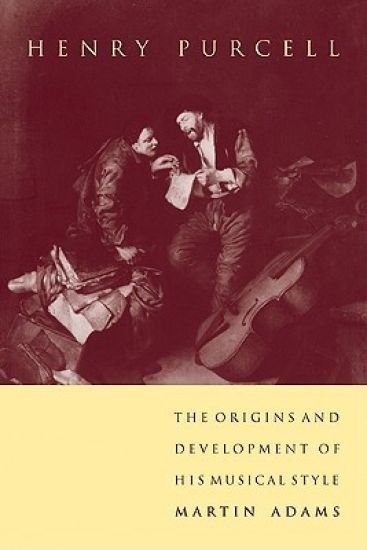
Henry Purcell

Henry Purcell

Martin Adams

Cambridge University Press
2009
nidottu
This is the first book thoroughly to explore the musical style of Henry Purcell. In this comprehensive study, Martin Adams identifies music by other composers, both within England and from abroad, which influenced Purcell's compositional decisions. Using a mix of broad stylistic observation and detailed analysis, Adams distinguishes between late seventeenth-century English style in general and Purcell's style in particular and chronicles the changes in the composer's approach to the main genres in which he worked, especially the newly emerging ode and English opera. As a result, Adams reveals that although Purcell went through a marked stylistic development, encompassing an unusually wide range of surface changes, special elements of his style remained constant. The book will be of interest to students and scholars of music and theatre history and of British cultural and social history.
An Existential Approach to Human Development
This textbook reviews for the first time the thinking of six major existential philosophers; Søren Kierkegaard, Friedrich Nietzsche, Martin Heidegger, Jean-Paul Sartre, Maurice Merleau-Ponty, and Simone de Beauvoir with respect to their ideas about human development. Martin Adams presents a philosophical and psychological analysis, and critically evaluates the different ways that existential philosophy can illuminate the way we all strive for meaning and purpose in life. Written in a detailed, well-structured manner, this text offers a fundamentally different way to understand not only life in general but the practice of psychotherapy in particular.
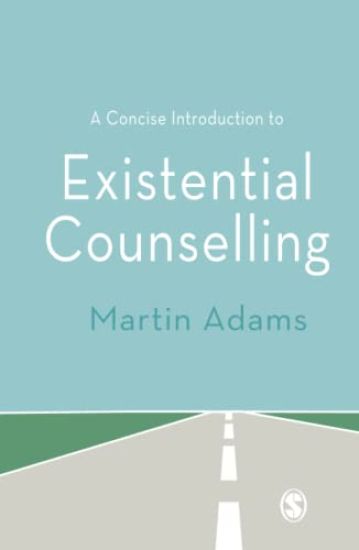
A Concise Introduction to Existential Counselling

A Concise Introduction to Existential Counselling

Martin Adams

SAGE Publications Ltd
2013
sidottu
'A concise introduction to existential counselling is a superb addition to the literature on existential counselling and psychotherapy. Martin Adams provides an excellent overview of the field for those who are new to it at the same time as distilling key features in a way which will be valuable for experienced practitioners' - Meg Barker, Senior Lecturer in Psychology at the Open University A Concise Introduction to Existential Counselling is just that: a brief and accessible pocket guide to the underlying theory & practice of the existential approach. Addressing everything a new trainee needs to know and do in a way that is entirely accessible and jargon-free, this book: - Provides a short history of the existential tradition - Puts key concepts into contexts, showing how theory translates into practice - Discusses issues in the therapeutic process - Shows how to work effectively with whatever the client brings to the session - Addresses the significance of existential thought in the wider world This book will be the perfect companion to new trainees looking to embark on their path to thinking and practicing existentially. Martin Adams is a practitioner and supervisor in private practice and a Lecturer at the New School of Psychotherapy and Regents College, both in London.
A Concise Introduction to Existential Counselling

A Concise Introduction to Existential Counselling

Martin Adams

SAGE Publications Ltd
2013
nidottu
'A concise introduction to existential counselling is a superb addition to the literature on existential counselling and psychotherapy. Martin Adams provides an excellent overview of the field for those who are new to it at the same time as distilling key features in a way which will be valuable for experienced practitioners' - Meg Barker, Senior Lecturer in Psychology at the Open University A Concise Introduction to Existential Counselling is just that: a brief and accessible pocket guide to the underlying theory & practice of the existential approach. Addressing everything a new trainee needs to know and do in a way that is entirely accessible and jargon-free, this book: - Provides a short history of the existential tradition - Puts key concepts into contexts, showing how theory translates into practice - Discusses issues in the therapeutic process - Shows how to work effectively with whatever the client brings to the session - Addresses the significance of existential thought in the wider world This book will be the perfect companion to new trainees looking to embark on their path to thinking and practicing existentially. Martin Adams is a practitioner and supervisor in private practice and a Lecturer at the New School of Psychotherapy and Regents College, both in London.
Land

Land

Martin Adams

North Atlantic Books,U.S.
2015
pokkari
What if we lived in a world where everyone had enough? A world where everyone mattered and where people lived in harmony with nature? What if the solution to our economic, social, and ecological problems was right underneath our feet? Land has been sought after throughout human history. Even today, people struggle to get onto the property ladder and view real estate as an important way to build wealth. Yet, as the reader will discover through this book, the act of owning land--and our urge to profit from it--causes economic booms and busts, social and cultural decline, and environmental devastation. Land: A New Paradigm for a Thriving World introduces a radically new economic model that ensures a more fair and abundant reality for everyone. It is a book for those who dream of a better world, for themselves and future generations. Table of ContentsIntroduction Part I: The Cost of Ignorance1. The Production of Wealth 2. The Value of Location3. The Free Market4. Social Decline5. Business Recessions6. Ecocide7. Earth, Our Home Part II: A New Paradigm for a Thriving World8. Restoring Communities9. Keep What You Earn, Pay for What You Use10. Local Autonomy11. Affordable Housing12. Thriving Cities13. Sustainable Farming14. The Price of Peace15. A New Paradigm Epilogue: A Personal NoteAppendix: The Math Behind the ScienceReferences & Suggestions for Further ReadingEndnotesIndex