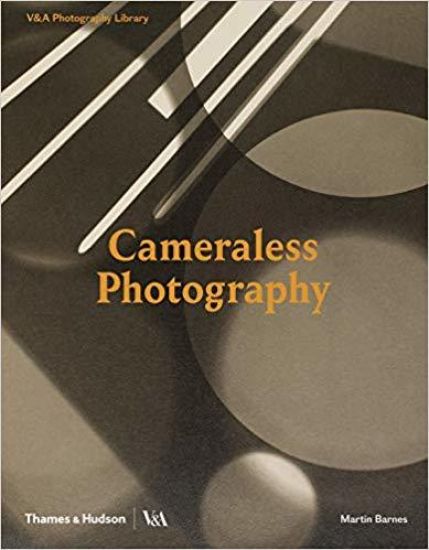
The V&A Photography Library is a new series of accessible, introductory volumes to the key themes, works, objects and individuals in photography, illustrated with unprecedented access to the V&A’s photography collection, the oldest held by a public museum and one of the largest and finest in the world, now expanded with acquisitions from the Royal Photographic Society collection. Written by Martin Barnes, Senior Curator of Photographs at the V&A, and publishing to coincide with the launch of the V&A’s new Photography Centre in autumn 2018, Cameraless Photography presents a concise historical survey of photographic images created without a camera. With over 125 photographs supported by extended commentaries and an introduction, it embraces a chronology spanning the early photographic experiments of the likes of Anna Atkins in the 19th century through the avant-garde photograms of modernists such as Man Ray, to the work of contemporary artists, such as Susan Derges, nearly two centuries later. Visually compelling, Cameraless Photography will be an outstanding introductory overview of the key creative, cameraless processes running throughout the history of photography – including photograms, chemigrams, luminograms, dye destruction prints and more – illustrated by the cameraless work of some of photography’s greatest names.
Wild or cultivated, solitary or within a forest, rural or urban, trees have long provided a compelling source of inspiration for artists and photographers alike. Both as standalone aesthetic ‘objects’ and as symbols of broader cultural significance, trees have an understated, sometimes underappreciated ability to evoke a deep, primal sense of wonder and, indeed, pleasure. Whether captured as functional botanical records or as a means of creative expression, Into the Woods is an elegant, informative introduction to the ways in which distinctive patterns of branch, bark, leaf and root have continued to offer arresting subjects for photographers across the centuries. Written by Martin Barnes, Senior Curator of Photographs at the V&A, with over 100 photographs ranging from the 19th through to the 21st century, supported by commentaries and an introduction of c. 1,500 words, Into the Woods illustrates the wild (or cultivated) and wonderful world of trees in photography.
CESMM4 Revised: Handbook is an ICE guide to the financial control of contracts using the fourth edition of the Civil Engineering Standard Method of Measurement (CESMM4). The handbook has been completely revised and updated to bring it into line with the changes and new material contained within CESMM4. Updates include: an explanation of amendments that make CESMM4 contract-neutral, and explanations of how CESMM can be used with NEC, FIDIC and ICC contracts. The book also explains updates that brought CESMM4 into line with the latest technologies, and how CESMM4 can be used with various national standards. It also contains an extensive range of updated examples that clarify the use of each of the 26 classes of work. The book is an invaluable reference guide for anyone who needs to prepare bills of quantities for civil engineering works and competitive tenders using CESMM4. It is suitable for those with little background in this area and who are seeking an authoritative introduction to CESMM4, and it is also a valuable resource for anyone familiar with the provisions of CESMM3 and who is looking to make the transition to CESMM4.
What to expect from this bookThis is the first of total 2 Volumes of Martin Barnes's course "Embroidery Business from Home". In this book you will learn everything you need to know about modern embroidery, the size of the embroidery industry and how you can start your own embroidery business from home. You will learn exactly what you need to invest in, and how much it will cost you. There are detailed lists of the largest and most reliable manufacturers of embroidery machines and developers of embroidery software, including industry secrets and price comparison.Moreover, this book includes a detailed business plan, which you can use in creating your embroidery business from home, no matter if you decide to start full or part-time. You don't need to worry about what steps to follow or what and how much you need to invest in. You don't need to trouble your mind on how to create your marketing plan, or how to find out additional income ideas. Martin has summed up his experience, and wrote all those things down for you, which you are fully allowed to use as a sample when creating your own customized business plan.Other readings for a complete knowledgeIn "Embroidery Business from Home" Volume 2, Martin will teach you how to digitize like a professional embroidery digitizer. A pack of 10 HD videos that make approximately 3.5 hours of digitizing training is also available, in case you are interested in expanding your knowledge beyond this book. You will find all appropriate information inside the book. Who is Martin BarnesMartin Barnes is an embroidery specialist and internet marketeer, with more than 10 years of experience in major embroidery related companies. He is also the author of the "Embroidery Business from Home" course, that has helped many people start their own embroidery business from home.Free Embroidery DesignsBy buying this book, you are automatically eligible for 5 high quality embroidery designs absolutely free. You will find instructions on how to claim the designs inside the book. The estimated price of those 5 designs equals the price of the book itself, so don't think twice
What to expect from this bookThe second Volume of the "Embroidery Business from Home" course, is designed to train you in digitizing embroidery designs, and help you calculate cost of embroideries in detail, in order to set end user prices. You will first learn about basic digitizing like running and satin stitch, underlay, density and many other terms which are the basics in creating your first embroidery design and edit it whenever you need to. You will also learn about the 12 steps to follow in order to create an embroidery design.You will also learn how to create your own letters and monograms for embroidery machines. As analysed in the first volume of this course, monogramming is one of the most profitable and easy to do parts of embroidery, so many embroiderers only do monogramming. This book teaches how to do letters along many other embroidery types, in order to be able to satisfy every customer's needs. Martin goes even deeper to advanced embroidery techniques only top level digitizers know how to use. Techniques that help reduce digitizing time and produce top quality designs, smart ways to use the embroidery software functions, in order to produce products that will amaze the customers. Color blending, embroidery with sequins and motifs are only some of the techniques presented in this book, and will help you create and expand a modern embroidery business from home.Martin uses more than 50 images, tables, charts and pictures in order to help you fully understand the training. He has created and included many screen captures of the various functions explained in this book, so you will have the chance to see how an embroidery software works before you even buy one Apart from that, you will be able to understand how the embroidery machine embroiders specific designs, by video simulating them in the training videos available.Other readings for a complete knowledgeIn "Embroidery Business from Home" Volume 1, Martin analyses the business part of an embroidery business from home. A pack of 10 HD videos that make approximately 3.5 hours of digitizing training is also available, in case you are interested in expanding your knowledge beyond this book. You will find all appropriate information inside the book. Who is Martin BarnesMartin Barnes is an embroidery specialist and internet marketeer, with more than 10 years of experience in major embroidery related companies. He is also the author of the "Embroidery Business from Home" course, that has helped many people start their own embroidery business from home.Free Embroidery DesignsBy buying this book, you are automatically eligible for 5 high quality embroidery designs absolutely free. You will find instructions on how to claim the designs inside the book. The estimated price of those 5 designs equals the price of the book itself, so don't think twice
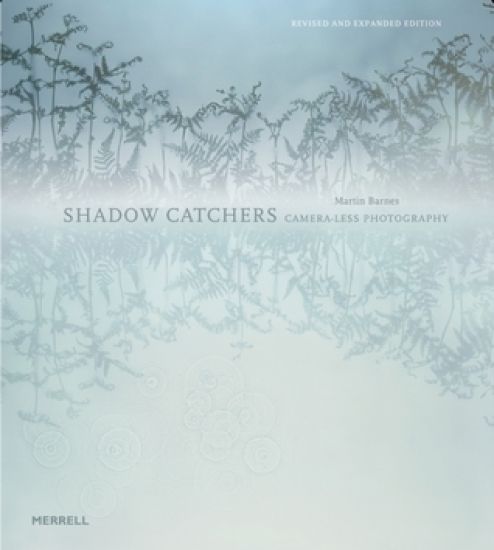
The very first photographs of the nineteenth century were produced without the use of a camera. Today, having rediscovered camera-less techniques, a number of artists are using camera-less photography to create beautiful, startling images. Now available in an updated and fully revised edition, Shadow Catchers surveys the work of five leading practitioners - Pierre Cordier, Susan Derges, Adam Fuss, Garry Fabian Miller and Floris Neususs - who, by casting shadows on light-sensitive paper or by chemically manipulating its surface, capture the presence of objects, figures or glowing light. The resulting pictures are consistently powerful, often with surreal effects and symbolic content. This is the first book to gather together the work of these key contemporary artists, revealing the technical processes and creative practices involved in their art. In an age of mass-produced imagery, Shadow Catchers offers a fascinating insight into a world of handcrafted photographs that are at once visually striking and intellectually stimulating.
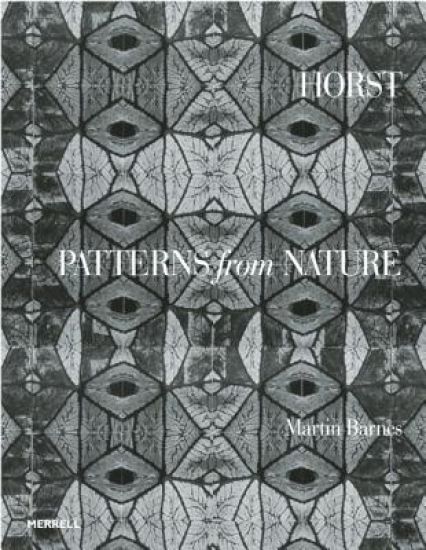
Horst P. Horst (1906-1999) was one of the twentieth century's master photographers. A revered figure in the world of fashion image making, he charted sixty years of style for Vogue and House and Garden, from the fashions and celebrities of the 1930s to the interiors of the 1980s. However, little-known within his body of work - and contrasting intriguingly with his career in fashion - is a set of prints and a book, Patterns from Nature (1946). Working with a Rolleiflex and Graphic View Camera in new York, Monterey and Mexico, Horst photographed the detailed textures and forms of natural objects, including plants, rocks, shells and butterfly wings. His close scrutiny of these forms makes them unfamiliar and revelatory. These images were gathered into Patterns from Nature, which also featured 9 kaleidoscopic images made by arranging the photographs in simple repeat. Horst believed that these dynamic patterns would be 'immediately applicable to industrial fields such as textiles, wallpaper, carpets, plastics and glass'. Published to coincide with a major retrospective on Horst's work at the Victoria and Albert Museum, Martin Barnes re-examines these images in, Horst: Patterns from Nature. This new edition will make the 9 original collaged images available for the first time in nearly 70 years and will also include a further 28 photo-collages that have only recently been rediscovered and have never before been seen or published.