Kirjojen hintavertailu. Mukana 11 244 527 kirjaa ja 12 kauppaa.

Kirjahaku

Etsi kirjoja tekijän nimen, kirjan nimen tai ISBN:n perusteella.

17 kirjaa tekijältä Martin Beech

Rejuvenating the Sun and Avoiding Other Global Catastrophes

Rejuvenating the Sun and Avoiding Other Global Catastrophes

Martin Beech

Springer-Verlag New York Inc.
2007
nidottu
This book is about an audacious idea: asteroengineering—literally, the physical engineering of a star, especially the star we call our Sun. It is an idea on the grandest of scales. Part science fiction, part science fact, asteroengineering is a response to a very definite and a very real problem, a problem that our distant descendants will one day have to face. It is also a universal problem that will be experienced – at some stage or other – by every extraterr- trial civilization that has or will exist. Indeed, the problem to be addressed resides within the parent stars of each and every li- supporting planetary system within our galaxy. In short, stars puff up to become luminous red giants as they age, and by doing this they vaporize those planets previously situated in the habitability zone where life can otherwise thrive. As their parent star ages and approaches the red giant phase, a civilization has two options open to it: stay at home, or pack up and leave. The latter option would require the hapless civilization to cocoon itself within giant spa- ships and then set itself adrift in the uncharted depths of space. If a civilization chooses to stay put, however, then all life will end—unless, that is, something is done about the demise of its parent star.
The Large Hadron Collider

The Large Hadron Collider

Martin Beech

Springer-Verlag New York Inc.
2010
nidottu
It may at first seem that the world of subatomic physics is far removed from our every day lives. Isn’t it all just a waste of time and taxpayers' money? Hopefully, all who read this book will come to a different conclusion. Collider physics is all about our origins, and this aspect alone makes it worthy of our very best attention. The experiments conducted within the vast collider chambers are at the forefront of humanity’s quest to unweave the great tapestry that is the universe. Everything is connected. Within the macrocosm is the microcosm. By knowing how matter is structured, how atoms and elementary particles interact, and what forces control the interactions between the particles, we discover further clues as to why the universe is the way it is, and we uncover glimpses of how everything came into being. The Large Hadron Collider (LHC), in the process of coming online at CERN, is the world’s largest and most complex machine. It represents the pinnacle of human ingenuity, and its physical characteristics, costs, and workings astound us at every turn. We are literally humbled by the machine that has been produced through a grand international collaboration of scientists. This book is about what those scientists hope to discover with the LHC, for hopes do run high, and there is much at stake. Careers, reputations and prestigious science prizes will be realized, and possibly lost, in the wake of the results that the LHC will produce. And there are risks, real and imagined. The LHC will probe the very fabric of matter and it will help us understand the very weft and the weave of the universe.
The Physics of Invisibility

The Physics of Invisibility

Martin Beech

Springer-Verlag New York Inc.
2011
nidottu
The ability is see is fundamental to our very existence. How true our perceptions really are depends upon many factors, and not least is our understanding of what light is and how it interacts with matter. It was said that the camera, the icon of light recording instruments, never lies, and in the day of the glass plate and celluloid roll-film this might well have been true. But in this modern era, with electronic cameras and computer software, it is often safe to assume that the camera always lies. The advertising images that bombard our every waking moment are manipulated in shape, profile, color, and form. In this new era, light can be manipulated with metamaterials to make one object look like another or even cause that objects to vanish, literally before our eyes; not only can the image we see be manipulated, but so can the light itself.
Terraforming: The Creating of Habitable Worlds

Terraforming: The Creating of Habitable Worlds

Martin Beech

Springer-Verlag New York Inc.
2016
nidottu
The word ‘‘terraforming’’ conjures up many exotic images and p- hapsevenwildemotions,butatitscoreitencapsulatestheideathat worldscanbechangedbydirecthumanaction.Theultimateaimof terraforming is to alter a hostile planetary environment into one that is Earth-like, and eventually upon the surface of the new and vibrant world that you or I could walk freely about and explore. It is not entirely clear that this high goal of terraforming can ever be achieved, however, and consequently throughout much of thisbooktheterraformingideasthatarediscussedwillapplytothe goal of making just some fraction of a world habitable. In other cases,theterraformingdescribedmightbeaimedatmakingaworld habitablenotforhumansbutforsomepotentialfoodsourcethat,of course, could be consumed by humans. The many icy moons that reside within the Solar System, for example, may never be ideal locationsforhumanhabitation,buttheypresentthegreatpotential for conversion into enormous hydroponic food-producing centers. The idea of transforming alien worlds has long been a literary backdrop for science fiction writers, and many a make-believe planet has succumbed to the actions of direct manipulation and the indomitable grinding of colossal machines. Indeed, there is something both liberating and humbling about the notion of tra- forming another world; it is the quintessential eucatastrophy espoused by J. R. R. Tolkien, the catastrophe that ultimately brings about a better world. When oxygen was first copiously produced by cyanobacterial activity on the Earth some three billion years ago, it was an act of extreme chemical pollution and a eucatastrophy. The original life-nurturing atmosphere was (eventually) changed f- ever, but an atmosphere that could support advanced life forms came about.
Introducing the Stars

Introducing the Stars

Martin Beech

Springer Nature Switzerland AG
2019
nidottu
This textbook introduces the reader to the basic concepts and equations that describe stellar structure. Various approximation techniques are used to solve equations, and an intuitive rather than rigorous approach is employed to interpret the properties of the stars. The book provides step-by-step instructions, helpful exercises and relevant historical lessons to familiarize students with key concepts and mathematical theories.Based upon a series of one-semester (12 weeks) elective undergraduate courses offered at the University of Regina, this book is intended for students who are interested in seeing how basic calculus and introductory physics can be applied to the understanding of the stars from their formation to their death. The text provides an intermediate stepping stone between lower-level undergraduate classes and more specialized postgraduate texts on the subject of stellar structure.
William Frederick Denning

William Frederick Denning

Martin Beech

Springer International Publishing AG
2023
sidottu
This book provides a detailed biographical account of the industrious late nineteenth-century astronomer William Frederick Denning who, in later life, rose to be a celebrated public figure and a highly respected amateur astronomer. The book also examines Denning’s many contributions to the astronomy of his time. As an indomitable promotor of amateur astronomy, Denning was closely involved in the formation of the short-lived, but historically pivotal, Observational Astronomy Society (OAS) in 1869. Readers will learn about the origins and the observational programs initiated by the OAS, and the author also presents a series of biographical sketches of its most industrious members. Furthermore, by examining Denning’s letters and publications, the author shows how he helped to nurture the growth of amateur astronomy, also teaching amateur observers how to make their efforts scientifically useful. A stalwart observer and enthusiast himself, Denning was a key player in the development of meteor astronomy in England, culminating in his being invited, in 1922, to be the first President of Commission 22 (meteors, meteorites and interplanetary dust) of the newly formed International Astronomical Union. The text follows the development and rapid growth of meteor astronomy during the nineteenth century, focusing upon the key observations and important theoretical advances. In addition, it pays tribute to pioneering practitioners, who, along with Denning, set out to unravel the story and secrets of the shooting stars. While not an openly forthright or strident figure, Denning, at the height of his career, became embroiled in two public and controversial issues. The first related to his pseudo-scientific theory of optical blurring, and his belief that large-aperture telescopes performed less efficiently than smaller-aperture telescopes when used in the study of planetary disks. The second concerned the mysterious issue of stationary meteor shower radiants—an apparent observational reduction that was completely at odds with both the standard theories of gravitational dynamics and the generally accepted notion of meteoroid stream structure. The book explores these two controversies and uses them to examine Denning’s outlook on scientific methodology.
William Frederick Denning

William Frederick Denning

Martin Beech

Springer International Publishing AG
2024
nidottu
This book provides a detailed biographical account of the industrious late nineteenth-century astronomer William Frederick Denning who, in later life, rose to be a celebrated public figure and a highly respected amateur astronomer. The book also examines Denning’s many contributions to the astronomy of his time. As an indomitable promotor of amateur astronomy, Denning was closely involved in the formation of the short-lived, but historically pivotal, Observational Astronomy Society (OAS) in 1869. Readers will learn about the origins and the observational programs initiated by the OAS, and the author also presents a series of biographical sketches of its most industrious members. Furthermore, by examining Denning’s letters and publications, the author shows how he helped to nurture the growth of amateur astronomy, also teaching amateur observers how to make their efforts scientifically useful. A stalwart observer and enthusiast himself, Denning was a key player in the development of meteor astronomy in England, culminating in his being invited, in 1922, to be the first President of Commission 22 (meteors, meteorites and interplanetary dust) of the newly formed International Astronomical Union. The text follows the development and rapid growth of meteor astronomy during the nineteenth century, focusing upon the key observations and important theoretical advances. In addition, it pays tribute to pioneering practitioners, who, along with Denning, set out to unravel the story and secrets of the shooting stars. While not an openly forthright or strident figure, Denning, at the height of his career, became embroiled in two public and controversial issues. The first related to his pseudo-scientific theory of optical blurring, and his belief that large-aperture telescopes performed less efficiently than smaller-aperture telescopes when used in the study of planetary disks. The second concerned the mysterious issue of stationary meteor shower radiants—an apparent observational reduction that was completely at odds with both the standard theories of gravitational dynamics and the generally accepted notion of meteoroid stream structure. The book explores these two controversies and uses them to examine Denning’s outlook on scientific methodology.
Alpha Centauri

Alpha Centauri

Martin Beech

Springer International Publishing AG
2014
nidottu
As our closest stellar companion and composed of two Sun-like stars and a third small dwarf star, Alpha Centauri is an ideal testing ground of astrophysical models and has played a central role in the history and development of modern astronomy—from the first guesses at stellar distances to understanding how our own star, the Sun, might have evolved. It is also the host of the nearest known exoplanet, an ultra-hot, Earth-like planet recently discovered.Just 4.4 light years away Alpha Centauri is also the most obvious target for humanity’s first directed interstellar space probe. Such a mission could reveal the small-scale structure of a new planetary system and also represent the first step in what must surely be humanity’s greatest future adventure—exploration of the Milky Way Galaxy itself.For all of its closeness, a Centauri continues to tantalize astronomers with many unresolved mysteries, such as how did it form, how many planets does it contain andwhere are they, and how might we view its extensive panorama directly?In this book we move from the study of individual stars to the study of our Solar System and our nearby galactic neighborhood. On the way we will review the rapidly developing fields of exoplanet formation and detection.
The Pillars of Creation

The Pillars of Creation

Martin Beech

Springer International Publishing AG
2017
nidottu
This book explores the mechanics of star formation, the process by which matter pulls together and creates new structures. Written for science enthusiasts, the author presents an accessible explanation of how stars are born from the interstellar medium and giant molecular clouds. Stars produce the chemicals that lead to life, and it is they that have enabled the conditions for planets to form and life to emerge.Although the Big Bang provided the spark of initiation, the primordial universe that it sired was born hopelessly sterile. It is only through the continued recycling of the interstellar medium, star formation, and stellar evolution that the universe has been animated beyond a chaotic mess of elementary atomic particles, radiation, dark matter, dark energy, and expanding spacetime. Using the Milky Way and the Eagle Nebula in particular as case studies, Beech follows every step of this amazing process.
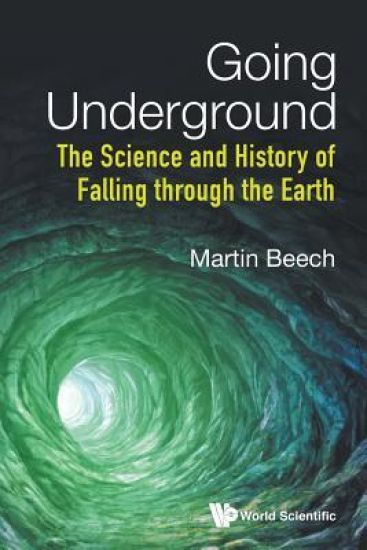
Going Underground: The Science And History Of Falling Through The Earth

Going Underground: The Science And History Of Falling Through The Earth

Martin Beech

World Scientific Publishing Co Pte Ltd
2019
nidottu
This book follows the historical trail by which humanity has determined the shape and internal structure of the Earth. It is a story that bears on aspects of the history of science, the history of philosophy and the history of mathematics. At the heart of the narrative is the important philosophical practice of performing thought experiments — that is, the art of considering an idealized experiment in the mind. This powerful technique has been used by all the great historical practitioners of science and mathematics, and this book looks specifically at the long history of considering what would happen if an object could be dropped into a tunnel that cuts all the way through the Earth's interior. Indeed, the story begins with a historical whodunit, tracing back through the historical literature the origins of what is now a classic, textbook problem in simple harmonic motion.
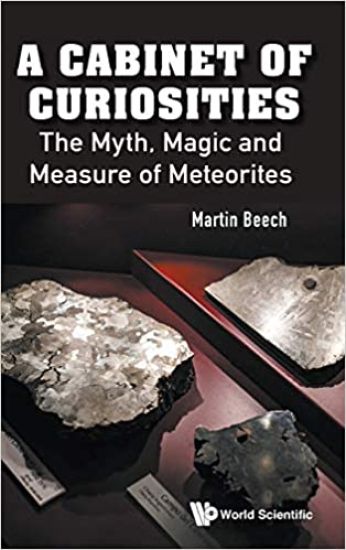
Cabinet Of Curiosities, A: The Myth, Magic And Measure Of Meteorites

Cabinet Of Curiosities, A: The Myth, Magic And Measure Of Meteorites

Martin Beech

World Scientific Publishing Co Pte Ltd
2021
sidottu
Hurtling through the atmosphere, in a blaze of light and reverberating percussions, the arrival of a meteorite on Earth is a magical, rare, and precious sight. These characteristics have accordingly ensured a long, yet often controversial history. For all this, meteorites are cosmic messengers. They tell us about the entire history of the solar system, their story carrying us from the very earliest moments, when solid material first began to form in the solar nebula. Indeed, meteorites played a key role in the origins of Earth's oceans and the genesis of life. Meteorites additionally tell us about the origin and evolution of the asteroids, and they tell us about impacts upon the Moon as well as the volcanic history of planet Mars. Much is known about the structure and chemistry of meteorites, but for all this, they still harbor many scientific mysteries that have yet to be resolved.
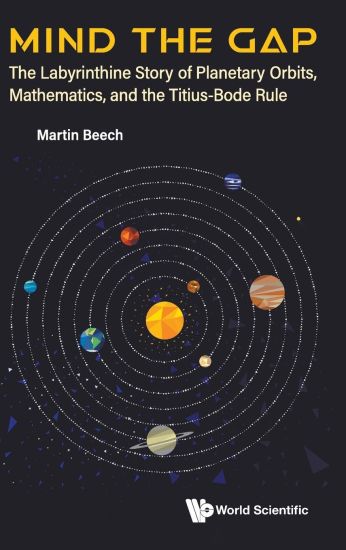
Mind The Gap: The Labyrinthine Story Of Planetary Orbits, Mathematics, And The Titius-bode Rule
This book is concerned with two tightly knit topics — those of mathematics and astronomy. Its focus is primarily concerned with planetary astronomy, and specifically the history of accounting for the spacing of planetary orbits. The story begins with the ancient Greek philosophers and continues to the modern era and the new data being gleaned from the study of exoplanetary systems. Throughout the text, the manner in which mathematical theory has been used to decipher, and impose order upon the solar system, will be examined. Attention and discussion will be directed towards the so-called Titius-Bode rule, a long-standing ordering principle, that in fact it has no physical underpinning or explanation.The story presented will look at how humanity has learned about the workings of the solar system, and it will look at the philosophical problems that arise when mathematical exposition leads observation. Furthermore, the fundamental role of mathematics in the development of physical theory is examined, and it is argued that there are some gaps in our knowledge of the solar system (and the universe) that mathematics and physical theory will never successfully bridge. The text will present material at the informed-amateur scientist, university undergraduate student level.
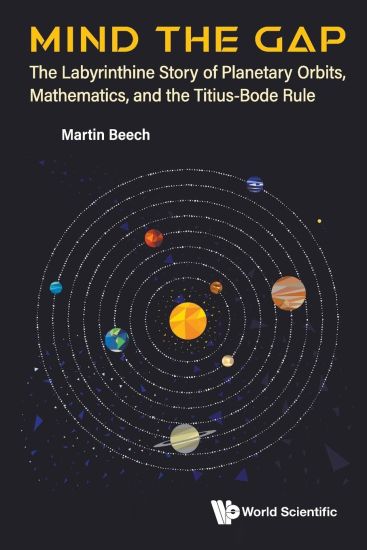
Mind The Gap: The Labyrinthine Story Of Planetary Orbits, Mathematics, And The Titius-bode Rule
This book is concerned with two tightly knit topics — those of mathematics and astronomy. Its focus is primarily concerned with planetary astronomy, and specifically the history of accounting for the spacing of planetary orbits. The story begins with the ancient Greek philosophers and continues to the modern era and the new data being gleaned from the study of exoplanetary systems. Throughout the text, the manner in which mathematical theory has been used to decipher, and impose order upon the solar system, will be examined. Attention and discussion will be directed towards the so-called Titius-Bode rule, a long-standing ordering principle, that in fact it has no physical underpinning or explanation.The story presented will look at how humanity has learned about the workings of the solar system, and it will look at the philosophical problems that arise when mathematical exposition leads observation. Furthermore, the fundamental role of mathematics in the development of physical theory is examined, and it is argued that there are some gaps in our knowledge of the solar system (and the universe) that mathematics and physical theory will never successfully bridge. The text will present material at the informed-amateur scientist, university undergraduate student level.
Going Underground: The Science And History Of Falling Through The Earth

Going Underground: The Science And History Of Falling Through The Earth

Martin Beech

World Scientific Publishing Co Pte Ltd
2019
sidottu
This book follows the historical trail by which humanity has determined the shape and internal structure of the Earth. It is a story that bears on aspects of the history of science, the history of philosophy and the history of mathematics. At the heart of the narrative is the important philosophical practice of performing thought experiments — that is, the art of considering an idealized experiment in the mind. This powerful technique has been used by all the great historical practitioners of science and mathematics, and this book looks specifically at the long history of considering what would happen if an object could be dropped into a tunnel that cuts all the way through the Earth's interior. Indeed, the story begins with a historical whodunit, tracing back through the historical literature the origins of what is now a classic, textbook problem in simple harmonic motion.
The Blue Straggler Mystery

The Blue Straggler Mystery

Martin Beech

WORLD SCIENTIFIC PUBLISHING CO PTE LTD
2025
sidottu
Blue stragglers are celestial misfits. They stand out from the crowd, and they require special explanation. Remarkably, for so the observations indicate, they have aged differently to similar mass 'normal' stars. First recognized as being altogether different in the early 1950s, blue stragglers have occupied the thoughts of astronomers ever since. This book looks into the mystery of blue straggler origins, and offers its readers an insight in to how astronomers measure and determine the properties of stars in general. Indeed, the book will take the reader through the basic physics and geometry that is needed to understand the essential observations and theory of stars and star clusters.