Kirjojen hintavertailu. Mukana 12 048 039 kirjaa ja 12 kauppaa.

Kirjahaku

Etsi kirjoja tekijän nimen, kirjan nimen tai ISBN:n perusteella.

96 kirjaa tekijältä Martin Buber

The Letters of Martin Buber

The Letters of Martin Buber

Martin Buber

Syracuse University Press
1996
nidottu
This collection of 700 letters traces Martin Buber's transition from mystically inclined man of letters to teacher of his people who preached a renewed sense of community, a binational Palestinian homeland and a humanistic socialism derived from the Gospel's and the Old Testament prophets.
A Land of Two Peoples

A Land of Two Peoples

Martin Buber

University of Chicago Press
2005
nidottu
Theologian, philosopher, and political radical, Martin Buber (1878-1965) was actively committed to a fundamental economic and political reconstruction of society as well as the pursuit of international peace. In his voluminous writings on Arab-Jewish relations in Palestine, Buber united his religious and philosophical teachings with his politics, which he felt were essential to a life of public dialogue and service to God. Collected in A Land of Two Peoples are the private and open letters, addresses, and essays in which Buber advocated binationalism as a solution to the conflict in the Middle East. A committed Zionist, Buber steadfastly articulated the moral necessity for reconciliation and accommodation between the Arabs and Jews. From the Balfour Declaration of November 1917 to his death in 1965, he campaigned passionately for a "one state solution." With the Middle East embroiled in religious and ethnic chaos, A Land of Two Peoples remains as relevant today as it was when it was first published more than twenty years ago. This timely reprint, which includes a new preface by Paul Mendes-Flohr, offers context and depth to current affairs and will be welcomed by those interested in Middle Eastern studies and political theory.
On Intersubjectivity and Cultural Creativity

On Intersubjectivity and Cultural Creativity

Martin Buber

University of Chicago Press
1992
nidottu
One of the foremost religious and social philosophers of the twentieth century, Martin Buber also wrote extensively on sociological subjects, particularly as these affected his philosophical concerns. Collected here, these writings offer essential insights into the human condition as it is expressed in culture and society. Buber's central focus in his sociological work is the relation between social interaction, or intersubjectivity, and the process of human creativity. Specifically, Buber seeks to define the nature and conditions of creativity, the conditions of authentic intersubjective social relations that nurture creativity in society and culture. He attempts to identify situations favorable to creativity that he believes exist to some extent in all cultures, though their fullest development occurs only rarely. Buber considers the combination of open dialogue between human and human and a dialogue between man and God to be necessary for the crystallization of the common discourse that is essential for holding a free, just, and open society together. Important for an understanding of Buber's thought, these writings—touching on education, religion, the state, and charismatic leadership—will be of profound value to students of sociology, philosophy, and religion.
Between Man and Man

Between Man and Man

Martin Buber

Routledge
2002
sidottu
Scholar, theologian and philosopher, Martin Buber is one of the twentieth century's most influential thinkers. He believed that the deepest reality of human life lies in the relationship between one being and another. Between Man and Man is the classic work where he puts this belief into practice, applying it to the concrete problems of contemporary society. Here he tackles subjects as varied as religious ethics, social philosophy, marriage, education, psychology and art. Including some of his most famous writings, such as the masterful What is Man?, this enlightening work challenges each reader to reassess their encounter with the world that surrounds them.
Between Man and Man

Between Man and Man

Martin Buber

Routledge
2002
nidottu
Scholar, theologian and philosopher, Martin Buber is one of the twentieth century's most influential thinkers. He believed that the deepest reality of human life lies in the relationship between one being and another. Between Man and Man is the classic work where he puts this belief into practice, applying it to the concrete problems of contemporary society. Here he tackles subjects as varied as religious ethics, social philosophy, marriage, education, psychology and art. Including some of his most famous writings, such as the masterful What is Man?, this enlightening work challenges each reader to reassess their encounter with the world that surrounds them.
The Way of Man

The Way of Man

Martin Buber

Routledge
2002
nidottu
Martin Buber was one of the most significant religious thinkers of the twentieth century. In this short and remarkable book he presents the essential teachings of Hasidism, the mystical Jewish movement which swept through Eastern Europe in the eighteenth and nineteenth centuries. Told through stories of imagination and spirit, together with Buber's own unique insights, The Way of Man offers us a way of understanding ourselves and our place in a spiritual world. 'There is something', he suggests, 'that can only be found in one place. It is a great treasure, which may be called the fulfilment of existence. The place where this treasure can be found is the place on which one stands.' Challenging us to recognize our own potential and to reach our true goal, The Way of Man is a life-enhancing book.
The Legend of the Baal-Shem

The Legend of the Baal-Shem

Martin Buber

Routledge
2002
sidottu
These twenty captivating stories about the founder of the Hasidic faith Israel ben Eliezer called the Baal-Shem or Master of God's Name, provide a profound and charming account of the genesis of Hasidism, still Judaism's most important religious movement. As a delicate and moving portrayal not only of the power of the Baal-Shem's mystical faith, but also of Eastern European Jewish daily life, The Legend of the Baal-Shem is an ideal introduction to Hasidic religious thought, and to Martin Buber's own influential philosophy of love and mutual human understanding.
The Legend of the Baal-Shem

The Legend of the Baal-Shem

Martin Buber

Routledge
2002
nidottu
These twenty captivating stories about the founder of the Hasidic faith Israel ben Eliezer called the Baal-Shem or Master of God's Name, provide a profound and charming account of the genesis of Hasidism, still Judaism's most important religious movement. As a delicate and moving portrayal not only of the power of the Baal-Shem's mystical faith, but also of Eastern European Jewish daily life, The Legend of the Baal-Shem is an ideal introduction to Hasidic religious thought, and to Martin Buber's own influential philosophy of love and mutual human understanding.
Meetings

Meetings

Martin Buber

Routledge
2002
nidottu
Meetings sets forth the life of one of the twentieth-century's greatest spiritual philosophers in his own words. A glittering series of reflections and narratives, it seeks not to describe his life in its full entirety, but rather to convey some of his defining moments of uncertainty, revelation and meaning. Recalling the question on the infinity of space and time which nearly drove Buber to suicide at the age of fourteen, his adolescent 'seduction' by Nietzsche's work, his hero-worship of Ferdinand Lassalle and his love of Bach's music, Meetings has no equal as a portrait of an unique intellect in progress. Like Buber's great works Between Man and Man and The Way of Man, it evokes a tactile, earthly concept of meaning ultimately found, as Maurice Friedman writes in his introduction, 'not in conceptual or systematic thought but in the four-dimensional reality of events and meetings'.
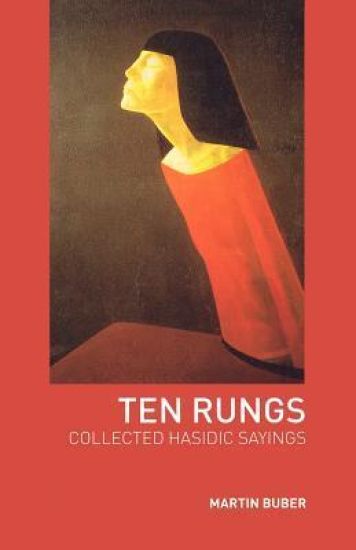
Ten Rungs

Ten Rungs

Martin Buber

Routledge
2002
nidottu
The sacred tales and aphorisms collected here by Martin Buber have their origins in the traditional Hasidic metaphor of life as a ladder, reaching towards the divine by ascending rungs of perfection. Through Biblical riddles and interpretations, Jewish proverbs and spiritual meditations, they seek to awaken in the reader a full awareness of the urgency of the human condition, and of the great need for self-recognition and spiritual renewal.
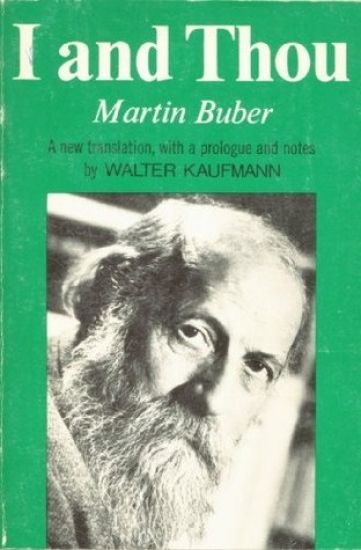
I and Thou

I and Thou

Martin Buber

Howard Books
1971
nidottu
Martin Buber's I and Thou has long been acclaimed as a classic. Many prominent writers have acknowledged its influence on their work; students of intellectual history consider it a landmark; and the generation born since World War II considers Buber as one of its prophets. The need for a new English translation has been felt for many years. The old version was marred by many inaccuracies and misunderstandings, and its recurrent use of the archaic "thou" was seriously misleading. Now Professor Walter Kaufmann, a distinguished writer and philosopher in his own right who was close to Buber, has retranslated the work at the request of Buber's family. He has added a wealth of informative footnotes to clarify obscurities and bring the reader closer to the original, and he has written a long "Prologue" that opens up new perspectives on the book and on Buber's thought. This volume should provide a new basis for all future discussions of Buber.
The Legend of the Baal-Shem

The Legend of the Baal-Shem

Martin Buber

Princeton University Press
1995
pokkari
The Jewish philosopher Martin Buber spoke directly to the most profound human concerns in all his works, including his discussions of Hasidism, a mystical-religious movement founded in Eastern Europe by Israel ben Eliezer, called the Baal-Shem (the Master of God's Name). Living in the first part of the eighteenth century in Podolia and Wolhynia, the Baal-Shem braved scorn and rejection from the rabbinical establishment and attracted followers from among the common people, the poor, and the mystically inclined. Here Buber offers a sensitive and intuitive account of Hasidism, followed by twenty stories about the life of the Baal-Shem. This book is the earliest and one of the most delightful of Buber's seven volumes on Hasidism and can be read not only as a collection of myth but as a key to understanding the central theme of Buber's thought: the I-Thou, or dialogical, relationship. "All positive religion rests on an enormous simplification of the manifold and wildly engulfing forces that invade us: it is the subduing of the fullness of existence. All myth, in contrast, is the expression of the fullness of existence, its image, its sign; it drinks incessantly from the gushing fountains of life."--Martin Buber, from the introduction
Eclipse of God

Eclipse of God

Martin Buber

Princeton University Press
2015
pokkari
Biblical in origin, the expression "eclipse of God" refers to the Jewish concept of hester panim, the act of God concealing his face as a way of punishing his disobedient subjects. Though this idea is deeply troubling for many people, in this book Martin Buber uses the expression hopefully--for a hiding God is also a God who can be found. First published in 1952, Eclipse of God is a collection of nine essays concerning the relationship between religion and philosophy. The book features Buber's critique of the thematically interconnected--yet diverse--perspectives of Soren Kierkegaard, Hermann Cohen, C.G. Jung, Martin Heidegger, and other prominent modern thinkers. Buber deconstructs their philosophical conceptions of God and explains why religion needs philosophy to interpret what is authentic in spiritual encounters. He elucidates the religious implications of the I-Thou, or dialogical relationship, and explains how the exclusive focus on scientific knowledge in the modern world blocks the possibility of a personal relationship with God. Featuring a new introduction by Leora Batnitzky, Eclipse of God offers a glimpse into the mind of one of the modern world's greatest Jewish thinkers.
Hasidism and Modern Man

Hasidism and Modern Man

Martin Buber

Princeton University Press
2015
pokkari
Hasidism, a controversial, mystical-religious movement of Eastern European origin, has posed a serious challenge to mainstream Judaism from its earliest beginnings in the middle of the eighteenth century. Decimated by the Holocaust, it has risen like a phoenix from the ashes and has reconstituted itself as a major force in the world of ultra-Orthodox Judaism. Philosopher Martin Buber found inspiration in its original tenets and devoted much of his career to making its insights known to a wide readership. First published in 1958, Hasidism and Modern Man examines the life and religious experiences of Hasidic Jews, as well as Buber's personal response to them. From the autobiographical "My Way to Hasidism," to "Hasidism and Modern Man," and "Love of God and Love of Neighbor," the essays span nearly half a century and reflect the evolution of Buber's religious philosophy in relation to the Hasidic movement. Hasidism and Modern Man remains prescient in its portrayal of a spiritual movement that brings God down to earth and makes possible a modern philosophy in which the human being becomes sacred.
The Prophetic Faith

The Prophetic Faith

Martin Buber

Princeton University Press
2015
pokkari
Originally published in English in 1949, The Prophetic Faith features Martin Buber's readings of select biblical prophets--especially Isaiah and Deborah, the only female prophet and judge in the Hebrew Bible. In an approach that combines insights from biblical prophecy with a concern for events in the here and now, Buber outlines his interpretation of biblical revelation. Infused with an anti-institutional--some have said anarchic--sensibility, Buber discusses the notion of kingship as portrayed in the Bible and provides an account of human suffering in an extended discussion of the Book of Job. Anticipating those today who describe themselves as "spiritual but not religious," Buber gives pride of place to a personal God outside of formal religious and legal strictures. Featuring a new introduction by Jon D. Levenson, The Prophetic Faith encourages a renewed appreciation for the Hebrew Bible and its relevance to the practical challenges of the present day.
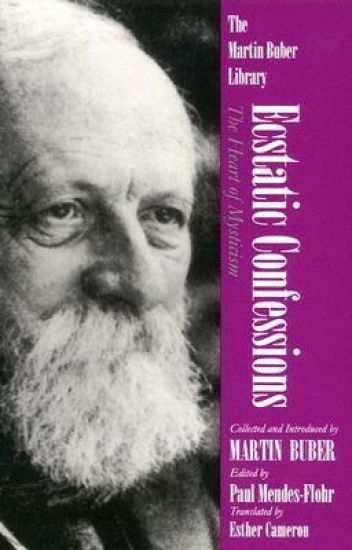
Ecstatic Confessions

Ecstatic Confessions

Martin Buber

Syracuse University Press
1996
nidottu
Beginning with Buber's seminal essay on mysticism, this book offers texts down the centuries from oriental, pagan, Gnostic, Eastern Orthodox, Catholic, Jewish and Muslim sources. It aims to convey some quality of an experience that is essentially beyond the power of words to capture.
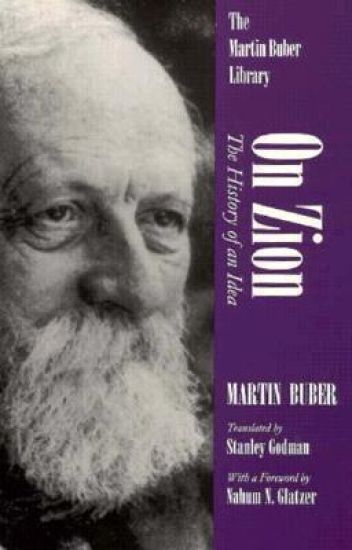
On Zion

On Zion

Martin Buber

Syracuse University Press
1997
nidottu
This volume grew out of a series of lectures by the author in 1944. He analyzes the centrality of Zion to biblical and Talmudic thought, how it inspired medieval thinkers and mystics, and how it moved modern Jews from Moses Hess to Ray Kook and A.D. Gordon.