Kirjojen hintavertailu. Mukana 11 699 587 kirjaa ja 12 kauppaa.

Kirjahaku

Etsi kirjoja tekijän nimen, kirjan nimen tai ISBN:n perusteella.

7 kirjaa tekijältä Martin C. Libicki

Conquest in Cyberspace

Conquest in Cyberspace

Martin C. Libicki

Cambridge University Press
2007
pokkari
With billions of computers in existence, cyberspace, 'the virtual world created when they are connected,' is said to be the new medium of power. Computer hackers operating from anywhere can enter cyberspace and take control of other people's computers, stealing their information, corrupting their workings, and shutting them down. Modern societies and militaries, both pervaded by computers, are supposedly at risk. As Conquest in Cyberspace explains, however, information systems and information itself are too easily conflated, and persistent mastery over the former is difficult to achieve. The author also investigates how far 'friendly conquest' in cyberspace extends, such as the power to persuade users to adopt new points of view. He discusses the role of public policy in managing cyberspace conquests and shows how the Internet is becoming more ubiquitous and complex, such as in the use of artificial intelligence.
Conquest in Cyberspace

Conquest in Cyberspace

Martin C. Libicki

Cambridge University Press
2007
sidottu
With billions of computers in existence, cyberspace, 'the virtual world created when they are connected,' is said to be the new medium of power. Computer hackers operating from anywhere can enter cyberspace and take control of other people's computers, stealing their information, corrupting their workings, and shutting them down. Modern societies and militaries, both pervaded by computers, are supposedly at risk. As Conquest in Cyberspace explains, however, information systems and information itself are too easily conflated, and persistent mastery over the former is difficult to achieve. The author also investigates how far 'friendly conquest' in cyberspace extends, such as the power to persuade users to adopt new points of view. He discusses the role of public policy in managing cyberspace conquests and shows how the Internet is becoming more ubiquitous and complex, such as in the use of artificial intelligence.
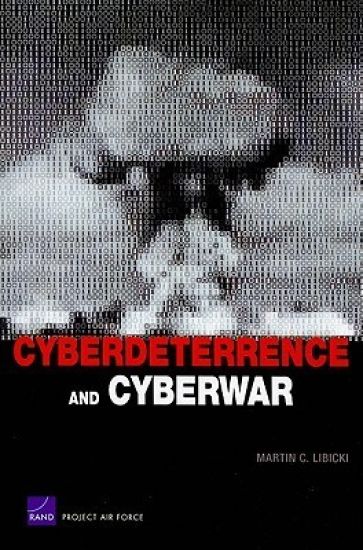
Cyberdeterrence and Cyberwar

Cyberdeterrence and Cyberwar

Martin C. Libicki

RAND
2009
pokkari
The protection of cyberspace, the information medium, has become a vital national interest because of its importance both to the economy and to military power. An attacker may tamper with networks to steal information for the money or to disrupt operations. Future wars are likely to be carried out, in part or perhaps entirely, in cyberspace. It might therefore seem obvious that maneuvering in cyberspace is like maneuvering in other media, but nothing would be more misleading. Cyberspace has its own laws; for instance, it is easy to hide identities and difficult to predict or even understand battle damage, and attacks deplete themselves quickly. Cyberwar is nothing so much as the manipulation of ambiguity. The author explores these topics in detail and uses the results to address such issues as the pros and cons of counterattack, the value of deterrence and vigilance, and other actions governments can take to protect themselves in the face of deliberate cyberattack. For more than 60 years, decisionmakers in the public and private sectors have turned to the RAND Corporation for objective analysis and effective solutions that address the challenges facing the nation and the world.
The New Calculus of Escalation

The New Calculus of Escalation

Martin C. Libicki

GEORGETOWN UNIVERSITY PRESS
2025
sidottu
A reevaluation of conflict thresholds in the context of complex cyber, conventional, and nuclear warThe return of great power competition has renewed concerns about managing escalation, lest a minor crisis inadvertently spiral into nuclear war. This has become apparent during the war between Russia and Ukraine, as Western aid for Ukraine has been predicated on avoiding Russian escalation.The New Calculus of Escalation updates our understanding of conflict escalation dynamics for the twenty-first century with the goal of reducing the possibility of a catastrophic war. To improve mutual understanding among states, Libicki rethinks conflict thresholds and exit ramps that manage escalation. During the Cold War, there were two critical thresholds—one between peace and war, and one between conventional war and nuclear war. But ongoing developments in cyber and other advanced military technologies threaten command and control and blur the old thresholds.Military strategists, international relations scholars, and graduate students will benefit from this book's cogent analytic framework in shaping future debates.
The New Calculus of Escalation

The New Calculus of Escalation

Martin C. Libicki

GEORGETOWN UNIVERSITY PRESS
2025
pokkari
A reevaluation of conflict thresholds in the context of complex cyber, conventional, and nuclear war The return of great power competition has renewed concerns about managing escalation, lest a minor crisis inadvertently spiral into nuclear war. This has become apparent during the war between Russia and Ukraine, as Western aid for Ukraine has been predicated on avoiding Russian escalation. The New Calculus of Escalation updates our understanding of conflict escalation dynamics for the twenty-first century with the goal of reducing the possibility of a catastrophic war. To improve mutual understanding among states, Libicki rethinks conflict thresholds and exit ramps that manage escalation. During the Cold War, there were two critical thresholds—one between peace and war, and one between conventional war and nuclear war. But ongoing developments in cyber and other advanced military technologies threaten command and control and blur the old thresholds. Military strategists, international relations scholars, and graduate students will benefit from this book's cogent analytic framework in shaping future debates.