Kirjojen hintavertailu. Mukana 12 155 299 kirjaa ja 12 kauppaa.

Kirjahaku

Etsi kirjoja tekijän nimen, kirjan nimen tai ISBN:n perusteella.

6 kirjaa tekijältä Martin Chick

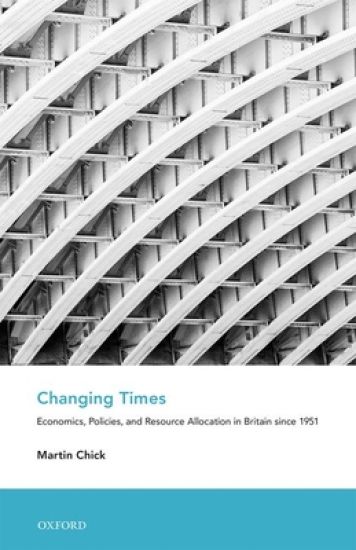
Changing Times

Changing Times

Martin Chick

Oxford University Press
2019
nidottu
This is a study of how, and why, the British economy has changed since 1951. It covers the Golden Age of 1945-1973 when unemployment was below one million; when governments built millions of council houses and flats; when electricity, telephones, and gas were supplied by nationalised monopolies; when income and wealth inequality were narrowing; and when the UK was not a member of the European Economic Community. Moving through the inflation, rising unemployment, and rapid contraction of the manufacturing industry from the mid- 1970s, Changing Times examines the transfer of assets which was effected in the privatisation of public housing and nationalised industries from the early 1980s. The role of the State changed as public investment fell. The financing of old-age care, of state pensions, and of the National Health Service became of increasing concern and were less politically amenable to the approach of using private finance (the Private Finance Initiative and tuition fees) to fund former public obligations. Changes were made to the system of taxation, but public expenditure changed little as a share of national income, although the government now built little. Difficulties emerged in ensuring adequate housing for a growing population, and uncertainty grew as to where future investment in necessities like electricity supply would come from. Having narrowed in the Golden Age, inequality of income and wealth widened. Environmental concerns also grew, from the local smogs of the 1950s, through the concern with acid rain from the 1960s, to the current global concern with climate change. The financial crash of 2008 and the decision to 'Brexit' in the referendum of 2016 reduced economic growth and highlighted the extent of economic change since 1951. This is a study of that change.
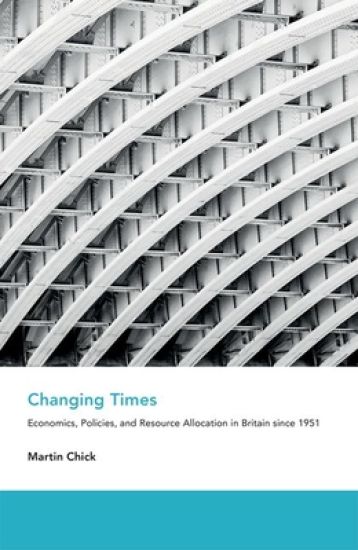
Changing Times

Changing Times

Martin Chick

Oxford University Press
2019
sidottu
This is a study of how, and why, the British economy has changed since 1951. It covers the Golden Age of 1945-1973 when unemployment was below one million; when governments built millions of council houses and flats; when electricity, telephones, and gas were supplied by nationalised monopolies; when income and wealth inequality were narrowing; and when the UK was not a member of the European Economic Community. Moving through the inflation, rising unemployment, and rapid contraction of the manufacturing industry from the mid- 1970s, Changing Times examines the transfer of assets which was effected in the privatisation of public housing and nationalised industries from the early 1980s. The role of the State changed as public investment fell. The financing of old-age care, of state pensions, and of the National Health Service became of increasing concern and were less politically amenable to the approach of using private finance (the Private Finance Initiative and tuition fees) to fund former public obligations. Changes were made to the system of taxation, but public expenditure changed little as a share of national income, although the government now built little. Difficulties emerged in ensuring adequate housing for a growing population, and uncertainty grew as to where future investment in necessities like electricity supply would come from. Having narrowed in the Golden Age, inequality of income and wealth widened. Environmental concerns also grew, from the local smogs of the 1950s, through the concern with acid rain from the 1960s, to the current global concern with climate change. The financial crash of 2008 and the decision to 'Brexit' in the referendum of 2016 reduced economic growth and highlighted the extent of economic change since 1951. This is a study of that change.
Industrial Policy in Britain 1945–1951

Industrial Policy in Britain 1945–1951

Martin Chick

Cambridge University Press
1997
sidottu
This is a detailed archive-based study of the economic planning of the Attlee governments, in which the author seeks to analyse the interaction between the decisions of central planners and the micro-economic effects of these decisions. Throughout the book, Martin Chick pays particular attention to the level, pattern and quality of fixed capital investment. At the same time, there is a continuous concern with the struggle between politicians, economists and industrialists over the mix of pricing mechanisms and administrative orders which were to be used in this period. This struggle permeated all discussions over matters such as the organisation of nationalised industries, the monopoly structure of nationalised industries, the allocation of resources and the promotion of higher productivity. The author also asks what impact, if any, economic planning had on the productivity performance of the UK economy.
Industrial Policy in Britain 1945–1951

Industrial Policy in Britain 1945–1951

Martin Chick

Cambridge University Press
2002
pokkari
This is a detailed archive-based study of the economic planning of the Attlee governments, in which the author seeks to analyse the interaction between the decisions of central planners and the micro-economic effects of these decisions. Throughout the book, Martin Chick pays particular attention to the level, pattern and quality of fixed capital investment. At the same time, there is a continuous concern with the struggle between politicians, economists and industrialists over the mix of pricing mechanisms and administrative orders which were to be used in this period. This struggle permeated all discussions over matters such as the organisation of nationalised industries, the monopoly structure of nationalised industries, the allocation of resources and the promotion of higher productivity. The author also asks what impact, if any, economic planning had on the productivity performance of the UK economy.
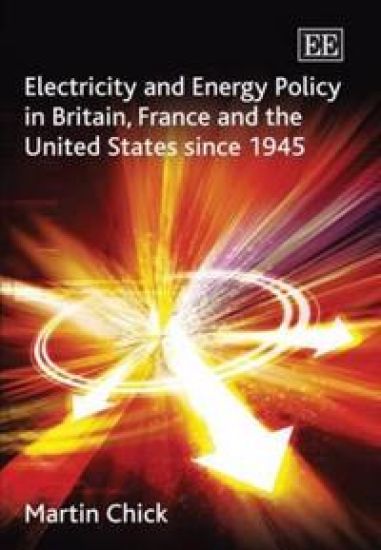
Electricity and Energy Policy in Britain, France and the United States since 1945
Martin Chick's book is a major economic and historical study of the development of electricity and energy policy in Britain, France and the United States since 1945. Using newly available archival material the author draws important comparisons between these countries and includes all of the fuel and power industries.Among the issues covered within this book are: nationalisation and privatisation; regulation, deregulation and liberalisation; marginal cost pricing; investment appraisal; the OPEC oil price hikes of the 1970s; the European Coal and Steel Community; domestic and international threats to national energy security; the electricity blackouts in California; the efforts of the European Commission to promote competition in national and transnational electricity markets; and the influence of history on current discussions of energy policy. The book blends economic theory with historical evidence and is as interested in the political factors affecting the implementation of theory as in the theory itself.It will be of interest to all students and scholars of environmental studies, politics, economics, business and industrial history, as well as to anyone interested in placing the current debates on electricity and energy policy in their historical perspective
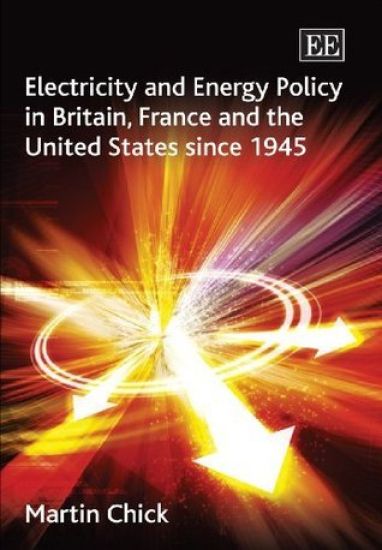
Electricity and Energy Policy in Britain, France and the United States since 1945
Martin Chick's book is a major economic and historical study of the development of electricity and energy policy in Britain, France and the United States since 1945. Using newly available archival material the author draws important comparisons between these countries and includes all of the fuel and power industries.Among the issues covered within this book are: nationalisation and privatisation; regulation, deregulation and liberalisation; marginal cost pricing; investment appraisal; the OPEC oil price hikes of the 1970s; the European Coal and Steel Community; domestic and international threats to national energy security; the electricity blackouts in California; the efforts of the European Commission to promote competition in national and transnational electricity markets; and the influence of history on current discussions of energy policy. The book blends economic theory with historical evidence and is as interested in the political factors affecting the implementation of theory as in the theory itself.It will be of interest to all students and scholars of environmental studies, politics, economics, business and industrial history, as well as to anyone interested in placing the current debates on electricity and energy policy in their historical perspective