
Kirjahaku
Etsi kirjoja tekijän nimen, kirjan nimen tai ISBN:n perusteella.
21 kirjaa tekijältä Martin Davie
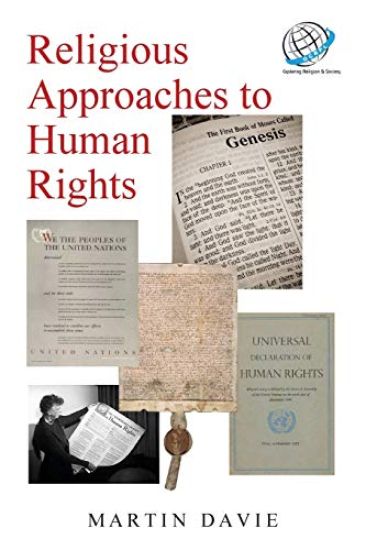
Religious approaches to Human Rights
Martin Davie
Select Academic Publishing Oxford Ltd
2016
pokkari
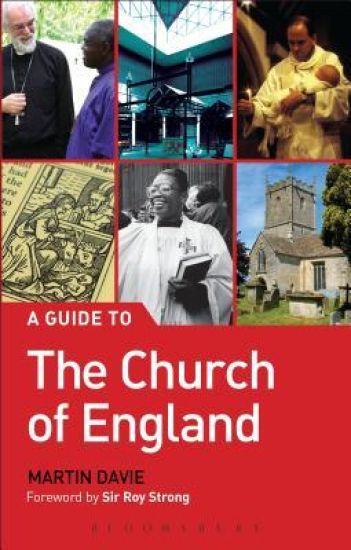
This is a lively and informative guide to the Church of England, from its Romano-British origins to the central church structures of the twenty-first century. It defines doctrine and how to address a Dean, covers Canon Law and explores the implications of Establishment; looks at mission and maintenance, music and ministry. From the Archbishop of Canterbury to the Thirty-Nine Articles and from Royal Peculiars to inter-faith relations, this invaluable resource brings together in a single volume the diverse threads that make up the Church of England.
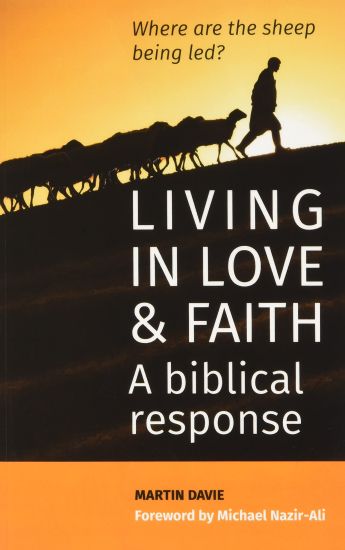
Living in Love and Faith is an initiative from the House of Bishops. It purports to be neutral, to aid conversations on the church's future position on matters of sexuality. However it is biased towards a liberal view.
The Athanasian Creed is now the neglected Creed. Most of the laity do not know about it, its theology is not well understood even by the clergy, and it is almost never used in services, even in conservative churches. This book's aim is to counter this neglect of the Athanasian Creed. Its five chapters: - Set out what kind of document the Creed is and when and why it was written; - Give a detailed commentary on the Creed, explaining clearly what it teaches and why what it teaches is true; - Explain why the Creed still matters today, not only because of its importance in the history of Christian theology and liturgy, but primarily because of the continuing significance of its teaching. - Explore how people in the Church of England today can be encouraged to make use of the Creed both in theological education and in the everyday life of their parishes.
We live in an age in which there is widespread confusion about matters to with sex, marriage, and family life not only in society at large, but also within the Christian Church. The purpose of this new Primer is to address this confusion by providing clergy and laity alike with a basic introduction to what the Christian faith has to say about these matters. it is particularly designed to help Christians to understand the issues that will be discussed in the Church of England following the publication of the Living in Love and Faith material in late 2020. The Primer explains in clear terms the basis of a Christian approach to these matters, and then goes on to look at what Christianity has to say about marriage, singleness, friendship, intersex and transgender, sex outside marriage (including same-sex relationships), divorce and re-marriage, birth control and treatment for infertility.
In 2019 a series of ten articles by various authors was published on the liberal Anglican website ViaMedia.News under the collective title 'Does the Bible Really Say....' The purpose of this series was to challenge the belief that the Bible rules out acceptance of same-sex sexual relationships and same-sex marriage. The essays in this book are response to these ViaMedia.News articles. They show that the arguments that these articles put forward are not sustainable in the light of what the Bible actually says. Underlying the current debate in the Church about human sexuality is the question asked of Eve by the snake 'Did God really say' (Genesis 3:1). Through nature and Scripture God has said clearly that he has created human beings as male and female and has ordained marriage between one man and one woman as the sole legitimate setting for sexual intercourse. We know that this is what God has told us and yet in the face of pressure from our contemporary culture we are tempted to question whether this is what he really meant. It is of the utmost importance that this temptation is resisted. The purpose of this book is to encourage such resistance.
Living in Love and Faith (LLF) is a set of resources produced by the bishops of the Church of England to help Christians discern God's will on the issues of 'identity, sexuality, relationships and marriage.' This booklet helps Evangelical clergy and laity approaching the LLF resources for the first time by addressing the two key questions about them. What do the LLF resources contain? What are we to make of them theologically? Everyone in the Church of England is being encouraged to engage with the LLF resources during the coming year. This booklet is an ideal place to begin that engagement.
A key way in which the benefits of the work of Christ are conveyed to those who respond to the gospel with repentance and faith is through the two rites of 'Christian initiation': baptism and confirmation.In baptism we die to our old life of sin and death and rise to a new life with God which will be fully revealed at the resurrection of the dead at the end of time.In confirmation we reaffirm the promises which were made at our baptism, and we are given strength through the Spirit to live the new life we have been given in baptism, and protection from all that would turn us away from God.The Church of England's normative confirmation service, to which the Common Worship services are authorised alternatives, is the confirmation service in the 1662 Book of Common Prayer.This little book provides an introduction to the 1662 service. It describes how confirmation developed in the Early Church and during the Middle Ages and how the Prayer Book confirmation service developed after the Reformation. It also provides a detailed commentary on the Prayer Book service, and answers the ten key questions people today generally ask about confirmation.
Those authorized to minister in the Church of England, whether as ordained or lay ministers, are expected to teach and act in accordance with the Church of England's doctrine. However, many of those who are currently exercising ministry in the Church of England, or who are being trained for ministry, are unclear about what the Church of England's doctrine is, and why it matters that they should adhere to it.In order to address this situation, the Latimer Trust is producing a new series of short books on doctrine which are designed to introduce various key aspects of the doctrine of the Church of England. The purpose of Deep Roots is to introduce the series as a whole. It does this by explaining what doctrine is, the nature of the doctrinal authorities accepted by the Church of England, and why it is important for both ministers (and Christians ingeneral) to adhere to what is taught by these doctrinal authorities. This is a book for existing ministers, those in training for ministryand ordinary lay Christians who want a concise but reliable answer to the question 'What is doctrine and why does it matter'
Whether they recognise it or not, everyone has a worldview, a way of understanding the world in which they live and their place in it. The difference between these worldviews means that physically people may inhabit the same universe, but mentally the universes they inhabit may be very different. For example, some people may inhabit a mental universe in which there is a single creator God, others may inhabit a mental universe where there are a multiplicity of different gods, and yet others may inhabit a mental universe where there are no gods at all, and in which the world is governed simply by the random movement of material forces. Given the existence of this range of mental universes, the aim of Living in the Multiverse is to do three things.Firstly, to explain the nature of the Christian universe and the reasons for believing that this universe exists not only as a mental concept, but as an objective reality. Secondly, to introduce Christians to the other main mental universes inhabited by people living in the UK today, explaining the reasons for their existence and looking at how they are similar to and different from the Christian universe, particularly in their views of what makes for human flourishing. Thirdly, to explore what it means for Christians to live well in the midst of these multiple mental universes.
The House of Bishops' background paper for the July 2024 meeting of the Church of England's General Synod, LLF: Moving Forward as One Church, is based on the belief articulated by Bishop Martyn Snow in the Preface, 'Unity matters - it really matters.' As the word 'one' in the paper's title indicates, what the bishops want is for the Church of England to remain united as one church, and they see the proposals contained in the paper as a way to achieve this. Unity and Truth is a critical theological review of what the bishops propose in their paper (which the General Synod very narrowly voted to support). What it shows is two things: Firstly, what the bishops are proposing as the way forward for the Church of England on the issue of human sexuality is not compatible with a proper theological understanding of what the unity of the Church requires. Secondly, should the Church of England continue to move in the direction that the bishops are proposing, conservative Christians in the Church of England will have no alternative, but to seek to establish an orthodox third province within the Church of England, precisely as a way to preserve as much unity as possible. This little book is an important resource for anyone wanting to understand why the way forward for the Church of England proposed by the bishops is theologically untenable and what a better approach would be like.
WITH GOD'S APPROVAL? A theological exploration of blessing same-sex couples, in conversation with Walter Moberley and Isabelle Hamley
Martin Davie
Dictum
2023
nidottu
Is it theologically possible to hold that God's blessing can rest upon sexually-active same-sex relationships and same-sex marriages? Is it therefore legitimate for the Church of England to bless them? This study carefully examines the papers on blessing by Walter Moberly and Isabelle Hamley, produced for the Church of England's General Synod in July 2023, then explores the pattern for God's blessing, as found in Scripture. The principles are more widely applicable. Martin Davie concludes that if such prayers of blessing were to be authorised, it would mean deciding that God's rejection of same-sex unions no longer applies.