Kirjojen hintavertailu. Mukana 11 627 220 kirjaa ja 12 kauppaa.

Kirjahaku

Etsi kirjoja tekijän nimen, kirjan nimen tai ISBN:n perusteella.

12 kirjaa tekijältä Martin M. Winkler

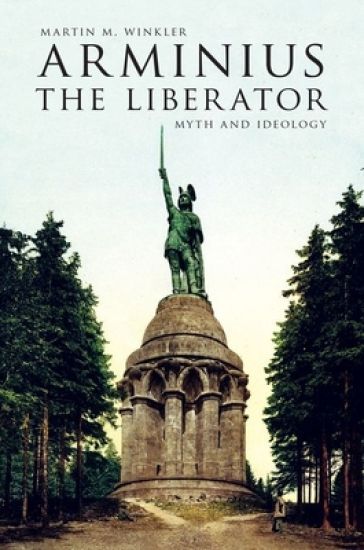
Arminius the Liberator

Arminius the Liberator

Martin M. Winkler

Oxford University Press Inc
2015
sidottu
Arminius the Liberator: Myth and Ideology deals with a particular, although wide-ranging, aspect in the long reception history of Arminius the Cheruscan, commonly called Hermann. Arminius inflicted one of their most devastating defeats on the Romans in the year 9 A.D., when he destroyed three legions under the command of Varus in the Battle in the Teutoburg Forest, as it is generally called. Martin M. Winkler traces the origin and development of the Arminius legend in antiquity and in political and ideological appropriations of Arminius-Hermann since the nineteenth century. The book's central theme is the ideological use and abuse of history and of historical myth in Germany: Weimar-era nationalism, National Socialism, and the reaction to the ideological taint of the Arminius figure after 1945. The book also examines the various appearances of Arminius in art and media from the 1960s until today. Special emphasis is on the representation of Arminius in the era of visual mass media in Germany, Italy, and the U.S.: painting (Anselm Kiefer) and theater (Claus Peymann) but, most extensively, cinema, television, and computer videos.

RopeSport

RopeSport

Martin M. Winkler

John Wiley Sons Ltd
2007
nidottu
Get in shape with exercise that's fat-blasting, portable, and fun RopeSport is the revolutionary fitness program people across the country are using to get fit, lose weight, and have a great time doing it. Now you can, too If you want a high-energy, low-impact way to tone your body, get a complete cardiovascular workout, and burn up to a thousand calories an hour, RopeSport is for you. This book covers everything from the benefits and basics to extreme jumps and alternative workouts. The step-by-step approach helps you become proficient in just a few workouts. RopeSport: * Progresses from basic jumps, combinations, and workouts to intermediate and advanced routines* Features four complete, detailed workouts for each skill level* Has more than a hundred photos that show you how it's done, jump after jump* Includes success stories from real people who love jumping rope* Is a workout endorsed by celebrities, including leading fitness expert Kathy Smith, Eric Nies of MTV, and Kelly Packard of Baywatch* Keeps you challenged with extreme jumps like the Matador, Running Doubles, and the Inverted Jump* Shares tips for a healthy lifestyle, effective training, and building athletic skills You'll learn the techniques and get the tools to create your own RopeSport full-body workout program-one that you can vary any number of ways and do almost anywhere.
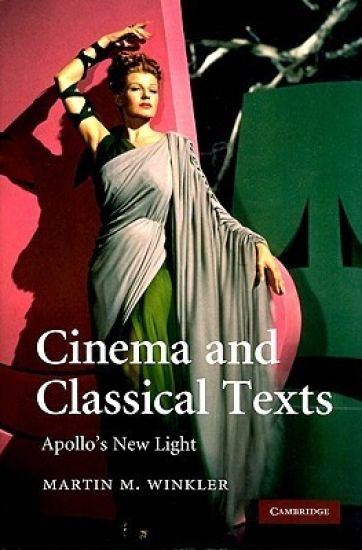
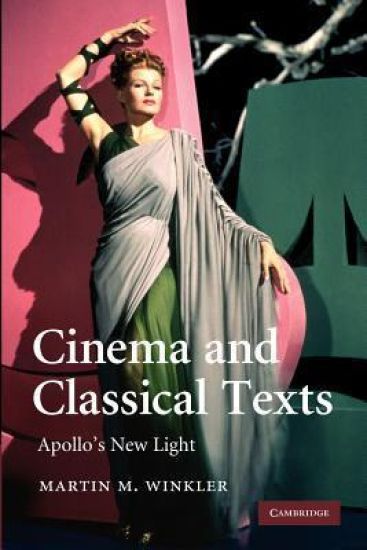
Cinema and Classical Texts

Cinema and Classical Texts

Martin M. Winkler

Cambridge University Press
2009
sidottu
Apollo was the ancient god of light and the divine patron of the arts. He is therefore a fitting metaphor for cinematography, which is the modern art of writing with moving light. This book interprets films as visual texts and provides the first systematic theoretical and practical demonstration of the affinities between Greco-Roman literature and the cinema. It examines major themes from classical myth and history such as film portrayals of gods, exemplified by Apollo and the Muses; Oedipus, antiquity's most influential mythic-tragic hero; the question of heroism and patriotism in war; and the representation of women like Helen of Troy and Cleopatra as products of male desire and fantasy. Covering a wide range of European and American directors, genres and classical authors, this study provides an innovative perspective on the two disciplines of classics and cinema and demonstrates our most influential medium's unlimited range when it adapts ancient texts.
Classical Antiquity and the Cinematic Imagination

Classical Antiquity and the Cinematic Imagination

Martin M. Winkler

Cambridge University Press
2025
pokkari
This book aims to enhance our appreciation of the modernity of the classical cultures and, conversely, of cinema's debt to ancient Greece and Rome. It explores filmic perspectives on the ancient verbal and visual arts and applies what is often referred to as pre-cinema and what Sergei Eisenstein called cinematism: that paintings, statues, and literature anticipate modern visual technologies. The motion of bodies depicted in static arts and the vividness of epic ecphrases point to modern features of storytelling, while Plato's Cave Allegory and Zeno's Arrow Paradox have been related to film exhibition and projection since the early days of cinema. The book additionally demonstrates the extensive influence of antiquity on an age dominated by moving-image media, as with stagings of Odysseus' arrow shot through twelve axes or depictions of the Golden Fleece. Chapters interpret numerous European and American silent and sound films and some television productions and digital videos.
Classical Antiquity and the Cinematic Imagination

Classical Antiquity and the Cinematic Imagination

Martin M. Winkler

Cambridge University Press
2024
sidottu
This book aims to enhance our appreciation of the modernity of the classical cultures and, conversely, of cinema's debt to ancient Greece and Rome. It explores filmic perspectives on the ancient verbal and visual arts and applies what is often referred to as pre-cinema and what Sergei Eisenstein called cinematism: that paintings, statues, and literature anticipate modern visual technologies. The motion of bodies depicted in static arts and the vividness of epic ecphrases point to modern features of storytelling, while Plato's Cave Allegory and Zeno's Arrow Paradox have been related to film exhibition and projection since the early days of cinema. The book additionally demonstrates the extensive influence of antiquity on an age dominated by moving-image media, as with stagings of Odysseus' arrow shot through twelve axes or depictions of the Golden Fleece. Chapters interpret numerous European and American silent and sound films and some television productions and digital videos.
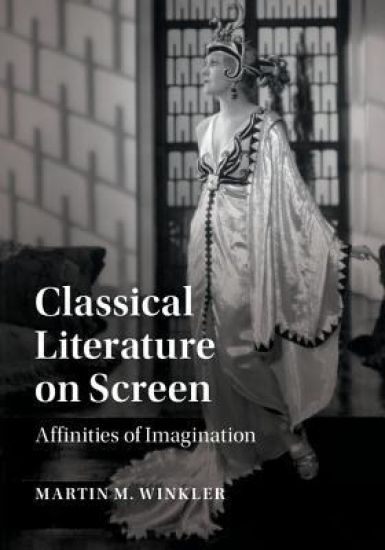
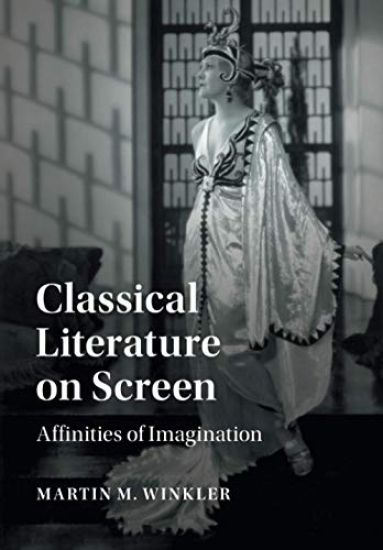
Classical Literature on Screen

Classical Literature on Screen

Martin M. Winkler

Cambridge University Press
2017
sidottu
Martin M. Winkler argues for a new approach to various creative affinities between ancient verbal and modern visual narratives. He examines screen adaptations of classical epic, tragedy, comedy, myth, and history, exploring, for example, how ancient rhetorical principles regarding the emotions apply to moving images and how Aristotle's perspective on thrilling plot-turns can recur on screen. He also interprets several popular films, such as 300 and Nero, and analyzes works by international directors, among them Pier Paolo Pasolini (Oedipus Rex, Medea), Jean Cocteau (The Testament of Orpheus), Mai Zetterling (The Girls), Lars von Trier (Medea), Arturo Ripstein (Such Is Life), John Ford (westerns), Alfred Hitchcock (Psycho), and Spike Lee (Chi-Raq). The book demonstrates the undiminished vitality of classical myth and literature in our visual media, as with screen portrayals of Helen of Troy. It is important for all classicists and scholars and students of film, literature, and history.
Cinema and Classical Texts

Cinema and Classical Texts

Martin M. Winkler

Cambridge University Press
2012
pokkari
Apollo was the ancient god of light and the divine patron of the arts. He is therefore a fitting metaphor for cinematography, which is the modern art of writing with moving light. This book interprets films as visual texts and provides the first systematic theoretical and practical demonstration of the affinities between Greco-Roman literature and the cinema. It examines major themes from classical myth and history such as film portrayals of gods, exemplified by Apollo and the Muses; Oedipus, antiquity's most influential mythic-tragic hero; the question of heroism and patriotism in war; and the representation of women like Helen of Troy and Cleopatra as products of male desire and fantasy. Covering a wide range of European and American directors, genres and classical authors, this study provides an innovative perspective on the two disciplines of classics and cinema and demonstrates our most influential medium's unlimited range when it adapts ancient texts.
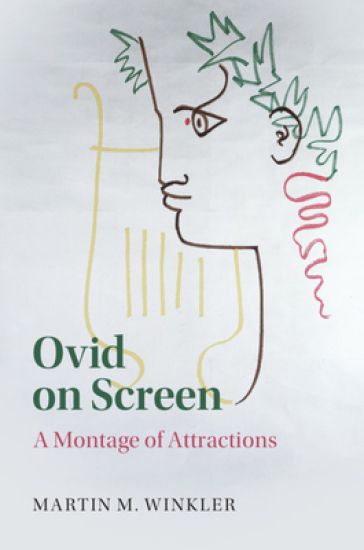
Ovid on Screen

Ovid on Screen

Martin M. Winkler

Cambridge University Press
2020
sidottu
This book presents the first systematic appreciation of Ovid's extensive influence on, and affinity with, modern visual culture. Some topics are directly related to Ovid; others exhibit features, characters, or themes analogous to those in his works. The book demonstrates the wide-ranging ramifications that Ovidian archetypes, especially from the Metamorphoses, have provoked in a modern artistic medium that did not exist in Ovid's time. It ranges from the earliest days of film history (Georges Méliès's discovery of screen metamorphosis) and theory (Gabriele D'Annunzio's fascination with the metamorphosis of Daphne; Sergei Eisenstein's concept of film sense) through silent films, classic sound films, commercial cinema, art-house and independent films to modernism and the C.G.I. era. Films by well-known directors, including Ingmar Bergman, Walerian Borowczyk, Jean Cocteau, Alfred Hitchcock, Stanley Kubrick, Fritz Lang, Max Ophüls, Alain Resnais, and various others, are analyzed in detail.
Ovid on Screen

Ovid on Screen

Martin M. Winkler

Cambridge University Press
2025
pokkari
This book presents the first systematic appreciation of Ovid's extensive influence on, and affinity with, modern visual culture. Some topics are directly related to Ovid; others exhibit features, characters, or themes analogous to those in his works. The book demonstrates the wide-ranging ramifications that Ovidian archetypes, especially from the Metamorphoses, have provoked in a modern artistic medium that did not exist in Ovid's time. It ranges from the earliest days of film history (Georges Méliès's discovery of screen metamorphosis) and theory (Gabriele D'Annunzio's fascination with the metamorphosis of Daphne; Sergei Eisenstein's concept of film sense) through silent films, classic sound films, commercial cinema, art-house and independent films to modernism and the C.G.I. era. Films by well-known directors, including Ingmar Bergman, Walerian Borowczyk, Jean Cocteau, Alfred Hitchcock, Stanley Kubrick, Fritz Lang, Max Ophüls, Alain Resnais, and various others, are analyzed in detail.
Classical Literature on Screen

Classical Literature on Screen

Martin M. Winkler

Cambridge University Press
2020
pokkari
Martin M. Winkler argues for a new approach to various creative affinities between ancient verbal and modern visual narratives. He examines screen adaptations of classical epic, tragedy, comedy, myth, and history, exploring, for example, how ancient rhetorical principles regarding the emotions apply to moving images and how Aristotle's perspective on thrilling plot-turns can recur on screen. He also interprets several popular films, such as 300 and Nero, and analyzes works by international directors, among them Pier Paolo Pasolini (Oedipus Rex, Medea), Jean Cocteau (The Testament of Orpheus), Mai Zetterling (The Girls), Lars von Trier (Medea), Arturo Ripstein (Such Is Life), John Ford (westerns), Alfred Hitchcock (Psycho), and Spike Lee (Chi-Raq). The book demonstrates the undiminished vitality of classical myth and literature in our visual media, as with screen portrayals of Helen of Troy. It is important for all classicists and scholars and students of film, literature, and history.
Sergei Eisenstein in the Classical Tradition

Sergei Eisenstein in the Classical Tradition

Martin M. Winkler

Cambridge University Press
2026
nidottu
This is the first study of Sergei Eisenstein's relationship to classical antiquity. Eisenstein regarded the cinema as a Gesamtkunstwerk and considered the ancient Greeks among its ancestors. He detected what he called “cinematism” in Homer, the Laocoon sculpture group, the Acropolis, and elsewhere. The book interprets Eisenstein's chief concept, montage, as a visual analogy to clever juxtapositions in Roman poetry and examines his conflicts with Stalin and the Communist Party over Bezhin Meadow and Ivan the Terrible alongside the classical rhetorical strategy of formidable speaking in the face of absolute power and the Russian practice of Aesopian language. Eisenstein also influenced the design of the New Acropolis Museum via an essay about the Acropolis' architectural promenade and his epic Alexander Nevsky. The cinematism of the Parthenon Frieze, American cinema architecture modeled on the Parthenon, and Eisenstein's image of the cinema as a temple reinforce his importance within the classical tradition.
Sergei Eisenstein in the Classical Tradition

Sergei Eisenstein in the Classical Tradition

Martin M. Winkler

Cambridge University Press
2026
sidottu
This is the first study of Sergei Eisenstein's relationship to classical antiquity. Eisenstein regarded the cinema as a Gesamtkunstwerk and considered the ancient Greeks among its ancestors. He detected what he called “cinematism” in Homer, the Laocoon sculpture group, the Acropolis, and elsewhere. The book interprets Eisenstein's chief concept, montage, as a visual analogy to clever juxtapositions in Roman poetry and examines his conflicts with Stalin and the Communist Party over Bezhin Meadow and Ivan the Terrible alongside the classical rhetorical strategy of formidable speaking in the face of absolute power and the Russian practice of Aesopian language. Eisenstein also influenced the design of the New Acropolis Museum via an essay about the Acropolis' architectural promenade and his epic Alexander Nevsky. The cinematism of the Parthenon Frieze, American cinema architecture modeled on the Parthenon, and Eisenstein's image of the cinema as a temple reinforce his importance within the classical tradition.