Kirjojen hintavertailu. Mukana 11 244 527 kirjaa ja 12 kauppaa.

Kirjahaku

Etsi kirjoja tekijän nimen, kirjan nimen tai ISBN:n perusteella.

16 kirjaa tekijältä Martin Manser

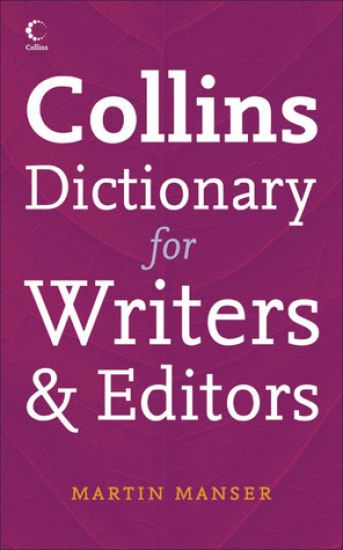
Collins Dictionary for Writers and Editors
The essential reference work for writers, editors and proofreaders. Well-known or well known? Affect or effect? Majorca or Mallorca? Royal Family or royal family? Spell check cannot be relied upon to help you with the trickier aspects of the English language. Even the most sophisticated writers of English will be faced with questions and problems in the quest for clear, elegant and correct writing. The new paperback edition of the Collins Dictionary for Writers and Editors answers these questions, and thousands of other usage conundrums, with a comprehensive collection of entries designed to sweep the minefield of the English language. Whether you're a writer, proofreader or editor, for books, periodicals or websites, the Collins Dictionary for Writers and Editors will be your essential reference. It contains accessible information covering everything from style and Americanization (or Americanisation), to proofreading marks and transliterations. It also includes: abbreviations and acronymsmisspellingscompound wordspluralscapitalisationapostrophestitles

Best Loved Prayers and Words of Wisdom
A timeless collection of prayers, quotes, poems and speeches for every occasion. Complete with a brief introduction to each piece and its author, this book features words and prayers from 300BC to the present day. It provides a great source of inspiration when planning a speech or ceremonial occasion or can be used for personal devotions. This carefully chosen selection of the best loved prayers and words of wisdom is a staple for any bookshelf. The many contributors include C. S. Lewis, Florence Nightingale, St Francis of Assisi, John & Charles Wesley, Mother Teresa, John Stott, Oswald Chambers, G. K. Chesterton and Julian of Norwich. From The Lord's Prayer and Footprints, to excerpts from A Pilgrims Progress and A Christmas Carol, this compilation is a useful for individuals to read and reference, and a great source of inspiration when planning for a ceremonial occasion, speech, wedding or funeral. Each reading is introduced with a brief history to the piece and its author, providing new levels of interest and a sense of context. The 300 hand-picked pieces have been arranged alphabetically, so that selecting a favourite work is easy. This guide is also accompanied by a set of indexes which detail first lines, themes, Bible references, and authors, so that each entry is thoroughly cross-referenced, enabling you to make the most of this fabulous selection.
Christian Christian Names

Christian Christian Names

Martin Manser

Collins
2009
nidottu
Are you looking for a baby name with a deeper meaning? Or for a popular and resonant name that has stood the test of time? If so, then Christian Christian Names is the only book you'll need. Are you looking for a baby name with a deeper meaning? Or for a popular and resonant name that has stood the test of time? If so, then Christian Christian Names is the only book you'll need. It includes over 2,000 first names for boys and girls, from Aaron to Zipporah. There are many you'll recognise and some you won't, but all of them have their meaning explained as well as the story of the Biblical character or Saint with the same name.
Time Management

Time Management

Martin Manser

HARPERCOLLINS PUBLISHERS
2010
nidottu
The time management secrets that experts and top professionals use. Get results fast with this quick, easy guide to the fundamentals of Time Management.Includes how to:• Identify your biggest priorities and find time to achieve them• Deal with the biggest hidden time-wasters• Communicate effectively with colleagues and clients• Cope with information overload• Take control of your inbox and voicemail
Best Loved Prayers and Words of Wisdom
A timeless collection of prayers, quotes, poems and speeches for every occasion. Complete with a brief introduction to each piece and its author, this book features words and prayers from 300BC to the present day. It provides a great source of inspiration when planning a speech or ceremonial occasion or can be used for personal devotions. This carefully chosen selection of the best loved prayers and words of wisdom is a staple for any bookshelf. The many contributors include C. S. Lewis, Florence Nightingale, St Francis of Assisi, John & Charles Wesley, Mother Teresa, John Stott, Oswald Chambers, G. K. Chesterton and Julian of Norwich. From The Lord's Prayer and Footprints, to excerpts from A Pilgrims Progress and A Christmas Carol, this compilation is a useful for individuals to read and reference, and a great source of inspiration when planning for a ceremonial occasion, speech, wedding or funeral. Each reading is introduced with a brief history to the piece and its author, providing new levels of interest and a sense of context. The 300 hand-picked pieces have been arranged alphabetically, so that selecting a favourite work is easy. This guide is also accompanied by a set of indexes which detail first lines, themes, Bible references, and authors, so that each entry is thoroughly cross-referenced, enabling you to make the most of this fabulous selection.
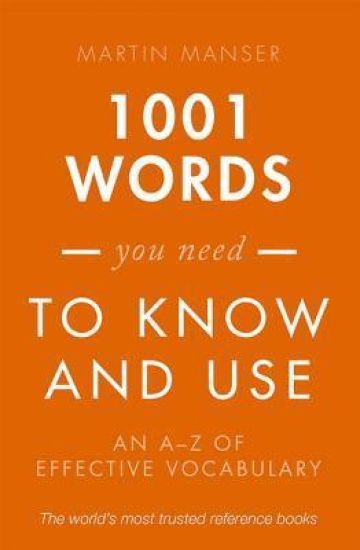
1001 Words You Need To Know and Use

1001 Words You Need To Know and Use

Martin Manser

Oxford University Press
2014
nidottu
An A-Z of Effective Vocabulary covers the meaning and usage of 1001 words that you really do need to know. Whether you need guidance for a letter, job application, essay, proposal, interview, or presentation, this book can help you choose the words you need to create the right effect. Each word is defined according to Oxford Languages' latest research and includes sample sentences of real usage drawn from the Oxford English Corpus (the world's largest language databank). The book also gives examples of pitfalls to avoid, hints on similar words, and advice on how to express yourself persuasively. Learn the words that will help you to describe an event, discuss a topic, speak in an interview, evaluate a point of view and write clearly using this book which contains essential information for anyone wanting to achieve greater success in any written or spoken task. This book has been reissued in an attractive new cover to sit alongside the other titles in this mini-series: the Oxford A-Z of Grammar and Punctuation, the Oxford Guide to Plain English, the Oxford A-Z of English Usage, and the Oxford A-Z of Better Spelling.
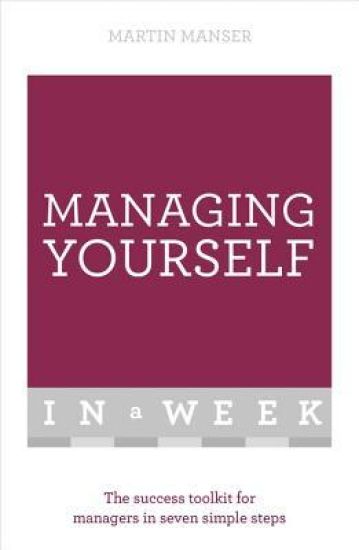
Managing Yourself In A Week

Managing Yourself In A Week

Martin Manser

Teach Yourself
2016
pokkari
Managing yourself just got easierOne of the most important aspects of being a manager is being able to manage yourself and the first step to doing this effectively is becoming aware of yourself and evaluating your strengths and weaknesses. In Managing Yourself In A Week you will learn about good time management and organization skills including planning and setting priorities, dealing with time wasters, and practical steps on maintaining a diary and to-do lists. You will explore techniques such as managing your mind and learn about the power of positive thinking in developing strategies and making good decisions. You will learn about managing emotions, increasing confidence, dealing with nerves, motivating yourself and building strong relationships by applying good listening skills. The final chapter, on managing stress, looks at what produces stress in you and discusses ways of dealing with its consequences. Managing Yourself in a Week gives handy guidelines that will enable you to take a grip on yourself and re-evaluate your way of working and your priorities in life. It is a quick and reliable guide to the basics of self-management in the world of work.Over this week-long course you will cover:- Sunday: Know yourself well- Monday: Manage your focus clearly- Tuesday: Manage your time effectively- Wednesday: Manage your mind decisively- Thursday: Manage your emotions carefully - Friday: Manage your relationships successfully- Saturday: Manage stress thoroughly
Difficult Conversations In A Week

Difficult Conversations In A Week

Martin Manser

Teach Yourself
2016
pokkari
Difficult conversations just got easierHow do you deal professionally with a colleague whose work is seriously below standard? A supplier who is always late? Saying 'no' graciously? Giving someone bad news? Many of us have been on the receiving end of business conversations that have been badly handled, poorly timed or scarcely prepared for by the person we're talking to. This practical book offers help to new and aspiring managers in a variety of business situations, such as delivering bad news in an appraisal, and how to work with a range of colleagues who may be lazy, negative orincompetent.Whether you choose to read it in a week or in a single sitting, Difficult Conversations In A Week is your fastest route to success:- Sunday: Why are some conversations difficult? We may tend to avoid difficult conversations: how else can you deal with them? - Monday: Manage your emotions Distinguish the facts of an incident and how colleagues feel about it and their sense of identity.- Tuesday: Prepare well The venue, atmosphere and timing of a difficult conversation are all important. It is essential that you prepare well, especially your opening words and the direction that you want the conversation to go in, including alternative ways to resolve the issue.- Wednesday: Listen carefully As you listen, you discover more about your colleague's background and motivation. You also need to learn how to ask incisive questions that get to the root of an issue.- Thursday: Treat colleagues with respect In a difficult conversation, you need to affirm your colleague and continue to listen until they feel heard. You will explain your point of view politely, yet firmly, being neither passive nor aggressive in tone.- Friday: Seek change Involve colleagues in a conversation; learn how to deal with certain kinds of colleagues, for example, those who are lazy, aggressive or shy.- Saturday: Build trusting relationships Work hard to develop strong working relationships, so that when you have to have a difficult conversation, you will be better placed to do sobecause you will know the person better.
Deliver Great Training Courses In A Week

Deliver Great Training Courses In A Week

Martin Manser

Teach Yourself
2016
pokkari
Training just got easierYou have probably been on both good and bad training courses. Unfortunately, it may be the bad ones that you remember - perhaps the content was badly ordered, the arrangements were poor, the speaker was boring. How can you prepare for and lead an outstanding training course? In this book we will show you how.Sunday: What is training? What are you aiming to achieve? What are the basic different styles in which colleagues learn - and in which trainers train? What overall points should you consider and what practical arrangements do you need to think about, for example on timing and venue?Monday: Identify the training needs clearly How to analyse participants' training needs, using various sources; use the needs to define clear learning outcomes that are both SMART and also relevant to participants' real work and jobs.Tuesday: Design the course carefully How to continue to prepare well: think about the points you want to communicate and order them clearly; find a fresh angle; be motivational, inspirational and practical; write a strong beginning and round off your training well at the end.Wednesday: Plan variety creatively Why the need to change the style of training regularly throughout the session is important to maintain participants' interest and involvement; plan variety; consider different ways to encourage group participation; use visual aids and PowerPoints effectively.Thursday: Implement your plan successfully Go for it! Put all your preparation into practice on the day itself. How will you make a good first impression and make the most of informal times? Body language is important; how will you overcome nerves? Learn how to deal with difficult people.Friday: Evaluate the training thoroughly Why identifying what went well and what didn't go so well is important; checking on 'learning' after the course is essential to determine changed attitudes, behaviour patterns, and so on. Review your training to see if it had its desired effects: if not, reassess and begin the process again.Saturday: Refine your skills constantly You have completed your training course and evaluated it; now learn how to cultivate the qualities of a professional trainer, for example by keeping up to date with your subject, learning from your mistakes and mentoring a colleague to lead training courses.
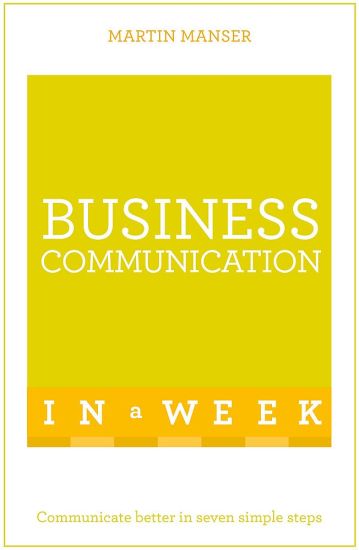
Business Communication In A Week

Business Communication In A Week

Martin Manser

Teach Yourself
2016
pokkari
Communication at work just got easierWe live in an age when the number of ways in which we communicate in business is constantly increasing. Years ago, we simply had face-to-face communication, phone and letter. Now we also have more, including email, websites, blogs... and yet, if we are honest, alongside this increase in the waysin which we communicate has come a decrease in the level of effective communication.This book is full of positive guidelines to help you communicate more effectively. You may not be able to change the way your company or organization works, but you can change the way in which you work.Whether you choose to read it in a week or in a single sitting, Business Communication In A Week is your fastest route to success:- Sunday: Know your aims. Who are you writing to/for? What is your message? What response do you want those you are communicating with to make?- Monday: Listen carefully as colleagues explain the challenges they are facing. When you listen, you show you value your colleagues as individuals.- Tuesday: Write clearly. Think creatively about what you want to express, organize your thoughts and then draft and edit your email or report.- Wednesday: Organize better meetings. The key to a successful meeting lies in its preparation, especially why you are holding it, who needs to be present and what you will consider.- Thursday: Give successful presentations. Prepare well, knowing your audience and your key messages, backed up if necessary by useful visual aids.- Friday: Build strong working relationships. Good working relationships are the glue that holds an organization together. How can you cultivate stronger working relationships?- Saturday: Engage effectively online by building - and maintaining - an accessible website and networking by means of social media.
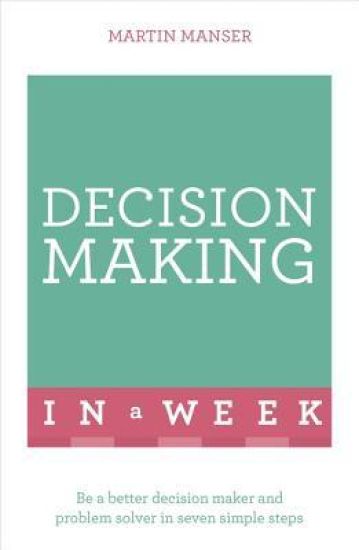
Decision Making In A Week

Decision Making In A Week

Martin Manser

Teach Yourself
2016
pokkari
Making decisions just got easierYou make decisions all the time in everyday life: what to eat, what clothes to wear, with whom you spend your leisure time and how you spend your money. In your business life you are also constantly making decisions: the different activities you - and your business colleagues - need to carry out in order to arrive at a sound decision. At work, you are deciding how to spend your time, which emails to answer, what subjects to raise at a meeting, when is the best time for your company to launch a new product, what companies you should invest in, what you are not willing to compromise on in negotiations, what policies to develop and how best to market your products and services. Some of these decisions may have already been made for you by other colleagues, usually those above you in your company or organization, and your task is merely to implement them. In other matters, however, you can exercise some control over the actual decision-making process.Each of the seven chapters in Decision Making In A Week covers a different aspect of the decision-making process:- Sunday: Know your aims clearly. What are you actually making a decision about?- Monday: Collect relevant information. Consider all the relevant factors as you gather the information you need.- Tuesday: Identify different options. Widen your thinking, challenge assumptions and consider creative solutions.- Wednesday: Work effectively as a team. Make decisions as a group so that colleagues will feel motivated to implement the decision.- Thursday: Evaluate different options. Set objective criteria against which you can examine the various options you have identified.- Friday: Make an informed decision and implement it, communicating it well to all the relevant parties.- Saturday: Review the decision carefully, evaluating the whole decision-making process, noting what went well and learning from mistakes.
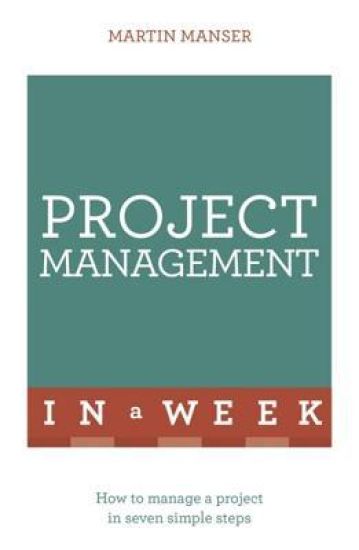
Project Management In A Week

Project Management In A Week

Martin Manser

Teach Yourself
2016
pokkari
Managing projects just got easierThis book will help you come to grips with the basics of project management in a week. By the end of the week you will know your way through the process more clearly. For a start, you will have to consult your end users to work out their precise requirements. You will then need to work out the best way to deliver the required outputs, consider the size of the team you will need to meet those requirements and prepare a schedule for the project. Most importantly, you will need to firm up costs, work out a budget and develop monitoring procedures to keep to the agreed costs. You will learn tips for communicating well, especially when dealing with unexpected problems that may arise.Each day of the week covers a different area and the material is structured for ease of reference. An introduction gives you a 'heads-up' as to what the day is about. The main material then explains the key lessons to be learned. Important principles are clarified and backed up by case studies, quotations and tables. Each day concludes with a summary, next steps and multiple-choice questions, to reinforce the learning points.Sunday: Think clearly. Lay firm foundations for your project as you clarify and set parameters for the project.Monday: Plan your project carefully. Begin to make detailed arrangements for the various stages of the project.Tuesday: Cost your project wisely in the planning stage and ensure that you have rigorous controls in place to monitor costs and quality as you implement the project.Wednesday: Implement your project successfully. After all your planning and preparation, you are now ready to put the project into practice.Thursday: Communicate effectively. Good communication with all the colleagues involved in your project is vital to ensure that the team works successfully.Friday: Deal with change constructively. Here we look at why some projects go off track and how to manage changes.Saturday: Conclude and evaluate your project positively. How do you complete all the final stages of your project? What lessons can you learn as you evaluate the success of your project?
Children's Dictionary

Children's Dictionary

Martin Manser

Skyhorse Publishing
2018
sidottu
Here’s a handy guide for young children and students to help with their first steps through the English language. This dictionary serves as a helpful tool for all young learners, and contains more than three thousand words, pictures, and definitions to create a comprehensive reference.An easy-to-understand glossary, it explains meanings and functions of words that children are likely to come across in their daily interactions with the world around them. With its vivid, colorful pictures, the dictionary will also prove visually appealing to readers.
Meetings

Meetings

Martin Manser

William Collins
2020
nidottu
The meetings secrets that experts and top professionals use. Get results fast with this quick, easy guide to the fundamentals of business meetings. Includes: • Why have meetings? • Prepare well for meetings • Chairing a meeting • Taking minutes • Giving a presentation • Taking part in a meeting • After the meeting