Kirjojen hintavertailu. Mukana 11 342 296 kirjaa ja 12 kauppaa.

Kirjahaku

Etsi kirjoja tekijän nimen, kirjan nimen tai ISBN:n perusteella.

32 kirjaa tekijältä Martin Mosebach

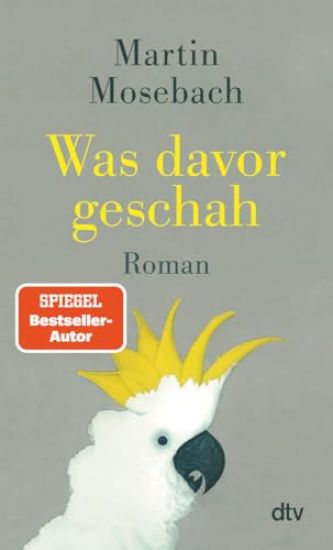
What Was Before

What Was Before

Martin Mosebach

Seagull Books London Ltd
2019
pokkari
Martin Mosebach’s novel What Was Before opens with a young couple enjoying a moment of carefree intimacy. Then the young woman, turning slightly more serious, asks her lover that fateful question, one that sounds so innocent but carries toxic seeds of jealousy: What was your life like before you met me? The answer grows into an entire book, an elaborate house of cards, filled with intrigue, sex, betrayal, exotic birds, and far-flung locations. Set against the backdrop of Frankfurt’s affluent suburbs, this elliptical tale of coincidence and necessity unfolds through a series of masterly constructed vignettes, which gradually come together to form a scintillating portrait of the funny, tender, and destructive guises that love between two people can assume and the effect it has on everyone around them. Hailed in Germany as the first great social novel of the twenty-first century, What Was Before is an Elective Affinities for our time.
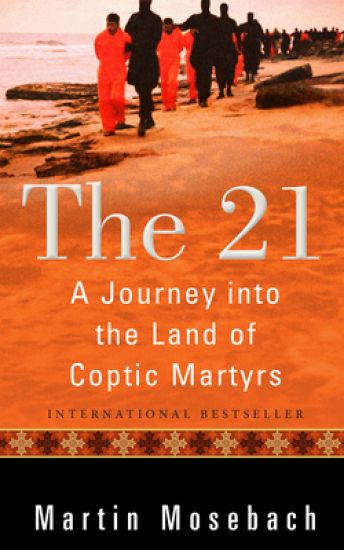
The 21

The 21

Martin Mosebach

Plough Publishing House
2020
pokkari
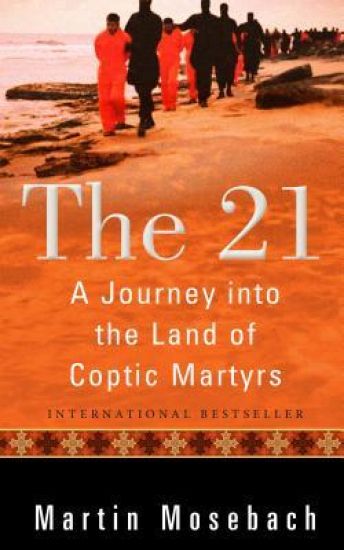
Behind a gruesome ISIS beheading video lies the untold story of the men in orange and the faith community that formed these unlikely modern-day saints and heroes. In a carefully choreographed propaganda video released in February 2015, ISIS militants behead twenty-one orange-clad Christian men on a Libyan beach. In the West, daily reports of new atrocities may have displaced the memory of this particularly vile event. But not in the world from which the murdered came. All but one were young Coptic Christian migrant workers from Egypt. Acclaimed literary writer Martin Mosebach traveled to the Egyptian village of El-Aour to meet their families and better understand the faith and culture that shaped such conviction. He finds himself welcomed into simple concrete homes through which swallows dart. Portraits of Jesus and Mary hang on the walls along with roughhewn shrines to now-famous loved ones. Mosebach is amazed time and again as, surrounded by children and goats, the bereaved replay the cruel propaganda video on an iPad. There is never any talk of revenge, but only the pride of having a martyr in the family, a saint in heaven. “The 21” appear on icons crowned like kings, celebrated even as their community grieves. A skeptical Westerner, Mosebach finds himself a stranger in this world in which everything is the reflection or fulfillment of biblical events, and facing persecution with courage is part of daily life. In twenty-one symbolic chapters, each preceded by a picture, Mosebach offers a travelogue of his encounter with a foreign culture and a church that has preserved the faith and liturgy of early Christianity – the “Church of the Martyrs.” As a religious minority in Muslim Egypt, the Copts find themselves caught in a clash of civilizations. This book, then, is also an account of the spiritual life of an Arab country stretched between extremism and pluralism, between a rich biblical past and the shopping centers of New Cairo.
The 21

The 21

Martin Mosebach

Plough Publishing House
2019
sidottu
Behind a gruesome ISIS beheading video lies the untold story of the men in orange and the faith community that formed these unlikely modern-day saints and heroes.In a carefully choreographed propaganda video released in February 2015, ISIS militants behead twenty-one orange-clad Christian men on a Libyan beach.In the West, daily reports of new atrocities may have displaced the memory of this particularly vile event. But not in the world from which the murdered came. All but one were young Coptic Christian migrant workers from Egypt. Acclaimed literary writer Martin Mosebach traveled to the Egyptian village of El-Aour to meet their families and better understand the faith and culture that shaped such conviction.He finds himself welcomed into simple concrete homes through which swallows dart. Portraits of Jesus and Mary hang on the walls along with roughhewn shrines to now-famous loved ones. Mosebach is amazed time and again as, surrounded by children and goats, the bereaved replay the cruel propaganda video on an iPad. There is never any talk of revenge, but only the pride of having a martyr in the family, a saint in heaven. “The 21” appear on icons crowned like kings, celebrated even as their community grieves. A skeptical Westerner, Mosebach finds himself a stranger in this world in which everything is the reflection or fulfillment of biblical events, and facing persecution with courage is part of daily life.In twenty-one symbolic chapters, each preceded by a picture, Mosebach offers a travelogue of his encounter with a foreign culture and a church that has preserved the faith and liturgy of early Christianity – the “Church of the Martyrs.” As a religious minority in Muslim Egypt, the Copts find themselves caught in a clash of civilizations. This book, then, is also an account of the spiritual life of an Arab country stretched between extremism and pluralism, between a rich biblical past and the shopping centers of New Cairo.
The Latin Mass and the Intellectuals

The Latin Mass and the Intellectuals

Martin Mosebach

Arouca Press
2023
pokkari
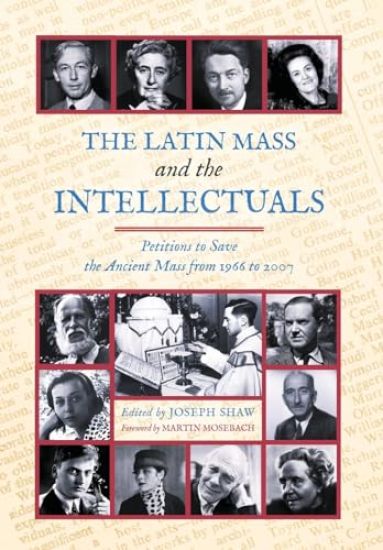
With contributions from Leo Darroch, Fr. Gabriel D az-Patri, Philippe Maxence, Sebastian Morello, Matthew Schellhorn, and Erik TonningWhat do Evelyn Waugh, Lanzo Del Vasto, Nancy Mitford, F.R. Leavis, Agatha Christi, Yehudi Menuhin, Ren Girard, and Franco Zefferelli have in common? Along with scores of others-artists, musicians, scholars, writers, actors, politicians, and business people-they signed petitions to save the Catholic Church's ancient Latin liturgy, between 1966 and 2007. This is the story of how so many men and women of culture, Catholic or not, came to the defence of the world's greatest monument of the human spirit-the immemorial Latin Mass-and of the music, art, and spiritual tradition which it comprises and inspires. As the 1971 petition stated, "Educated people are in the vanguard where recognition of the value of tradition is concerned, and are the first to raise the alarm when it is threatened.... They wish to call to the attention of the Holy See, the appalling responsibility it would incur in the history of the human spirit were it to refuse to allow the Traditional Mass to survive." Numerous petitions signers were not Catholics, "which only makes their testimony more impressive," as Martin Mosebach notes in the foreword. "For their participation in this great action proved how deeply the ritual of the Mass of the Roman Church had become rooted in the general consciousness." Drawing on rarely-seen historical documents and new research, editor Joseph Shaw weaves together a compelling account of the petitions' genesis, and the formation of the movement to preserve the Traditional Mass.
The Latin Mass and the Intellectuals

The Latin Mass and the Intellectuals

Martin Mosebach

Arouca Press
2023
sidottu
With contributions from Leo Darroch, Fr. Gabriel D az-Patri, Philippe Maxence, Sebastian Morello, Matthew Schellhorn, and Erik TonningWhat do Evelyn Waugh, Lanzo Del Vasto, Nancy Mitford, F.R. Leavis, Agatha Christi, Yehudi Menuhin, Ren Girard, and Franco Zefferelli have in common? Along with scores of others-artists, musicians, scholars, writers, actors, politicians, and business people-they signed petitions to save the Catholic Church's ancient Latin liturgy, between 1966 and 2007. This is the story of how so many men and women of culture, Catholic or not, came to the defence of the world's greatest monument of the human spirit-the immemorial Latin Mass-and of the music, art, and spiritual tradition which it comprises and inspires. As the 1971 petition stated, "Educated people are in the vanguard where recognition of the value of tradition is concerned, and are the first to raise the alarm when it is threatened.... They wish to call to the attention of the Holy See, the appalling responsibility it would incur in the history of the human spirit were it to refuse to allow the Traditional Mass to survive." Numerous petitions signers were not Catholics, "which only makes their testimony more impressive," as Martin Mosebach notes in the foreword. "For their participation in this great action proved how deeply the ritual of the Mass of the Roman Church had become rooted in the general consciousness." Drawing on rarely-seen historical documents and new research, editor Joseph Shaw weaves together a compelling account of the petitions' genesis, and the formation of the movement to preserve the Traditional Mass.
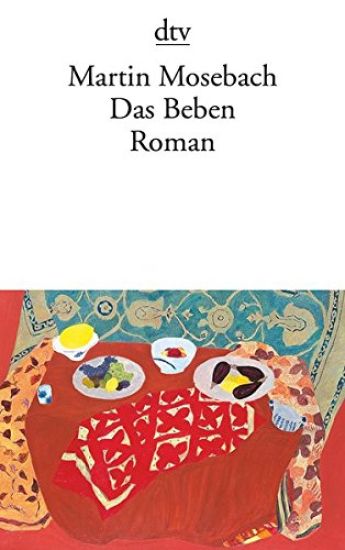
Das Beben

Das Beben

Martin Mosebach

dtv Verlagsgesellschaft
2007
pokkari
Der Aufzug führt unmittelbar in den siebten Stock. Als sich seine Schiebetür sich öffnet, steht der Erzähler im gleißenden Licht einer modernen Architektenwohnung. Doch was ihm noch mehr Eindruck macht als der berühmte Mann, für den er arbeiten soll, ist dessen Tochter Manon. Er verliebt sich unsterblich, die Geliebte aber ist ihm nicht treu. So entschließt er sich zur Flucht und nimmt den Auftrag an, einen indischen Königspalast in ein modernes Hotel umzubauen. Manon aber folgt ihm ...
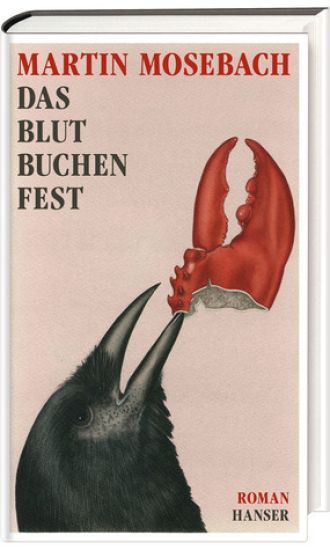
Das Blutbuchenfest

Das Blutbuchenfest

Martin Mosebach

Carl Hanser Verlag
2014
sidottu
Mitten in der Stadt, im Garten unter der blutroten Buche, organisiert ein windiger Geschäftemacher ein teures Fest. Das ist der Auslöser für erotische Verwicklungen, Liebe, Betrug und Eifersucht. Der Erzähler, ein verbummelter Kunsthistoriker, verliebt sich in die zerbrechliche Winnie. Marusha, eine schillernde Figur, dient gleich mehreren Herren als Geliebte. Hochstapler treffen auf Kreative und Verliebte auf Verlassene. Bei allen aber putzt Ivana aus Bosnien, die ihren Kundenstamm energisch zusammenhält und auch auf dem Fest für Ordnung sorgen soll. Doch während die Kunden feiern, beginnt auf dem Balkan der Krieg. Martin Mosebach überrascht mit einem neuartigen Ton, wechselnd zwischen Komik und Härte, Ironie und Trauer.