Kirjojen hintavertailu. Mukana 11 244 527 kirjaa ja 12 kauppaa.

Kirjahaku

Etsi kirjoja tekijän nimen, kirjan nimen tai ISBN:n perusteella.

6 kirjaa tekijältä Martin P. Wattenberg

Parties Without Partisans

Parties Without Partisans

Martin P. Wattenberg

Oxford University Press
2002
nidottu
If democracy without political parties is unthinkable, what would happen if the role of political parties if the democratic process is weakened? The ongoing debate about the vitality of political parties is also a debate about the vitality of representative democracy. Leading scholars in the field of party research assess the evidence for partisan decline or adaptation for the OECD nations in this book. It documents the broadscale erosion of the public's partisan identities in virtually all advanced industrial democracies. Partisan dealignment is diminishing involvement in electoral politics, and for those who participate it leads to more volatility in their voting choices, an openness to new political appeals, and less predictablity in their party preferences. Political parties have adapted to partisan dealignment by strengthening their internal organizational structures and partially isolating themselves from the ebbs and flows of electoral politics. Centralized, professionalized parties with short time horizons have replaced the ideologically-driven mass parties of the past. This study also examines the role of parties within government, and finds that parties have retained their traditional roles in structuring legislative action and the function of government-further evidence that party organizations are insulating themselves from the changes transforming democratic publics. Parties without Partisans is the most comprehensive cross-national study of parties in advanced industrial democracies in all of their forms -- in electoral politics, as organizations, and in government. Its findings chart both how representative democracy has been transformed in the later half of the 20th Century, as well as what the new style of democratic politics is likely to look like in the 21st Century.

Is Voting for Young People?

Is Voting for Young People?

Martin P. Wattenberg

Routledge
2020
sidottu
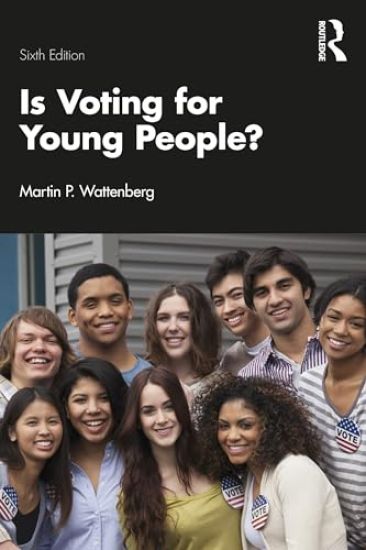
In 2016, Hillary Clinton managed to win the Democratic nomination despite losing young voters to Bernie Sanders by a margin of 73 to 26 percent. The fact that senior citizens were four times more likely to vote in the primaries than young people enabled her to survive her lack of youth appeal. But in the general election, Clinton’s problems with young people turned into her Achilles heel. Young people failed to come out to vote as much as she needed, or to support her in sufficient numbers when they did vote. What will happen in 2020, another history-making election? Already in late 2019, journalists were referring to the generation gap as "the most important divide among Democratic voters."Is Voting for Young People? explores the reasons why young people are less likely to follow politics and vote in the United States (as well as in many other established democracies), no matter who the candidates are, or what the issues may be. This brief, accessible, and provocative book suggests ways of changing that.New to the Fifth Edition For the first time since its original 2006 publication, the entire text has been updated with the most recent available data and analysis. A new chapter has been added—Young People and Politics in the Trump Era. New chapter-opening vignettes illustrate one of the key points in each chapter.
Where Have All the Voters Gone?

Where Have All the Voters Gone?

Martin P. Wattenberg

Harvard University Press
2002
nidottu
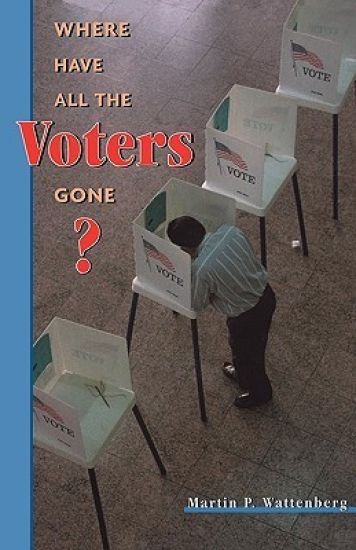
As the confusion over the ballots in Florida in 2000 demonstrated, American elections are complex and anything but user-friendly. This phenomenon is by no means new, but with the weakening of political parties in recent decades and the rise of candidate-centered politics, the high level of complexity has become ever more difficult for many citizens to navigate. Thus the combination of complex elections and the steady decline of the party system has led to a decline in voter turnout. In this timely book, Martin Wattenberg confronts the question of what low participation rates mean for democracy. At the individual level, turnout decline has been highest among the types of people who most need to have electoral decisions simplified for them through a strong party system--those with the least education, political knowledge, and life experience. As Wattenberg shows, rather than lamenting how many Americans fail to exercise their democratic rights, we should be impressed with how many arrive at the polls in spite of a political system that asks more of a typical person than is reasonable. Meanwhile, we must find ways to make the American electoral process more user-friendly.
The Decline of American Political Parties, 1952-1996

The Decline of American Political Parties, 1952-1996

Martin P. Wattenberg

Harvard University Press
1998
nidottu
"The major theme of Chapter 12, new to this edition, is the missed opportunities for the parties in the 1996 elections. The year started with a highly visible confrontation over the budget that could have revitalized the party coalitions if the issues had been carried over to the election. However, the candidate-centered campaign of 1996 ultimately did little to resolve these issues or to reinvigorate partisanship in the electorate. In spite of the opportunities for getting new voters to the polls created by the Motor Voter Act, voter turnout in 1996 was the lowest since 1924. Turning out the vote is one of the most crucial functions of political parties, and their inability to mobalize more than half of the eligible electorate strongly indicates their future decline in importance to voters. Until citizens support the parties more by showing up to cast votes for their candidates, the decline of American political parties must be considered to be an ongoing phenomenon."--From the preface
Is Voting for Young People?

Is Voting for Young People?

Martin P. Wattenberg

TAYLOR FRANCIS LTD
2024
nidottu
Is Voting for Young People? explores the reasons why young people are less likely to follow politics and vote in the United States and other established democracies, no matter who the candidates are, or what the issues may be.This brief, accessible, and provocative book suggests ways of changing that. Fully updated to include statistics and analysis from the 2020 and 2022 US elections, this book argues that politics and voting have increasingly become the province of the elderly, with a growing rift between politicians and young adults that weakens democracy. Employing a wealth of cross-national data, Martin P. Wattenberg shows how changes in media consumption, neglect from politicians, and changing attitudes towards civic duty have created a generation gap in voter turnout and ceded important decisions on youth concerns to those who have different values and interests.Illustrating the critical importance of engaging young voters, this book is an important read for students of democracy, political participation, elections, and voter behavior.
Is Voting for Young People?

Is Voting for Young People?

Martin P. Wattenberg

TAYLOR FRANCIS LTD
2024
sidottu
Is Voting for Young People? explores the reasons why young people are less likely to follow politics and vote in the United States and other established democracies, no matter who the candidates are, or what the issues may be.This brief, accessible, and provocative book suggests ways of changing that. Fully updated to include statistics and analysis from the 2020 and 2022 US elections, this book argues that politics and voting have increasingly become the province of the elderly, with a growing rift between politicians and young adults that weakens democracy. Employing a wealth of cross-national data, Martin P. Wattenberg shows how changes in media consumption, neglect from politicians, and changing attitudes towards civic duty have created a generation gap in voter turnout and ceded important decisions on youth concerns to those who have different values and interests.Illustrating the critical importance of engaging young voters, this book is an important read for students of democracy, political participation, elections, and voter behavior.