Kirjojen hintavertailu. Mukana 11 244 527 kirjaa ja 12 kauppaa.

Kirjahaku

Etsi kirjoja tekijän nimen, kirjan nimen tai ISBN:n perusteella.

11 kirjaa tekijältä Martin Price

Mountains

Mountains

Martin Price

Oxford University Press
2015
nidottu
Mountains cover a quarter of the Earth's land surface and are home to about 12 percent of the global population. They are the sources of all the world's major rivers, affect regional weather patterns, provide centres of biological and cultural diversity, hold deposits of minerals, and provide both active and contemplative recreation. Yet mountains are also significantly affected by climate change; as melting and retreating glaciers show. Given the manifold goods and services which mountains provide to the world, such changes are of global importance. In this Very Short Introduction, Martin Price outlines why mountains matter at the global level, and addresses the existing and likely impacts of climate change on mountain, hydrological and ecological systems. Considering the risks associated with the increasing frequency of extreme events and 'natural hazards' caused by climate change, he discusses the implications for both mountain societies and wider populations, and concludes by emphasizing the need for greater cooperation in order to adapt to climate change in our increasingly globalized world. ABOUT THE SERIES: The Very Short Introductions series from Oxford University Press contains hundreds of titles in almost every subject area. These pocket-sized books are the perfect way to get ahead in a new subject quickly. Our expert authors combine facts, analysis, perspective, new ideas, and enthusiasm to make interesting and challenging topics highly readable.
Forms of Life

Forms of Life

Martin Price

Yale University Press
2011
pokkari
The novel contains imagined lives that achieve a kind of meaning and intensity our own lives do not. Out of the novelist’s moral imagination—the breadth and depth of his awareness of human motivations, tensions, and complexities—emerge fictional persons through whom we learn to read ourselves. This eloquent book, exploring fictional lives in crucial moments of choice and change, stresses both their difference from and their deep connections with life. Martin Price writes here about ways in which character has been conceived and presented in the novels of the nineteenth and early twentieth centuries. Beginning with chapters that cogently argue the artistic value of character, Price then deals with the different forms character has taken in individual novels. His first discussions center on authors—Jane Austen, Stendhal, Charles Dickens, George Eliot, and Leo Tolstoy—who define individuals by their adherence or opposition to social norms. The next chapters deal with novelists for whom the moral world is largely internalized. The characters of Henry James, Joseph Conrad, D.H. Lawrence, and E.M. Forster live in society and act upon it, but the authors are particularly concerned with the confusions, terrors, and heroism that lie within consciousness. The last chapter uses novels about the artist by James Joyce, Virginia Woolf, and Thomas Mann in order to apprehend the process by which experience is transformed into art. Avoiding both formalistic and moralistic extremes, this new book by a distinguished critic helps us recover a fuller sense of literary form and the forms of life from which it emerges.
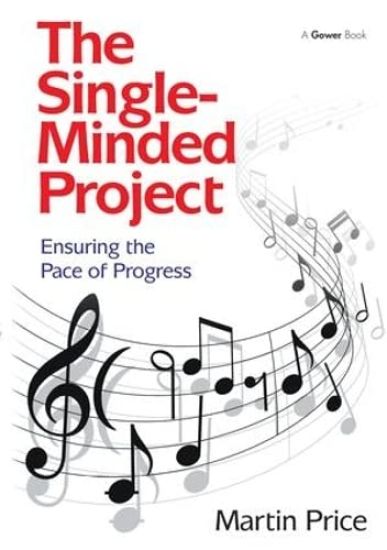
The Single-Minded Project

The Single-Minded Project

Martin Price

TAYLOR FRANCIS LTD
2024
nidottu
The behaviour of people and their organisation are the primary drivers of a project?€?s pace of progress. Methodology, tools and techniques are vital but subordinate to human endeavour; if only because their selection, deployment and application entirely depend on the abilities of the project players and their organisation. Performance ultimately rests on human and organisational behaviour: expressed by the players?€? experience, professional ability, resolve, dialogue and collaboration. Fresh approaches and methods help practitioners to address this reality productively. This book is written under nine headings: collaboration; able people; strength; connections; rigour; pace; persistence; adaptation; and maturity. The Single-Minded Project offers a new and convincing appreciation of project management that will harness players and their organisation. It recognises that at its heart, the management and leadership of a project regime relies on the choices, behaviours and decisions of its players and the organisation?€?s freedom of action. It addresses the urgency of the project (the need for swiftness), coupled with the kind and degree of diligence (the need for rigour in the choice and management of method): referring to its Pace of Progress. The success of a project very much depends on the pace at which it is conducted to then deliver value. Projects find themselves in territory where methodology, tools and techniques are of little help. The Single-Minded Project fills that gap and more.
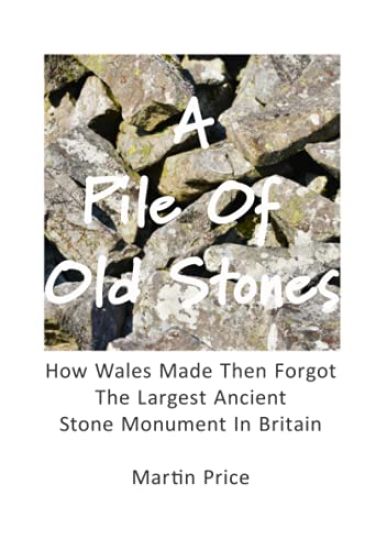
A Pile Of Old Stones

A Pile Of Old Stones

Martin Price

Lulu.com
2021
pokkari
Until the BBC dedicated an hour long programme to it in early 2021, few knew that some stones on a peaty moorland in Pembrokeshire were once the largest stone circle in Britain, and they were the exact stones transported to create the 'original' Stonehenge. Similarly, until recently a peaty moorland site in Carmarthenshire had been designated as merely one of nearly 700 Iron Age forts in Wales. Now research has concluded that it is not only several thousand years older, but was once a major Neolithic religious centre, and, indeed, is the largest ancient stone monument in Britain. This book compellingly makes the case in a heavily researched, but lightly written, style that encourages the reader to draw their own conclusions.
The Single-Minded Project

The Single-Minded Project

Martin Price

Routledge
2014
sidottu
The behaviour of people and their organisation are the primary drivers of a project’s pace of progress. Methodology, tools and techniques are vital but subordinate to human endeavour; if only because their selection, deployment and application entirely depend on the abilities of the project players and their organisation. Performance ultimately rests on human and organisational behaviour: expressed by the players’ experience, professional ability, resolve, dialogue and collaboration. Fresh approaches and methods help practitioners to address this reality productively. This book is written under nine headings: collaboration; able people; strength; connections; rigour; pace; persistence; adaptation; and maturity. The Single-Minded Project offers a new and convincing appreciation of project management that will harness players and their organisation. It recognises that at its heart, the management and leadership of a project regime relies on the choices, behaviours and decisions of its players and the organisation’s freedom of action. It addresses the urgency of the project (the need for swiftness), coupled with the kind and degree of diligence (the need for rigour in the choice and management of method): referring to its Pace of Progress. The success of a project very much depends on the pace at which it is conducted to then deliver value. Projects find themselves in territory where methodology, tools and techniques are of little help. The Single-Minded Project fills that gap and more.