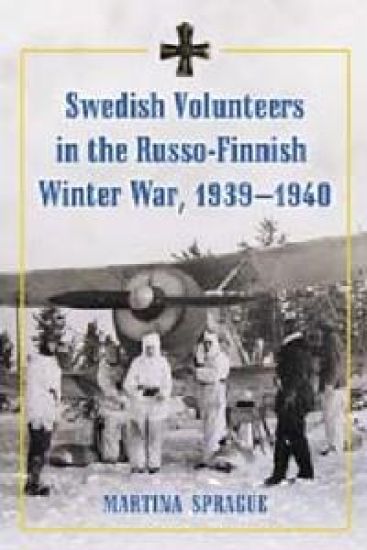
Sandwiched between Nazi Germany and the "Russian Bear," Sweden walked a diplomatic tightrope on if and how it should support Finland during the Russo-Finnish Winter War. Social and political forces motivated the Swedish leadership to promote neutrality and avoid official military engagement, while at the same time the Swedish Volunteer Corps comprised the largest volunteer combat force (more than 8,200 strong) in any modern war. This book discusses the political background of the 1939-1940 Winter War; setbacks the volunteers suffered due to weather and terrain; and the ever-present fear that war would come to the Scandinavian Peninsula.
Become a Better Martial Artist by Applying Lessons from the World's Greatest Military Strategists from Sun Tzu to Von ClausewitzLessons in the Art of War investigates the theories and philosophies of the most prominent military thinkers in Asia and Europe and examines the combat roots of a variety of fighting styles from traditional Chinese, Japanese, and Korean martial arts to the fighting arts of the ancient Greeks and modern Israelis. It also demonstrates how the martial arts, whether Asian or Western in origin, were historically about brutal fighting, often to the death, and how ancient attitudes and beliefs can be adapted for success in today's MMA steel cage, judo or karate tournament as they were in ancient armies.Including an introduction to Asian and Western military thought, chapters include:The Nature and Conduct of CombatWhat is Combat?Preparing for BattleElements of Tactics and StrategyImposing Your WillDestroying the Enemy ForceStrength of the Defensive PositionFailureMoral Quality of CourageSecuring Victory
Martial arts, combat, fighting, whatever you call it, goes hand-in-hand with courage, toughness, dedication, and focus. What sets the formidable fighter apart from other martial artists is that he or she approaches the training with the intent to develop an edge that allows him to dominate the opponent physically and psychologically. The goal of the formidable fighter is to retain the initiative by interfering with the opponent's ability to counter an attack or defensive technique.The greater physical shape you are in, the less likely you are to sustain an injury, because your body is better prepared to handle the stress of combat. Superior strength and conditioning give you an edge that can act as an equalizer against a bigger opponent. Powerful punches and grips are the product of proper training and conditioning. Good training also makes allowances for failures and prepares you to win.On the field of battle, you command the fight by force, not finesse. The formidable fighter knows how to approach a scenario with the appropriate mindset that allows him or her to act rather than react and beat the opponent to the punch. Know how to play the cards you are dealt. Martial arts techniques are not complicated; it is the surrounding situations and how we think about them that complicate how we use them. Formidable Fighter: The Complete Series is the print version of the full series of 14 e-books, and includes also a bonus section; a quick reference to all concepts discussed in the text.
The colonists arrived in America anticipating conflict; they arrived with the prior knowledge that they would have to fight and defend themselves. As they pushed the frontier, they were willing to resort to almost any method of warfare, no matter how ruthless. They did not engage in large state-sponsored wars for the purpose of controlling enemy governments, but fought for survival in a new land. Violence thus became an essential part of early American history. Although violence is an integral part of all types of warfare, there is value in studying American military history. By comprehending the past, we can at least begin to comprehend the development of our nation's military forces on the domestic and international level.There are many prisms through which one can view warfare in the pre-Civil War era. Rather than examining specific battles or simply giving the reader a rundown of events for memorization, this book focuses on the underlying military, social, and political factors that shaped early American warfare and drove the development of our nation's military tradition. Discussions include the following topics:1. The Development of Warfare in North America, and Colonial Struggles for North American Domination2. The Military Mores of American Colonial Forces, British Regulars, and Native Americans3. Political and Ideological Perspectives on the Revolutionary War4. A Hessian Soldier's View of the Revolutionary War5. How Pragmatic Was American Warfare in the Revolutionary War?6. The Transformation of the Navy 7. Shaping of National Interest after the Revolutionary War8. America in the Mexican-American War9. The Foundation for Overseas Commerce and Territorial Expansion10. Topics for Further Study and DebateThe book is suitable for history interested readers looking for thought provoking topics, but not having a lot of time; and for teachers preparing the class for critical thinking about historical events, and how they have come to affect current affairs. More books with focus on domestic and international military history will be forthcoming in this new series titled, A 59-Minute Perspective.
The Civil War is an enormously important event in our nation's history, and not just a fleeting disagreement about slavery between the northern and southern states. As such, it has impacted our country's political course into modern day. The results of the Civil War reinforced the motto, E pluribus unum (Out of many, one), and strengthened the notion that the United States is indeed united, despite its many states, and despite the fact that the North and South continue to maintain significant different political views. Although the Civil War ended slavery based on legal doctrine, the oppression of the former slaves did not end, and racism has continued through the Civil Rights era and continues to some extent today. The war also brought to light that military leaders may change their basic moral standards when a conflict proves difficult to win.There are many prisms through which one can view Civil War strategies, and one might naturally be tempted to draw many lessons from the Civil War. Rather than providing definite answers, this brief study aims at rousing additional interest and provoking critical thinking about what might have been the most important event in our nation's history. As such, it focuses on the underlying social and political factors that shaped the decision of the southern states to secede from the Union, and the Union's subsequent attempt to prevent their secession. Discussions include the following topics:1. Political Background of the Civil War2. Robert E. Lee's War Strategies3. Ulysses S. Grant's and William Tecumseh Sherman's War Strategies4. How Likely Was Victory for the Confederate States in the Early Years of the War?5. Other Factors That Influenced Union Victory and Confederate Loss6. Reshaping the Military in the Reconstruction Period7. Military Reforms in the Last Decades of the Nineteenth Century8. Topics for Further Study and DebateThe book is suitable for history interested readers looking for thought provoking topics, but not having a lot of time; and for teachers preparing the class for critical thinking about historical events, and how they have come to affect current affairs. More books with focus on domestic and international military history will be forthcoming in this new series titled, A 59-Minute Perspective.
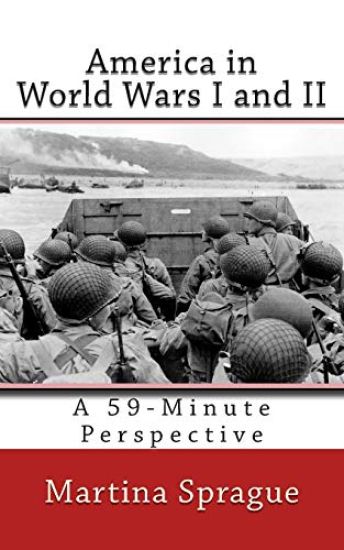
Never having participated in a conflict on the scale of World War I naturally taught America that it needed some adjustments to its military forces. When America entered the war, the Allies also minimized American achievements and viewed American troops as less prepared to meet the challenges of modern wars than the stalwart, disciplined, and well-trained French and British forces. In the interwar period, the United States realized that Japan was becoming a growing strategic problem. In case of war, the American war effort would have to be divided between Europe and Asia. What America might be best remembered for, however, are the strategic bombing campaigns which culminated in dropping the atomic bombs on Hiroshima and Nagasaki. After World War II, America focused on a strategy of deterrence and containment of communism, with a commitment to defeat totalitarian regimes, which it believed was essential for the economic growth of the Free World. There are many prisms through which one can view American participation in World Wars I and II. Rather than providing definite answers, this brief study aims at rousing additional interest and provoking critical thinking about how these large-scale wars shaped military policy and the future of the United States Armed Forces, including our nation's decision to go to war. Discussions include the following topics:1. America Enters World War I2. American Strategy and Tactics in the Great War3. Military Preparations in the Interwar Years4. Doctrinal Differences between the Military Branches5. America Enters World War II6. The Strategic Bombings of Japan and Germany7. Allied Victory and the End of World War II8. How America's Warfare Policies Changed after World War II9. Topics for Further Study and DebateThe book is suitable for history interested readers looking for thought provoking topics, but not having a lot of time; and for teachers preparing the class for critical thinking about historical events, and how they have come to affect current affairs. More books with focus on domestic and international military history will be forthcoming in this new series titled, A 59-Minute Perspective.
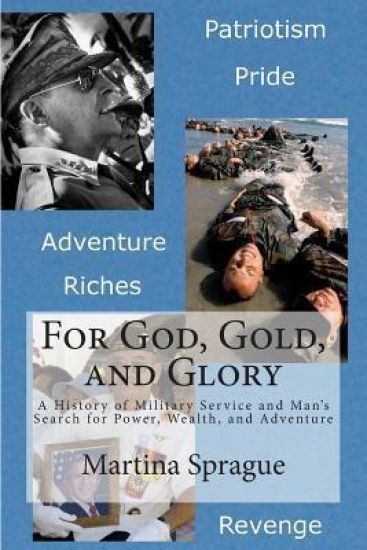
Not for nothing did Napoleon say, "Give me enough medals and crimson ribbon and I will conquer the world." Soldiers fight for a variety of reasons: a sense of patriotic duty, the lure of financial gain, or the desire for honor and glory. Some want a bit more than what life has to offer. Others feel that war is their destiny; they can see the writing on the wall and know they must be part of it.It has been said that wars are fought for God (and country), gold (power and wealth), and glory (honor and heroism). Beneath these identifiers are several subcategories that explain the reasons why governments send troops to war, and why men and increasingly more women voluntarily enlist in the armed forces and fight for their country (or for somebody else's). This book sheds light on those individuals who commit their lives to armed service for reasons related to patriotism, financial gain, adventure, and heroism. Although the focus is the armed forces of the United States and the staffing of the military since the birth of our nation, the recruitment practices of other countries are also explored from ancient to modern day to illustrate the continuity that runs through thousands of years of world history.In his classic, Seven Pillars of Wisdom: A Triumph, T. E. Lawrence says, "All men dream, but not equally. Those who dream by night in the dusty recesses of their minds wake in the day to find that it was vanity. But the dreamers of the day are dangerous men, for they may act their dream with open eyes, to make it possible." For God, Gold, and Glory: A History of Military Service and Man's Search for Power, Wealth, and Adventure is of interest to military and social historians, as well as armchair warriors dreaming of the glory that "mischance" prevented them from obtaining. The book comprises approximately 350 pages of text and 15 photographs and covers the following topics:1. Patriotism2. Family Tradition and Kinship Obligation3. Revenge, Social, and Political Pressures4. Poverty and Military Enlistment5. Financial and Material Incentives6. Mercenaries and Volunteers in Foreign Armies7. The Ennui of Everyday Life8. War and Recruitment Propaganda9. Once a Soldier, Always a Soldier10. Membership in an Elite Society11. Military Training as a Pleasant Pastime12. Growing Fond of War13. Ninety Percent Boredom and Ten Percent Action14. Desertion and Disillusion15. Finding the Holy GrailWar volunteering is an aspect of military history that has received surprisingly little academic attention. In 2007 at the University of T bingen's Heinrich Fabri Institute in Germany, scholars engaged in what is believed to have been the first ever international discussions on the subject of war volunteering in the nineteenth and twentieth century. Although this book by no means is conclusive, the hope is that it will provide a solid base upon which further research and study can be built.
The Gurkhas have been termed the only soldiers who can win their battles on their reputation alone. Weapons shape the character of the men who wield them and two upturned kukris meeting at the top, their naked blades crossing, serve as the identifying insignia of the Brigade of Gurkhas in the United Kingdom.The Gurkhas were brought to the world's attention in the nineteenth century, when the territory ruled by Britain's Honourable East India Company in Nepal experienced a number of boundary disputes and Gurkha raids. Mutual respect developed between the Gurkhas and the British, who viewed the Gurkhas as disciplined and capable fighters training under the motto, "It is better to die than to be a coward."In modern times the Gurkhas have served the British Crown in several campaigns worldwide, including both World Wars. As World War II ended Gurkhas saw active service mainly in the Far East, until Britain moved forward to defend the Falkland Islands following the Argentine occupation in the spring of 1982.This book examines the kukri knife as a combat weapon and relates it to the history of the Gurkha soldier. It starts with a historical background of the Gurkhas, including an account of the campaigns in which they have fought. It then explores the origin and handling characteristics of the kukri and its combat applications. Next it discusses Gurkha recruitment into the British and Indian armies, followed by an examination of the status of Gurkhas as mercenary soldiers. The book summarizes with a discussion of the Gurkha reputation as the "bravest of the brave." The concluding remarks focus on the Gurkhas' so-called "inherent" fighting characteristics and the kukri knife as a symbol of status and skill.Knives, Swords, and Bayonets: A World History of Edged Weapon Warfare is a book series that examines the history of edged weapons in Europe, Asia, Africa, the Americas, and the Middle East and surrounding areas before gunpowder increased the distance between combatants. The book series takes a critical look at the relationship between the soldier, his weapon, and the social and political mores of the times. Each book examines the historical background and metallurgic science of the knife, sword, or bayonet respectively, and explores the handling characteristics and combat applications of each weapon. The individual books are excerpted from the previously published book, A History of Edged Weapon Warfare, also by Martina Sprague. Look for more books in this series in the near future.