Kirjojen hintavertailu. Mukana 11 699 587 kirjaa ja 12 kauppaa.

Kirjahaku

Etsi kirjoja tekijän nimen, kirjan nimen tai ISBN:n perusteella.

4 kirjaa tekijältä Mary Ann Bennett

Super Brains for Super Kids: A Super Parent's Research Based Resource

Super Brains for Super Kids: A Super Parent's Research Based Resource

Mary Ann Bennett

Createspace Independent Publishing Platform
2018
nidottu
This book is intended for every parent and teacher searching for reasons why their child/student might have struggles with learning. There are factors beyond the normal "laziness" label that you may not even be aware of. Our environment plays a very critical role in learning. Some call it epigenetics. Let this book allow you to expand your understanding of what factors can cause learning struggles and what you can do to help a struggling learner.
Super Brains for Super Kids: A Super Parent's Guide to Optimum Gut/Brain Health for their Child
This book is intended for every parent and teacher searching for reasons why their child/student might have struggles with learning. There are factors beyond the normal "laziness" label that you may not even be aware of. Our environment plays a very critical role in learning. Some call it epigenetics. Let this book allow you to expand your understanding of what factors can cause learning struggles and what you can do to help a struggling learner.
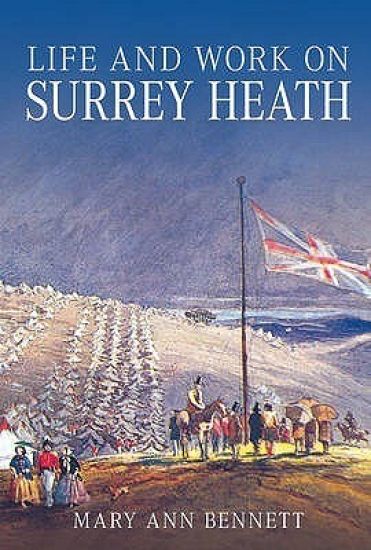
Life and Work on Surrey Heath

Life and Work on Surrey Heath

Mary Ann Bennett

Phillimore Co Ltd
2007
sidottu
The area known today as Surrey Heath, formed in 1974, is made up of the villages of Chobham, Bisley, Bagshot, Windlesham, Sunningdale, Lightwater, West End, Frimley, Frimley Green, Deepcut, Mytchett and Camberley. Historically, Chobham was the largest of the four original villages, together with its West End and northern settlements of Burrow Hill and Valley End; Windlesham was predominantly a farming community with a more commercial area in Bagshot; Frimley included South End, or Frimley Green, and the southernmost area, known then as Mitchet; while Bisley village was the smallest. Each settlement was an oasis of reasonably productive farmland surrounded by the heath which shaped the lives of generations of people who lived and worked here.The constraints and influences which the heath imposed had a major bearing on the way in which opportunities for much-needed additional work developed. The lack of a large river, the nature of the soil and, especially, the vast acreage of unproductive heathland created a region which was slow to develop economically, the low population numbers relying on a traditional way of life until enclosure of the heathland in the early 19th century brought the first changes. This book examines the period during which the use of the heathland harvest changed, from the time before the 19th century, when smallholders, weavers and potters were prominent, up to the post-enclosure arrival of the army and the nursery trade. It considers the businesses which flourished to meet the needs of those who travelled on the turnpike road, and their subsequent decline with the introduction of the railway, and also features the schools, institutions and large estates that came to the area to make use of the allotments of former heathland, along with the industry which grew up around the local fir plantations and the health benefits they brought.
Camberley: A History

Camberley: A History

Mary Ann Bennett

Phillimore Co Ltd
2009
sidottu
The town of Camberley was built on a grid laid out by an ex-Sandhurst gentleman cadet in 1860. This former heathland, part of the manor of Frimley, had been planted with fir trees after the Enclosure Act of 1801. These were harvested when Captain Charles Raleigh Knight laid out the 'new town' opposite the Staff College being built north of the London Road. The northern half of Frimley manor had been largely uninhabited, but the work of building and manning the Royal Military and Staff Colleges drew people to the area and provided it with opportunities to develop. Entrepreneurs erected a few dwellings before selling on but, with the bankruptcy of the first railway company, Camberley had an uncertain start. Men trained in the military colleges were attracted back to the town, however, and for a while it was known as 'Colonelstown;. Following the Second World War, land sold piecemeal by the Ministry of Defence was used to build estates for residents of the metropolitan boroughs of Surrey. Factories were built, town centre properties were requisitioned and a new shopping centre opened. With the arrival of the M3 new private estates were built on the outskirts of town.The Atrium, recently developed west of Park Street, has been built over the site of some of the earliest working-class houses erected by Captain Knight. This beautifully illustrated and informative narrative traces the development of Camberley from Mudd Town of 1851 to the present. It will be enjoyed by all those with an interest in Surrey history.