Kirjojen hintavertailu. Mukana 11 699 587 kirjaa ja 12 kauppaa.

Kirjahaku

Etsi kirjoja tekijän nimen, kirjan nimen tai ISBN:n perusteella.

3 kirjaa tekijältä Mary Anne Perkins

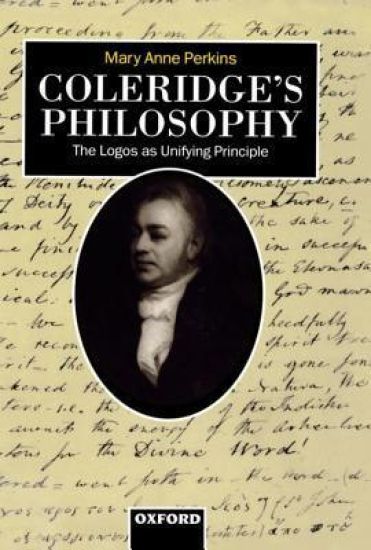
Coleridge's Philosophy

Coleridge's Philosophy

Mary Anne Perkins

Clarendon Press
1994
sidottu
Coleridge's status as a philosopher has often been questioned. `I am a poor poet in England,' he admitted, `but in America, I am a great philosopher.' J. S. Mill's assertion that `the time is yet far distant when, in the estimation of Coleridge, and of his influence upon the intellect of our time, anything like unanimity can be looked for' seems to have been justified. Mary Anne Perkins re-examines Coleridge's claim to have developed a `logosophic' system which attempted `to reduce all knowledges into harmony'. She pays particular attention to his later writings, some of which are still unpublished. She suggests that the accusations of plagiarism and of muddled, abstruse metaphysics which have been levelled at him may be challenged by a thorough reading of his work in which his unifying principle is revealed. She explores the various meanings for the term `Logos', a recurrent theme in every area of Coleridge's thought - philosophy, religion, natural science, history, political and social criticism, literary theory, and psychology. Coleridge was responding to the concerns of his own time, a revolutionary age in which increasing intellectual and moral fragmentation and confusion seemed to him to threaten both individuals and society. Drawing on the whole of Western intellectual history, he offered a ground for philosophy which was relational rather than mechanistic. He is one of those few thinkers whose work appears to become more interesting, his perceptions more acute, as the historical gulf widens. This book is a contribution to the reassessment that he deserves.
Nation and Word, 1770–1850

Nation and Word, 1770–1850

Mary Anne Perkins

Ashgate Publishing Limited
1999
sidottu
The emergence of the modern nation state in Europe and the accompanying rise in national consciousness led to a heightened awareness of the close relationship between language and national identity. In this book the author shows that this relationship was expressed through the themes and figures of a ’language’ of nationhood, drawn from a common European cultural heritage, particularly the Classical and Christian traditions. Despite its common roots, this language became the medium through which the diversity of national characters was expressed. The idea of the divine Word, for example, enabled the sacredness and power of national language to be celebrated. The identification of poet and prophet gave Romantic nationalists an authority to speak for and to the nation, and the theme of the Chosen People was often adopted to express the elect status of a writer’s own nation. In conclusion, it is shown that this language of nationhood remains a powerful force at the end of the twentieth century.
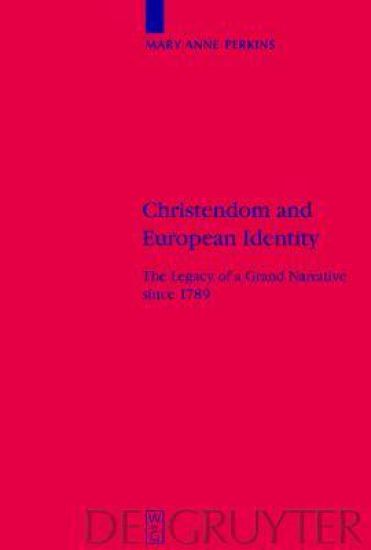
Christendom and European Identity

Christendom and European Identity

Mary Anne Perkins

De Gruyter
2004
sidottu
This book critically explores the idea of Europe since the French Revolution from the perspective of intellectual history. It traces the dominant and recurring theme of Europe-as-Christendom in discourse concerning the relationship of religion, politics and society, in historiography and hermeneutics, and in theories and constructions of identity and ‘otherness’. It examines the evolution of a grand narrative by which European elites have sought to define European and national identity. This narrative, the author argues, maintains the existence of common historical and intellectual roots, common values, culture and religion. The book explores its powerful legacy in the positive creation of a sense of European unity, the ways in which it has been exploited for ideological purposes, and its impact on non-Christian communities within Europe.