Kirjojen hintavertailu. Mukana 12 016 292 kirjaa ja 12 kauppaa.

Kirjahaku

Etsi kirjoja tekijän nimen, kirjan nimen tai ISBN:n perusteella.

50 kirjaa tekijältä Mary Beard

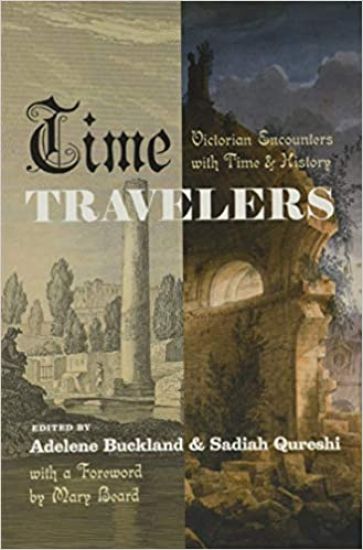
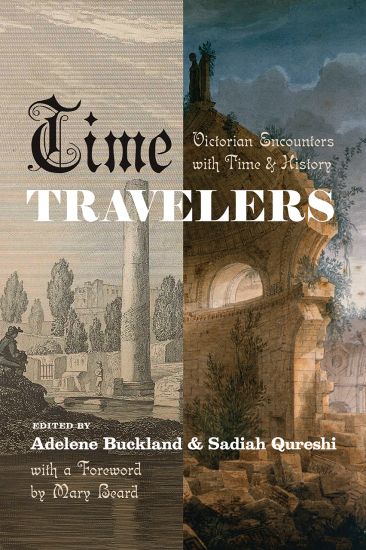
Time Travelers

Time Travelers

Mary Beard

University of Chicago Press
2020
sidottu
The Victorians, perhaps more than any Britons before them, were diggers and sifters of the past. Though they were not the first to be fascinated by history, the intensity and range of Victorian preoccupations with the past was unprecedented and of lasting importance. They paved the way for many of our modern disciplines, discovered the primeval monsters we now call the dinosaurs, and built many of Britain's most important national museums and galleries. To a large degree, they created the perceptual frameworks through which we continue to understand the past. Out of their discoveries, new histories emerged, giving rise to new debates, while seemingly well-known pasts were thrown into confusion by new tools and methods of scrutiny. If in the eighteenth century the study of the past had been the province of a handful of elites, new technologies and economic development in the nineteenth century meant that the past, in all its brilliant detail, was for the first time the property of the many, not the few. Time Travelers is a book about the myriad ways in which Victorians approached the past, offering a vivid new picture of the Victorian world and its historical obsessions.
Time Travelers

Time Travelers

Mary Beard

University of Chicago Press
2020
pokkari
The Victorians, perhaps more than any Britons before them, were diggers and sifters of the past. Though they were not the first to be fascinated by history, the intensity and range of Victorian preoccupations with the past was unprecedented and of lasting importance. They paved the way for many of our modern disciplines, discovered the primeval monsters we now call the dinosaurs, and built many of Britain's most important national museums and galleries. To a large degree, they created the perceptual frameworks through which we continue to understand the past. Out of their discoveries, new histories emerged, giving rise to new debates, while seemingly well-known pasts were thrown into confusion by new tools and methods of scrutiny. If in the eighteenth century the study of the past had been the province of a handful of elites, new technologies and economic development in the nineteenth century meant that the past, in all its brilliant detail, was for the first time the property of the many, not the few. Time Travelers is a book about the myriad ways in which Victorians approached the past, offering a vivid new picture of the Victorian world and its historical obsessions.
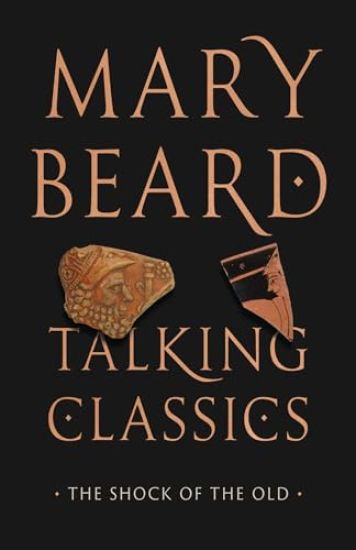
Talking Classics: The Shock of the Old

Talking Classics: The Shock of the Old

Mary Beard

University of Chicago Press
2026
sidottu
The incomparable Mary Beard is back, and she's talking all things classics. Why the ongoing fascination with the ancient world? This witty, approachable book asks why--for better or (sometimes) worse--antiquity continues to exert such a powerful hold on the contemporary imagination. Recalling a formative childhood encounter with a four-thousand-year-old piece of bread in a museum, Beard introduces the idea of thauma, or wonder, that kick-started a lifetime engaging with classics. It was not the canonical "greats" of ancient literature and art that initially drew her in, she confesses, but rather the more intimate, messy, and humdrum evidence of daily life in the remote past. Confronting the uses and abuses of symbols of the ancient world, Beard reminds us that the traditions and "masterpieces" of Greece and Rome have certainly been politicized, but they belong to neither the left nor the right. Happily, no one owns the past. She warns us not to let a sense of reverence or overfamiliarity dampen the "shock of the old," arguing that one of the most important things that classics teach us is how to grapple with complicated and controversial things. "The Greeks and Romans are long dead, they cannot answer back, and you can say what you like about them," she reminds readers. "The simple fact that classics belong to none of us can offer a safe space to argue about the most difficult debates we face now." Beard welcomes everyone into classics. "It is not compulsory to be excited by the ancient world," she writes. "But it can be a shame not to be." This charming, sharp, and readable book from one of the world's most entertaining classicists offers something for both new and established fans of classics, bringing new wonder and curiosity to even the most ancient of ideas.
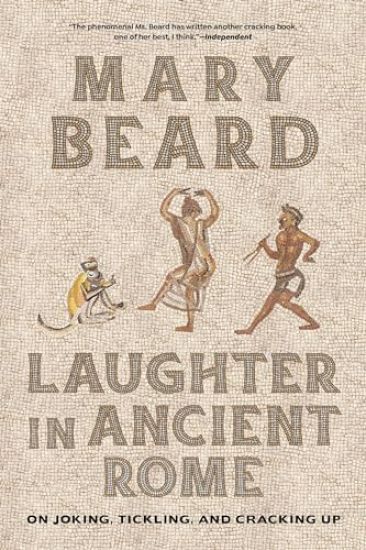
Laughter in Ancient Rome

Laughter in Ancient Rome

Mary Beard

University of California Press
2014
sidottu
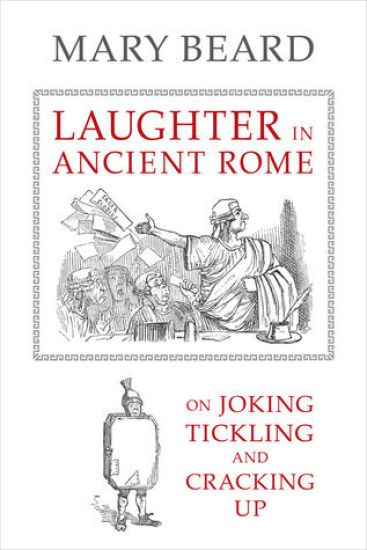
What made the Romans laugh? Was ancient Rome a carnival, filled with practical jokes and hearty chuckles? Or was it a carefully regulated culture in which the uncontrollable excess of laughter was a force to fear--a world of wit, irony, and knowing smiles? How did Romans make sense of laughter? What role did it play in the world of the law courts, the imperial palace, or the spectacles of the arena? Laughter in Ancient Rome explores one of the most intriguing, but also trickiest, of historical subjects. Drawing on a wide range of Roman writing--from essays on rhetoric to a surviving Roman joke book--Mary Beard tracks down the giggles, smirks, and guffaws of the ancient Romans themselves. From ancient "monkey business" to the role of a chuckle in a culture of tyranny, she explores Roman humor from the hilarious, to the momentous, to the surprising. But she also reflects on even bigger historical questions. What kind of history of laughter can we possibly tell? Can we ever really "get" the Romans' jokes?
Laughter in Ancient Rome

Laughter in Ancient Rome

Mary Beard

University of California Press
2015
pokkari
What made the Romans laugh? Was ancient Rome a carnival, filled with practical jokes and hearty chuckles? Or was it a carefully regulated culture in which the uncontrollable excess of laughter was a force to fear a world of wit, irony, and knowing smiles? How did Romans make sense of laughter? What role did it play in the world of the law courts, the imperial palace, or the spectacles of the arena? Laughter in Ancient Rome explores one of the most intriguing, but also trickiest, of historical subjects. Drawing on a wide range of Roman writing from essays on rhetoric to a surviving Roman joke book Mary Beard tracks down the giggles, smirks, and guffaws of the ancient Romans themselves. From ancient monkey business" to the role of a chuckle in a culture of tyranny, she explores Roman humor from the hilarious, to the momentous, to the surprising. But she also reflects on even bigger historical questions. What kind of history of laughter can we possibly tell? Can we ever really get" the Romans' jokes?
Laughter in Ancient Rome

Laughter in Ancient Rome

Mary Beard

University of California Press
2024
pokkari
"Superbly acute and unashamedly complex."—The Telegraph "Rich and provocative."—Times Literary Supplement "An engaging exploration."—The New Yorker"The phenomenal Ms. Beard has written another cracking book, one of her best."—The Independent What made the Romans laugh? Was ancient Rome a carnival, filled with practical jokes and hearty chuckles? Or was it a carefully regulated culture in which the uncontrollable excess of laughter was a force to fear—a world of wit, irony, and knowing smiles? How did Romans make sense of laughter? What role did it play in the world of the law courts, the imperial palace, or the spectacles of the arena?Laughter in Ancient Rome explores one of the most intriguing, but also trickiest, of historical subjects. Drawing on a wide range of Roman writing—from essays on rhetoric to a surviving Roman joke book—Mary Beard tracks down the giggles, smirks, and guffaws of the ancient Romans themselves. From ancient “monkey business” to the role of a chuckle in a culture of tyranny, she explores Roman humor from the hilarious, to the momentous, to the surprising. But she also reflects on even bigger historical questions. What kind of history of laughter can we possibly tell? Can we ever really “get” the Romans’ jokes?
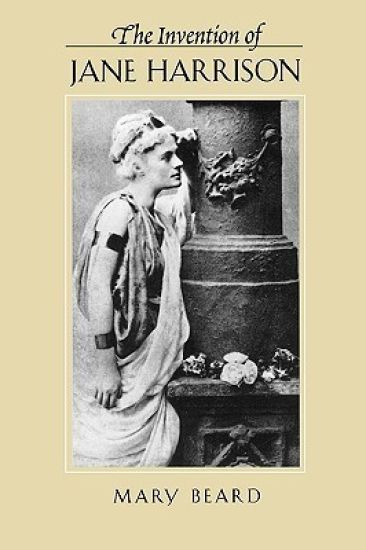
The Invention of Jane Harrison

The Invention of Jane Harrison

Mary Beard

Harvard University Press
2002
nidottu
Jane Ellen Harrison (1850-1928) is the most famous female Classicist in history, the author of books that revolutionized our understanding of Greek culture and religion. A star in the British academic world, she became the quintessential Cambridge woman--as Virginia Woolf suggested when, in A Room of One's Own, she claims to have glimpsed Harrison's ghost in the college gardens.This lively and innovative portrayal of a fascinating woman raises the question of who wins (and how) in the competition for academic fame. Mary Beard captures Harrison's ability to create her own image. And she contrasts her story with that of Eugénie Sellers Strong, a younger contemporary and onetime intimate, the author of major work on Roman art and once a glittering figure at the British School in Rome--but who lost the race for renown. The setting for the story of Harrison's career is Classical scholarship in this period--its internal arguments and allegiances and especially the influence of the anthropological strain most strikingly exemplified by Sir James Frazer. Questioning the common criteria for identifying intellectual "influence" and "movements," Beard exposes the mythology that is embedded in the history of Classics. At the same time she provides a vivid picture of a sparkling intellectual scene. The Invention of Jane Harrison offers shrewd history and undiluted fun.
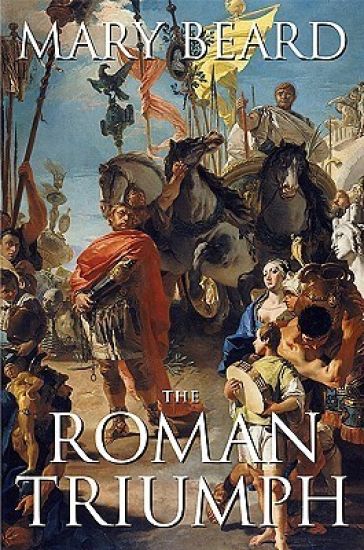
The Roman Triumph

The Roman Triumph

Mary Beard

The Belknap Press
2009
nidottu
It followed every major military victory in ancient Rome: the successful general drove through the streets to the temple of Jupiter on the Capitoline Hill; behind him streamed his raucous soldiers; in front were his most glamorous prisoners, as well as the booty he’d captured, from enemy ships and precious statues to plants and animals from the conquered territory. Occasionally there was so much on display that the show lasted two or three days.A radical reexamination of this most extraordinary of ancient ceremonies, this book explores the magnificence of the Roman triumph, but also its darker side. What did it mean when the axle broke under Julius Caesar’s chariot? Or when Pompey’s elephants got stuck trying to squeeze through an arch? Or when exotic or pathetic prisoners stole the general’s show? And what are the implications of the Roman triumph, as a celebration of imperialism and military might, for questions about military power and “victory” in our own day? The triumph, Mary Beard contends, prompted the Romans to question as well as celebrate military glory.Her richly illustrated work is a testament to the profound importance of the triumph in Roman culture—and for monarchs, dynasts and generals ever since. But how can we re-create the ceremony as it was celebrated in Rome? How can we piece together its elusive traces in art and literature? Beard addresses these questions, opening a window on the intriguing process of sifting through and making sense of what constitutes “history.”
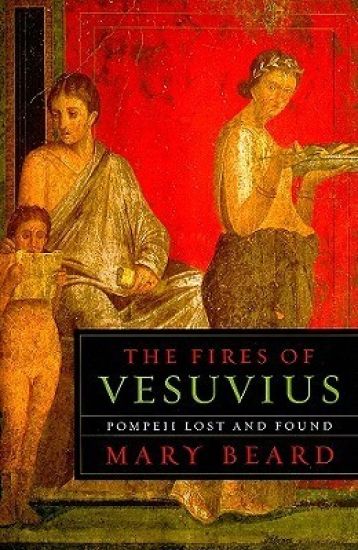
The Fires of Vesuvius: Pompeii Lost and Found
Pompeii is the most famous archaeological site in the world, visited by more than two million people each year. Yet it is also one of the most puzzling, with an intriguing and sometimes violent history, from the sixth century BCE to the present day. Destroyed by Vesuvius in 79 CE, the ruins of Pompeii offer the best evidence we have of life in the Roman Empire. But the eruptions are only part of the story. In The Fires of Vesuvius, acclaimed historian Mary Beard makes sense of the remains. She explores what kind of town it was--more like Calcutta or the Costa del Sol?--and what it can tell us about "ordinary" life there. From sex to politics, food to religion, slavery to literacy, Beard offers us the big picture even as she takes us close enough to the past to smell the bad breath and see the intestinal tapeworms of the inhabitants of the lost city. She resurrects the Temple of Isis as a testament to ancient multiculturalism. At the Suburban Baths we go from communal bathing to hygiene to erotica. Recently, Pompeii has been a focus of pleasure and loss: from Pink Floyd's memorable rock concert to Primo Levi's elegy on the victims. But Pompeii still does not give up its secrets quite as easily as it may seem. This book shows us how much more and less there is to Pompeii than a city frozen in time as it went about its business on 24 August 79.
Twelve Caesars

Twelve Caesars

Mary Beard

PRINCETON UNIVERSITY PRESS
2021
sidottu
From the bestselling author of SPQR: A History of Ancient Rome, the fascinating story of how images of Roman autocrats have influenced art, culture, and the representation of power for more than 2,000 yearsWhat does the face of power look like? Who gets commemorated in art and why? And how do we react to statues of politicians we deplore? In this book—against a background of today’s “sculpture wars”—Mary Beard tells the story of how for more than two millennia portraits of the rich, powerful, and famous in the western world have been shaped by the image of Roman emperors, especially the “Twelve Caesars,” from the ruthless Julius Caesar to the fly-torturing Domitian. Twelve Caesars asks why these murderous autocrats have loomed so large in art from antiquity and the Renaissance to today, when hapless leaders are still caricatured as Neros fiddling while Rome burns.Beginning with the importance of imperial portraits in Roman politics, this richly illustrated book offers a tour through 2,000 years of art and cultural history, presenting a fresh look at works by artists from Memling and Mantegna to the nineteenth-century American sculptor Edmonia Lewis, as well as by generations of weavers, cabinetmakers, silversmiths, printers, and ceramicists. Rather than a story of a simple repetition of stable, blandly conservative images of imperial men and women, Twelve Caesars is an unexpected tale of changing identities, clueless or deliberate misidentifications, fakes, and often ambivalent representations of authority.From Beard’s reconstruction of Titian’s extraordinary lost Room of the Emperors to her reinterpretation of Henry VIII’s famous Caesarian tapestries, Twelve Caesars includes fascinating detective work and offers a gripping story of some of the most challenging and disturbing portraits of power ever created.Published in association with the Center for Advanced Study in the Visual Arts, National Gallery of Art, Washington, DC
Twelve Caesars

Twelve Caesars

Mary Beard

PRINCETON UNIVERSITY PRESS
2023
pokkari
From the bestselling author of SPQR: A History of Ancient Rome, the fascinating story of how images of Roman autocrats have influenced art, culture, and the representation of power for more than 2,000 yearsWhat does the face of power look like? Who gets commemorated in art and why? And how do we react to statues of politicians we deplore? In this book—against a background of today’s “sculpture wars”—Mary Beard tells the story of how for more than two millennia portraits of the rich, powerful, and famous in the western world have been shaped by the image of Roman emperors, especially the “Twelve Caesars,” from the ruthless Julius Caesar to the fly-torturing Domitian. Twelve Caesars asks why these murderous autocrats have loomed so large in art from antiquity and the Renaissance to today, when hapless leaders are still caricatured as Neros fiddling while Rome burns.Beginning with the importance of imperial portraits in Roman politics, this richly illustrated book offers a tour through 2,000 years of art and cultural history, presenting a fresh look at works by artists from Memling and Mantegna to the nineteenth-century American sculptor Edmonia Lewis, as well as by generations of weavers, cabinetmakers, silversmiths, printers, and ceramicists. Rather than a story of a simple repetition of stable, blandly conservative images of imperial men and women, Twelve Caesars is an unexpected tale of changing identities, clueless or deliberate misidentifications, fakes, and often ambivalent representations of authority.From Beard’s reconstruction of Titian’s extraordinary lost Room of the Emperors to her reinterpretation of Henry VIII’s famous Caesarian tapestries, Twelve Caesars includes fascinating detective work and offers a gripping story of some of the most challenging and disturbing portraits of power ever created.Published in association with the Center for Advanced Study in the Visual Arts, National Gallery of Art, Washington, DC
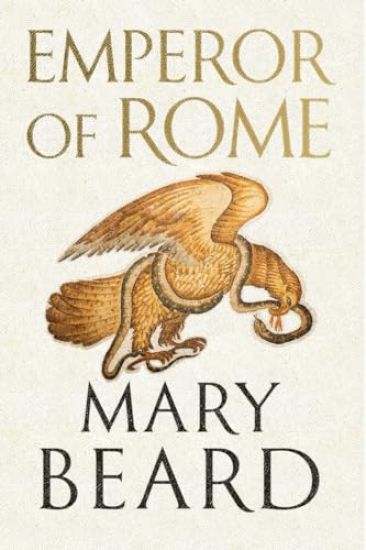
Emperor of Rome: Ruling the Ancient Roman World

Emperor of Rome: Ruling the Ancient Roman World

Mary Beard

Liveright Publishing Corporation
2023
sidottu
In her international bestseller SPQR, Mary Beard told the thousand-year story of ancient Rome, from its slightly shabby Iron Age origins to its reign as the undisputed hegemon of the Mediterranean. Now, drawing on more than thirty years of teaching and writing about Roman history, Beard turns to the emperors who ruled the Roman Empire, beginning with Julius Caesar (assassinated 44 BCE) and taking us through the nearly three centuries--and some thirty emperors--that separate him from the boy-king Alexander Severus (assassinated 235 CE).Yet Emperor of Rome is not your typical chronological account of Roman rulers, one emperor after another: the mad Caligula, the monster Nero, the philosopher Marcus Aurelius. Instead, Beard asks different, often larger and more probing questions: What power did emperors actually have? Was the Roman palace really so bloodstained? What kind of jokes did Augustus tell? And for that matter, what really happened, for example, between the emperor Hadrian and his beloved Antinous? Effortlessly combining the epic with the quotidian, Beard tracks the emperor down at home, at the races, on his travels, even on his way to heaven.Along the way, Beard explores Roman fictions of imperial power, overturning many of the assumptions that we hold as gospel, not the least of them the perception that emperors one and all were orchestrators of extreme brutality and cruelty. Here Beard introduces us to the emperor's wives and lovers, rivals and slaves, court jesters and soldiers, and the ordinary people who pressed begging letters into his hand--whose chamber pot disputes were adjudicated by Augustus, and whose budgets were approved by Vespasian, himself the son of a tax collector.With its finely nuanced portrayal of sex, class, and politics, Emperor of Rome goes directly to the heart of Roman fantasies (and our own) about what it was to be Roman at its richest, most luxurious, most extreme, most powerful, and most deadly, offering an account of Roman history as it has never been presented before.
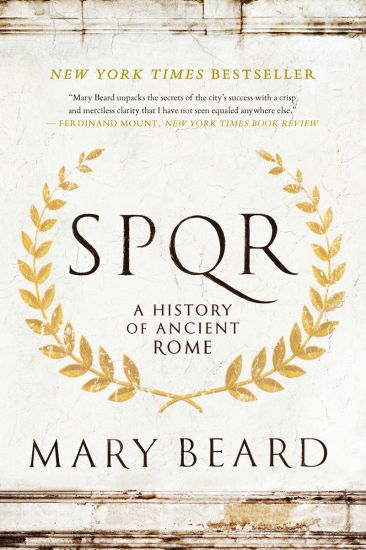
S.P.Q.R: A History of Ancient Rome

S.P.Q.R: A History of Ancient Rome

Mary Beard

Liveright Publishing Corporation
2015
sidottu
Ancient Rome was an imposing city even by modern standards, a sprawling imperial metropolis of more than a million inhabitants, a "mixture of luxury and filth, liberty and exploitation, civic pride and murderous civil war" that served as the seat of power for an empire that spanned from Spain to Syria. Yet how did all this emerge from what was once an insignificant village in central Italy? In S.P.Q.R., world-renowned classicist Mary Beard narrates the unprecedented rise of a civilization that even two thousand years later still shapes many of our most fundamental assumptions about power, citizenship, responsibility, political violence, empire, luxury, and beauty.From the foundational myth of Romulus and Remus to 212 ce--nearly a thousand years later--when the emperor Caracalla gave Roman citizenship to every free inhabitant of the empire, S.P.Q.R. (the abbreviation of "The Senate and People of Rome") examines not just how we think of ancient Rome but challenges the comfortable historical perspectives that have existed for centuries by exploring how the Romans thought of themselves: how they challenged the idea of imperial rule, how they responded to terrorism and revolution, and how they invented a new idea of citizenship and nation.Opening the book in 63 bce with the famous clash between the populist aristocrat Catiline and Cicero, the renowned politician and orator, Beard animates this "terrorist conspiracy," which was aimed at the very heart of the Republic, demonstrating how this singular event would presage the struggle between democracy and autocracy that would come to define much of Rome's subsequent history. Illustrating how a classical democracy yielded to a self-confident and self-critical empire, S.P.Q.R. reintroduces us, though in a wholly different way, to famous and familiar characters--Hannibal, Julius Caesar, Cleopatra, Augustus, and Nero, among others--while expanding the historical aperture to include those overlooked in traditional histories: the women, the slaves and ex-slaves, conspirators, and those on the losing side of Rome's glorious conquests.Like the best detectives, Beard sifts fact from fiction, myth and propaganda from historical record, refusing either simple admiration or blanket condemnation. Far from being frozen in marble, Roman history, she shows, is constantly being revised and rewritten as our knowledge expands. Indeed, our perceptions of ancient Rome have changed dramatically over the last fifty years, and S.P.Q.R., with its nuanced attention to class inequality, democratic struggles, and the lives of entire groups of people omitted from the historical narrative for centuries, promises to shape our view of Roman history for decades to come.
Confronting the Classics

Confronting the Classics

Mary Beard

Liveright Publishing Corporation
2014
pokkari
Mary Beard, drawing on thirty years of teaching and writing about Greek and Roman history, provides a panoramic portrait of the classical world, a book in which we encounter not only Cleopatra and Alexander the Great, Julius Caesar and Hannibal, but also the common people-the millions of inhabitants of the Roman Empire, the slaves, soldiers, and women. How did they live? Where did they go if their marriage was in trouble or if they were broke? Or, perhaps just as important, how did they clean their teeth? Effortlessly combining the epic with the quotidian, Beard forces us along the way to reexamine so many of the assumptions we held as gospel-not the least of them the perception that the Emperor Caligula was bonkers or Nero a monster. With capacious wit and verve, Beard demonstrates that, far from being carved in marble, the classical world is still very much alive.
Emperor of Rome: Ruling the Ancient World

Emperor of Rome: Ruling the Ancient World

Mary Beard

Liveright Publishing Corporation
2024
nidottu
In her international bestseller SPQR, Mary Beard told the thousand-year story of ancient Rome, from its slightly shabby Iron Age origins to its reign as the undisputed hegemon of the Mediterranean. Now, drawing on more than thirty years of teaching and writing about Roman history, Beard turns to the emperors who ruled the Roman Empire, beginning with Julius Caesar (assassinated 44 BCE) and taking us through the nearly three centuries--and some thirty emperors--that separate him from the boy-king Alexander Severus (assassinated 235 CE).Yet Emperor of Rome is not your typical chronological account of Roman rulers, one emperor after another: the mad Caligula, the monster Nero, the philosopher Marcus Aurelius. Instead, Beard asks different, often larger and more probing questions: What power did emperors actually have? Was the Roman palace really so bloodstained? What kind of jokes did Augustus tell? And for that matter, what really happened, for example, between the emperor Hadrian and his beloved Antinous? Effortlessly combining the epic with the quotidian, Beard tracks the emperor down at home, at the races, on his travels, even on his way to heaven.Along the way, Beard explores Roman fictions of imperial power, overturning many of the assumptions that we hold as gospel, not the least of them the perception that emperors one and all were orchestrators of extreme brutality and cruelty. Here Beard introduces us to the emperor's wives and lovers, rivals and slaves, court jesters and soldiers, and the ordinary people who pressed begging letters into his hand--whose chamber pot disputes were adjudicated by Augustus, and whose budgets were approved by Vespasian, himself the son of a tax collector.With its finely nuanced portrayal of sex, class, and politics, Emperor of Rome goes directly to the heart of Roman fantasies (and our own) about what it was to be Roman at its richest, most luxurious, most extreme, most powerful, and most deadly, offering an account of Roman history as it has never been presented before.
S.P.Q.R: A History of Ancient Rome

S.P.Q.R: A History of Ancient Rome

Mary Beard

Liveright Publishing Corporation
2016
nidottu
In SPQR, an instant classic, Mary Beard narrates the history of Rome "with passion and without technical jargon" and demonstrates how "a slightly shabby Iron Age village" rose to become the "undisputed hegemon of the Mediterranean" (Wall Street Journal). Hailed by critics as animating "the grand sweep and the intimate details that bring the distant past vividly to life" (Economist) in a way that makes "your hair stand on end" (Christian Science Monitor) and spanning nearly a thousand years of history, this "highly informative, highly readable" (Dallas Morning News) work examines not just how we think of ancient Rome but challenges the comfortable historical perspectives that have existed for centuries. With its nuanced attention to class, democratic struggles, and the lives of entire groups of people omitted from the historical narrative for centuries, SPQR will to shape our view of Roman history for decades to come.
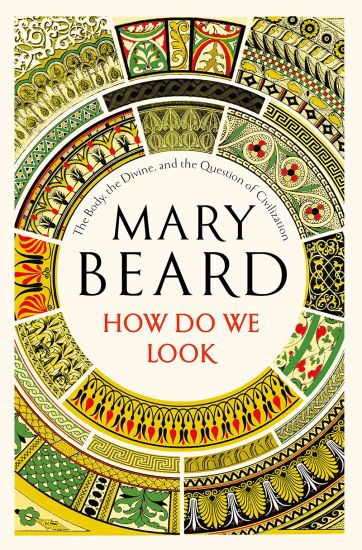
How Do We Look

How Do We Look

Mary Beard

Liveright Publishing Corporation
2018
sidottu
Conceived as a gorgeously illustrated accompaniment to "How Do We Look" and "The Eye of Faith," the famed Civilisations shows on PBS, renowned classicist Mary Beard has created this elegant volume on how we have looked at art. Focusing in Part I on the Olmec heads of early Mesoamerica, the colossal statues of the pharaoh Amenhotep III, and the nudes of classical Greece, Beard explores the power, hierarchy, and gender politics of the art of the ancient world, and explains how it came to define the so-called civilized world. In Part II, Beard chronicles some of the most breathtaking religious imagery ever made-whether at Angkor Wat, Ravenna, Venice, or in the art of Jewish and Islamic calligraphers- to show how all religions, ancient and modern, have faced irreconcilable problems in trying to picture the divine. With this classic volume, Beard redefines the Western-and male-centric legacies of Ernst Gombrich and Kenneth Clark.
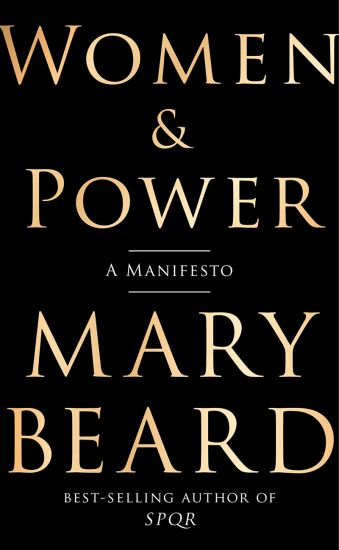
Women & Power

Women & Power

Mary Beard

Liveright Publishing Corporation
2018
sidottu
At long last, Mary Beard addresses in one brave book the misogynists and trolls who mercilessly attack and demean women the world over, including, very often, Mary herself. In Women & Power, she traces the origins of this misogyny to its ancient roots, examining the pitfalls of gender and the ways that history has mistreated strong women since time immemorial. As far back as Homer's Odyssey, Beard shows, women have been prohibited from leadership roles in civic life, public speech being defined as inherently male. From Medusa to Philomela (whose tongue was cut out), from Hillary Clinton to Elizabeth Warren (who was told to sit down), Beard draws illuminating parallels between our cultural assumptions about women's relationship to power-and how powerful women provide a necessary example for all women who must resist being vacuumed into a male template. With personal reflections on her own online experiences with sexism, Beard asks: If women aren't perceived to be within the structure of power, isn't it power itself we need to redefine? And how many more centuries should we be expected to wait?
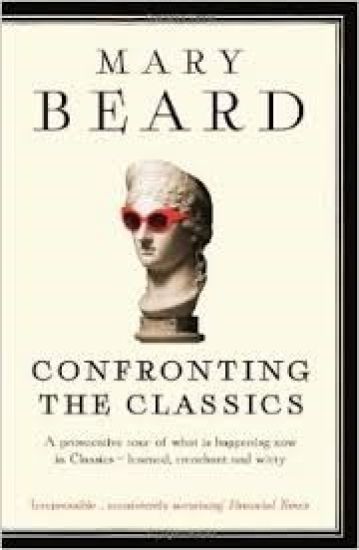
Confronting the Classics

Confronting the Classics

Mary Beard

Profile Books Ltd
2014
pokkari
Mary Beard is one of the world's best-known classicists - a brilliant academic, with a rare gift for communicating with a wide audience both though her TV presenting and her books. In a series of sparkling essays, she explores our rich classical heritage - from Greek drama to Roman jokes, introducing some larger-than-life characters of classical history, such as Alexander the Great, Nero and Boudicca. She invites you into the places where Greeks and Romans lived and died, from the palace at Knossos to Cleopatra's Alexandria - and reveals the often hidden world of slaves. She takes a fresh look at both scholarly controversies and popular interpretations of the ancient world, from The Golden Bough to Asterix. The fruit of over thirty years in the world of classical scholarship, Confronting the Classics captures the world of antiquity and its modern significance with wit, verve and scholarly expertise.
Women & Power

Women & Power

Mary Beard

Profile Books Ltd
2018
pokkari
An updated edition of the Sunday Times Bestseller Britain's best-known classicist Mary Beard, is also a committed and vocal feminist. With wry wit, she revisits the gender agenda and shows how history has treated powerful women. Her examples range from the classical world to the modern day, from Medusa and Athena to Theresa May and Hillary Clinton. Beard explores the cultural underpinnings of misogyny, considering the public voice of women, our cultural assumptions about women's relationship with power, and how powerful women resist being packaged into a male template. A year on since the advent of #metoo, Beard looks at how the discussions have moved on during this time, and how that intersects with issues of rape and consent, and the stories men tell themselves to support their actions. In trademark Beardian style, using examples ancient and modern, Beard argues, 'it's time for change - and now!' From the author of international bestseller SPQR: A History of Ancient Rome.