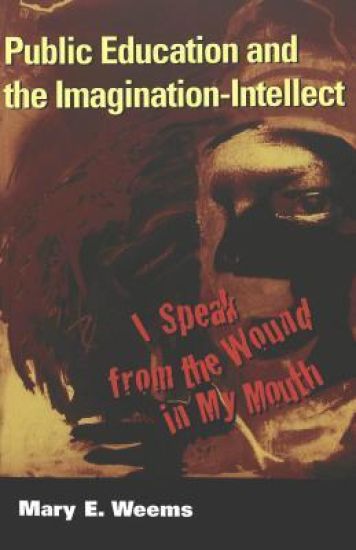
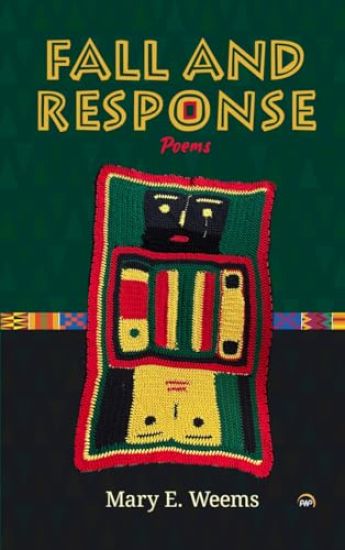
Public Education and the Imagination-Intellect argues for re-thinking the thinking process and for urban education reform. Weems's work lives in the moment of creation. Her imagination-intellect theory chapters frame this book; she posits that the imagination and intellect are inextricably linked; that like Freire's architect all ideas are first imagined, then intellectually developed in an interconnected process that mirrors the blood's circulation through the body. The two plays and the collection of poems are rich, layered landscapes of African American culture and meanings. They lend themselves to multi-interpretation, co-performance, and co-ownership by each audience member who engages the work.
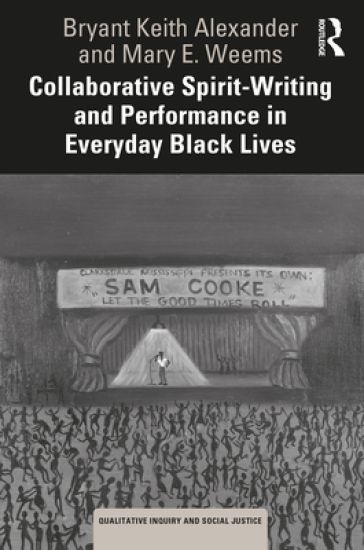
Collaborative Spirit-Writing and Performance in Everyday Black Lives is about the interconnectedness between collaboration, spirit, and writing. It is also about a dialogic engagement that draws upon shared lived experiences, hopes, and fears of two Black persons: male/female, straight/gay. This book is structured around a series of textual performances, poems, plays, dialogues, calls and responses, and mediations that serve as claim, ground, warrant, qualifier, rebuttal, and backing in an argument about collaborative spirit-writing for social justice. Each entry provides evidence of encounters of possibility, collated between the authors, for ourselves, for readers, and society from a standpoint of individual and collective struggle. The entries in this Black performance diary are at times independent and interdependent, interspliced and interrogative, interanimating and interstitial. They build arguments about collaboration but always emanate from a place of discontent in a caste system, designed through slavery and maintained until today, that positions Black people in relation to white superiority, terror, and perpetual struggle.With particular emphasis on the confluence of Race, Racism, Antiracism, Black Lives Matter, the Trump administration, and the Coronavirus pandemic, this book will appeal to students and scholars in Race studies, performance studies, and those who practice qualitative methods as a new way of seeking Black social justice.
Collaborative Spirit-Writing and Performance in Everyday Black Lives is about the interconnectedness between collaboration, spirit, and writing. It is also about a dialogic engagement that draws upon shared lived experiences, hopes, and fears of two Black persons: male/female, straight/gay. This book is structured around a series of textual performances, poems, plays, dialogues, calls and responses, and mediations that serve as claim, ground, warrant, qualifier, rebuttal, and backing in an argument about collaborative spirit-writing for social justice. Each entry provides evidence of encounters of possibility, collated between the authors, for ourselves, for readers, and society from a standpoint of individual and collective struggle. The entries in this Black performance diary are at times independent and interdependent, interspliced and interrogative, interanimating and interstitial. They build arguments about collaboration but always emanate from a place of discontent in a caste system, designed through slavery and maintained until today, that positions Black people in relation to white superiority, terror, and perpetual struggle.With particular emphasis on the confluence of Race, Racism, Antiracism, Black Lives Matter, the Trump administration, and the Coronavirus pandemic, this book will appeal to students and scholars in Race studies, performance studies, and those who practice qualitative methods as a new way of seeking Black social justice.
Performative Intergenerational Dialogues of a Black Quartet promotes the importance of intergenerational Black dialogue as a collaborative spirit-making across race, genders, sexualities, and cultures to bridge time and space.The authors enter this dialogue in a crisis moment: a crisis moment at the confluence of a pandemic, the national political transition of leadership in the United States, the necessary rise of Black, Indigenous, and People of Color activism—in the face of the continued murders of unarmed Black and queer people by police. And as each author mourns the loss of loved ones who have left us through illness, the contiguity of time, or murder, we all hold tight to each other and to memory as an act of keeping them alive in our hearts and actions, remembrance as an act of resistance so that the circle will be unbroken. But they also come together in the spirit of hope, the hope that bleeds the borders between generations of Black teacher-artist-scholars, the hope that we find in each other’s joy and laughter, and the hope that comes when we hear both stories of struggle and strife and stories of celebration and smile that lead to possibilities and potentialities of our collective being and becoming—as a people.So, the authors offer stories of witness, resistance, and gettin’ ovah, stories that serve as a road map from Black history and heritage to a Black futurity that is mythic and imagined but that can also be actualized and embodied, now. This book will be of interest to scholars, students, and activists in a wide range of disciplines across the social sciences and performance studies.
Performative Intergenerational Dialogues of a Black Quartet promotes the importance of intergenerational Black dialogue as a collaborative spirit-making across race, genders, sexualities, and cultures to bridge time and space.The authors enter this dialogue in a crisis moment: a crisis moment at the confluence of a pandemic, the national political transition of leadership in the United States, the necessary rise of Black, Indigenous, and People of Color activism—in the face of the continued murders of unarmed Black and queer people by police. And as each author mourns the loss of loved ones who have left us through illness, the contiguity of time, or murder, we all hold tight to each other and to memory as an act of keeping them alive in our hearts and actions, remembrance as an act of resistance so that the circle will be unbroken. But they also come together in the spirit of hope, the hope that bleeds the borders between generations of Black teacher-artist-scholars, the hope that we find in each other’s joy and laughter, and the hope that comes when we hear both stories of struggle and strife and stories of celebration and smile that lead to possibilities and potentialities of our collective being and becoming—as a people.So, the authors offer stories of witness, resistance, and gettin’ ovah, stories that serve as a road map from Black history and heritage to a Black futurity that is mythic and imagined but that can also be actualized and embodied, now. This book will be of interest to scholars, students, and activists in a wide range of disciplines across the social sciences and performance studies.
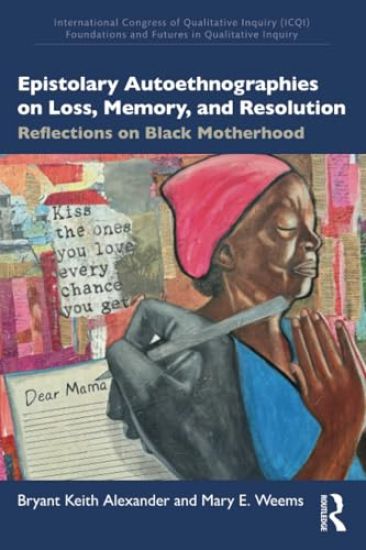
This book uses letter writing as a form of engaging autoethnography to address relational histories and dynamics such as race, gender, loss, memory and resolution.It is structured around textual performances, poems, and dialogues in the form of letters. Set within the context of adult Black children and their Black mothers, each author uses their letters to reflect on life with and without mama, and their own sense of coming to know themselves in the absence of their mother. Each entry evidence encounters of pain, possibility, and potentiality collated between the authors for a robust thematic underpinning for the reader. Building upon poetic inquiry and autoethnography narratives, this book seeks to build arguments about privatized struggle, and offers a guide on reflection.In addition to students and researchers partaking in autoethnographical studies, this book is suitable for anyone studying qualitative inquiry, performance studies, gender studies, cultural studies, Black studies, anthropology, and performative writing.
This book uses letter writing as a form of engaging autoethnography to address relational histories and dynamics such as race, gender, loss, memory and resolution.It is structured around textual performances, poems, and dialogues in the form of letters. Set within the context of adult Black children and their Black mothers, each author uses their letters to reflect on life with and without mama, and their own sense of coming to know themselves in the absence of their mother. Each entry evidence encounters of pain, possibility, and potentiality collated between the authors for a robust thematic underpinning for the reader. Building upon poetic inquiry and autoethnography narratives, this book seeks to build arguments about privatized struggle, and offers a guide on reflection.In addition to students and researchers partaking in autoethnographical studies, this book is suitable for anyone studying qualitative inquiry, performance studies, gender studies, cultural studies, Black studies, anthropology, and performative writing.
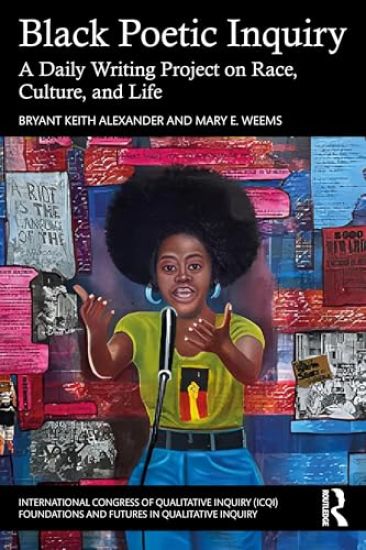
The poems in this project were written within a 24-hour period of each other and are presented in order of their appearance for the month of January 2024.Written as a call and response to each other, the poems are at times direct responses in content and form, or a mediation on what the offering triggered in the other. Using poetry writing as a methodological engagement with the reflective and reflexive attributes of autoethnography, this project offers an examination of lived experience and will provide a critical expansion of poetic inquiry. An example of "collaborative spirit-writing," this text uses a dialogical exchange of responsiveness, excavating the lived experiences of the two authors (a Black man and a Black woman) with complex intersectional identities. Using poetic writing as both form and function, this book provides a performance of remembrance and resistance.Students and researchers working with qualitative inquiry and in areas from performative writing to Critical Race Studies will find this book a useful addition to their research. Teachers will also find this book facilitates pedagogies of engagement.
The poems in this project were written within a 24-hour period of each other and are presented in order of their appearance for the month of January 2024.Written as a call and response to each other, the poems are at times direct responses in content and form, or a mediation on what the offering triggered in the other. Using poetry writing as a methodological engagement with the reflective and reflexive attributes of autoethnography, this project offers an examination of lived experience and will provide a critical expansion of poetic inquiry. An example of "collaborative spirit-writing," this text uses a dialogical exchange of responsiveness, excavating the lived experiences of the two authors (a Black man and a Black woman) with complex intersectional identities. Using poetic writing as both form and function, this book provides a performance of remembrance and resistance.Students and researchers working with qualitative inquiry and in areas from performative writing to Critical Race Studies will find this book a useful addition to their research. Teachers will also find this book facilitates pedagogies of engagement.
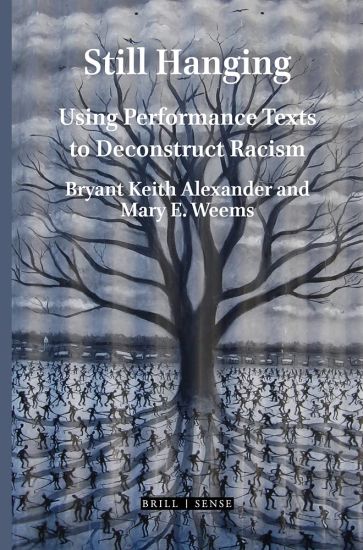
The current socio-political climate in the United States sheds a critical, glaring light on the racism and white supremacy which has been part of the fabric of this country since the seventeenth century. Barack Obama's tenure as president resulted in a major increase in white hate groups, hate crimes, and unrelenting violence against innocent Black men and women by police. In response, people of different races, ethnicities, genders, sexual orientations, religions, ages and classes have taken to the streets in protest, and increased decades long efforts to organize against racism and for a more empathetic, just, democratic society. Social change about racism must begin with acknowledgement followed by open, focused, critical dialogue. Still Hanging: Using Performance Texts to Deconstruct Racism, referencing both the resilience of Black people in the face of institutionalized racism and systemic oppression, and the fact that Black people continue to be literally and metaphorically lynched in 2020, is designed to use the power of lived experience specific performance texts as frames for engaging faculty, students and others interested in beginning to deconstruct racism and construct an anti-racist way of being.
The current socio-political climate in the United States sheds a critical, glaring light on the racism and white supremacy which has been part of the fabric of this country since the seventeenth century. Barack Obama’s tenure as president resulted in a major increase in white hate groups, hate crimes, and unrelenting violence against innocent Black men and women by police. In response, people of different races, ethnicities, genders, sexual orientations, religions, ages and classes have taken to the streets in protest, and increased decades long efforts to organize against racism and for a more empathetic, just, democratic society. Social change about racism must begin with acknowledgement followed by open, focused, critical dialogue. Still Hanging: Using Performance Texts to Deconstruct Racism, referencing both the resilience of Black people in the face of institutionalized racism and systemic oppression, and the fact that Black people continue to be literally and metaphorically lynched in 2020, is designed to use the power of lived experience specific performance texts as frames for engaging faculty, students and others interested in beginning to deconstruct racism and construct an anti-racist way of being.