
Kirjahaku
Etsi kirjoja tekijän nimen, kirjan nimen tai ISBN:n perusteella.
12 kirjaa tekijältä Mary Jacobus
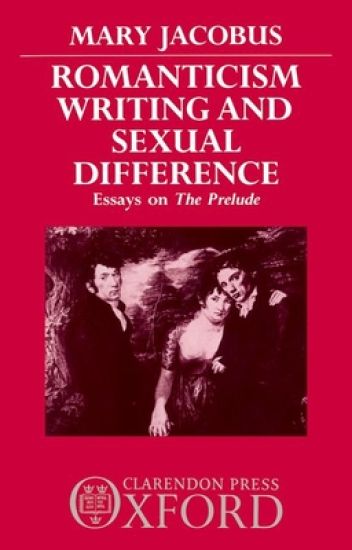
A re-reading of The Prelude in the light of post-structuralist and feminist theory, Romanticism, Writing, and Sexual Difference is the first major study of The Prelude by an author distinguished both as a Wordsworthian and as a feminist critic. Beginning with Romantic autobiography, theatrical politics, and history, the book moves by way of Romantic attitudes to language, figuration, and voice to considering the role of gender in Romantic self-representation and pedagogy. Besides investigating different aspects of the high Romanticism exemplified by The Prelude, individual chapters explore writing by Burke, Rousseau, Hazlitt, Lamb, and De Quincey, while engaging with topics such as literary influence, New Historicism, or the gender-related aspects of Romantic criticism. Romanticism, Writing, and Sexual Difference is an important contribution not only to Wordsworth studies, but to current theoretical debates on both sides of the Atlantic as they bear on the history and politics (including sexual politics) of Romanticism itself.
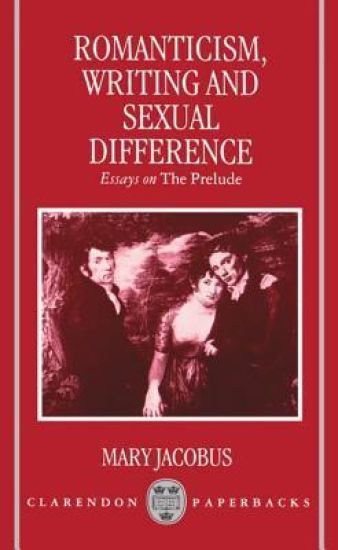
A re-reading of The Prelude in the light of poststructuralist and feminist theory, this highly praised work is the first major study of the poem by an author distinguished as both Wordsworthian and feminist critic. Beginning with Romantic autobiography, theatrical politics, and history, the book moves by way of Romantic attitudes to language, figuration and voice to consider the role of gender in Romantic self-representation and pedagogy. Besides investigating different aspects of the high Romanticism exemplified by The prelude, individual chapters explore writing by Burke, Rousseau, Hazlitt, Lamb, and De Quincey, while engaging with topics such as literary influence, New Historicism, or the gender-related aspects of Romantic criticism. Romanticism, Writing, and Sexual Difference is an important contribution not only to Wordsworth studies, but to current theoretical debates on both sides of the Atlantic as they bear on the history and politics (including sexual politics) of Romanticism itself. 'given that we are at a breaking point in "romantic" studies, it is difficult to know how to give a book like this the kind of praise it deserves without returning to those very "Romantic" tropes which are put at risk by the book itself. Readers interested in Romanticism, writing, or sexual difference will simply have to read the book for themselves to determine how best to rearticulate the terms of praise.' Modern Philology 'a lively and stimulating book' Times Higher Education Supplement
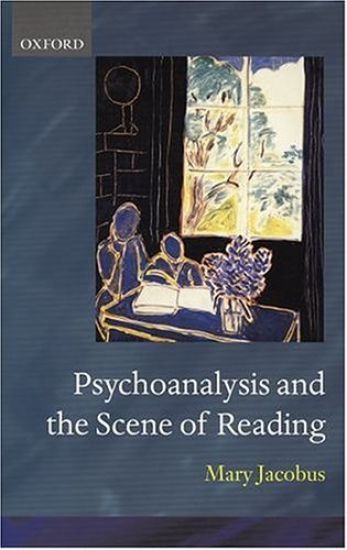
Psychoanalysis and the Scene of Reading explores some of the ways in which we think about reading and the effects reading has on us. Whether considered as a process, a representation, or a cultural activity, reading involves the idea about inner and outer, absence and boundaries, and the transmission of thoughts and feelings between one person or historical period and another. These ideas provide the basis for much of our thinking about subjectivity and receive their fullest elaboration in the twentieth-century discourse of psychoanalysis. Drawing on the rich tradition of British object relations, Psychoanalysis and the Scene of Reading is a literary critics approach to the scene of reading understood from a pyschoanalytic perspective. Linked essays on books and interiority, memory and landscape, trauma and literary transmission provide a subtle account of writing by Woolf, Austen, Rousseau, and Romantic women, as well as fictional accounts of slavery and colonialism, and Holocaust memoirs.
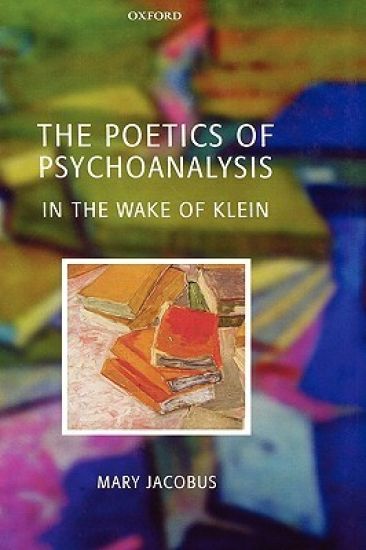
The Poetics of Psychoanalysis: In the Wake of Klein explores the literary aspects of the twentieth-century psychoanalytic tradition that has come to be known as British Object Relations psychoanalysis. Focusing on Melanie Klein's legacy to psychoanalysis between the 1930s and 1970s, it deals with major figures such as Riviere, Isaacs, Winnicott, Milner, and Bion, as well as Klein's contemporary, Ella Sharpe. Mary Jacobus breaks new ground by giving a central place to the literary and aesthetic concerns of the British Object Relations tradition. Paying close attention to writing that is often side-lined by literary critics and theorists, she makes fruitful connections with particular works of literature and art, along with pressing contemporary issues. The three sections focus on the transitions, mediations, and transformations that took place in British Object Relations psychoanalysis as Klein's ideas were developed and transformed. Situating Kleinian thought in relation to later developments and differences, while making it accessible to non-psychoanalytic readers, The Poetics of Psychoanalysis argues against the separation of British and continental traditions and for the continuing links between psychoanalysis and aesthetics. Rather than applying psychoanalytic ideas to literature and aesthetics, the book traces the British Object Relations tradition as a form of proto-modernist discourse in its own right. Linked by a common thread of ideas and structured to reflect a roughly chronological trajectory, individual chapters can also be read as free-standing critical essays. Aimed at literary readers, this book will also be of interest to psychoanalytic practitioners and cultural theorists.
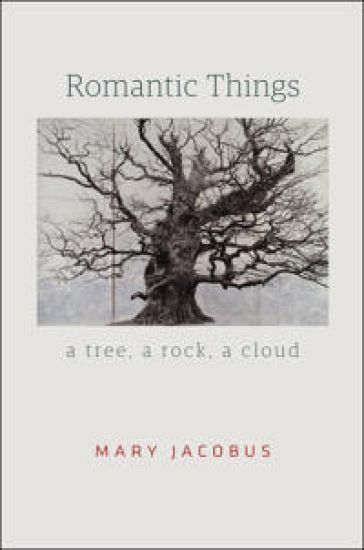
Our thoughts are shaped as much by what things make of us as by what we make of them. In Romantic Things, Mary Jacobus explores the world of objects and phenomena in nature as expressed in Romantic poetry alongside the theme of sentience and sensory deprivation in literature and art. Jacobus discusses objects and attributes that test our perceptions and preoccupy both Romantic poetry and modern philosophy. John Clare, John Constable, Rainer Maria Rilke, W G Sebald, and Gerhard Richter make appearances around the central figure of William Wordsworth as Jacobus explores trees, rocks, clouds, breath, sleep, deafness, and blindness in their work. Along the way, she is assisted by the writings of Maurice Merleau-Ponty, Jacques Derrida, and Jean-Luc Nancy. Helping us think more deeply about things both visible and invisible, felt and unfeeling, Romantic Things opens our eyes to what has been previously overlooked in lyric and Romantic poetry.
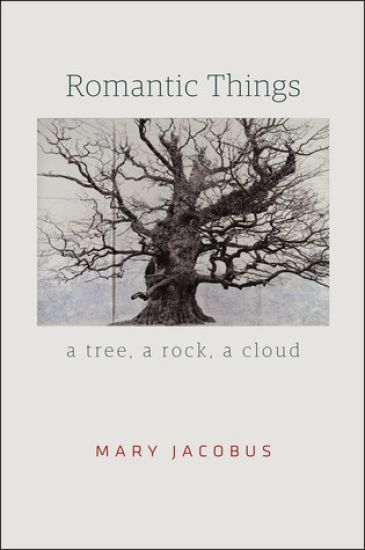
Our thoughts are shaped as much by what things make of us as by what we make of them. Lyric poetry is especially concerned with things and their relationship to thought, sense, and understanding. In "Romantic Things", Mary Jacobus explores the world of objects and phenomena in nature as expressed in romantic poetry alongside the theme of sentience and sensory deprivation in literature and art. Jacobus discusses objects and attributes that test our perceptions and preoccupy both romantic poetry and modern philosophy. John Clare, John Constable, Rainer Maria Rilke, W. G. Sebald, and Gerhard Richter make appearances around the central figure of William Wordsworth as Jacobus explores trees, rocks, clouds, breath, sleep, deafness, and blindness in their work. While she thinks through these things, she is assisted by the writings of Maurice Merleau-Ponty, Jacques Derrida, and Jean-Luc Nancy. Helping us think more deeply about things that are at once visible and invisible, seen and unseen, felt and unfeeling, "Romantic Things" opens our eyes to what has been previously overlooked in lyric and romantic poetry.

In First Things Mary Jacobus combines close readings with theoretical concerns in an examination of the many forms taken by the mythic or phantasmic mother in literary, psychoanalytic and artistic representations.She carefully explores the ways in which the maternal imaginary informs both unconscious processes and signifying practices at all levels. Her fierce analysis of specific texts and paintings raises questions about the the symbolic and biological maternal body and how they relate to each other in literary and psychoanalytic terms. The invocation of writings by Kleist, Wollstonecraft, Mary Shelley, Malthus and de Sade, along with analysis of French revolutionary iconography and Realist and Impressionist paintings by Eakins and Morisot, make this wide-ranging text a truly interdisciplinary study.First Things sees literary theory and psychoanalysis as mutually illuminating practices. The work of Freud, Klein, Kristeva and Bion shape an inquiry into such topics as population discourse, surrogate motherhood, AIDS, mastectomy and psychoanalysis itself. In addition, Jacobus elaborates on Freud's oedipal preconceptions, Klein's missing theory of signs, memory, melancholia, narcissism and maternal reverie.
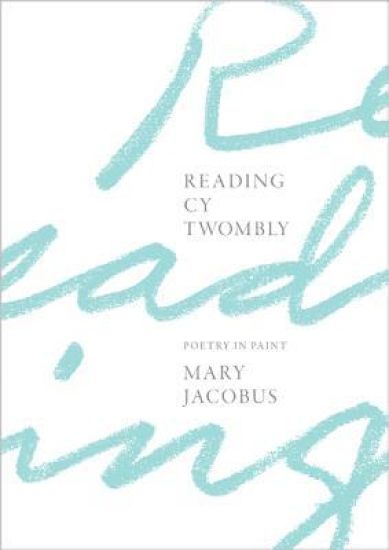
Many of Cy Twombly's paintings and drawings include handwritten words and phrases--naming or quoting poets ranging from Sappho, Homer, and Virgil to Mallarme, Rilke, and Cavafy. Enigmatic and sometimes hard to decipher, these inscriptions are a distinctive feature of his work. Reading Cy Twombly poses both literary and art historical questions. How does poetic reference in largely abstract works affect their interpretation? Reading Cy Twombly is the first book to focus specifically on the artist's use of poetry. Twombly's library formed an extension of his studio and he sometimes painted with a book open in front of him. Drawing on original research in an archive that includes his paint-stained and annotated books, Mary Jacobus's account--richly illustrated with more than 125 color and black-and-white images--unlocks an important aspect of Twombly's practice. Jacobus shows that poetry was an indispensable source of reference throughout Twombly's career; as he said, he "never really separated painting and literature." Among much else, she explores the influence of Ezra Pound and Charles Olson; Twombly's fondness for Greek pastoral poetry and Virgil's Eclogues; the inspiration of the Iliad and Ovid's Metamorphoses; and Twombly's love of Keats and his collaboration with Octavio Paz. Twombly's art reveals both his distinctive relationship to poetry and his use of quotation to solve formal problems. A modern painter, he belongs in a critical tradition that goes back, by way of Roland Barthes, to Baudelaire. Reading Cy Twombly opens up fascinating new readings of some of the most important paintings and drawings of the twentieth century.
A look at how ideas of translation, migration, and displacement are embedded in the works of prominent artists, from Ovid to Tacita DeanOn Belonging and Not Belonging provides a sophisticated exploration of how themes of translation, migration, and displacement shape an astonishing range of artistic works. From the possibilities and limitations of translation addressed by Jhumpa Lahiri and David Malouf to the effects of shifting borders in the writings of Eugenio Montale, W. G. Sebald, Colm Tóibín, and many others, esteemed literary critic Mary Jacobus looks at the ways novelists, poets, photographers, and filmmakers revise narratives of language, identity, and exile. Jacobus’s attentive readings of texts and images seek to answer the question: What does it mean to identify as—or with—an outsider?Walls and border-crossings, nomadic wanderings and Alpine walking, the urge to travel and the yearning for home—Jacobus braids together such threads in disparate times and geographies. She plumbs the experiences of Ovid in exile, Frankenstein’s outcast Being, Elizabeth Bishop in Nova Scotia and Brazil, Walter Benjamin’s Berlin childhood, and Sophocles’s Antigone in the wilderness. Throughout, Jacobus trains her eye on issues of transformation and translocation; the traumas of partings, journeys, and returns; and confrontations with memory and the past.Focusing on human conditions both modern and timeless, On Belonging and Not Belonging offers a unique consideration of inclusion and exclusion in our world.
A look at how ideas of translation, migration, and displacement are embedded in the works of prominent artists, from Ovid to Tacita DeanOn Belonging and Not Belonging provides a sophisticated exploration of how themes of translation, migration, and displacement shape an astonishing range of artistic works. From the possibilities and limitations of translation addressed by Jhumpa Lahiri and David Malouf to the effects of shifting borders in the writings of Eugenio Montale, W. G. Sebald, Colm Tóibín, and many others, esteemed literary critic Mary Jacobus looks at the ways novelists, poets, photographers, and filmmakers revise narratives of language, identity, and exile. Jacobus’s attentive readings of texts and images seek to answer the question: What does it mean to identify as—or with—an outsider?Walls and border-crossings, nomadic wanderings and Alpine walking, the urge to travel and the yearning for home—Jacobus braids together such threads in disparate times and geographies. She plumbs the experiences of Ovid in exile, Frankenstein’s outcast Being, Elizabeth Bishop in Nova Scotia and Brazil, Walter Benjamin’s Berlin childhood, and Sophocles’s Antigone in the wilderness. Throughout, Jacobus trains her eye on issues of transformation and translocation; the traumas of partings, journeys, and returns; and confrontations with memory and the past.Focusing on human conditions both modern and timeless, On Belonging and Not Belonging offers a unique consideration of inclusion and exclusion in our world.