Kirjojen hintavertailu. Mukana 11 244 527 kirjaa ja 12 kauppaa.

Kirjahaku

Etsi kirjoja tekijän nimen, kirjan nimen tai ISBN:n perusteella.

28 kirjaa tekijältä Mary Kay Carson

Urban Coyotes

Urban Coyotes

Mary Kay Carson

Clarion Books
2024
sidottu
A new addition to the acclaimed Scientists in the Field series, Urban Coyotes follows the scientists of the Urban Coyote Research Project as they track, study, and care for coyotes living among humans in one of America's largest cities, Chicago.But that's the thing about coyotes. They don't necessarily do what's typical or usual, nor what's expected or predicted. Coyotes are rule breakers. The fourth largest metropolitan area in North America is home to more than nine million people and a surprisingly large population of coyotes. Join the wildlife scientists of the Urban Coyote Research Project as they carry on their twenty-five-year mission: Studying the coyotes of Cook County, Illinois, home to the city of Chicago. Explore questions such as "Where did the coyotes come from--and why?," "Are they a danger to Chicagoans?," and "Do predators create healthier urban ecosystems?" with real-life scientists in the field. Started by urban ecologist Stan Gehrt in the late 1990s when coyotes were first noticed entering the Chicago region, the Urban Coyote Research Project's mission is to help coyotes and human city dwellers live together in peace.With stunning up-close photography by Tom Uhlman, author Mary Kay Carson offers an in-depth look into how these mystifying wild creatures, and those dedicated to studying and protecting them, navigate urban spaces.
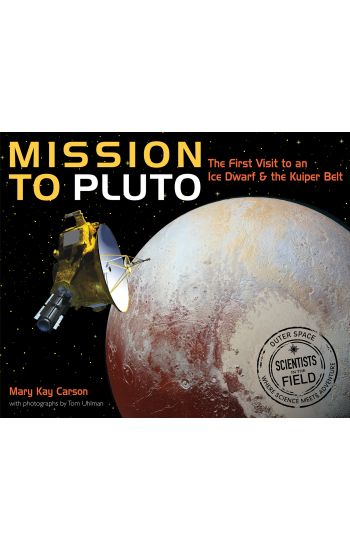
Mission to Pluto

Mission to Pluto

Mary Kay Carson

Houghton Mifflin Books for Children
2020
nidottu
In July of 2015, a robotic spacecraft reached Pluto after a nine-and-a-half-year journey. Explore with New Horizons in this new-to-paperback book about the first mission to Pluto, which revealed the ice dwarf and its five moons as they had never been seen before. Images from the mission show a reddish surface covered in mountains of frozen water, moving glaciers, hints of possible ice volcanoes, and an underground ocean. Pluto is geologically alive and changing!
Inside Biosphere 2: Earth Science Under Glass
In the Arizona desert, scientists conduct studies and experiments aimed to help us better understand our environment and what sort of things are happening to it due to climate change. The location is Biosphere 2, an immense structure that contains a replica ocean, savannah, and rainforest, among other Earth biomes. It's a unique take on the Scientists in the Field mission statement -- in this case, the lab is a replica that allows the scientists to conduct large-scale experiments that would otherwise be impossible.
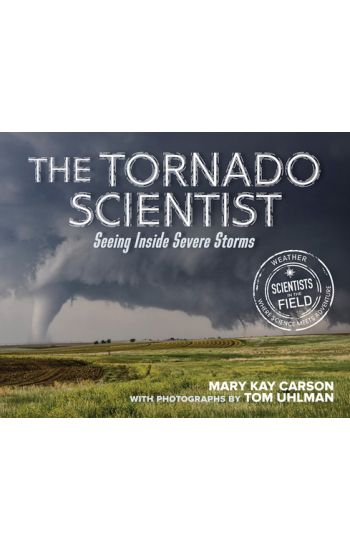
The Tornado Scientist: Seeing Inside Severe Storms
In this addition to the critically acclaimed Scientist in the Field series, scientist Robin Tanamachi and her team are trying to save countless lives across America's heartland, chasing one tornado at a time.Robin Tanamachi has been captivated by tornadoes and extreme weather her entire life. When she realized people researched weather for a job, she was hooked.She now studies tornadogenesis, or how tornadoes form, and what causes them to get weaker versus strengthen. For her, driving around in a Doppler radar truck aiming towards storms is a normal day in the office. The data she collects is then modeled and studied on computers--with math, physics, and computer science working hand in hand with meteorology.At the end of the day, knowing exactly how, when, and where these violent storms happen can give more warning time for everyone involved.
Mission to Pluto: The First Visit to an Ice Dwarf and the Kuiper Belt
In July of 2015 a robotic spacecraft reached Pluto after a nine-and-half-year journey. New Horizons is the first spacecraft mission to Pluto and revealed its five moons as never before seen. Images from the mission show a reddish surface covered in ice-water mountains, moving glaciers, and hints of possible ice volcanoes and an underground ocean. Pluto is geologically alive and changing This addition to the Scientists in the Field series goes where no person or spacecraft has ever gone before. Follow along with the team of scientists as they build New Horizons, fly it across the solar system, and make new discoveries about a world three billion miles away.
The Tornado Scientist: Seeing Inside Severe Storms
In this addition to the critically acclaimed Scientist in the Field series, scientist Robin Tanamachi and her team are trying to save countless lives across America's heartland, chasing one tornado at a time.Robin Tanamachi has been captivated by tornadoes and extreme weather her entire life. When she realized people researched weather for a job, she was hooked.She now studies tornadogenesis, or how tornadoes form, and what causes them to get weaker versus strengthen. For her, driving around in a Doppler radar truck aiming towards storms is a normal day in the office. The data she collects is then modeled and studied on computers--with math, physics, and computer science working hand in hand with meteorology.At the end of the day, knowing exactly how, when, and where these violent storms happen can give more warning time for everyone involved.
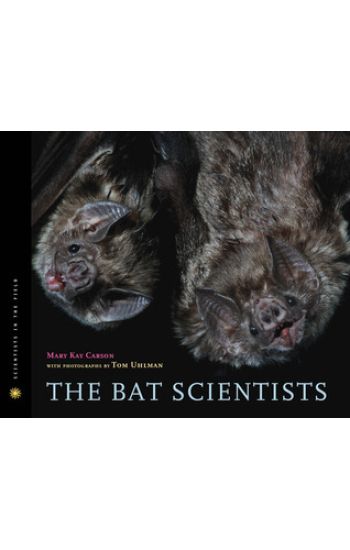
The Bat Scientists

The Bat Scientists

Mary Kay Carson

Clarion Books
2010
sidottu
Dr. Merlin Tuttle and his colleagues at Bat Conservation International aren't scared of bats. These bat crusaders are fascinated by them, with good reason. Bats fly the night skies in nearly every part of the world, but they are the least studied of all mammals. As the major predator of night-flying insects, bats eat many pests. Unfortunately bats are facing many problems, including a terrifying new disease. White-nose Syndrome is infecting and killing millions of hibernating bats in North America. But Dr. Tuttle, with the help of his fellow bat scientists are in the trenches--and caves--on the front line of the fight to save their beloved bats.
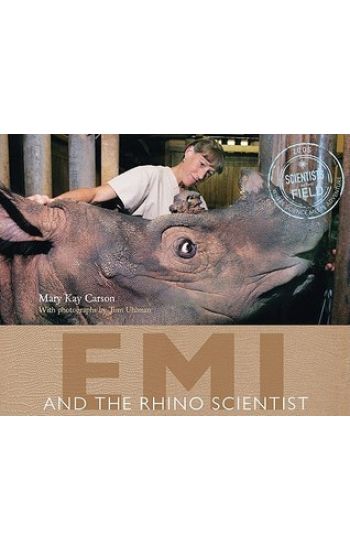
Emi and the Rhino Scientist

Emi and the Rhino Scientist

Mary Kay Carson

Clarion Books
2010
nidottu
Terri Roth trudges through the thick, dark Sumatran jungle. She's looking for a rhinoceros that's been seen in the area. It's a rare Sumatran rhino, the world's smallest rhino and one of the most endangered mammals on the planet.Suddenly she spots a young female rhino through the tangle of ferns and trees. The stocky animal is covered in reddish hair, and her snout sports two stubby horns. The rhino walks right up to Terri. The scientist slowly reaches out her hand and touches the rhino's big nose. The wild rhino's curiosity and friendliness remind Terri of Emi, the female Sumatran rhino that lives at the Cincinnati Zoo where Terri works. Terri is working with Emi to help save Sumatran rhinos from extinction--one calf at a time.
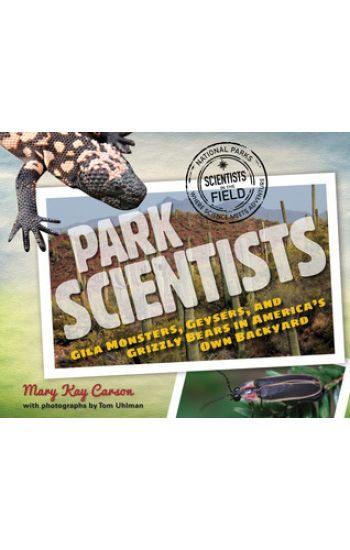
Park Scientists: Gila Monsters, Geysers, and Grizzly Bears in America's Own Backyard
America's National Parks are protected places and have become living museums for as many as 270 million visitors per year In addition, researchers are able to perform long term studies of a wide number of subjects from salamanders the size of thumbnails to gigantic geothermal geysers. These parks are natural laboratories for scientists. Did you know that Yellowstone National Park in Wyoming sits on top of an active (and very large) volcano? This volcano is monitored and studied on a daily basis, not only as a means of protection (though it seems a long way off from erupting) but also as a way of understanding how the environment changes and influences what goes on deep underground. The scientists profiled in The Park Scientists also study grizzly bears in Yellowstone, the majestic Sagauro catci in Arizona, and fireflies in Tennessee -- and suggest many ways for the average reader of any age to help out. The emphasis here is twofold: the great science that happens everyday in these important, protected spaces, and the fact that you can visit all of them and participate in the research. It's backyard science at its biggest and best in this resourceful addition to the Scientists in the Field series
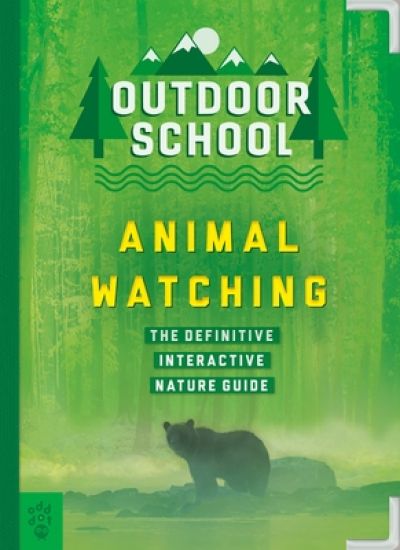
Outdoor School: Animal Watching: The Definitive Interactive Nature Guide
Rewild your life With metal corners and 448 full-color, highly illustrated pages, OUTDOOR SCHOOL: ANIMAL WATCHING is an indispensable tool for young explorers and animal lovers. Make every day an adventure with the included: - Immersive activities to get you exploring- Write-in sections to journal about experiences- Next-level adventures to challenge even seasoned nature lovers No experience is required--only curiosity and courage. This interactive field guide to animals includes: - Animal tracking- Identifying birds by silhouette, size, and color- Reading animal range maps- Bird nest spotting- Essential animal-watching gear- Identifying mammals- Bird calls and animal sounds- Finding amphibians, reptiles, and fish- Spotting scat- Recognizing eyeshine- Recording animal behaviorAnd so much more Also from the OUTDOOR SCHOOL series: - Hiking and Camping- Rock, Fossil, and Shell Hunting- Gardening- Tree, Wildflower, and Mushroom Spotting- Outdoor School Essentials: Survival Skills- Outdoor School Essentials: Animal Tracks- Spot & Sticker Animals- Spot & Sticker Plants- Spot & Sticker Birds- Spot & Sticker Oceans- Spot & Sticker Butterflies & Moths
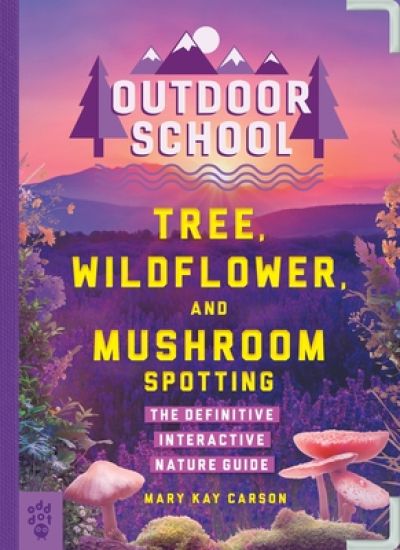
Outdoor School: Tree, Wildflower, and Mushroom Spotting: The Definitive Interactive Nature Guide
With 448 full-color, highly-illustrated pages, Outdoor School is your indispensable tool for the outdoors. This interactive field guide to plant and mushroom spotting includes: - Immersive activities to get you exploring- Write-in sections to journal about experiences- Next-level adventures to challenge even seasoned nature lovers. No experience is required--only curiosity and courage. Inside you'll find easy-to-follow instructions on how to: - Grow mushrooms with cardboard- Compare bark types- Count tree rings- Survey leaf patterns- Create fern spore prints- Press and preserve wildflowersAnd so much more Also from the OUTDOOR SCHOOL series: - Hiking and Camping- Rock, Fossil, and Shell Hunting- Animal Watching- Gardening- Outdoor School Essentials: Survival Skills- Outdoor School Essentials: Animal Tracks- Spot & Sticker Animals- Spot & Sticker Plants- Spot & Sticker Birds- Spot & Sticker Oceans- Spot & Sticker Butterflies & Moths
Park Scientists: Gila Monsters, Geysers, and Grizzly Bears in America's Own Backyard
* "A well-written, unique, carefully organized treat for nature lovers and investigators."--School Library Journal, starred review America's national parks have been called the country's "best idea," and some of the best scientific ideas are happening inside these protected spaces. There are geysers and grizzlies in Yellowstone, Gila monsters and saguaro cacti in southern Arizona, and the world's only known population of red-cheeked salamanders in the Great Smoky Mountains. And in some parks you can roll up your sleeves and actively participate as a citizen scientist. There is much to see, do and learn, right here in America's own backyard
How Many Planets Circle the Sun?

How Many Planets Circle the Sun?

Mary Kay Carson

Sterling
2014
pokkari
This book offers fascinating facts about our universe from award-winner Mary Kay Carson. Kids will learn about the asteroid belt, Martian volcanoes, dwarf planets, how did Saturn got its rings and more. It is suitable for children aged 7 and over. Why is there life on earth? How did Saturn get its rings? Which planet is biggest, which one's hottest and which has a cloud named Scooter? Take a trip into outer space to learn about the asteroid belt, Martian volcanoes, dwarf planets and other fascinating facts about our universe.
Why Does Earth Spin?

Why Does Earth Spin?

Mary Kay Carson

Sterling
2014
pokkari
This book reveals answers to must-know questions about our amazing planet. It includes information about Earth's size and location, why the sky is blue and much more. It is suitable for children aged 7 and over. Where is planet Earth and how big is it? Does the ground move under our feet? What would we find if we dug down all the way to the Earth's core? And why is the sky blue? Children will discover the answers to these and other must-know questions about our amazing planet.
What Makes a Tornado Twist?

What Makes a Tornado Twist?

Mary Kay Carson

Sterling
2014
pokkari
This title is the latest from the popular Good Question! series. It features charming illustrations, clever charts and fun text help kids learn about the weather. It is suitable for children aged 6 and over. Is each snowflake unique? What comes first: thunder or lightning? What causes the seasons? Charming illustrations, clever charts and fun text help kids learn whatever they want to know about wild weather. No matter their question, the fascinating answers are right here!
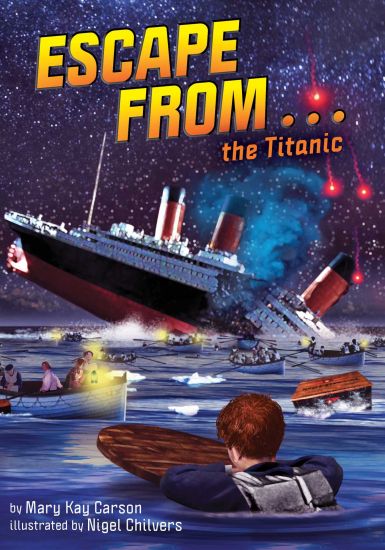
Escape from . . . the Titanic

Escape from . . . the Titanic

Mary Kay Carson

Little Bee Books
2021
nidottu
"Many details within the informative, exciting narrative are based in history, and sidebars filling in the facts will bolster the story's believability for young readers...A good beginning for the Escape From . . . historical fiction series." Booklist "With a prologue that spells out the issues on the Titanic, this book foreshadows disaster. Patrick Kelley, an Irish bellboy set to turn 14 on the ship, and Sarah Walsh, a young white passenger headed back to her family in Boston, are thrown together in an unlikely match, with little in common except their Irish backgrounds." School Library JournalPatrick is an Irish bellboy working on the Titanic to help his family back home. Sarah is a passenger excited to return to America. Neither of them knows that they are about to embark on the most dangerous trip of their lives. The unsinkable Titanic is not quite what Sarah expected. Instead of dining with movie stars, she finds herself having more fun in steerage with the family of her new friend, Patrick, a bellboy. He shows her all the secrets that the greatest ship in the world has to offer, like heated swimming pools and first-class cabins.But then . . . disaster The ship crashes into an iceberg, and water begins rushing into the lower decks. The Titanic is going down fast-into the deep, icy Atlantic. Can Sarah find her new friends in time? Can Patrick do his duty and also save himself? Will either of them manage to escape one of the deadliest shipwrecks in history?
Escape from . . . the 1916 Shark Attacks

Escape from . . . the 1916 Shark Attacks

Mary Kay Carson

Little Bee Books
2023
nidottu
Stay out of the water During the summer of 1916, the "Jersey man-eater"-a great white shark-terrorized the coast of New Jersey. Based on real events, new friends Ed and Mike have to work together to survive one of the deadliest shark attacks in history In the blistering summer of 1916, Ed Mitchell is melting in the heat wave boiling New York City. All the city pools are closed because of the polio epidemic, so Ed can't wait to flee to the Jersey Shore and cool off in the ocean. But during his first dip, a great white shark attacks a swimmer and sends the coastline into a panic. Ed is sent away from the shore to visit his aunt in Matawan, New Jersey, where he can stay safe and cool. In Matawan, Ed meets Mike Anders-a local boy who knows all the best spots in the nearby creek. Mike vows to teach Ed to swim, and Ed promises to help Mike read better. Little do they know, the new friends are about to have the summer of their lives. The "Jersey man-eater," the dangerous shark who keeps attacking swimmers, is headed right up the coast and into their favorite swimming spot Will Ed and Mike be able to survive one of the deadliest shark attacks in history?
Escape from . . . the 1916 Shark Attacks

Escape from . . . the 1916 Shark Attacks

Mary Kay Carson

Little Bee Books
2023
sidottu
Stay out of the water During the summer of 1916, the "Jersey man-eater"-a great white shark-terrorized the coast of New Jersey. Based on real events, new friends Ed and Mike have to work together to survive one of the deadliest shark attacks in history In the blistering summer of 1916, Ed Mitchell is melting in the heat wave boiling New York City. All the city pools are closed because of the polio epidemic, so Ed can't wait to flee to the Jersey Shore and cool off in the ocean. But during his first dip, a great white shark attacks a swimmer and sends the coastline into a panic. Ed is sent away from the shore to visit his aunt in Matawan, New Jersey, where he can stay safe and cool. In Matawan, Ed meets Mike Anders-a local boy who knows all the best spots in the nearby creek. Mike vows to teach Ed to swim, and Ed promises to help Mike read better. Little do they know, the new friends are about to have the summer of their lives. The "Jersey man-eater," the dangerous shark who keeps attacking swimmers, is headed right up the coast and into their favorite swimming spot Will Ed and Mike be able to survive one of the deadliest shark attacks in history?
Before It Was a Hurricane

Before It Was a Hurricane

Mary Kay Carson

Little Bee Books
2026
sidottu
A hurricane is a massive, dangerous storm. Its clouds carry trillions of gallons of water that can dump a year's worth of rain in a single day. Learn how the most massive, destructive storm on Earth forms with this inventive new series Howling wind rips away roofs and topples trees. Rising water floods streets, and pounding waves slam sandy beaches. This isn't just any seaside squall. It's a ... HURRICANE A hurricane isn't a surprise. It's a storm that calls ahead and lets you know it's coming. By the time a full-blown hurricane is ripping off roofs and flooding streets, scientists are on a first-name basis with it. They know its history and can trace its path across the ocean. Before It Was a Hurricane starts at the peak of the action-the chaos and power of a hurricane at full strength-before stepping backward through time. Follow its four-thousand-mile journey from a hot desert breeze to the most destructive storm on Earth. Includes fold-out pages to see HUGE images of a hurricane in action
The River That Wolves Moved: A True Tale from Yellowstone
Long before its establishment as a national park in 1872, Yellowstone was home to the gray wolf, as well as other large predators. But the relationship between human and wolf has always been a tense and complicated one. Predator control programs were developed and, by the mid-1900s, wolves had almost been entirely eliminated from the region and even the lower United States. The removal of even one strand of an ecosystem's complex web can have a ripple effect, though. Using the structure of "The House that Jack Built," science writer Mary Kay Carson shows the interconnectedness of the wildlife that lives in a place and how the presence (or absence) of a single species can impact an ecosystem so that the physical landscape itself is altered. Engaging text and colorful detailed artwork make the natural science understandable and accessible to young readers. With so many of Earth's ecosystems under threat by climate change, pollution, and loss of habitat, this is a critical and timely topic. Back matter includes information on the Yellowstone region during the wolves' absence and after their reintroduction.