Kirjojen hintavertailu. Mukana 12 016 292 kirjaa ja 12 kauppaa.

Kirjahaku

Etsi kirjoja tekijän nimen, kirjan nimen tai ISBN:n perusteella.

6 kirjaa tekijältä Mary Meigs

Lily Briscoe

Lily Briscoe

Mary Meigs

Talonbooks
1981
pokkari
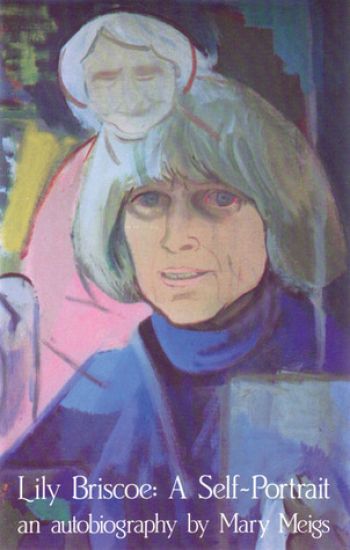
Taking as her alter-ego Lily Briscoe--the painter in Virginia Woolf's To the Lighthouse--Mary Meigs paints a portrait of herself, her family and her friends in Lily Briscoe: A Self-Portrait, a book that is both autobiography and memoir. In it, she describes the three major decisions of her life: "not to marry, to be an artist" and to listen to her "own voices." She speaks of her parents who belonged to "a generation before their own" and how they instilled in her a sense of guilt, locking her in the prison of her self, a prison constructed "with the material of doubt and failure; of shattered dreams and unhappy loves, jealousy, hate, envy and the deadly sins of lovelessness and indifference," but she also tells how she escapes from this prison with the knowledge that her inner sun takes its energy "from love, from creativity." Lily Briscoe: A Self-Portrait is a book about the exercise of the will, the art of dreaming and the transcendent power of friendship. It is a very wise book written by a woman who waited--and lived--some sixty years before beginning to write.
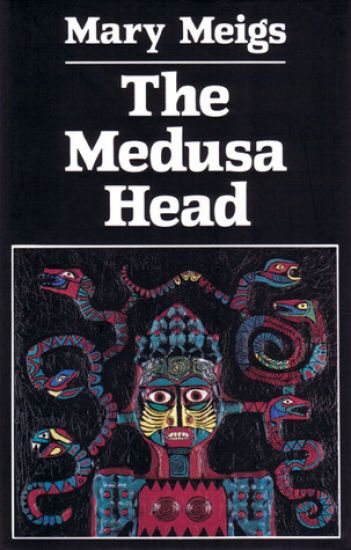
The Medusa Head

The Medusa Head

Mary Meigs

Talonbooks
1983
pokkari
For one year in her life, Mary Meigs and her long-term lover and friend, Marie-Claire Blais, lived in a menage a trois with the beautiful and powerful "Andree." After the end of their stormy three-way relationship, both Marie-Claire and Andree, who are fiction writers, embodied their memories in novels. The Medusa Head comes from the third woman--the autobiographer, who works hard to uncover the truth about that year. The story begins when Marie-Claire meets Andree at a literary event in Paris. They fall in love; and when Mary meets Andree, she falls in love, too. The three of them move to La Salle in Brittany, where Mary and Marie-Claire discover that the beguiling Andree is emotionally complex. In her happy, contented state, Andree is irresistible: intelligent, witty, charming. But Andree is also given to sudden and unexpected mood shifts, the most terrifying of which is her transformation into the "Medusa Head"--a furious, irrational, overpowering figure who must be placated at all costs. Thus, Mary and Marie-Claire are drawn into Andree's emotional labyrinth, from which they find it increasingly difficult to escape.
The Box Closet

The Box Closet

Mary Meigs

Talonbooks
1987
pokkari
The box closet was a real closet in the attic of the family house in Washington, D.C. in which Mary Meigs grew up. Bags and boxes of letters and diaries were found there after her mother's death in 1958, and when Meigs read them she decided that they were the material for a book. In the course of reading her family's letters and her mother's early diaries, she no longer saw her parents as Mother and Father but as Margaret and Edward, young and vulnerable: Margaret who flirted, Edward who waited ten years to propose marriage. Meigs saw aspects of them that made them and their parents more fully real to her than they had been in life. She has woven the diaries and letters together with a narrative that integrates her discoveries with her memories as a daughter and granddaughter. The result is a moving portrait of a family that was protected by another kind of box closet--that of privilege and of moral certitude--with opaque walls that shut out most of the world. It was, in her father's words, "the easy sheltered life," which is so hard for "good" people to escape from.
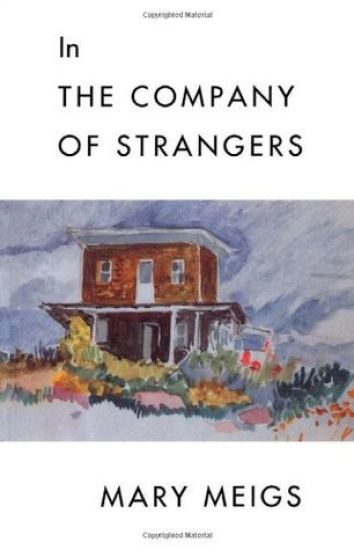
In the Company of Strangers

In the Company of Strangers

Mary Meigs

Talonbooks
1991
pokkari
Mary Meigs is one of the eight women who portray themselves in the film The Company of Strangers, a "semi-documentary" National Film Board production, released in 1990 to overwhelming critical and popular acclaim. Meigs spent two years writing this extraordinary narrative, which begins as her story of being in the film and unfolds into a gentle, intricate meditation on the experience of time, old age, magic and binding. Time becomes still and circular as the women's self-images and film images, their past and present, are bound inextricably with the filmmaker's vision.
The Time Being

The Time Being

Mary Meigs

Talonbooks
1997
pokkari
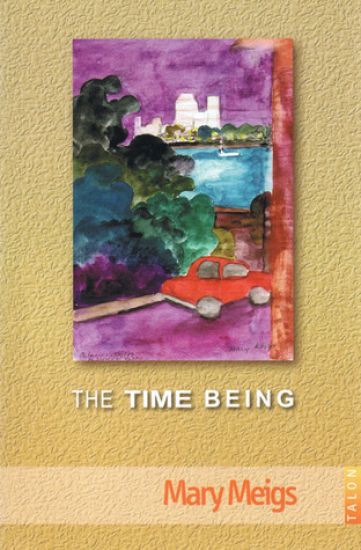
From Mary Meigs, the celebrated author of In the Company of Strangers, comes an autobiographical novel, The Time Being. An affair born of a correspondence with a distant admirer leads the lovers to an arranged meeting in Australia. With a lifetime of relationships already behind them, the two women approach each other cautiously, each filled with the rekindled fire of innocent passion, constrained by their gathered clouds of experience. In this isolated and primeval land, a performance of ancient aboriginal ritual and drama draws the lovers into the elemental world of "the dream time," the still point around which their relationship begins to turn. This is an exquisite love story unlike any other, written in retrospect with a lovely, clear heart, and in the full light of day.
Beyond Recall

Beyond Recall

Mary Meigs

Talonbooks
2005
pokkari
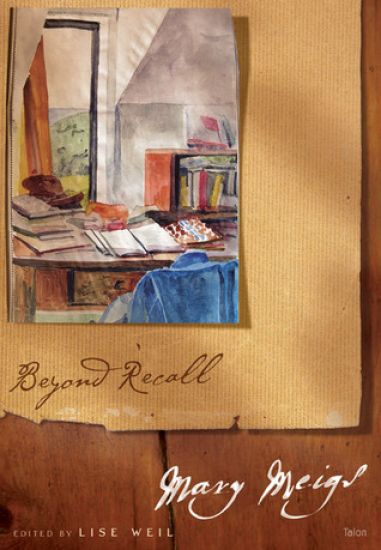
An exquisite painter, intellectual, social activist and articulate lesbian feminist, Mary Meigs did not begin her writing career until age sixty. While her books are grounded in the particulars of her personal relationships, they are difficult to categorize. So luminous are they with her painter's recognition of the dance of shades and hues of context, so unsparingly lucid is her intellect of analytical and mindful thought, so unsentimental and profoundly self-aware is her heart, that her books read like the most exquisitely crafted fiction a life embraced to the fullest, and with eyes wide open, can become in its written record. Mary Meigs suffered a stroke in 1999. Undaunted and irrepressible, Meigs embraced her fate with both a penetrating curiosity and an utterly undiminished will to create. New, discrete forms of writing emerged: an incisively contemplative journal; a beautifully witty, illustrated fax correspondence between her cat Mike and Marie-Claire Blais's cat Mouser; and a fascinating series of collaborative "free writing" sketches, beginning with a line or phrase, usually from a poem, on which the writer elaborated without moving pen from paper.Lise Weil has constructed a celebratory gathering of these magical pieces in Beyond Recall, Meigs's paean to the indomitable human spirit and its triumph over the infirmities and obstacles old age imposes on the human condition.