Kirjojen hintavertailu. Mukana 12 016 292 kirjaa ja 12 kauppaa.

Kirjahaku

Etsi kirjoja tekijän nimen, kirjan nimen tai ISBN:n perusteella.

12 kirjaa tekijältä Mary Stanton

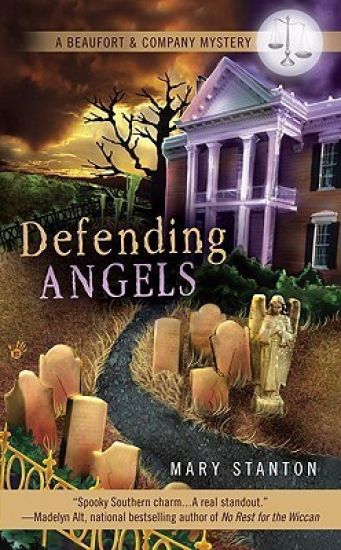
Defending Angels

Defending Angels

Mary Stanton

Penguin Publishing Group
2008
pokkari
With a long list of ethereal clients who need her help, Savannah lawyer Brianna Winston Beaufort's career choice is beginning to haunt her? An already dead businessman needs Bree's help to find his murderer and prove his innocence against the charge of greed, which comes from the mightiest hand of the law, the Celestial Court. And the verdict in this case could put Bree's life on the line?as well as her client's afterlife.
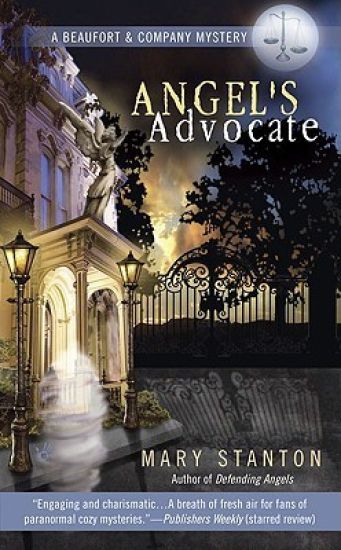
Angel's Advocate

Angel's Advocate

Mary Stanton

BERKLEY BOOKS
2009
pokkari
Money's been tight ever since Bree Winston Beaufort inherited Savannah's haunted law firm Beaufort & Company along with its less-than-angelic staff. But she's finally going to tackle a case that pays the bills representing a spoiled girl who stole someone's Girl Scout cookie money. But soon enough she finds that her client's departed millionaire father needs help too. Can she help an unsavory father/daughter duo and make a living off of the living?
Avenging Angels

Avenging Angels

Mary Stanton

BERKLEY BOOKS
2010
pokkari
The series that's "a breath of fresh air for fans of paranormal cozy mysteries" (Publishers Weekly, starred review) Law school hasn't prepared Bree to appeal cases for the dead. After inheriting her great-uncle's haunted law firm, she must now represent ex-banker O'Rourke, who supposedly killed himself after losing a fortune. But with a merry widow and evidence mounting, it's beginning to look like murder. So Bree and her team of angels begin to investigate. But Bree soon discovers that someone would rather see her deceased than debriefed.
Angel's Verdict

Angel's Verdict

Mary Stanton

BERKLEY BOOKS
2011
pokkari
Celestial advocate Brianna Winston-Beaufort is eager to set aside handling appeals for condemned souls and get back to practicing law in the land of the living. Three months after taking over the family practice Bree jumps at the opportunity to work for an earthly client. But when elderly actress Justine Coville walks into Beaufort & Company's office to make changes to her will, she drags Bree right back into a whole other-world of troubles.
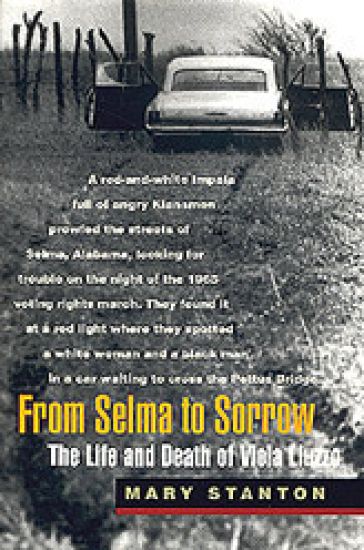
From Selma to Sorrow

From Selma to Sorrow

Mary Stanton

University of Georgia Press
2000
pokkari
More than thirty years after the murder of Viola Liuzzo by the Ku Klux Klan, she remains an enigma. Some saw her as a dedicated civil rights worker, others as a troubled housewife. Some thought she was a victim of random violence and government conspiracy, while others thought she was an unfit mother who got what she deserved.From Selma to Sorrow is the first full-length biography of the only white woman honored at the Civil Rights Memorial in Montgomery. Born and reared in the South, Liuzzo moved to Detroit as an adult. At the time of her death she was married to a high-ranking Teamster and had five children. While a part-time student at Wayne State University she became involved in civil rights protests and decided to participate in a voting rights march in Selma, Alabama. On March 25, 1965, Liuzzo and a young black man named Leroy Moton were on their way from Selma to Montgomery after the march. Klansmen followed Liuzzo's car along Highway 80 for twenty miles, then pulled alongside and fired shots. Liuzzo was killed instantly and Moton, covered with her blood, escaped by pretending to be dead when the killers returned.Because this group of Klansmen included an FBI informant, Liuzzo lost her life in more ways than one. To deflect attention and to cover up his recklessness in permitting a known violent racist to work undercover during the march, J. Edgar Hoover crafted a malicious public relations campaign that unfairly portrayed Liuzzo as an unstable woman who abandoned her family to stir up trouble in the South. The years of unrelenting accusations, innuendos, and lies nearly destroyed her husband and five children.In From Selma to Sorrow Mary Stanton searches for the truth about Liuzzo's life and death, using extensive interviews, public records, and FBI case files to tell a startling story of murder, betrayal, and passion.
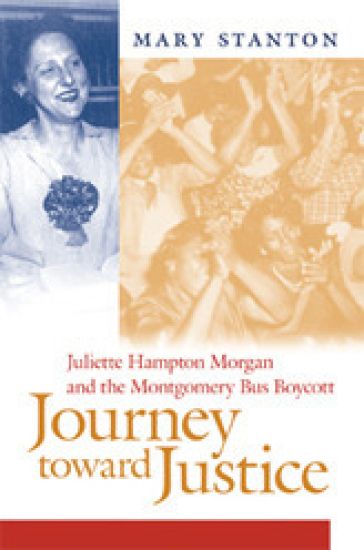
Journey toward Justice

Journey toward Justice

Mary Stanton

University of Georgia Press
2006
sidottu
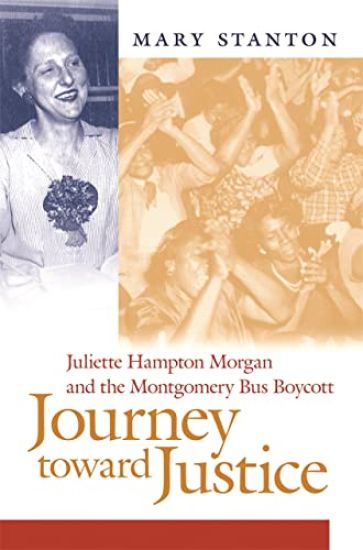
About a week after the [Montgomery Bus Boycott] started a white woman who understood and sympathized with the Negroes' efforts wrote a letter to the editor . . . comparing the bus protest with the Gandhian movement in India. Miss Juliette Morgan, sensitive and frail, did not long survive the rejection and condemnation of the white community, but before she died in the summer of 1957 the name of Mahatma Gandhi was well-known in Montgomery.—Martin Luther King Jr., from Stride toward FreedomFrom 1936 to 1957 in letters published in Alabama's major daily newspapers as well as in essays and private correspondence, Juliette Hampton Morgan made some of the most insightful observations on record about Montgomery's racial crises. Mary Stanton traces the development of Morgan's moral conscience amid details about her childhood, her education, and her family, which included a politically ambitious father and a strong-willed mother and grandmother.Morgan backed her words with action. As a New Deal Democrat, she worked to abolish the poll tax and establish a federal antilynching law. She rarely hesitated to appear in integrated settings, and years before the 1955 Montgomery Bus Boycott, she was regularly confronting bus drivers over their mistreatment of black riders. Morgan's letters had consequences: she and the newspapers that published them were vilified and threatened. Although the trustees of the Montgomery Public Library, where Morgan worked, resisted pressure to fire her, a cross was burned in her yard, and friends, neighbors, former students, and colleagues shunned her.This biography, which acknowledges the vital work of a civil rights advocate at the local level, demonstrates the costs of speaking out in a highly conformist society. Morgan took her own life at age forty-three. No one who reads her story can easily dismiss the effects of the rebukes and isolation she endured because of her stand against racism.
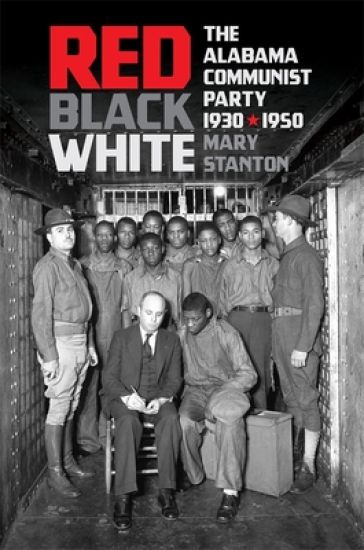
Red, Black, White

Red, Black, White

Mary Stanton

University of Georgia Press
2019
sidottu
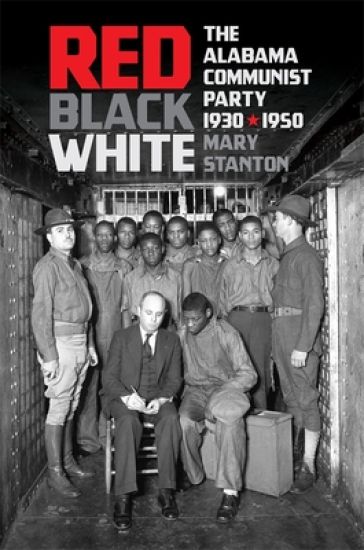
Red, Black, White is the first narrative history of the American communist movement in the South since Robin D. G. Kelley's groundbreaking Hammer and Hoe and the first to explore its key figures and actions beyond the 1930s. Written from the perspective of the district 17 (CPUSA) Reds who worked primarily in Alabama, it acquaints a new generation with the impact of the Great Depression on postwar black and white, young and old, urban and rural Americans.After the Scottsboro story broke on March 25, 1931, it was open season for old-fashioned lynchings, legal (courtroom) lynchings, and mob murder. In Alabama alone, twenty black men were known to have been murdered, and countless others, women included, were beaten, disabled, jailed, “disappeared,” or had their lives otherwise ruined between March 1931 and September 1935. In this collective biography, Mary Stanton—a noted chronicler of the left and of social justice movements in the South—explores the resources available to Depression-era Reds before the advent of the New Deal or the modern civil rights movement. What emerges from this narrative is a meaningful criterion by which to evaluate the Reds’ accomplishments.Through seven cases of the CPUSA (district 17) activity in the South, Stanton covers tortured notions of loyalty and betrayal, the cult of white southern womanhood, Christianity in all its iterations, and the scapegoating of African Americans, Jews, and communists. Yet this still is a story of how these groups fought back, and fought together, for social justice and change in a fractured region.
Red, Black, White

Red, Black, White

Mary Stanton

University of Georgia Press
2019
pokkari
Red, Black, White is the first narrative history of the American communist movement in the South since Robin D. G. Kelley's groundbreaking Hammer and Hoe and the first to explore its key figures and actions beyond the 1930s. Written from the perspective of the district 17 (CPUSA) Reds who worked primarily in Alabama, it acquaints a new generation with the impact of the Great Depression on postwar black and white, young and old, urban and rural Americans.After the Scottsboro story broke on March 25, 1931, it was open season for old-fashioned lynchings, legal (courtroom) lynchings, and mob murder. In Alabama alone, twenty black men were known to have been murdered, and countless others, women included, were beaten, disabled, jailed, “disappeared,” or had their lives otherwise ruined between March 1931 and September 1935. In this collective biography, Mary Stanton—a noted chronicler of the left and of social justice movements in the South—explores the resources available to Depression-era Reds before the advent of the New Deal or the modern civil rights movement. What emerges from this narrative is a meaningful criterion by which to evaluate the Reds’ accomplishments.Through seven cases of the CPUSA (district 17) activity in the South, Stanton covers tortured notions of loyalty and betrayal, the cult of white southern womanhood, Christianity in all its iterations, and the scapegoating of African Americans, Jews, and communists. Yet this still is a story of how these groups fought back, and fought together, for social justice and change in a fractured region.
Recreation without Humiliation

Recreation without Humiliation

Mary Stanton

UNIVERSITY OF GEORGIA PRESS
2024
sidottu
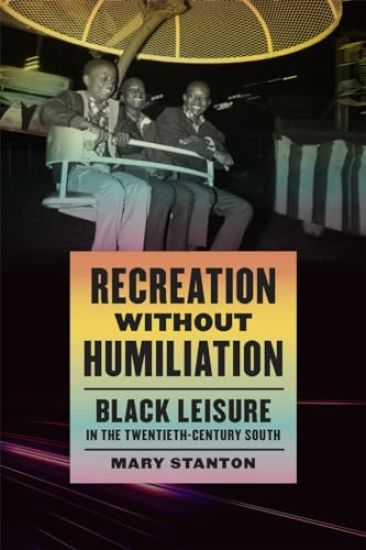
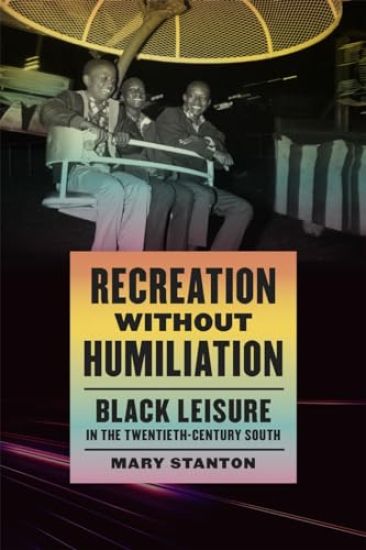
Recreation without Humiliation is the first comprehensive study of Black amusement venues established by Black Americans for Black Americans. Mary Stanton’s extensive research on African American amusement parks in America explores not only segregation, class, and social barriers but also the notion of the ‘pursuit of happiness’ as an inalienable right for all races and classes of people. Inspired by summers spent on Coney Island, where Stanton became curious about the existence of African American amusement parks in America, Stanton’s research uncovered more than fifty such venues, most of which operated during the late nineteenth and early twentieth centuries. These were parks, theaters, juke joints, country clubs, summer colonies, baseball diamonds, and arenas. Although these venues provided much needed recreational services to an underserved Black population, many were threatened by whites, and some destroyed by them. Through her study of these sites of recreation, Stanton illuminates the history of African Americans who strove to create and maintain safe and satisfying entertainment despite segregation. In her research, Stanton also found class divisions among Black American entertainment venues. At the pinnacle of Black society in this era were the upper class, who could afford exclusive Black summer cottages and country clubs. General entertainment for Black working-class families consisted of dancing and drinking in juke joints or patronizing small amusement parks, playgrounds, movie theaters, church-sponsored functions, and Black county fairs. African Americans in the twentieth century, especially in the South, transformed segregation into what historian Earl Lewis calls “congregation.” Congregation implies choice, and this congregation “provided space and support for establishing new amusements, entertainments, music, and dance” without interference or oppression.
Recreation without Humiliation

Recreation without Humiliation

Mary Stanton

UNIVERSITY OF GEORGIA PRESS
2024
pokkari
Recreation without Humiliation is the first comprehensive study of Black amusement venues established by Black Americans for Black Americans. Mary Stanton’s extensive research on African American amusement parks in America explores not only segregation, class, and social barriers but also the notion of the ‘pursuit of happiness’ as an inalienable right for all races and classes of people. Inspired by summers spent on Coney Island, where Stanton became curious about the existence of African American amusement parks in America, Stanton’s research uncovered more than fifty such venues, most of which operated during the late nineteenth and early twentieth centuries. These were parks, theaters, juke joints, country clubs, summer colonies, baseball diamonds, and arenas. Although these venues provided much needed recreational services to an underserved Black population, many were threatened by whites, and some destroyed by them. Through her study of these sites of recreation, Stanton illuminates the history of African Americans who strove to create and maintain safe and satisfying entertainment despite segregation. In her research, Stanton also found class divisions among Black American entertainment venues. At the pinnacle of Black society in this era were the upper class, who could afford exclusive Black summer cottages and country clubs. General entertainment for Black working-class families consisted of dancing and drinking in juke joints or patronizing small amusement parks, playgrounds, movie theaters, church-sponsored functions, and Black county fairs. African Americans in the twentieth century, especially in the South, transformed segregation into what historian Earl Lewis calls “congregation.” Congregation implies choice, and this congregation “provided space and support for establishing new amusements, entertainments, music, and dance” without interference or oppression.
Journey toward Justice

Journey toward Justice

Mary Stanton

UNIVERSITY OF GEORGIA PRESS
2024
pokkari
About a week after the [Montgomery Bus Boycott] started a white woman who understood and sympathized with the Negroes' efforts wrote a letter to the editor . . . comparing the bus protest with the Gandhian movement in India. Miss Juliette Morgan, sensitive and frail, did not long survive the rejection and condemnation of the white community, but before she died in the summer of 1957 the name of Mahatma Gandhi was well-known in Montgomery.—Martin Luther King Jr., from Stride toward FreedomFrom 1936 to 1957 in letters published in Alabama's major daily newspapers as well as in essays and private correspondence, Juliette Hampton Morgan made some of the most insightful observations on record about Montgomery's racial crises. Mary Stanton traces the development of Morgan's moral conscience amid details about her childhood, her education, and her family, which included a politically ambitious father and a strong-willed mother and grandmother.Morgan backed her words with action. As a New Deal Democrat, she worked to abolish the poll tax and establish a federal antilynching law. She rarely hesitated to appear in integrated settings, and years before the 1955 Montgomery Bus Boycott, she was regularly confronting bus drivers over their mistreatment of black riders. Morgan's letters had consequences: she and the newspapers that published them were vilified and threatened. Although the trustees of the Montgomery Public Library, where Morgan worked, resisted pressure to fire her, a cross was burned in her yard, and friends, neighbors, former students, and colleagues shunned her.This biography, which acknowledges the vital work of a civil rights advocate at the local level, demonstrates the costs of speaking out in a highly conformist society. Morgan took her own life at age forty-three. No one who reads her story can easily dismiss the effects of the rebukes and isolation she endured because of her stand against racism.
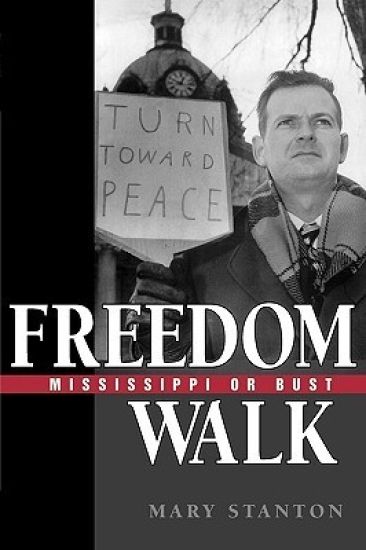
Freedom Walk

Freedom Walk

Mary Stanton

University Press of Mississippi
2010
nidottu
In 1963, the streams of religious revival, racial strife, and cold-war politics were feeding the swelling river of social unrest in America. Marshaling massive forces, civil rights leaders were primed for a widescale attack on injustice in the South. By summer the conflict rose to great intensity as blacks and whites clashed in Birmingham. Outside the massive drive, Bill Moore, a white mail carrier, had made his own assault a few months earlier. Jeered and assailed as he made a solitary civil rights march along the Deep South highways, he was ridiculed by racists as a ""crazy man."" His well publicized purpose: to walk from Chattanooga to Jackson and hand-deliver a plea for racial tolerance to Ross Barnett, the staunchly segregationist governor of Mississippi. On April 23, on a highway near Attalla, Alabama, this lone crusader was shot dead. Although he was not a nobly ideal figure handpicked by shapers of the movement, inadvertently he became one of its earliest martyrs and, until now, part of an overlooked chapter in the history of the civil rights movement. Floyd Simpson, a grocer and member of the Gadsden, Alabama, chapter of the Ku Klux Klan, was charged with Moore's murder. A week later a white college student named Sam Shirah led five black and five white volunteers into Alabama to finish Moore's walk. They were beaten and jailed. Four other attempts to complete the postman's quest were similarly stymied. Moore had kept a journal that detailed his goal. Using it, along with interviews and extensive newspaper and newsreel reports, Mary Stanton has documented this phenomenal freedom walk as seen through the eyes of Moore, Shirah, and the gunman, the three protagonists. Though all shared a deep love of the South, their strong feelings about who was entitled to walk its highways were in deadly conflict.