Kirjojen hintavertailu. Mukana 11 244 527 kirjaa ja 12 kauppaa.

Kirjahaku

Etsi kirjoja tekijän nimen, kirjan nimen tai ISBN:n perusteella.

5 kirjaa tekijältä Mary Talbot

Media Discourse

Media Discourse

Mary Talbot

Edinburgh University Press
2007
sidottu
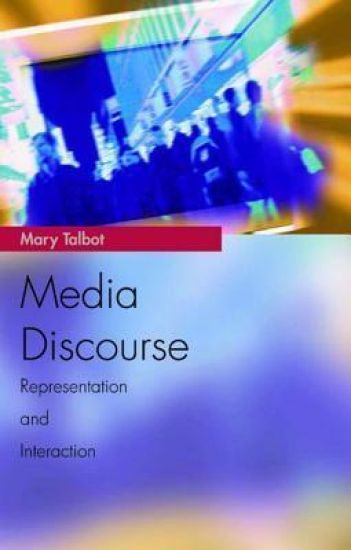
This lively and accessible study of media and discourse combines theoretical reflection with empirical engagement, and brings together insights from a range of disciplines. Within media and cultural studies, the study of media texts is dominated by an exclusive focus on representation. This book adds long overdue attention to social interaction. The book is divided into two sections. The first outlines key theoretical issues and concepts, including informalisation, genre hybridisation, positioning, dialogism and discourse. The second is a sustained interrogation of social interaction in and around media. Re-examining issues of representation and interaction, it critically assesses work on the para-social and broadcast sociability, then explores distinct sites of interaction: production communities, audience communities and 'interactivity' with audiences. Key features * The book is rich with fascinating examples involving British and US media, including radio, television, magazines and newspapers and their Internet spin-offs. * It brings together insights from conversation analysis, critical discourse analysis, cultural studies and media anthropology. * It is key reading for advanced undergraduates and postgraduates doing media studies, communication and cultural studies and journalism studies.
Media Discourse

Media Discourse

Mary Talbot

Edinburgh University Press
2007
nidottu
This lively and accessible study of media and discourse combines theoretical reflection with empirical engagement, and brings together insights from a range of disciplines. Within media and cultural studies, the study of media texts is dominated by an exclusive focus on representation. This book adds long overdue attention to social interaction. The book is divided into two sections. The first outlines key theoretical issues and concepts, including informalisation, genre hybridisation, positioning, dialogism and discourse. The second is a sustained interrogation of social interaction in and around media. Re-examining issues of representation and interaction, it critically assesses work on the para-social and broadcast sociability, then explores distinct sites of interaction: production communities, audience communities and 'interactivity' with audiences. Key features * The book is rich with fascinating examples involving British and US media, including radio, television, magazines and newspapers and their Internet spin-offs. * It brings together insights from conversation analysis, critical discourse analysis, cultural studies and media anthropology. * It is key reading for advanced undergraduates and postgraduates doing media studies, communication and cultural studies and journalism studies.
Language and Gender

Language and Gender

Mary Talbot

Polity Press
2019
sidottu
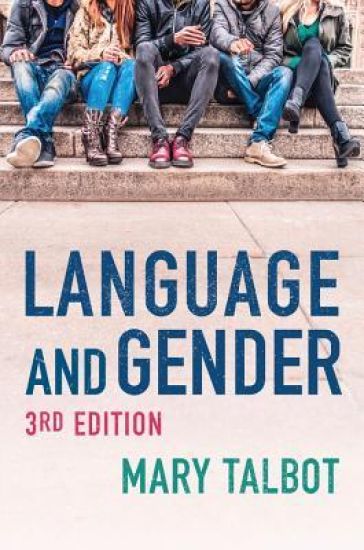
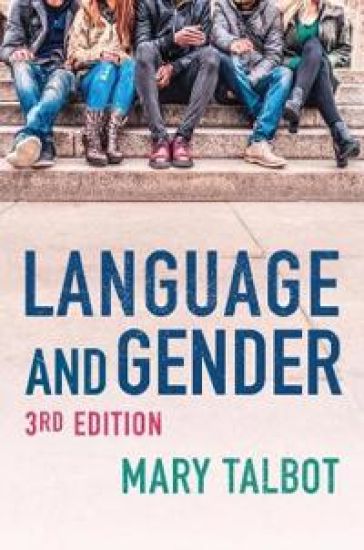
Since its first publication in 1998, Mary Talbot’s Language and Gender has been a leading textbook, popular with students for its accessibility and with teachers for the range and depth it achieves in a single volume. This anticipated third edition has been thoroughly revised and updated for the era of #MeToo, genderqueer, Trump, and cyberhate. The book is organized into three parts. An introductory section provides grounding in early ‘classic' studies in the field. In the second section, Talbot examines language used by women and men in a variety of speech situations and genres. The last section considers the construction and performance of gender in discourse, reflecting the interest in mass media and popular culture found in recent research, as well as the preoccupation with social change that is central to Critical Discourse Analysis. Maintaining an emphasis on recent research, Talbot covers a range of approaches at an introductory level, lucidly presenting sometimes difficult and complex issues. Each chapter concludes with a list of recommended readings, enabling students to further their interests in various topics. Language and Gender will continue to be an essential textbook for undergraduates and postgraduates in linguistics, sociolinguistics, cultural and media studies, gender studies and communication studies.
Language and Gender

Language and Gender

Mary Talbot

Polity Press
2019
nidottu
Since its first publication in 1998, Mary Talbot’s Language and Gender has been a leading textbook, popular with students for its accessibility and with teachers for the range and depth it achieves in a single volume. This anticipated third edition has been thoroughly revised and updated for the era of #MeToo, genderqueer, Trump, and cyberhate. The book is organized into three parts. An introductory section provides grounding in early ‘classic' studies in the field. In the second section, Talbot examines language used by women and men in a variety of speech situations and genres. The last section considers the construction and performance of gender in discourse, reflecting the interest in mass media and popular culture found in recent research, as well as the preoccupation with social change that is central to Critical Discourse Analysis. Maintaining an emphasis on recent research, Talbot covers a range of approaches at an introductory level, lucidly presenting sometimes difficult and complex issues. Each chapter concludes with a list of recommended readings, enabling students to further their interests in various topics. Language and Gender will continue to be an essential textbook for undergraduates and postgraduates in linguistics, sociolinguistics, cultural and media studies, gender studies and communication studies.