Kirjojen hintavertailu. Mukana 12 083 983 kirjaa ja 12 kauppaa.

Kirjahaku

Etsi kirjoja tekijän nimen, kirjan nimen tai ISBN:n perusteella.

3 kirjaa tekijältä Mary Triece

On the Picket Line

On the Picket Line

Mary Triece

University of Illinois Press
2007
nidottu
Bonnie Ritter Book Award, National Communication Association's Feminist and Women Studies Division, 2008. On the Picket Line uncovers the voices of working-class women, particularly those active in the Communist Party, U.S.A., in order to examine how these individuals confronted the tensions between their roles as workers, wives, mothers, and consumers. Combining critical analysis, Marxist and feminist theory, and labor history, Mary E. Triece analyzes the protest tactics employed by working class women to challenge dominant ideologies surrounding domesticity. She details the rhetorical strategies used by women to argue for their rights as workers in the paid labor force and as caregivers in the home. Their overtly coercive tactics included numerous sit-ins, strikes, and boycotts that won tangible gains for working poor and unemployed women. The book also gives voice to influential figures in the 1930s labor movement (many of whom were members of the Communist Party, U.S.A.), such as Ella Reeve Bloor, Margaret Cowl, Anna Damon, Ann Burlak, and Grace Hutchins. Triece ultimately argues that these confrontational protest tactics of the 1930s remain relevant in today's fights for more humane workplaces and better living conditions.
Protest And Popular Culture

Protest And Popular Culture

Mary Triece

Routledge
2019
sidottu
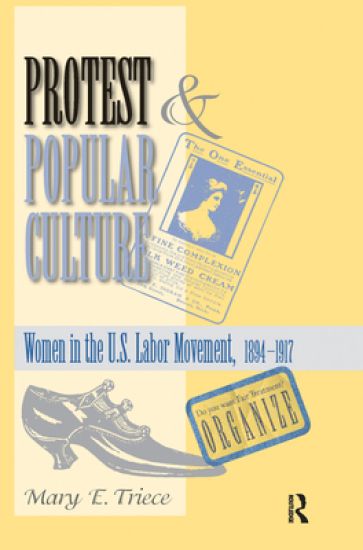
Protest and Popular Culture is at once a historical monograph and a critique of postmodernist approaches to the study of mass media, consumerism, and popular political movements. In it, Triece compares the self-representations of several late nineteenth and twentieth-century women's protest movements with representations of women offered by contemporaneous mass media outlets. She shows that from the late nineteenth century until the present day, U.S. women's protest movements sought to convince women that they are first and foremost laborer/producers, while the U.S. media has just as consistently sought to convince women that they are primarily consumers. Triece contends that these approaches to portraying women have been and continue to be constructed in opposition to one another. The leaders of women's protest movements, she argues, have long sought to convince women not to spend time and money on reshaping their selves through consumer purchases, but instead to focus attention on empowering themselves politically by asserting control over their own labor power. The mass media, meanwhile, has always treated such movements as potential threats to the financial well-being of the consumer sector (that is, of advertisers), and so has consistently trivialized them, while seeking simultaneously to convince women that they should devote attention and resources to buying things, not to struggling to overcome class and gender discrimination. Many cultural-studies scholars have argued that in recent years, rising prosperity has made consumerism into the primary site of both individual expression and ?resistance? to the dominant socio-economic order, with self-definition through personal purchases supplanting the role formerly played by struggle for an end to inequities of all kinds. These scholars contend that as such, mass media no longer function to naturalize, and thus reinforce such inequities, and consumerism no longer serves to perpetuate them. Triece argues that her
Protest And Popular Culture

Protest And Popular Culture

Mary Triece

Westview Press Inc
2001
nidottu
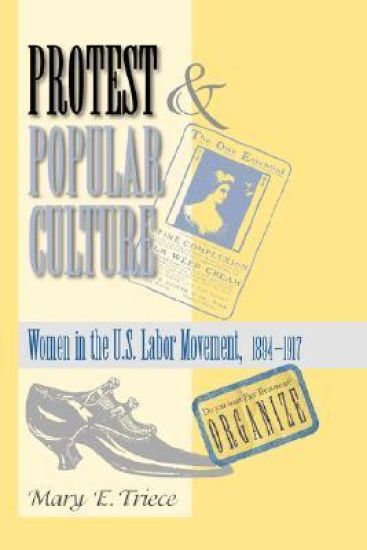
Protest and Popular Culture is at once a historical monograph and a critique of postmodernist approaches to the study of mass media, consumerism, and popular political movements. In it, Triece compares the self-representations of several late nineteenth and twentieth-century women's protest movements with representations of women offered by contemporaneous mass media outlets. She shows that from the late nineteenth century until the present day, U.S. women's protest movements sought to convince women that they are first and foremost laborer/producers, while the U.S. media has just as consistently sought to convince women that they are primarily consumers. Triece contends that these approaches to portraying women have been and continue to be constructed in opposition to one another. The leaders of women's protest movements, she argues, have long sought to convince women not to spend time and money on reshaping their selves through consumer purchases, but instead to focus attention on empowering themselves politically by asserting control over their own labor power. The mass media, meanwhile, has always treated such movements as potential threats to the financial well-being of the consumer sector (that is, of advertisers), and so has consistently trivialized them, while seeking simultaneously to convince women that they should devote attention and resources to buying things, not to struggling to overcome class and gender discrimination. Many cultural-studies scholars have argued that in recent years, rising prosperity has made consumerism into the primary site of both individual expression and ?resistance? to the dominant socio-economic order, with self-definition through personal purchases supplanting the role formerly played by struggle for an end to inequities of all kinds. These scholars contend that as such, mass media no longer function to naturalize, and thus reinforce such inequities, and consumerism no longer serves to perpetuate them. Triece argues that her examples show that this argument is faulty, and that scholars should continue to take a traditional materialist view in all studies of mass media, consumerism, and popular protest.