Kirjojen hintavertailu. Mukana 12 295 126 kirjaa ja 12 kauppaa.

Kirjahaku

Etsi kirjoja tekijän nimen, kirjan nimen tai ISBN:n perusteella.

8 kirjaa tekijältä Mary W. Helms

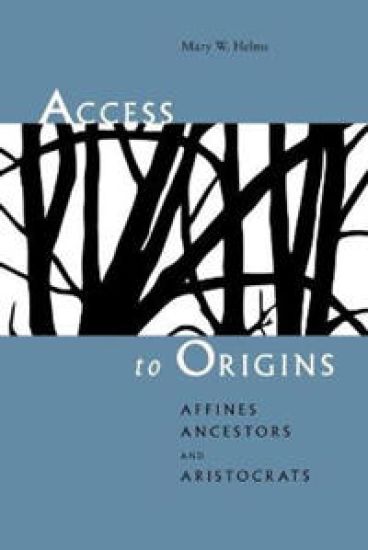
Access to Origins

Access to Origins

Mary W. Helms

University of Texas Press
1998
pokkari
In many non-industrial, non-Western societies, power and prestige are closely linked to the extent of an individual's or group's perceived connection to the supernatural realm, which also explains and validates tangible activities such as economic success, victories in war, or control over lucrative trade. Affines (in-laws), ancestors, and aristocrats, in particular, are connected to the realm of creative cosmological origins (i.e., to Genesis), which accords them distinctive, supernatural powers and gives them a natural and legitimate right to worldly authority. This is the hypothesis that Mary W. Helms pursues in this broadly cross-cultural study of aristocracy in chiefly societies. She begins with basic ideas about the dead, ancestors, affines, and concepts of cosmological origins. This leads her to a discussion of cosmologically defined hierarchies, the qualities that characterize aristocracy, and the political and ideological roles of aristocrats as wife-givers and wife-takers (that is, as in-laws). She concludes by considering various models that explain how societies may develop or define aristocracies.
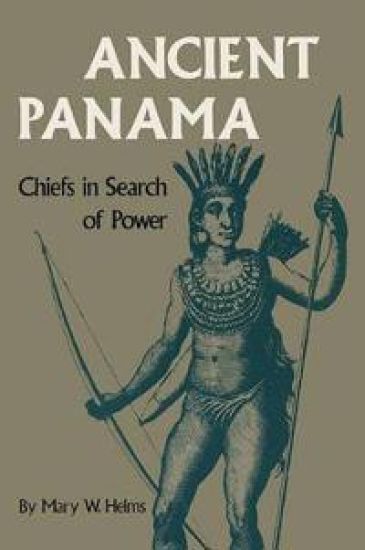
Ancient Panama

Ancient Panama

Mary W. Helms

University of Texas Press
1979
pokkari
Ancient Panama adds depth to our understanding of the political and religious elite ruling in Panama at the time of the European conquest. Mary W. Helms's research greatly expands knowledge of the distribution, extent, and structural nature of these pre-Columbian chiefdoms.In addition, Helms delves more deeply into select aspects of ancient Panamanian political systems, including the relationship between elite competition and chiefly status, the use of sumptuary goods in the expression of elite power, and the role of elites in regional and long-distance exchange networks. In a significant departure from traditional thinking, she proposes that the search for esoteric knowledge was more important than economic trade in developing long-distance contact among chiefdoms.The primary data for the study are derived from sixteenth-century Spanish records by Oviedo y Valdés, Andagoya, Balboa, and others. The author also turns to ethnographic data from contemporary native people of Panama, Colombia, tropical America, and Polynesia for analogy and comparison. The result is a highly innovative study which illuminates not only pre-Columbian Panamanian elites but also the nature of chiefdoms as a distinctive cultural type.
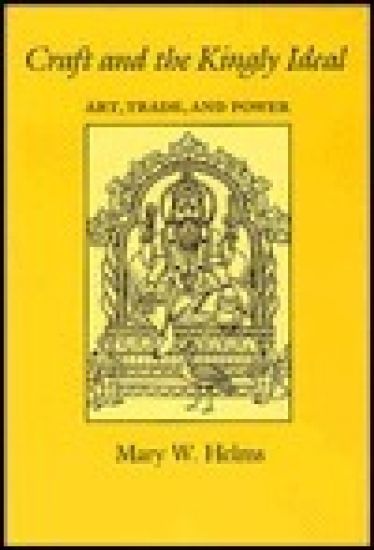
Craft and the Kingly Ideal

Craft and the Kingly Ideal

Mary W. Helms

University of Texas Press
1993
pokkari
In ancient Mediterranean cultures, diamonds were thought to endow their owners with invincibility. In contemporary United States culture, a foreign-made luxury car is believed to give its owner status and prestige. Where do these beliefs come from?In this study of craft production and long-distance trade in traditional, nonindustrial societies, Mary W. Helms explores the power attributed to objects that either are produced by skilled artisans and/or come from "afar." She argues that fine artisanship and long-distance trade, both of which are more available to powerful elites than to ordinary people, are means of creating or acquiring tangible objects that embody intangible powers and energies from the cosmological realms of gods, ancestors, or heroes. Through the objects, these qualities become available to human society and confer honor and power on their possessors.Helms’ novel approach equates trade with artistry and emphasizes acquisition rather than distribution. She rejects the classic Western separation between economics and aesthetics and offers a new paradigm for understanding traditional societies that will be of interest to all anthropologists and archaeologists.
Ulysses' Sail

Ulysses' Sail

Mary W. Helms

Princeton University Press
2014
pokkari
What do long-distance travelers gain from their voyages, especially when faraway lands are regarded as the source of esoteric knowledge? Mary Helms explains how various cultures interpret space and distance in cosmological terms, and why they associate political power with information about strange places, peoples, and things. She assesses the diverse goals of travelers, be they Hindu pilgrims in India, Islamic scholars of West Africa, Navajo traders, or Tlingit chiefs, and discusses the most extensive experience of long-distance contact on record--that between Europeans and native peoples--and the clash of cultures that arose from conflicting expectations about the "faraway.". The author describes her work as "especially concerned with the political and ideological contexts or auras within which long-distance interests and activities may be conducted ...Not only exotic materials but also intangible knowledge of distant realms and regions can be politically valuable 'goods,' both for those who have endured the perils of travel and for those sedentary homebodies who are able to acquire such knowledge by indirect means and use it for political advantage." Originally published in 1988. The Princeton Legacy Library uses the latest print-on-demand technology to again make available previously out-of-print books from the distinguished backlist of Princeton University Press. These editions preserve the original texts of these important books while presenting them in durable paperback and hardcover editions. The goal of the Princeton Legacy Library is to vastly increase access to the rich scholarly heritage found in the thousands of books published by Princeton University Press since its founding in 1905.
Ulysses' Sail

Ulysses' Sail

Mary W. Helms

Princeton University Press
2016
sidottu
What do long-distance travelers gain from their voyages, especially when faraway lands are regarded as the source of esoteric knowledge? Mary Helms explains how various cultures interpret space and distance in cosmological terms, and why they associate political power with information about strange places, peoples, and things. She assesses the diverse goals of travelers, be they Hindu pilgrims in India, Islamic scholars of West Africa, Navajo traders, or Tlingit chiefs, and discusses the most extensive experience of long-distance contact on record--that between Europeans and native peoples--and the clash of cultures that arose from conflicting expectations about the "faraway.". The author describes her work as "especially concerned with the political and ideological contexts or auras within which long-distance interests and activities may be conducted ...Not only exotic materials but also intangible knowledge of distant realms and regions can be politically valuable 'goods,' both for those who have endured the perils of travel and for those sedentary homebodies who are able to acquire such knowledge by indirect means and use it for political advantage." Originally published in 1988. The Princeton Legacy Library uses the latest print-on-demand technology to again make available previously out-of-print books from the distinguished backlist of Princeton University Press. These editions preserve the original texts of these important books while presenting them in durable paperback and hardcover editions. The goal of the Princeton Legacy Library is to vastly increase access to the rich scholarly heritage found in the thousands of books published by Princeton University Press since its founding in 1905.