Kirjojen hintavertailu. Mukana 12 390 323 kirjaa ja 12 kauppaa.

Kirjahaku

Etsi kirjoja tekijän nimen, kirjan nimen tai ISBN:n perusteella.

9 kirjaa tekijältä Maryanne Wolf

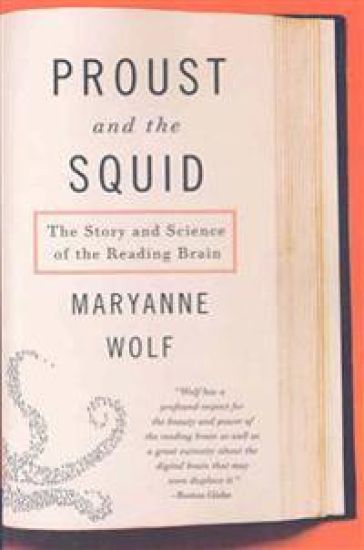
Proust and the Squid: The Story and Science of the Reading Brain
"Wolf restores our awe of the human brain--its adaptability, its creativity, and its ability to connect with other minds through a procession of silly squiggles." -- San Francisco ChronicleHow do people learn to read and write--and how has the development of these skills transformed the brain and the world itself ? Neuropsychologist and child development expert Maryann Wolf answers these questions in this ambitious and provocative book that chronicles the remarkable journey of written language not only throughout our evolution but also over the course of a single child's life, showing why a growing percentage have difficulty mastering these abilities.With fascinating down-to-earth examples and lively personal anecdotes, Wolf asserts that the brain that examined the tiny clay tablets of the Sumerians is a very different brain from the one that is immersed in today's technology-driven literacy, in which visual images on the screen are paving the way for a reduced need for written language--with potentially profound consequences for our future.
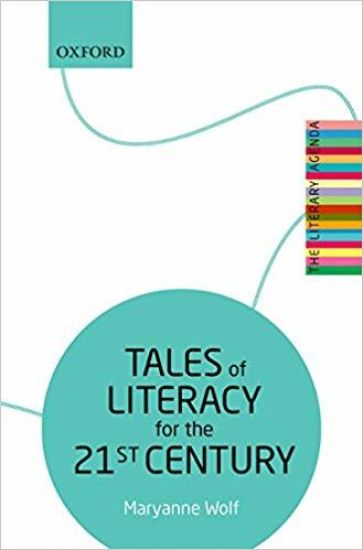
Tales of Literacy for the 21st Century

Tales of Literacy for the 21st Century

Maryanne Wolf

Oxford University Press
2016
nidottu
The Literary Agenda is a series of short polemical monographs about the importance of literature and of reading in the wider world and about the state of literary education inside schools and universities. The category of 'the literary' has always been contentious. What is clear, however, is how increasingly it is dismissed or is unrecognised as a way of thinking or an arena for thought. It is sceptically challenged from within, for example, by the sometimes rival claims of cultural history, contextualized explanation, or media studies. It is shaken from without by even greater pressures: by economic exigency and the severe social attitudes that can follow from it; by technological change that may leave the traditional forms of serious human communication looking merely antiquated. For just these reasons this is the right time for renewal, to start reinvigorated work into the meaning and value of literary reading. Being Literate in the 21st Century wrestles with critical, timely questions for 21st-century society. How does literacy change the human brain? What does it mean to be a literate or a non-literate person in the present digital culture: for example, what will be lost in the present reading brain, and what will be gained with different mediums than print? What are the consequences of a digital reading brain for the literary mind and for writing itself ? Can knowledge about the reading brain and advances in technology offer new forms of literacy and new forms of knowledge to the peoples in remote regions of the world who would never otherwise become literate? By using both research from cognitive neuroscience, psycholinguistics, child development, and education, and considering literary examples from world literature, Maryanne Wolf plots a course that seeks to preserve the deepest forms of reading from the past, while developing the cognitive skills necessary for this century's next generation.
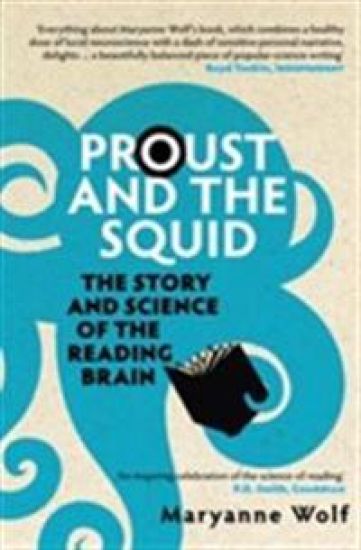
Proust and the Squid

Proust and the Squid

Maryanne Wolf

Icon Books Ltd
2008
nidottu
‘Everything about [this] book, which combines a healthy dose of lucid neuroscience with a dash of sensitive personal narrative, delights ... a beautifully balanced piece of popular-science writing’ Boyd Tonkin, Independent 'For people interested in language, this is a must. You'll find yourself focusing on words in new ways. Read it slowly - it will take time to sink in.’William Leith, Sunday Telegraph 'An inspiring celebration of the science of reading.’ P.D. Smith, Guardian 'We were never born to read', says Maryanne Wolf. 'No specific genes ever dictated reading's development. Human beings invented reading only a few thousand years ago. And with this invention, we changed the very organisation of our brain, which in turn expanded the ways we were able to think, which altered the intellectual evolution of our species.' In "Proust and the Squid", Maryanne Wolf explores our brains' near-miraculous ability to arrange and re-arrange themselves in response to external circumstances. She examines how this 'open architecture', the elasticity of our brains, helps and hinders humans in their attempts to learn to read, and to process the written language. She also investigates what happens to people whose brains make it difficult to acquire these skills, such as those with dyslexia. Wolf, a world expert on the reading brain, brings both a personal passion and deft style to this, the story of the reading brain. It is a pop science masterpiece on a subject that anyone who loves reading will be sure to find fascinating.
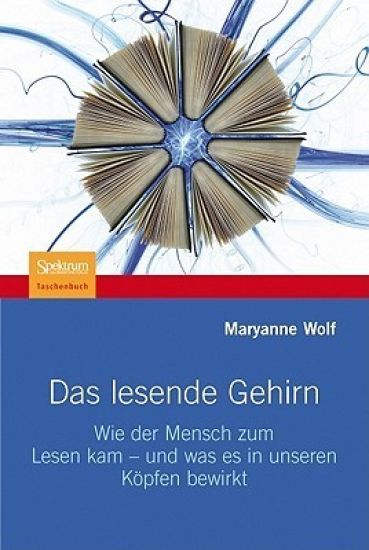
Das lesende Gehirn

Das lesende Gehirn

Maryanne Wolf

Spektrum Akademischer Verlag
2010
nidottu
Ich habe mein Leben in den Dienst der W rter gestellt - ich m chte heraus? nden, in welchen verborgenen Winkeln des Gehirns sie sich verstecken, ich m chte die verschiedenen Ebenen ihrer Bedeutung und Form erforschen und jungen Menschen von ihren Geheimn- sen erz hlen. Auf den folgenden Seiten lade ich Sie ein, sich die ungeheure sch pferische Kraft vor Augen zu f hren, die sich hinter dem Lesen von W rtern verbirgt. Keine Errungenschaft unserer geistigen Entwicklung sollten wir weniger selbstverst ndlich h- nehmen - vor allem in der heutigen Zeit, in der der bergang zur digitalen Kultur immer schneller voranschreitet. Nie zuvor hat man die komplexe Sch nheit des Lesevorgangs und die Vielfalt der damit verbundenen Leistungen wissenschaftlich so gut durchschaut wie heute und noch nie lief das Lesen so sehr Gefahr, von anderen Kommunikationsformen ersetzt zu werden. Das Leitmotiv dieses Buches soll daher sein, genau zu betrachten, was wir haben, und dar ber nachzudenken, was wir bewahren w- len. Wirklich zu begreifen, was beim Lesen geschieht, w re nach den denkw rdigen Worten Sir Edmund Hueys aus dem ausgehenden 19.
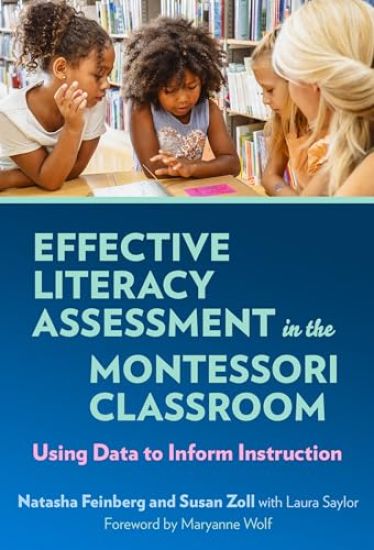
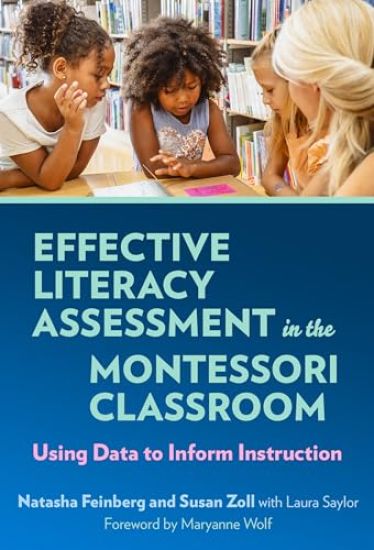
Effective Literacy Assessment in the Montessori Classroom

Effective Literacy Assessment in the Montessori Classroom

Natasha Feinberg; Susan Zoll; Maryanne Wolf

TEACHERS' COLLEGE PRESS
2025
nidottu
Learn how to use Montessori teaching and assessment methods in today's diverse classrooms. From the authors of Powerful Literacy in the Montessori Classroom, this new book focuses on the practical implementation of Montessori teaching and assessment methods in pre-K–6th grade classrooms. The authors describe how reading research and Montessori's scientific pedagogy and language curriculum play out in actual classrooms through concrete examples of structured literacy instruction. Using the timeline of a typical school year as a framework, the book contains three primary sections: (1) Starting the School Year: Setting the Stage So Reading Improves for Every Student; (2) All School Year Long: Integrating Data, Progress Monitoring, and Instruction to Maximize Reading Success for All Students; and (3) Wrapping Up the School Year: Prioritizing, Keeping On, and Defining Next Steps. Each section contains an overview of current research and theory to inform assessments and literacy goals prioritized at these key points across the academic year. Chapters feature activities, assessments, and case studies adapted from diverse Montessori classrooms. Book Features: Shows what the Montessori curriculum looks like when reading research, currently known as "the science of reading," is implemented.Demonstrates how lessons, a comprehensive assessment system, and logistics work in a real-world setting.Defines the Montessori curriculum as both comprehensive and integrated, showing that materials for building reading skills, background knowledge, and vocabulary are found throughout the classroom through a single curriculum.Helps Montessori educators and administrators, especially those working in publicly funded schools, address state legislation requiring approved curriculum aligned to the science of reading.Supports all educators interested in meeting reading legislation.
Effective Literacy Assessment in the Montessori Classroom

Effective Literacy Assessment in the Montessori Classroom

Natasha Feinberg; Susan Zoll; Maryanne Wolf

TEACHERS' COLLEGE PRESS
2025
sidottu
Learn how to use Montessori teaching and assessment methods in today's diverse classrooms. From the authors of Powerful Literacy in the Montessori Classroom, this new book focuses on the practical implementation of Montessori teaching and assessment methods in pre-K–6th grade classrooms. The authors describe how reading research and Montessori's scientific pedagogy and language curriculum play out in actual classrooms through concrete examples of structured literacy instruction. Using the timeline of a typical school year as a framework, the book contains three primary sections: (1) Starting the School Year: Setting the Stage So Reading Improves for Every Student; (2) All School Year Long: Integrating Data, Progress Monitoring, and Instruction to Maximize Reading Success for All Students; and (3) Wrapping Up the School Year: Prioritizing, Keeping On, and Defining Next Steps. Each section contains an overview of current research and theory to inform assessments and literacy goals prioritized at these key points across the academic year. Chapters feature activities, assessments, and case studies adapted from diverse Montessori classrooms. Book Features: Shows what the Montessori curriculum looks like when reading research, currently known as "the science of reading," is implemented.Demonstrates how lessons, a comprehensive assessment system, and logistics work in a real-world setting.Defines the Montessori curriculum as both comprehensive and integrated, showing that materials for building reading skills, background knowledge, and vocabulary are found throughout the classroom through a single curriculum.Helps Montessori educators and administrators, especially those working in publicly funded schools, address state legislation requiring approved curriculum aligned to the science of reading.Supports all educators interested in meeting reading legislation.
Stop What You're Doing And Read This!

Stop What You're Doing And Read This!

Mark Haddon; Michael Rosen; Zadie Smith; Carmen Callil; Jeanette Winterson; Tim Parks; Blake Morrison; Maryanne Wolf; Mirit Barzillai; Nicholas Carr; Jane Davis

Vintage
2011
pokkari
In any 24 hours there might be sleeping, eating, kids, parents, friends, lovers, work, school, travel, deadlines, emails, phone calls, Facebook, Twitter, the news, the TV, Playstation, music, movies, sport, responsibilities, passions, desires, dreams.Why should you stop what you're doing and read a book?People have always needed stories. We need literature - novels, poetry - because we need to make sense of our lives, test our depths, understand our joys and discover what humans are capable of. Great books can provide companionship when we are lonely or peacefulness in the midst of an overcrowded daily life. Reading provides a unique kind of pleasure and no-one should live without it.In the ten essays in this book some of our finest authors and passionate advocates from the worlds of science, publishing, technology and social enterprise tell us about the experience of reading, why access to books should never be taken forgranted, how reading transforms our brains, and how literature can save lives. In any 24 hours there are so many demands on your time and attention - make books one of them.Carmen Callil Tim ParksNicholas Carr Michael RosenJane Davis Zadie SmithMark Haddon Jeanette WintersonBlake Morrison Dr Maryanne Wolf & Dr Mirit Barzillai
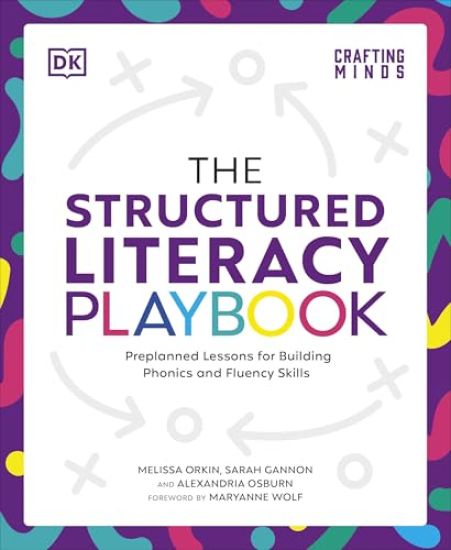
The Structured Literacy Playbook

The Structured Literacy Playbook

Melissa Orkin; Sarah Gannon; Alexandria Osburn; Maryanne Wolf

DORLING KINDERSLEY LTD
2025
nidottu
This practical playbook offers the resources necessary to build critical fluency and comprehension skills through lessons that weave phonics concepts into vocabulary and book reading activities.The Structured Literacy Playbook is a practical framework for planning and delivering targeted instruction, coupled with pre-planned lessons for pupils across the stages of word reading development.The content follows a teacher-friendly format by centralising each chapter around a series of lessons that accompany Phonic Books decodable texts and offer instruction across foundational aspects of word knowledge. Descriptions and rationale for instructional routines are brief and well-illustrated and teachers can access additional lesson materials and demo videos through QR codes.This practical teacher guide offers:Helpful QR codes that link to videos showing how to implement the activities included.Ideas and activities throughout the book that can be used with any phonics programme.Content written by expert authors that address diverse learning needs through implementation science.As educators enhance their understanding of evidence-based literacy practices, The Structured Literacy Playbook will provide essential resources to develop critical fluency and comprehension skills through lessons that integrate phonics concepts with reading activities and vocabulary.