Kirjojen hintavertailu. Mukana 11 907 501 kirjaa ja 12 kauppaa.

Kirjahaku

Etsi kirjoja tekijän nimen, kirjan nimen tai ISBN:n perusteella.

4 kirjaa tekijältä Massimo Pirozzi

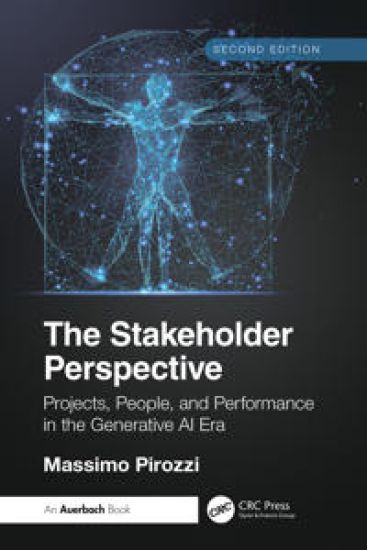
The Stakeholder Perspective

The Stakeholder Perspective

Massimo Pirozzi

CRC Press
2019
sidottu
The Stakeholder Perspective places people at the center of both projects and project management. It gives to the project management community a helpful, innovative, stakeholder-centered approach to increase projects’ delivered value and success rate. It presents a logical model also called the "Stakeholder Perspective," which acts as the reference point in a structured path to effectiveness. Starting from the analysis of a project’s stakeholders, the model integrates both rational and relational innovative approaches. Its continuous focus on stakeholder requirements and expectations helps to set a proper path, and to maintain it, in order to target success and to achieve goals in a variety of projects with different size and complexity. The book presents a set of innovative and immediately applicable techniques for effective stakeholder identification and classification, as well as analysis of stakeholder requirements and expectations, key stakeholders management, stakeholder network management, and, more generally, stakeholder relationship management. The proposed stakeholder classification model consists of just four communities, each one based on the commonality of main interests and behavior. This model features an accurate and stable identification process to increase effective communication and drastic reduce relationship complexity. A systemic approach is proposed to analyze both stakeholder requirements and expectations. The approach aids in detecting otherwise unclear stakeholder requirements and/or hidden stakeholder expectations. An interactive communication model is presented along with its individual and organizational frames of reference. Also presented are relevant cues to maximize effective and purposeful communication with key stakeholders as well as with the stakeholder network. The importance of satisfying not only the project requirements but also the stakeholder expectations is demonstrated to be the critical success factor in all projects. An innovative approach based on the perceived value and key performance indicators shows how to manage different levels of project complexity. The book also defines a complete structured path to relationship effectiveness called "Relationship Management Project," which can be tailored to enhance stakeholder and communication management processes in each one of the project management process groups (i.e. initiating, planning, executing, monitoring and controlling, and closing). The book concludes with a look ahead at Project Management X.0 and the stakeholder-centered evolution of both project and portfolio management.
The Stakeholder Perspective

The Stakeholder Perspective

Massimo Pirozzi

Taylor Francis Ltd
2021
nidottu
The Stakeholder Perspective places people at the center of both projects and project management. It gives to the project management community a helpful, innovative, stakeholder-centered approach to increase projects’ delivered value and success rate. It presents a logical model also called the "Stakeholder Perspective," which acts as the reference point in a structured path to effectiveness. Starting from the analysis of a project’s stakeholders, the model integrates both rational and relational innovative approaches. Its continuous focus on stakeholder requirements and expectations helps to set a proper path, and to maintain it, in order to target success and to achieve goals in a variety of projects with different size and complexity. The book presents a set of innovative and immediately applicable techniques for effective stakeholder identification and classification, as well as analysis of stakeholder requirements and expectations, key stakeholders management, stakeholder network management, and, more generally, stakeholder relationship management. The proposed stakeholder classification model consists of just four communities, each one based on the commonality of main interests and behavior. This model features an accurate and stable identification process to increase effective communication and drastic reduce relationship complexity. A systemic approach is proposed to analyze both stakeholder requirements and expectations. The approach aids in detecting otherwise unclear stakeholder requirements and/or hidden stakeholder expectations. An interactive communication model is presented along with its individual and organizational frames of reference. Also presented are relevant cues to maximize effective and purposeful communication with key stakeholders as well as with the stakeholder network. The importance of satisfying not only the project requirements but also the stakeholder expectations is demonstrated to be the critical success factor in all projects. An innovative approach based on the perceived value and key performance indicators shows how to manage different levels of project complexity. The book also defines a complete structured path to relationship effectiveness called "Relationship Management Project," which can be tailored to enhance stakeholder and communication management processes in each one of the project management process groups (i.e. initiating, planning, executing, monitoring and controlling, and closing). The book concludes with a look ahead at Project Management X.0 and the stakeholder-centered evolution of both project and portfolio management.
The Stakeholder Perspective, Second Edition

The Stakeholder Perspective, Second Edition

Massimo Pirozzi

TAYLOR FRANCIS LTD
2026
sidottu
The Stakeholder Perspective, Second Edition is both a continuation and a renewal. It preserves the spirit of the first edition—humanistic, systemic, stakeholder-centered—while taking it into the domain of data and intelligent systems. It recognizes that the biggest challenge in managing projects and stakeholders today is figuring out how to blend human skills with technology in smart systems so that people and machines work together to create and share value by balancing efficiency with purpose, understanding data analysis, and using AI responsibly and ethically. Nevertheless, the augmented capacity for managing relations effectively, interpreting and giving real meaning, and properly taking care of stakeholders’ increased requirements and expectations remains, as ever, absolutely human. Aligned with the PMBOK® Guide, Eighth Edition, the book focuses on the determinant role of the stakeholders in the process of value generation, perception, and delivery. Taking the view that managing stakeholders is a “project in the project,” it explores how AI has entered the stakeholder domain, not just as a technical tool but as a functional agent that influences communication patterns, decision-making, and, ultimately, value creation. This second edition introduces AI stakeholders, which are non-sentient entities capable of shaping choices, mediating interactions, and amplifying narratives. These systems behave like stakeholders even though they are not human: they can advise, filter, prioritize, negotiate, or even contest information. They can support or disrupt strategic alignment, and they can take on such different roles as influencers, mediators, proxies, or collaborators. The book presents a coherent vision of Stakeholder Management 4.0 as an intelligent, human-centered model in which data, technology, and consciousness form an integrated ecosystem. Rather than diminishing human relevance, using AI in stakeholder relations underscores the importance of humans because emotional intelligence, critical thinking, and ethical leadership are the defining competencies of project professionals today.
The Stakeholder Perspective, Second Edition

The Stakeholder Perspective, Second Edition

Massimo Pirozzi

TAYLOR FRANCIS LTD
2026
nidottu
The Stakeholder Perspective, Second Edition is both a continuation and a renewal. It preserves the spirit of the first edition—humanistic, systemic, stakeholder-centered—while taking it into the domain of data and intelligent systems. It recognizes that the biggest challenge in managing projects and stakeholders today is figuring out how to blend human skills with technology in smart systems so that people and machines work together to create and share value by balancing efficiency with purpose, understanding data analysis, and using AI responsibly and ethically. Nevertheless, the augmented capacity for managing relations effectively, interpreting and giving real meaning, and properly taking care of stakeholders’ increased requirements and expectations remains, as ever, absolutely human. Aligned with the PMBOK® Guide, Eighth Edition, the book focuses on the determinant role of the stakeholders in the process of value generation, perception, and delivery. Taking the view that managing stakeholders is a “project in the project,” it explores how AI has entered the stakeholder domain, not just as a technical tool but as a functional agent that influences communication patterns, decision-making, and, ultimately, value creation. This second edition introduces AI stakeholders, which are non-sentient entities capable of shaping choices, mediating interactions, and amplifying narratives. These systems behave like stakeholders even though they are not human: they can advise, filter, prioritize, negotiate, or even contest information. They can support or disrupt strategic alignment, and they can take on such different roles as influencers, mediators, proxies, or collaborators. The book presents a coherent vision of Stakeholder Management 4.0 as an intelligent, human-centered model in which data, technology, and consciousness form an integrated ecosystem. Rather than diminishing human relevance, using AI in stakeholder relations underscores the importance of humans because emotional intelligence, critical thinking, and ethical leadership are the defining competencies of project professionals today.