Kirjojen hintavertailu. Mukana 12 016 292 kirjaa ja 12 kauppaa.

Kirjahaku

Etsi kirjoja tekijän nimen, kirjan nimen tai ISBN:n perusteella.

5 kirjaa tekijältä Mathias Kirchmer

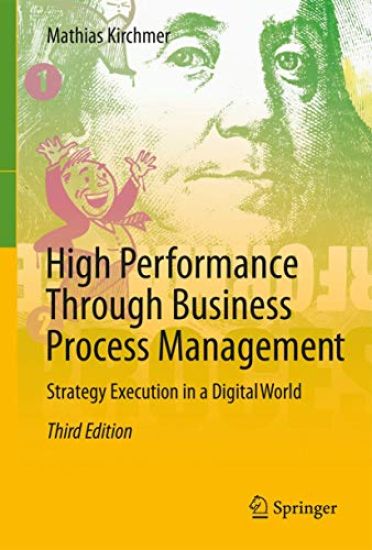
High Performance Through Business Process Management

High Performance Through Business Process Management

Mathias Kirchmer

Springer International Publishing AG
2017
sidottu
This management book presents value-driven business process management as a successful discipline to turn strategy into people- and technology-based execution, quickly and at minimal risk. It shows how to achieve high performance successfully in a digital business environment. Static business models do not keep pace with the dynamic changes in our digital world. Organizations need a management approach that fits this environment and capitalizes on its opportunities while minimizing the related risks. They need to execute their business strategy fast and reliably. In effect, they have to know how and when to modify or enhance their business processes, which processes are the best candidates for intervention, and how to move rapidly from strategy to execution. This means organizations need to establish business process management as a real management discipline. The importance of process innovation, digital technology and people aspects, process governance, internationalization, emerging processes and the unique situation in mid-market organizations are some of the key topics discussed in this book. It ends with a comprehensive case study and a discussion about what process engineers can learn from jazz musicians.
High Performance Through Business Process Management

High Performance Through Business Process Management

Mathias Kirchmer

Springer International Publishing AG
2018
nidottu
This management book presents value-driven business process management as a successful discipline to turn strategy into people- and technology-based execution, quickly and at minimal risk. It shows how to achieve high performance successfully in a digital business environment. Static business models do not keep pace with the dynamic changes in our digital world. Organizations need a management approach that fits this environment and capitalizes on its opportunities while minimizing the related risks. They need to execute their business strategy fast and reliably. In effect, they have to know how and when to modify or enhance their business processes, which processes are the best candidates for intervention, and how to move rapidly from strategy to execution. This means organizations need to establish business process management as a real management discipline. The importance of process innovation, digital technology and people aspects, process governance, internationalization, emerging processes and the unique situation in mid-market organizations are some of the key topics discussed in this book. It ends with a comprehensive case study and a discussion about what process engineers can learn from jazz musicians.
Business Process Oriented Implementation of Standard Software

Business Process Oriented Implementation of Standard Software

Mathias Kirchmer

Springer-Verlag Berlin and Heidelberg GmbH Co. K
1999
sidottu
Companies must confront an increasingly competitive environment with lean, flexible and market oriented structures. Therefore companies organize themselves according to their business processes. These processes are more and more often designed, implemented and managed based on standard software, mostly ERP or SCM packages. This is the first book delivering a complete description of a business driven implementation of standard software packages, accelerated by the use of reference models and other information models. The use of those models ensures best quality results and speeds up the software implementation. The book discusses how companies can optimize business processes and realize strategic goals with the implementation of software like SAP R/3, Oracle, Baan or Peoplesoft. It also includes the post implementation activities. The book cites numerous case studies and outlines each step of a process oriented implementation, including the goals, procedures and necessary methods and tools.
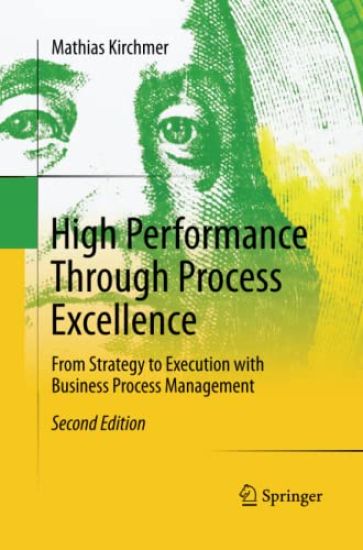
High Performance Through Process Excellence

High Performance Through Process Excellence

Mathias Kirchmer

Springer-Verlag Berlin and Heidelberg GmbH Co. K
2014
nidottu
Continuously changing customer and market requirements as well as new developments in information technology have become a dominating factor in today's business environment. To be successful enterprises have to adapt quickly to new opportunities and threats. They have to take smart decision and execute fast. Innovation and agility become important success factors. The Management of Process Excellence (MPE) is the main enabler. It helps achieving immediate benefits while building lasting process management capabilities. MPE links strategy with people and technology based execution. Service Oriented Architectures (SOA), Web 2.0 or "cloud computing" support this approach. The right process governance, including centers of excellence, and knowledge assets in form of reference models increase the delivered value again. The resulting next generation enterprise is ready for long term success.The book discusses how business process management delivers real value in private and public sector organizations around the world. It addresses executives and managers as well as educators and students.
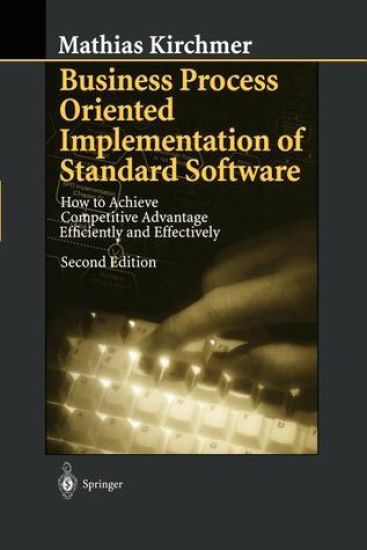
Business Process Oriented Implementation of Standard Software

Business Process Oriented Implementation of Standard Software

Mathias Kirchmer

Springer-Verlag Berlin and Heidelberg GmbH Co. K
2012
nidottu
Companies must confront an increasingly competitive environment with lean, flexible and market oriented structures. Therefore companies organize themselves according to their business processes. These processes are more and more often designed, implemented and managed based on standard software, mostly ERP or SCM packages. This is the first book delivering a complete description of a business driven implementation of standard software packages, accelerated by the use of reference models and other information models. The use of those models ensures best quality results and speeds up the software implementation. The book discusses how companies can optimize business processes and realize strategic goals with the implementation of software like SAP R/3, Oracle, Baan or Peoplesoft. It also includes the post implementation activities. The book cites numerous case studies and outlines each step of a process oriented implementation, including the goals, procedures and necessary methods and tools.