Kirjojen hintavertailu. Mukana 12 016 292 kirjaa ja 12 kauppaa.

Kirjahaku

Etsi kirjoja tekijän nimen, kirjan nimen tai ISBN:n perusteella.

4 kirjaa tekijältä Matt Brim

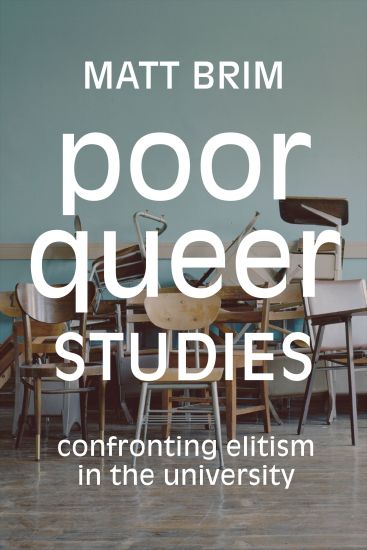
James Baldwin and the Queer Imagination

James Baldwin and the Queer Imagination

Matt Brim

The University of Michigan Press
2014
nidottu
The central figure in black gay literary history, James Baldwin has become a familiar touchstone for queer scholarship in the academy. Matt Brim’s James Baldwin and the Queer Imagination draws on the contributions of queer theory and black queer studies to critically engage with and complicate the project of queering Baldwin and his work. Brim argues that Baldwin animates and, in contrast, disrupts both the black gay literary tradition and the queer theoretical enterprise that have claimed him. More paradoxically, even as Baldwin’s fiction brilliantly succeeds in imagining queer intersections of race and sexuality, it simultaneously exhibits striking queer failures, whether exploiting gay love or erasing black lesbian desire. Brim thus argues that Baldwin’s work is deeply marked by ruptures of the “unqueer” into transcendent queer thought—and that readers must sustain rather than override this paradoxical dynamic within acts of queer imagination.
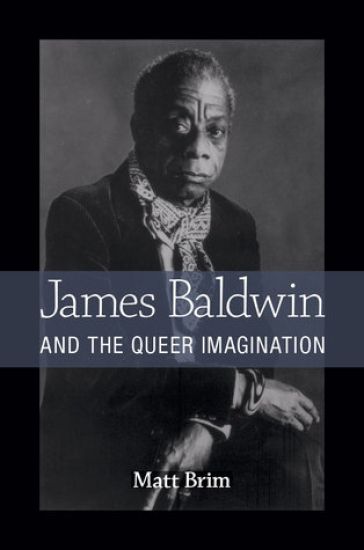
James Baldwin and the Queer Imagination

James Baldwin and the Queer Imagination

Matt Brim

The University of Michigan Press
2014
sidottu
The central figure in black gay literary history, James Baldwin has become a familiar touchstone for queer scholarship in the academy. Matt Brim’s James Baldwin and the Queer Imagination draws on the contributions of queer theory and black queer studies to critically engage with and complicate the project of queering Baldwin and his work. Brim argues that Baldwin animates and, in contrast, disrupts both the black gay literary tradition and the queer theoretical enterprise that have claimed him. More paradoxically, even as Baldwin’s fiction brilliantly succeeds in imagining queer intersections of race and sexuality, it simultaneously exhibits striking queer failures, whether exploiting gay love or erasing black lesbian desire. Brim thus argues that Baldwin’s work is deeply marked by ruptures of the “unqueer” into transcendent queer thought—and that readers must sustain rather than override this paradoxical dynamic within acts of queer imagination.
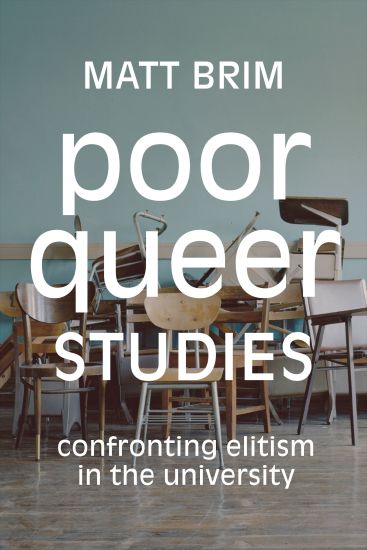
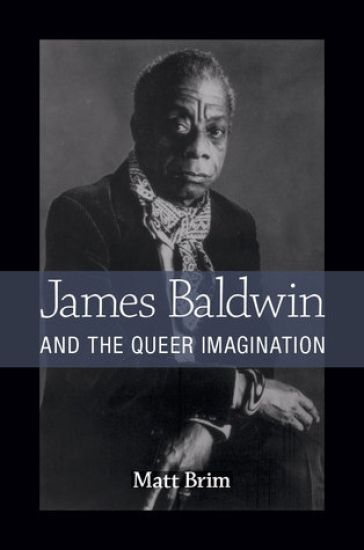
Poor Queer Studies

Poor Queer Studies

Matt Brim

Duke University Press
2020
sidottu
In Poor Queer Studies Matt Brim shifts queer studies away from its familiar sites of elite education toward poor and working-class people, places, and pedagogies. Brim shows how queer studies also takes place beyond the halls of flagship institutions: in night school; after a three-hour commute; in overflowing classrooms at no-name colleges; with no research budget; without access to decent food; with kids in tow; in a state of homelessness. Drawing on the everyday experiences of teaching and learning queer studies at the College of Staten Island, Brim outlines the ways the field has been driven by the material and intellectual resources of those institutions that neglect and rarely serve poor and minority students. By exploring poor and working-class queer ideas and laying bare the structural and disciplinary mechanisms of inequality that suppress them, Brim jumpstarts a queer-class knowledge project committed to anti-elitist and anti-racist education. Poor Queer Studies is essential for all of those who care about the state of higher education and building a more equitable academy.
Poor Queer Studies

Poor Queer Studies

Matt Brim

Duke University Press
2020
pokkari
In Poor Queer Studies Matt Brim shifts queer studies away from its familiar sites of elite education toward poor and working-class people, places, and pedagogies. Brim shows how queer studies also takes place beyond the halls of flagship institutions: in night school; after a three-hour commute; in overflowing classrooms at no-name colleges; with no research budget; without access to decent food; with kids in tow; in a state of homelessness. Drawing on the everyday experiences of teaching and learning queer studies at the College of Staten Island, Brim outlines the ways the field has been driven by the material and intellectual resources of those institutions that neglect and rarely serve poor and minority students. By exploring poor and working-class queer ideas and laying bare the structural and disciplinary mechanisms of inequality that suppress them, Brim jumpstarts a queer-class knowledge project committed to anti-elitist and anti-racist education. Poor Queer Studies is essential for all of those who care about the state of higher education and building a more equitable academy.