Kirjojen hintavertailu. Mukana 12 016 292 kirjaa ja 12 kauppaa.

Kirjahaku

Etsi kirjoja tekijän nimen, kirjan nimen tai ISBN:n perusteella.

8 kirjaa tekijältä Matthew Beaumont

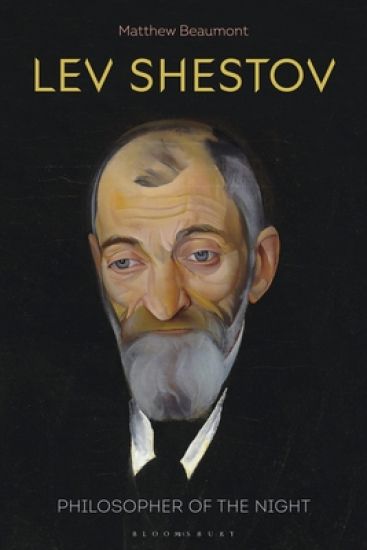
Lev Shestov

Lev Shestov

Matthew Beaumont

Bloomsbury Academic
2020
sidottu
A 2021 Choice Outstanding Academic TitleThe Jewish philosopher Lev Shestov (1866-1938) is perhaps the great forgotten thinker of the twentieth century, but one whose revival seems timely and urgent in the twenty-first century. An important influence on Georges Bataille, Albert Camus, Gilles Deleuze and many others, Shestov developed a fascinating anti-Enlightenment philosophy that critiqued the limits of reason and triumphantly affirmed an ethics of hope in the face of hopelessness.In a wide-ranging reappraisal of his life and thought, which explores his ideas in relation to the history of literature and painting as well as philosophy, Matthew Beaumont restores Shestov to prominence as a thinker for turbulent times. In reconstructing Shestov’s thought and asserting its continued relevance, the book’s central theme is wakefulness. It argues that for Shestov, escape from the limits of rationalist Enlightenment thought comes from maintaining an insomniac vigilance in the face of the spiritual night to which his century appeared condemned. Shestov’s engagement with the image of Christ remaining awake in the Garden of Gethsemane then, is at the core of his inspiring understanding of our ethical responsibilities after the horrors of the twentieth century.
Lev Shestov

Lev Shestov

Matthew Beaumont

BLOOMSBURY PUBLISHING PLC
2022
nidottu
A 2021 Choice Outstanding Academic TitleThe Jewish philosopher Lev Shestov (1866-1938) is perhaps the great forgotten thinker of the twentieth century, but one whose revival seems timely and urgent in the twenty-first century. An important influence on Georges Bataille, Albert Camus, Gilles Deleuze and many others, Shestov developed a fascinating anti-Enlightenment philosophy that critiqued the limits of reason and triumphantly affirmed an ethics of hope in the face of hopelessness.In a wide-ranging reappraisal of his life and thought, which explores his ideas in relation to the history of literature and painting as well as philosophy, Matthew Beaumont restores Shestov to prominence as a thinker for turbulent times. In reconstructing Shestov’s thought and asserting its continued relevance, the book’s central theme is wakefulness. It argues that for Shestov, escape from the limits of rationalist Enlightenment thought comes from maintaining an insomniac vigilance in the face of the spiritual night to which his century appeared condemned. Shestov’s engagement with the image of Christ remaining awake in the Garden of Gethsemane then, is at the core of his inspiring understanding of our ethical responsibilities after the horrors of the twentieth century.
Utopia, Ltd.: Ideologies For Social Dreaming In England 1870-1900
This book uncovers the historical preconditions for the explosive revival of utopian literature at the nineteenth-century fin de siècle, and excavates its ideological content. It marks a contribution not only to the literary and cultural history of the late-Victorian period, and to the expanding field of utopian studies, but to the development of a Marxist critique of utopianism. The book is particularly concerned with three kinds of political utopia or anti-utopia, those of 'state socialism', feminism, and anti-communism (the characteristic expression of this last example being the cacotopia). After an extensive contextual account of the politics of utopia in late-nineteenth century England, it devotes a chapter to each of these topics before developing an original reinterpretation of William Morris's seminal Marxist utopia, News from Nowhere.About the AuthorMatthew Beaumont, D. Phil. (2000) in English Literature at the University of Oxford, is Lecturer in Nineteenth-Century Literature at University College London'ReviewsUtopia Ltd. is remarkable for its detailed historical grasp of the late-nineteenth century. Beaumont operates at a high conceptual level, demonstrating a sophisitcated understanding of Marxist cultural theory, which is most effectively put to use as an explanatory framework. There is much impressvely original work here, both in terms of ideas and in the bringing to light of hitherto little-discussed texts. There is also a good balance between original research on the one hand, and, on the other, a fresh approach to more canonical works such as Morris's News from Nowhere. The book is full of illuminating insights, lucidly and coherently argued.' Terry Eagleton, Professor of Cultural Theory and John Rylands Fellow, University of Manchester.'This is a very convincing, often original, and lucidly written reading of late-nineteenth century utopian literature that makes a fine contribution to the ever-growing field of fin-de-siècle studies.' Sally Ledger, Professor of Nineteenth-Century Literature, Birkbeck College, University of London.'Utopia Ltd. presents us with a new constellation of the field under inquiry, or — as one of Beaumont's masters of thought, Benjamin, would say — with a dialectical image which on the one hand makes some common features of late-nineteenth century utopian literature stand out, and on the other does not neglect the single stars. I recommend it warmly.' Darko Suvin, Emeritus Professor of English and Comparitive Literature, McGill University.'What I find particularly valuable about this book is the way in which it provides a new framework for understanding well-known texts such as Bellamy's Looking Backward, and especially Morris's News from Nowhere, by situating them in relation to the large output of utopian and "cacatopian" literature produced in the late nineteenth century. This phenomenon is an ideological episode worthy of attention in its own right, as a symptom of the widely-perceived crisis of bourgeois culture around the fin de siècle, and Beaumont does a convincing job of explaining it, thereby making it interesting to the reader. But I suspect that many on the left will be drawn to this study by the way it helps us towards a fuller understanding of Morris's News from Nowhere and issues around Marxist utopianism.' Andrew Hemingway, Professor of Art History, University College, London
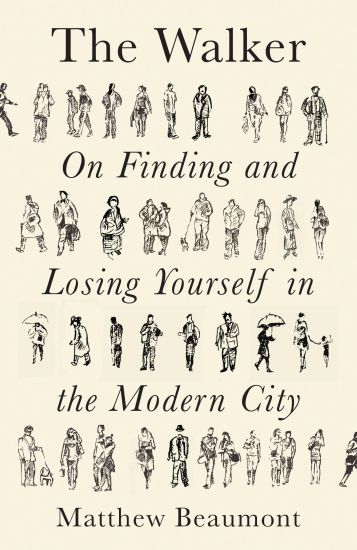
The Walker

The Walker

Matthew Beaumont

Verso Books
2020
sidottu
There is no such thing as the wrong step; every time we walk we are going somewhere. Moving around the modern city becomes more than from getting from A to B, but a way of understanding who and where you are. In a series of riveting intellectual rambles, Matthew Beaumont, retraces a history of the walker. From Charles Dicken's insomniac night rambles to wandering through the faceless, windswept monuments of the neoliberal city, the act of walking is one of escape, self-discovery, disappearances and potential revolution. Pacing stride for stride alongside such literary amblers and thinkers as Edgar Allen Poe, Andrew Breton, H G Wells, Virginia Woolf, Jean Rhys and Ray Bradbury, Matthew Beaumont explores the relationship between the metropolis and its pedestrian life. He asks can you get lost in a crowd? It is polite to stare at people walking past on the street? What differentiates the city of daylight and the nocturnal metropolis? What connects walking, philosophy and the big toe? Can we save the city - or ourselves - by taking the pavement?
The Walker

The Walker

Matthew Beaumont

Verso Books
2021
nidottu
Can you get lost in a crowd? It is polite to stare at people walking past on the street? What differentiates the city of daylight and the nocturnal metropolis? What connects walking, philosophy and the big toe? Can we save the city - or ourselves - by taking the pavement?There is no such thing as the wrong step; every time we walk we are going somewhere. In a series of riveting intellectual rambles, Matthew Beaumont retraces a history of the walker from Charles Dicken's insomniac night rambles to wandering through the faceless, windswept monuments of the neoliberal city including Edgar Allen Poe, Andrew Breton, H G Wells, Virginia Woolf, Jean Rhys and Ray Bradbury. As the author shows, the act of walking is one of escape, self-discovery, disappearances and potential revolution, and explores the relationship between the metropolis and its pedestrian life.
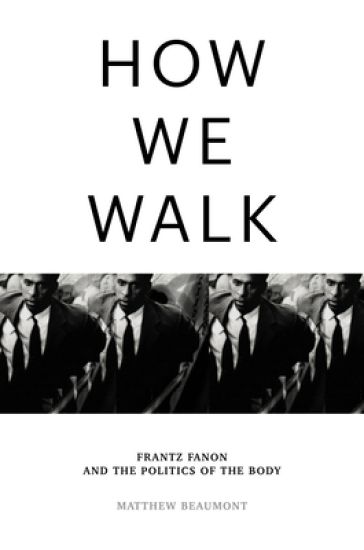
How We Walk

How We Walk

Matthew Beaumont

Verso Books
2024
sidottu
You can tell a lot about people by how they walk. Matthew Beaumont argues that our standing, walking body holds the social traumas of history and its racialized inequalities. Our posture and gait reflect our social and political experiences as we navigate the city under capitalism. Through a series of dialogues with thinkers and walkers, his book explores the relationship between freedom and the human bodyHow We Walk foregrounds the work of Frantz Fanon, psychiatrist and leading thinker of liberation, who was one of the first people to think about the politics of 'walking while black'. It also introduces us to the renegade psychoanalyst Wilhelm Reich, who wrote that one could discern the truth about a person through their posture and gait. For Marxist philosopher Ernst Bloch, the ability to walk upright and with ease is a sign of personal and social freedom.Through these excursions, Beaumont reimagines the canonical literature on walking and presents a new interpretation of the impact of class and race on our physical and political mobility, raising important questions about the politics of the body.
The Spectre of Utopia

The Spectre of Utopia

Matthew Beaumont

Peter Lang AG, Internationaler Verlag der Wissenschaften
2011
nidottu
In the late nineteenth century, a spectre haunted Europe and the United States: the spectre of utopia. This book re-examines the rise of utopian thought at the fin de siècle, situating it in the social and political contradictions of the time and exploring the ways in which it articulated a deepening sense that the capitalist system might not be insuperable after all. The study pays particular attention to Edward Bellamy’s seminal utopian fiction, Looking Backward (1888), embedding it in a number of unfamiliar contexts, and reading its richest passages against the grain, but it also offers detailed discussions of William Morris, H.G. Wells and Oscar Wilde. Both historical and theoretical in its approach, this book constitutes a substantial contribution to our understanding of the utopian imaginary, and an original analysis of the counter-culture in which it thrived at the fin de siècle.