
Kirjahaku
Etsi kirjoja tekijän nimen, kirjan nimen tai ISBN:n perusteella.
22 kirjaa tekijältä Matthew Forney Steele
The American Colonial Wars
Matthew Forney Steele
Createspace Independent Publishing Platform
2014
nidottu
The American Revolutionary War: The Northern Campaigns
Matthew Forney Steele
Createspace Independent Publishing Platform
2014
nidottu
The American Revolutionary War: The Southern Campaigns
Matthew Forney Steele
Createspace Independent Publishing Platform
2014
nidottu
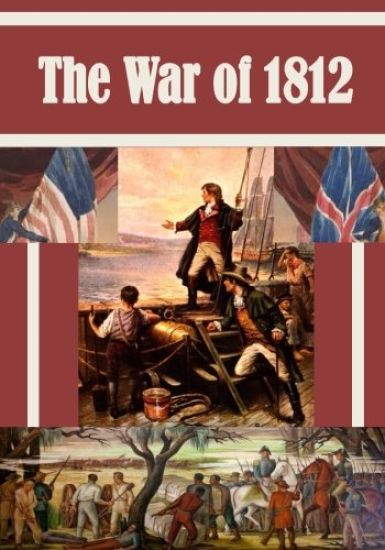
On the 18th of June, 1812, Congress declared war against Great Britain. The grounds upon which the declaration was made were just and sufficient, but not more so than they had been for several years. Nor can it well be seen by a careful review of the case that there was much less cause for war with France than there was for war with England. These two states had been engaged in hostilities for several years. The British Ministry by their "Orders in Council" declared the coasts of France and her allies and colonies in a state of blockade. Napoleon replied with his famous Berlin and Milan Decrees declaring a blockade of British ports. Neither belligerent, of course, was able to maintain an actual blockade of such extensive coast lines, but each seized all vessels caught violating its "paper blockade." The result of it all was that within three or four years American commerce was practically driven from the seas.A former Administration, Mr. Jefferson's, undertook to retaliate by issuing an embargo, prohibiting American vessels from going to sea. This was based on the supposition that Europe could not subsist without American products. It imposed a great hardship on our commerce, of course, had no effect on the belligerents, and was revoked after fourteen months. The same thing was again resorted to in Madison's administration, with the same result. Another grievance against Great Britain was based on her monstrous assumption of the right to search American ships for British subjects. In fact, this complaint was given first place in the President's message to Congress, recommending a declaration of war.But all these outrages had gone on for five or six years, and would probably have been tolerated until the end, if President Madison could have had his way, --for he was as pacific and long-suffering as his Mentor, Mr. Jefferson. But a squad of younger men, led by Henry Clay and John C. Calhoun, had got control in Congress. They compelled the decision for war.
The Mexican War: Taylor's Campaign
Matthew Forney Steele
Createspace Independent Publishing Platform
2014
nidottu
The First Battle of Bull Run
Matthew Forney Steele
Createspace Independent Publishing Platform
2014
nidottu
Jackson's Valley Campaign
Matthew Forney Steele
Createspace Independent Publishing Platform
2014
nidottu
The region known as the Valley of Virginia, or the Shenandoah Valley, played an important part in the Civil War from the beginning almost to the end. Indeed Lee's little army was hastening toward that region in its very last march, and, if it had not been headed off by Sheridan's cavalry at Appomattox, the last hostile action on Virginia soil, like the first, might have taken place in the Shenandoah Valley.The situation of Richmond and Washington fore-ordered that Virginia, rather than Kentucky or other border State, should become the principal theater of operations, and the mountain region of the Shenandoah formed a strong natural barrier covering its left flank. All things combined to make the Valley the best line of communications with Virginia and the base at Richmond, for a Confederate army invading the North in this theater of the war; twice it was used for this purpose by Lee. Thus, the general direction of this Valley was northeast, and the Potomac, more easily forded here than farther east, crossed it within fifty miles of Washington. On its eastern or exposed flank it was covered by the Blue Ridge Mountains south of the Potomac, and South Mountain north of this river. These mountains could be crossed only at certain passes, or gaps, through most of which there were good roads. The Valley was connected with Richmond, the Confederate base, by two systems of railway, one leading out of it by way of Strasburg and Manassas Gap, the other by way of Staunton and Rockfish Gap. A good system of roads connected all the towns and villages in the region. The main thoroughfare was the Valley Turnpike, stretching from Staunton near the head of the Valley, to Martinsburg at its lower end, a distance of 120 miles; and passing through Harrisonburg, New Market, Woodstock, Strasburg, and Winchester. The main Valley of the Shenandoah, averaging about twenty miles in width, is closed on its western side by the Alleghenies, a more difficult chain of mountains than the Blue Ridge.
The Second Battle of Bull Run
Matthew Forney Steele
Createspace Independent Publishing Platform
2014
nidottu
After the Union defeat at Manassas in July 1861, Gen. George B. McClellan took command of the Federal forces in and around Washington and organized them into a formidable fighting machine- the Army of the Potomac. In March 1862, leaving a strong force to cover the capital, McClellan shifted his army by water to Fort Monroe on the tip of the York-James peninsular, only 100 miles southeast of Richmond. Early in April he advanced toward the Confederate capital.Anticipating such a move, the Southerners abandoned the Manassas area and marched to meet the Federals. By the end of May, McClellan's troops were within sight of Richmond. Here Gen. Joseph E. Johnston's Confederate army assailed the Federals in the bloody but inconclusive Battle of Seven Pines. Johnston was wounded, and President Davis placed Gen. Robert E. Lee in command. Seizing the offensive, Lee sent his force (now called the Army of Northern Virginia) across the Chickahominy River and, in a series of savage battles, pushed McClellan back from the edge of Richmond to a position on the James River.At the same time, the scattered Federal forces in northern Virginia were organized into the Army of Virginia under the command of Gen. John Pope, who arrived with a reputation freshly won in the war's western theater. Gambling that McClellan would cause no further trouble around Richmond, Lee sent Stonewall Jackson's corps northward to "suppress" Pope. Jackson clashed indecisively with part of Pope's troops at Cedar Mountain on August 9. Meanwhile, learning that the Army of the Potomac was withdrawing by water to join Pope, Lee marched with Gen. James Longstreet's corps to bolster Jackson. On the Rapidan, Pope successfully blocked Lee's attempts to gain the tactical advantage, and then withdrew his men north of the Rappahannock River. Lee knew that if he was to defeat Pope he would have to strike before McClellan's army arrived in northern Virginia. On August 25 Lee boldly started Jackson's corps on a march of over 50 miles, around the Union right flank to strike at Pope's rear.Two days later, Jackson's veterans seized Pope's supply depot at Manassas Junction. After a day of wild feasting, Jackson burned the Federal supplies and moved to a position in the woods at Groveton near the old Manassas battlefield.Pope, stung by the attack on his supply base, abandoned the line of the Rappahannock and headed towards Manassas to "bag" Jackson. At the same time, Lee was moving northward with Longstreet's corps to reunite his army. On the afternoon of August 28, to prevent the Federal commander's efforts to concentrate at Centreville and bring Pope to battle, Jackson ordered his troops to attack a Union column as it marched past on the Warrenton Turnpike. This savage fight at Brawner's Farm lasted until dark.Convinced that Jackson was isolated, Pope ordered his columns to converge on Groveton. He was sure that he could destroy Jackson before Lee and Longstreet could intervene. On the 29th Pope's army found Jackson's men posted along an unfinished railroad grade, north of the turnpike. All afternoon, in a series of uncoordinated attacks, Pope hurled his men against the Confederate position. In several places the northerners momentarily breached Jackson's line, but each time were forced back. During the afternoon, Longstreet's troops arrived on the battlefield and, unknown to Pope, deployed on Jackson's right, overlapping the exposed Union left. Lee urged Longstreet to attack, but "Old Pete" demurred. The time was just not right, he said.The morning of August 30 passed quietly. Just before noon, erroneously concluding the Confederates were retreating, Pope ordered his army forward in "pursuit". The pursuit, however, was short-lived. Pope found that Lee had gone nowhere. Amazingly, Pope ordered yet another attack against Jackson's line.
The Antietam Campaign
Matthew Forney Steele
Createspace Independent Publishing Platform
2014
nidottu
The Fredericksburg Campaign
Matthew Forney Steele
Createspace Independent Publishing Platform
2014
nidottu
The Stones River Campaign
Matthew Forney Steele
Createspace Independent Publishing Platform
2014
nidottu
As 1862 drew to a close, President Abraham Lincoln was desperate for a military victory. His armies were stalled, and the terrible defeat at Fredericksburg spread a pall of defeat across the nation. There was also the Emancipation Proclamation to consider. The nation needed a victory to bolster morale and support the proclamation when it went into effect on January 1, 1863.The Confederate Army of Tennessee was camped in Murfreesboro, Tennessee only 30 miles away from General William S. Rosecrans' army in Nashville. General Braxton Bragg chose this area in order to position himself to stop any Union advances towards Chattanooga and to protect the rich farms of Middle Tennessee that were feeding his men.Union General-In-Chief Henry Halleck telegraphed Rosecrans telling him that, "... the Government demands action, and if you cannot respond to that demand some one else will be tried."On December 26, 1862, the Union Army of the Cumberland left Nashville to meet the Confederates. This was the beginning of the Stones River Campaign.
The Battle of Gettysburg
Matthew Forney Steele
Createspace Independent Publishing Platform
2014
nidottu
The Battle of Forts Henry and Donelson
Matthew Forney Steele
Createspace Independent Publishing Platform
2014
nidottu
When the Southern States seceded and organized the Confederacy, Kentucky wavered between Union and Secession. The governor was for Secession, but the legislature was for the Union. So the State, which had been brought up in the school of compromise by her greatest statesman, Henry Clay, compromised in this instance by undertaking to remain neutral.For a time the United States and the Confederacy appeared tacitly to recognize the neutrality of her soil, while both recruited regiments among her people. The first violation of her neutrality was done by General Leonidas Polk, who, with a Confederate force, occupied Columbus on the 3rd of September, 1861. Thereupon General Grant, with a National force, occupied Paducah on the 5th September. Henceforth Kentucky's neutrality was not regarded.As it was well known that a large part of the population of Kentucky was in favor of secession, the Confederate authorities were very loath to let go any part of the State, so General Albert Sidney Johnston was, in September, 1861, placed in command of the Confederate forces in the West, whose task was to hold Kentucky and Tennessee, and the Mississippi River. He made Bowling Green his headquarters, and issued a proclamation saying in effect that he would respect Kentucky's neutrality and withdraw his army from her soil as soon as he should be assured that the Union commanders would do likewise. His line stretched from Columbus to Cumberland Gap. At Columbus, which was fortified, General Polk had, in January, 1862, 12,000 effectives and in the entrenched camp at Bowling Green there were about 22,000 effectives. General Tilghman garrisoned Forts Henry and Donelson with 5,000 or 6,000 men. At Cumberland Gap there was a fortified Confederate camp. Below Columbus the Mississippi was guarded by two or three garrisoned forts.
The Chickamauga Campaign
Matthew Forney Steele
Createspace Independent Publishing Platform
2014
nidottu
The Battle of Chattanooga
Matthew Forney Steele
Createspace Independent Publishing Platform
2014
nidottu
The Battle of Chancellorsville
Matthew Forney Steele
Createspace Independent Publishing Platform
2014
nidottu
The Battle of Spottsylvania Court House
Matthew Forney Steele
Createspace Independent Publishing Platform
2014
nidottu
Having resolved to continue his advance southward from the Wilderness battlefield, and, if possible, to cut Lee off from Richmond, Grant set his army in motion on the evening of May 7, 1864. As the movement was to be made mainly with a view to getting outside of the Wilderness and inducing Lee to go out and give battle in the open, the first objective points assigned to the various army-corps, and the routes, were merely preliminary; subsequent movements would depend upon the movements of Lee's army. Hancock's corps Second], which occupied the left of the line, was to remain in position until the trains and the rest of the army marched off the battlefield by the rear of his line. The trains were started in the afternoon, and at half-past eight the troops took up the march. Passing behind Hancock's line, Warren's corps Fifth] moved by the Brock Road toward Spottsylvania Court House. Sedgwick's Sixth] marched by way of Chancellorsville, Aldrich's, and Piney Branch Church, toward the same point. Burnside's corps Ninth] followed Sedgwick's as far as Aldrich's. Hancock was ordered to follow close behind Warren to Todd's Tavern. The cavalry covered the movement in flank and rear, and pushed out ahead of the infantry columns. Todd's Tavern was about six miles from Wilderness Tav ern by the Brock Road, and Spottsylvania Court House was about twelve miles. By way of Chancellorsville Spottsylvania was about fourteen miles from Wilderness Tavern. In this preliminary movement the corps on different roads would be within short distances of one another; but the woods were so dose and the cross-trails so little known that it would be difficult to pass troops from one road to another. Lee was informed by Stuart on the afternoon of the 7th concerning the movement of the Federal wagon-trains, and he made no doubt that Grant's objective was Spottsylvania Court House. He, therefore, ordered Anderson, now commanding Longstreet's corps, to make a night march for the same point, by way of by-roads and Shady Grove Church Road. Stuart's cavalry was to retard the march of the Federal columns as much as possible, in order to enable Anderson to reach Spottsylvania ahead of them and take up a position. At Spottsylvania Court House several roads came together from the direction of Wilderness Tavern and Chancellorsville, as well as from Fredericksburg, now the Union base. Other roads led from Spottsylvania toward the east and south. The junction of all these roads gave the place a temporary strategic importance, and made it the field of a battle.
The Campaign of Atlanta
Matthew Forney Steele
Createspace Independent Publishing Platform
2014
nidottu
The Siege of Petersburg
Matthew Forney Steele
Createspace Independent Publishing Platform
2014
nidottu