Kirjojen hintavertailu. Mukana 11 699 587 kirjaa ja 12 kauppaa.

Kirjahaku

Etsi kirjoja tekijän nimen, kirjan nimen tai ISBN:n perusteella.

3 kirjaa tekijältä Matthew Hilton

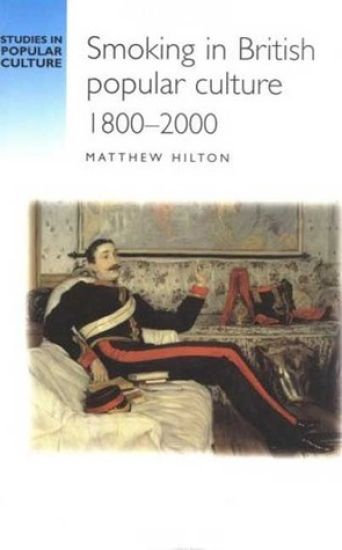
Smoking in British Popular Culture 1800–2000

Smoking in British Popular Culture 1800–2000

Matthew Hilton

Manchester University Press
2000
nidottu
A concise history of smoking in British popular culture from the early nineteenth century to the present day.. Provides the historical backdrop to the current debates about the politics of tobacco and health, demonstrating that both pro- and anti-smokers have consistently failed to understand the position of smoking within popular culture.. Important themes explored include: the importance of consumption to constructions of masculinity and femininity, the role of the state in the official regulation of the ‘minor vices’, the morality of consumption and the position of scientific knowledge within popular culture.. Traces the production, promotion and consumption of tobacco as well as outlining the arguments that have variously opposed this ever-controversial drug.. Genuinely interdisciplinary, combining elements of social, cultural and economic history whilst contributing to debates in sociology and cultural studies, the anthropology of material culture, design history, medical history and public health policy.
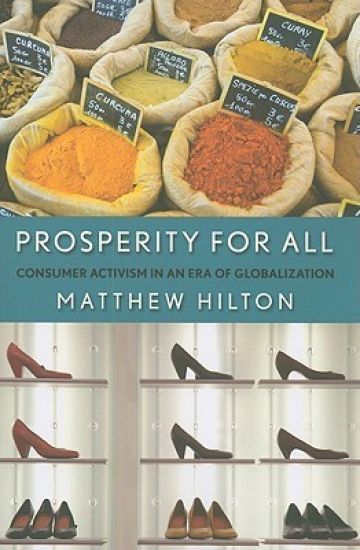
Prosperity for All

Prosperity for All

Matthew Hilton

Cornell University Press
2009
pokkari
The history of consumerism is about much more than just shopping. Ever since the eighteenth century, citizen-consumers have protested against the abuses of the market by boycotting products and promoting fair instead of free trade. In recent decades, consumer activism has responded to the challenges of affluence by helping to guide consumers through an increasingly complex and alien marketplace. In doing so, it has challenged the very meaning of consumer society and tackled some of the key economic, social, and political issues associated with the era of globalization.In Prosperity for All, the first international history of consumer activism, Matthew Hilton shows that modern consumer advocacy reached the peak of its influence in the decades after World War II. Growing out of the product-testing activities of Consumer Reports and its international counterparts (including Which? in the United Kingdom, Que Choisir in France, and Test in Germany), consumerism evolved into a truly global social movement. Consumer unions, NGOs, and individual activists like Ralph Nader emerged in countries around the world—including developing countries in Southeast Asia and Latin America—concerned with creating a more equitable marketplace and articulating a politics of consumption that addressed the needs of both individuals and society as a whole.Consumer activists achieved many victories, from making cars safer to highlighting the dangers of using baby formula instead of breast milk in countries with no access to clean water. The 1980s saw a reversal in the consumer movement's fortunes, thanks in large part to the rise of an antiregulatory agenda both in the United States and internationally. In the process, the definition of consumerism changed, focusing more on choice than on access. As Hilton shows, this change reflects more broadly on the dilemmas we all face as consumers: Do we want more stuff and more prosperity for ourselves, or do we want others less fortunate to be able to enjoy the same opportunities and standard of living that we do?Prosperity for All makes clear that by abandoning a more idealistic vision for consumer society we reduce consumers to little more than shoppers, and we deny the vast majority of the world's population the fruits of affluence.
Charity After Empire

Charity After Empire

Matthew Hilton

Cambridge University Press
2026
sidottu
Why did charity become the outlet for global compassion? Charity After Empire traces the history of humanitarian agencies such as Oxfam, Save the Children and Christian Aid. It shows how they obtained a permanent presence in the alleviation of global poverty, why they were supported by the public and how they were embraced by governments in Britain and across Africa. Through several fascinating life stories and illuminating case studies across the UK and in countries such as Botswana, Zimbabwe and Kenya, Hilton explains how the racial politics of Southern Africa shaped not only the history of international aid but also the meaning of charity and its role in the alleviation of poverty both at home and abroad. In doing so, he makes a powerful case for the importance of charity in the shaping of modern Britain over the extended decades of decolonization in the latter half of the twentieth century.