Kirjahaku
Etsi kirjoja tekijän nimen, kirjan nimen tai ISBN:n perusteella.
5 kirjaa tekijältä Matthew J Marohl

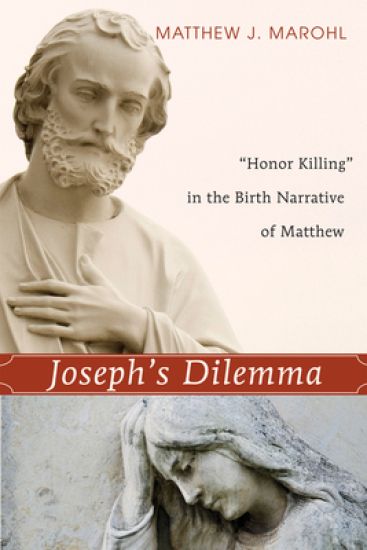
"". . . from expected death comes unexpected new life "" The Gospel of Matthew does not shy away from the realities of struggle, suffering, doubt, and death. Yet, from the first names in the genealogy to the last words spoken by Jesus, the Gospel testifies to the promise that from expected death comes unexpected new life. Through the actions of Tamar, Rahab, Ruth, and Bathsheba, we experience the expectation of death and the promise of unexpected new life. In the birth story of Jesus, Joseph suspects Mary of committing adultery. It is this dilemma that is the focus of the narrative. If he reveals her pregnancy, she could be killed. If he conceals her pregnancy, he will be going against the law of the Lord. What is a righteous man to do? In Joseph's dilemma, this experience of expected death, the Gospel of Matthew proclaims the promise of unexpected new life. The promise of unexpected new life is a theme that continues throughout Matthew's Gospel in the life and ministry of Jesus. The call of his disciples is a call from death to new life. The teaching of Jesus focuses on the experience of death and the promise of new life. In both healing and curing, Jesus brings unexpected new life to those who face death. But it is the death and resurrection of Jesus that is the climax of unexpected new life in the Gospel of Matthew. Even as Jesus experiences a most horrific and humiliating death in the crucifixion, death and the grave do not have the final say. In bearing witness to Jesus' resurrection, the Gospel of Matthew proclaims the magnificent promise of unexpected new life. Matthew J. Marohl invites you in these pages to read the Gospel of Matthew in a new way, from a fresh perspective. Integrating insights from the study of Mediterranean anthropology, Marohl makes the cultural world of the Gospel come alive, so that as you read Matthew again (or perhaps for the first time) you will certainly experience the powerful promise that from expected death comes unexpected new life ""Unexpected New Life has short, readable chapters that will compel the independent reader to rethink the birth story, and also provide fascinating material for rich discussions in adult education classes in community or church programs. Because of the flexible format of this excellent resource, one chapter could be the basis of a single discussion, or the entire book could serve as a guide for a series of classes."" -Katie Hanson Board president, CommUniversity, a community education program Matthew J. Marohl is a pastor at St. Paul Lutheran Church in Davenport, Iowa, and teaches courses at Wartburg Theological Seminary, Dubuque, Iowa. He holds a PhD in New Testament from the University of St. Andrews and is the author of Joseph's Dilemma: ""Honor Killing"" in the Birth Narrative of Matthew (Cascade, 2009) and Faithfulness and the Purpose of Hebrews: A Social Identity Approach (Pickwick, 2008).
Faithfulness and the Purpose of Hebrews offers fresh answers to several unresolved questions by employing that branch of social psychology known as social identity theory. Who were the addressees? With the categories of social identity theory, this study argues that the addressees arranged the world into two groups: ""us"" and ""them."" They understood their group, the ""us,"" to be the ""faithful."" They understood ""them"" (a symbolic outgroup of ""all others"") to be the ""unfaithful."" Faithfulness, then, is the primary identity descriptor for the addressees and plays an essential role thoughout the text. How did the addressees understand the faithfulness of Jesus? The author of Hebrews describes the faithfulness of Jesus as ""prototypical."" The faithfulness of all others is described in relation to Jesus' faith, and together they are integrated into an ongoing narrative of faithfulness. What is the meaning of the promised ""rest""? Utilizing a model of present temporal orientation, the study interprets the dynamic relationship between the ""antecedent"" faithfulness of many witnesses and the ""forthcoming"" promised rest of the addressees. The addressees of Hebrews were encouraged to ""understand their futures by looking to the past."" What is the purpose of the text? Social identity theorists explain that groups with a negative social identity have two broad options: social mobility or social change. The study concludes that the author of Hebrews provides internal constraints that are meant to prevent social mobility. The author utilizes social creativity (an aspect of social change) to provide a positive social identity for the addressees.
Description: Faithfulness and the Purpose of Hebrews offers fresh answers to several unresolved questions by employing that branch of social psychology known as social identity theory. Who were the addressees? With the categories of social identity theory, this study argues that the addressees arranged the world into two groups: ""us"" and ""them."" They understood their group, the ""us,"" to be the ""faithful."" They understood ""them"" (a symbolic outgroup of ""all others"") to be the ""unfaithful."" Faithfulness, then, is the primary identity descriptor for the addressees and plays an essential role thoughout the text. How did the addressees understand the faithfulness of Jesus? The author of Hebrews describes the faithfulness of Jesus as ""prototypical."" The faithfulness of all others is described in relation to Jesus' faith, and together they are integrated into an ongoing narrative of faithfulness. What is the meaning of the promised ""rest""? Utilizing a model of present temporal orientation, the study interprets the dynamic relationship between the ""antecedent"" faithfulness of many witnesses and the ""forthcoming"" promised rest of the addressees. The addressees of Hebrews were encouraged to ""understand their futures by looking to the past."" What is the purpose of the text? Social identity theorists explain that groups with a negative social identity have two broad options: social mobility or social change. The study concludes that the author of Hebrews provides internal constraints that are meant to prevent social mobility. The author utilizes social creativity (an aspect of social change) to provide a positive social identity for the addressees. Endorsements: ""Marohl's welcome study represents an accomplished application of social identity theory to the text of Hebrews. His methodological attentiveness is mature and responsible, resulting in an articulate analysis that recognises the faithfulness of Jesus to be the theological centre that informs the socio-religious program advocated by the author of Hebrews."" --Bruce Longenecker, University of St Andrews ""In this work, Matthew Marohl uses social identity theory to provide a fresh and illuminating interpretation of the epistle to the Hebrews. His judicious use of social scientific resources offers a new perspective on the identity of the ingroup and outgroup, the function of comparison, and the significance of 'prototypes' in the strategy of the letter. Those interested in the epistle to the Hebrews, or in social-scientific interpretation, will find this an engaging work."" --David G. Horrell, University of Exeter About the Contributor(s): Matthew J. Marohl teaches New Testament at Augustana College, Rock Island, Illinois.