Kirjojen hintavertailu. Mukana 11 699 587 kirjaa ja 12 kauppaa.

Kirjahaku

Etsi kirjoja tekijän nimen, kirjan nimen tai ISBN:n perusteella.

35 kirjaa tekijältä Matthew Jones

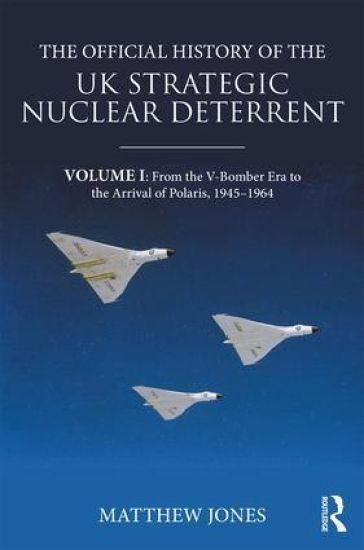
The Official History of the UK Strategic Nuclear Deterrent
Volume I of The Official History of the UK Strategic Nuclear Deterrent provides an authoritative and in-depth examination of the British government’s strategic nuclear policy from 1945 to 1964.Written with full access to the UK documentary record, this volume examines how British governments after 1945 tried to build and then maintain an independent, nationally controlled strategic nuclear capability, and the debates this provoked in official circles. Against a background of evolving British ideas about deterrence during the Cold War, it focuses on the strategic, political and diplomatic considerations that compelled governments, in the face of ever-increasing pressures on the defence budget, to persist in their efforts to develop nuclear weapons and to deploy a credible nuclear force, as the age of the manned bomber gave way to the ballistic missile. Particular attention is given to controversies over the portion of the defence budget devoted to the deterrent programme, the effects of the restoration of Anglo-American nuclear collaboration after 1958, increasing reliance on the United States for nuclear delivery systems, the negotiations that led to the Nassau Agreement of 1962 and the supply of Polaris, and discussions within the Western Alliance over the control of nuclear forces. By the time of the October 1964 election, when this volume concludes, previous dismissal of the prospects for successful ballistic missile defence were giving way to growing doubts over the long-term effectiveness of the Polaris system in its role as an independent deterrent, several years before it was due to enter service with the Royal Navy. This book will be of much interest to students of British politics, Cold War history, nuclear proliferation and international relations.
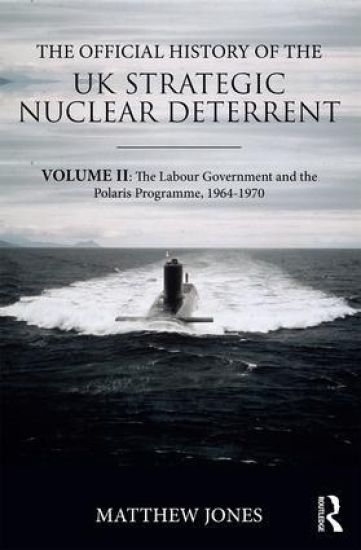
The Official History of the UK Strategic Nuclear Deterrent
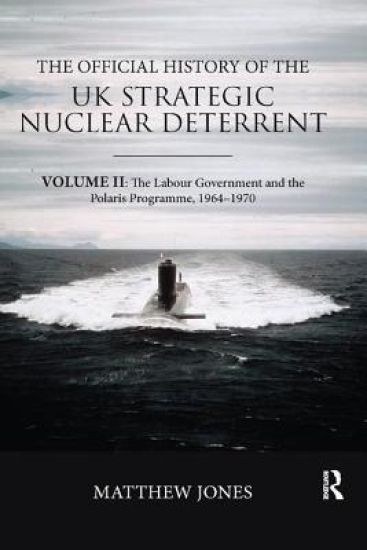
Volume II of The Official History of the UK Strategic Nuclear Deterrent provides an authoritative and in-depth examination of the British government’s strategic nuclear policy from 1964 to 1970.Written with full access to the UK documentary record, Volume II examines the controversies that developed over nuclear policy following the arrival in office of a Labour government led by Harold Wilson in October 1964 that openly questioned the independence of the deterrent. Having decided to preserve the Polaris programme, Labour ministers were nevertheless committed not to develop another generation of nuclear weapons beyond those in the pipeline, placing major doubts over the long-term future of the nuclear programme and collaboration with the United States. Defence planners also became increasingly concerned that the deployment of Soviet anti-ballistic missile (ABM) defences around Moscow threatened to undermine the ability of Polaris to fulfil its role as a national strategic nuclear deterrent. During 1967, under heavy pressures to control defence spending, a protracted debate was conducted within Whitehall over the future of Polaris and how to respond to the evolving ABM challenge. The volume concludes with Labour’s defeat at the general election of June 1970, by which time the Royal Navy had assumed the nuclear deterrent role from the RAF, and plans had already been formulated for a UK project to improve Polaris which could both ensure its continuing credibility and rejuvenate the Anglo-American nuclear relationship. This book will be of much interest to students of British politics, Cold War history, nuclear proliferation and international relations.

How to Make Music in an Epidemic

How to Make Music in an Epidemic

Matthew Jones

TAYLOR FRANCIS LTD
2024
sidottu
This volume examines responses to the epidemic of HIV/AIDS in Anglophone popular musicians and music video during the AIDS crisis (1981–1996).Through close reading of song lyrics, musical texts, and music videos, this book demonstrates how music played an integral part in the artistic-activist response to the AIDS epidemic, demonstrating music as a way to raise money for HIV/AIDS services, to articulate affective responses to the epidemic, to disseminate public health messages, to talk back to power, and to bear witness to the losses of AIDS.Drawing methodologies from musicology, queer theory, critical race studies, public health, and critical theory, the book will be of interest to a wide readership, including artists, activists, musicians, historians, and other scholars across the humanities as well as to people who lived through the AIDS crisis.
Conflict and Confrontation in South East Asia, 1961–1965

Conflict and Confrontation in South East Asia, 1961–1965

Matthew Jones

Cambridge University Press
2012
pokkari
In the early 1960s, Britain and the United States were still trying to come to terms with the powerful forces of indigenous nationalism unleashed by the Second World War. The Indonesia-Malaysia confrontation - a crisis which was, as Macmillan remarked to Kennedy, 'as dangerous a situation in Southeast Asia as we have seen since the war' - was a complex test of Anglo-American relations. As American commitment to Vietnam accelerated under the Kennedy and Johnson administrations, Britain was involving herself in an 'end-of-empire' exercise in state-building which had important military and political implications for both nations. In this book Matthew Jones provides a detailed insight into the origins, outbreak and development of this important episode in international history; using a large range of previously unavailable archival sources, he illuminates the formation of the Malaysian federation, Indonesia's violent opposition to the state and the Western Powers' attempts to deal with the resulting conflict.
Conflict and Confrontation in South East Asia, 1961–1965

Conflict and Confrontation in South East Asia, 1961–1965

Matthew Jones

Cambridge University Press
2001
sidottu
In the early 1960s, Britain and the United States were still trying to come to terms with the powerful forces of indigenous nationalism unleashed by the Second World War. The Indonesia-Malaysia confrontation - a crisis which was, as Macmillan remarked to Kennedy, ‘as dangerous a situation in Southeast Asia as we have seen since the war’ - was a complex test of Anglo-American relations. As American commitment to Vietnam accelerated under the Kennedy and Johnson administrations, Britain was involving herself in an ‘end-of-empire’ exercise in state-building which had important military and political implications for both nations. Matthew Jones provides a detailed insight into the origins, outbreak and development of this important episode in international history; using a large range of previously unavailable archival sources, he illuminates the formation of the Malaysian federation, Indonesia’s violent opposition to the new state and the Western Powers’ attempts to deal with the resulting conflict.
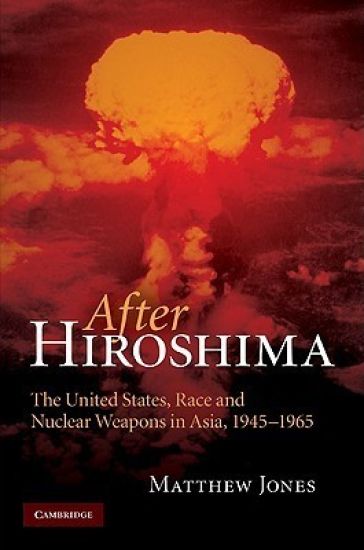
After Hiroshima

After Hiroshima

Matthew Jones

Cambridge University Press
2010
sidottu
By emphasising the role of nuclear issues, After Hiroshima, published in 2010, provides an original history of American policy in Asia between the dropping of the atomic bombs on Japan and the escalation of the Vietnam War. Drawing on a wide range of documentary evidence, Matthew Jones charts the development of American nuclear strategy and the foreign policy problems it raised, as the United States both confronted China and attempted to win the friendship of an Asia emerging from colonial domination. In underlining American perceptions that Asian peoples saw the possible repeat use of nuclear weapons as a manifestation of Western attitudes of 'white superiority', he offers new insights into the links between racial sensitivities and the conduct of US policy, and a fresh interpretation of the transition in American strategy from massive retaliation to flexible response in the era spanned by the Korean and Vietnam Wars.
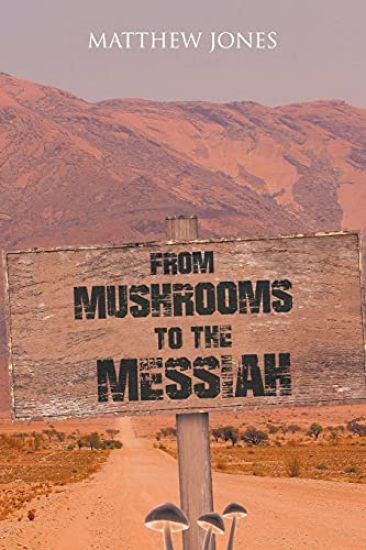
From Mushrooms to the Messiah

From Mushrooms to the Messiah

Matthew Jones

Christian Faith
2021
pokkari
How do you define success?Is it a flourishing family life, prosperous career, healthy marriage, scholastic achievement, or physical fitness? Maybe your idea of success is a combination of the above. No matter how you define success, your journey to the top of that mountain requires commitment. From Mushrooms to the Messiah follows one man's journey to discover how to make and keep commitments that will ultimately provide the success and fulfillment that many of us desire.Prepare yourself for a wild ride through fraternity life and into the drug abuse that brought one man face-to-face with the God who would turn his life upside down. No matter your religion or worldview, From Mushrooms to the Messiah will test your understanding of God and redefine faith while offering a timeless and unique love story the world has never known. What are you waiting for? An adventure awaits the willing.
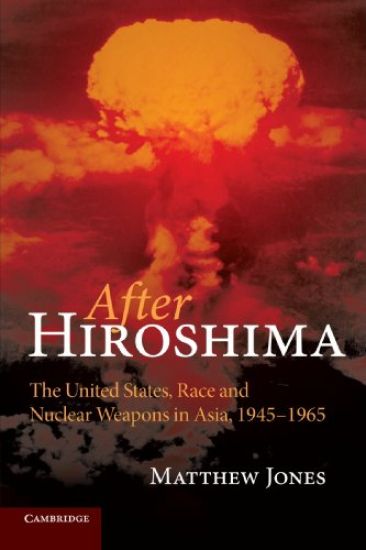
After Hiroshima

After Hiroshima

Matthew Jones

Cambridge University Press
2012
pokkari
By emphasising the role of nuclear issues, After Hiroshima, published in 2010, provides an original history of American policy in Asia between the dropping of the atomic bombs on Japan and the escalation of the Vietnam War. Drawing on a wide range of documentary evidence, Matthew Jones charts the development of American nuclear strategy and the foreign policy problems it raised, as the United States both confronted China and attempted to win the friendship of an Asia emerging from colonial domination. In underlining American perceptions that Asian peoples saw the possible repeat use of nuclear weapons as a manifestation of Western attitudes of 'white superiority', he offers new insights into the links between racial sensitivities and the conduct of US policy, and a fresh interpretation of the transition in American strategy from massive retaliation to flexible response in the era spanned by the Korean and Vietnam Wars.
The Official History of the UK Strategic Nuclear Deterrent
Volume II of The Official History of the UK Strategic Nuclear Deterrent provides an authoritative and in-depth examination of the British government’s strategic nuclear policy from 1964 to 1970.Written with full access to the UK documentary record, Volume II examines the controversies that developed over nuclear policy following the arrival in office of a Labour government led by Harold Wilson in October 1964 that openly questioned the independence of the deterrent. Having decided to preserve the Polaris programme, Labour ministers were nevertheless committed not to develop another generation of nuclear weapons beyond those in the pipeline, placing major doubts over the long-term future of the nuclear programme and collaboration with the United States. Defence planners also became increasingly concerned that the deployment of Soviet anti-ballistic missile (ABM) defences around Moscow threatened to undermine the ability of Polaris to fulfil its role as a national strategic nuclear deterrent. During 1967, under heavy pressures to control defence spending, a protracted debate was conducted within Whitehall over the future of Polaris and how to respond to the evolving ABM challenge. The volume concludes with Labour’s defeat at the general election of June 1970, by which time the Royal Navy had assumed the nuclear deterrent role from the RAF, and plans had already been formulated for a UK project to improve Polaris which could both ensure its continuing credibility and rejuvenate the Anglo-American nuclear relationship. This book will be of much interest to students of British politics, Cold War history, nuclear proliferation and international relations.

The Official History of the UK Strategic Nuclear Deterrent
Volume I of The Official History of the UK Strategic Nuclear Deterrent provides an authoritative and in-depth examination of the British government’s strategic nuclear policy from 1945 to 1964.Written with full access to the UK documentary record, this volume examines how British governments after 1945 tried to build and then maintain an independent, nationally controlled strategic nuclear capability, and the debates this provoked in official circles. Against a background of evolving British ideas about deterrence during the Cold War, it focuses on the strategic, political and diplomatic considerations that compelled governments, in the face of ever-increasing pressures on the defence budget, to persist in their efforts to develop nuclear weapons and to deploy a credible nuclear force, as the age of the manned bomber gave way to the ballistic missile. Particular attention is given to controversies over the portion of the defence budget devoted to the deterrent programme, the effects of the restoration of Anglo-American nuclear collaboration after 1958, increasing reliance on the United States for nuclear delivery systems, the negotiations that led to the Nassau Agreement of 1962 and the supply of Polaris, and discussions within the Western Alliance over the control of nuclear forces. By the time of the October 1964 election, when this volume concludes, previous dismissal of the prospects for successful ballistic missile defence were giving way to growing doubts over the long-term effectiveness of the Polaris system in its role as an independent deterrent, several years before it was due to enter service with the Royal Navy. This book will be of much interest to students of British politics, Cold War history, nuclear proliferation and international relations.
Researching Organizations

Researching Organizations

Matthew Jones

SAGE Publications Ltd
2014
sidottu
Although there are plenty of books that discuss the principles, the philosophy and the techniques of research in organisations, it is much harder to find information on what doing research in organisations actually involves in practice. Yet this is often one of the most challenging, but also most interesting, aspects of a study. Drawing on examples and debates from a broad range of disciplines (such as criminology, education and social anthropology as well management) Researching Organisations explores the issues that researchers may encounter when carrying out fieldwork in organisations. From getting in to an organisation at the start of the research to getting out and maybe back again at the end, the book offers systematic guidance to help researchers navigate the messy reality of fieldwork. Researching Organisations is designed for graduate level researchers who may be undertaking fieldwork for the first time, but also for those who wish to gain an understanding of research practice.
Researching Organizations

Researching Organizations

Matthew Jones

SAGE Publications Ltd
2014
nidottu
Although there are plenty of books that discuss the principles, the philosophy and the techniques of research in organisations, it is much harder to find information on what doing research in organisations actually involves in practice. Yet this is often one of the most challenging, but also most interesting, aspects of a study. Drawing on examples and debates from a broad range of disciplines (such as criminology, education and social anthropology as well management) Researching Organisations explores the issues that researchers may encounter when carrying out fieldwork in organisations. From getting in to an organisation at the start of the research to getting out and maybe back again at the end, the book offers systematic guidance to help researchers navigate the messy reality of fieldwork. Researching Organisations is designed for graduate level researchers who may be undertaking fieldwork for the first time, but also for those who wish to gain an understanding of research practice.
Science Fiction Cinema and 1950s Britain

Science Fiction Cinema and 1950s Britain

Matthew Jones

Bloomsbury Academic USA
2017
sidottu
This book is open access and available on www.bloomsburycollections.com. It is funded by Knowledge Unlatched.For the last sixty years discussion of 1950s science fiction cinema has been dominated by claims that the genre reflected US paranoia about Soviet brainwashing and the nuclear bomb. However, classic films, such as Invasion of the Body Snatchers (1956) and It Came from Outer Space (1953), and less familiar productions, such as It! The Terror from Beyond Space (1958), were regularly exported to countries across the world. The histories of their encounters with foreign audiences have not yet been told. Science Fiction Cinema and 1950s Britain begins this task by recounting the story of 1950s British cinema-goers and the aliens and monsters they watched on the silver screen. Drawing on extensive archival research, Matthew Jones makes an exciting and important intervention by locating American science fiction films alongside their domestic counterparts in their British contexts of release and reception. He offers a radical reassessment of the genre, demonstrating for the first time that in Britain, which was a significant market for and producer of science fiction, these films gave voice to different fears than they did in America. While Americans experienced an economic boom, low immigration and the conferring of statehood on Alaska and Hawaii, Britons worried about economic uncertainty, mass immigration and the dissolution of the Empire. Science Fiction Cinema and 1950s Britain uses these and other differences between the British and American experiences of the 1950s to tell a new history of the decade’s science fiction cinema, exploring for the first time the ways in which the genre came to mean something unique to Britons.
Science Fiction Cinema and 1950s Britain

Science Fiction Cinema and 1950s Britain

Matthew Jones

Bloomsbury Academic USA
2019
nidottu
This book is open access and available on www.bloomsburycollections.com. It is funded by Knowledge Unlatched.For the last sixty years discussion of 1950s science fiction cinema has been dominated by claims that the genre reflected US paranoia about Soviet brainwashing and the nuclear bomb. However, classic films, such as Invasion of the Body Snatchers (1956) and It Came from Outer Space (1953), and less familiar productions, such as It! The Terror from Beyond Space (1958), were regularly exported to countries across the world. The histories of their encounters with foreign audiences have not yet been told. Science Fiction Cinema and 1950s Britain begins this task by recounting the story of 1950s British cinema-goers and the aliens and monsters they watched on the silver screen. Drawing on extensive archival research, Matthew Jones makes an exciting and important intervention by locating American science fiction films alongside their domestic counterparts in their British contexts of release and reception. He offers a radical reassessment of the genre, demonstrating for the first time that in Britain, which was a significant market for and producer of science fiction, these films gave voice to different fears than they did in America. While Americans experienced an economic boom, low immigration and the conferring of statehood on Alaska and Hawaii, Britons worried about economic uncertainty, mass immigration and the dissolution of the Empire. Science Fiction Cinema and 1950s Britain uses these and other differences between the British and American experiences of the 1950s to tell a new history of the decade’s science fiction cinema, exploring for the first time the ways in which the genre came to mean something unique to Britons.