Kirjojen hintavertailu. Mukana 11 699 587 kirjaa ja 12 kauppaa.

Kirjahaku

Etsi kirjoja tekijän nimen, kirjan nimen tai ISBN:n perusteella.

45 kirjaa tekijältä Matthew Levering

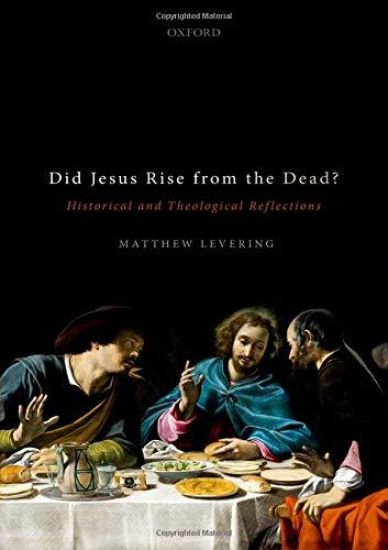
Did Jesus Rise from the Dead?

Did Jesus Rise from the Dead?

Matthew Levering

Oxford University Press
2019
sidottu
The Resurrection of Jesus is at the very root of Christian faith; without belief in Jesus Christianity dies. In this thought-provoking work, Matthew Levering defends the credibility of the claim that Jesus rose from the dead. Drawing on the work of N. T. Wright, Levering shows that the historical evidence vindicates this assumption, and reveals that the Gospels were backed by eyewitnesses who were living and telling their stories even during the time of the writing of the Gospels. The author also emphasises the importance of evaluating the Old Testament to validate Jesus' Resurrection. By highlighting the desire--both in the ancient world and now--to make the Resurrection more comprehensible by spiritualizing it, Levering argues that the fact that the disciples themselves did not do this provides a further clue to reliability. Finally, the author addresses the question of why Jesus does not continue to show himself in his glorified flesh after his resurrection, which is often seen as a strong case for scepticism. However, he shows that Jesus' entire mission is predicated upon helping us to avoid cleaving to the present world over God. He is leading us to where he is--the kingdom of God, the beginning of the new creation at the Father's right hand. By developing these arguments for the historical reality of Jesus' Resurrection, this ground-breaking study expertly draws together historical and theological reasons for believing that Jesus' Resurrection happened.
Biblical Natural Law

Biblical Natural Law

Matthew Levering

Oxford University Press
2008
sidottu
Natural law theory is controversial today because it presumes that there is a stable 'human nature' that is subject to a 'law.' How do we know that 'human nature' is stable and not ever-evolving? How can we expect 'law' not to constrict human freedom and potential? Furthermore if there is a 'law,' there must be a lawgiver. Matthew Levering argues that natural law theory makes sense only within a broader worldview, and that the Bible sketches both such a persuasive worldview and an account of natural law that offers an exciting portrait of the moral life. To establish the relevance of biblical readings to the wider philosophical debate on natural law, this study offers an overview of modern natural law theories from Cicero to Nietzsche, which reverse the biblical portrait by placing human beings at the center of the moral universe. Whereas the biblical portrait of natural law is other-directed, ordered to self-giving love, the modern accounts turn inward upon the self. Drawing on the thought of St. Thomas Aquinas, Levering employs theological and philosophical investigation to achieve a contemporary doctrine of natural law that accords with the biblical witness to a loving Creator who draws human beings to share in the divine life. This book provides both an introduction to natural law theory and a compelling challenge to re-think current biblical scholarship on the topic.
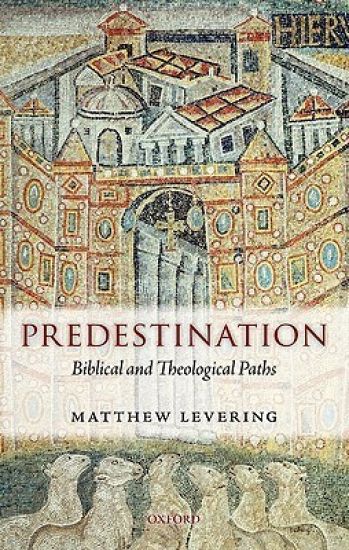
Predestination

Predestination

Matthew Levering

Oxford University Press
2011
sidottu
Predestination has been the subject of perennial controversy among Christians, although in recent years theologians have shied away from it as a divisive and unedifying topic. In this book Matthew Levering argues that Christian theological reflection needs to continue to return to the topic of predestination, for two reasons: Firstly, predestinarian doctrine is taught in the New Testament. Reflecting the importance of the topic in many strands of Second Temple Judaism, the New Testament authors teach predestination in a manner that explains why Christian theologians continually recur to this topic. Secondly, the doctrine of predestination provides a way for Christian theologians to reflect upon two fundamental affirmations of biblical revelation. The first is God's love, without any deficiency or crimp, for each and every rational creature; the second is that God from eternity brings about the purpose for which he created us, and that he permits some rational creatures freely and permanently to rebel against his love. When theologians reflect on these two key biblical affirmations, they generally try to unite them in a logical synthesis. Instead, Levering argues, it is necessary to allow for the truth of each side of the mystery, without trying to blend the two affirmations into one. Levering pairs his discussion of Scripture with ecumenically oriented discussion of the doctrine of predestination in through the ages through the figures of Origen, Augustine, Boethius, John of Damascus, Eriugena, Aquinas, Ockham, Catherine of Siena, Calvin, Molina, Francis de Sales, Leibniz, Bulgakov, Barth, Maritain, and Balthasar. He concludes with a constructive chapter regarding the future of the doctrine.
Biblical Natural Law

Biblical Natural Law

Matthew Levering

Oxford University Press
2012
nidottu
Natural law theory is controversial today because it presumes that there is a stable 'human nature' that is subject to a 'law.' How do we know that 'human nature' is stable and not ever-evolving? How can we expect 'law' not to constrict human freedom and potential? Furthermore if there is a 'law,' there must be a lawgiver. Matthew Levering argues that natural law theory makes sense only within a broader worldview, and that the Bible sketches both such a persuasive worldview and an account of natural law that offers an exciting portrait of the moral life. To establish the relevance of biblical readings to the wider philosophical debate on natural law, this study offers an overview of modern natural law theories from Cicero to Nietzsche, which reverse the biblical portrait by placing human beings at the center of the moral universe. Whereas the biblical portrait of natural law is other-directed, ordered to self-giving love, the modern accounts turn inward upon the self. Drawing on the thought of St. Thomas Aquinas, Levering employs theological and philosophical investigation to achieve a contemporary doctrine of natural law that accords with the biblical witness to a loving Creator who draws human beings to share in the divine life. This book provides both an introduction to natural law theory and a compelling challenge to re-think current biblical scholarship on the topic.
Christ's Fulfillment of Torah and Temple

Christ's Fulfillment of Torah and Temple

Matthew Levering

University of Notre Dame Press
2002
sidottu
Christ's Fulfillment of Torah and Temple is a concise introduction to the Christian theology of salvation in light of the contributions of Thomas Aquinas. In this cogent study, Matthew Levering identifies six important aspects of soteriology, each of which corresponds to an individual chapter in the book. Levering focuses on human history understood in light of the divine law and covenants, Jesus the Incarnate Son of God and Messiah of Israel, Jesus' cross, transformation in the image of God, the Mystical Body of Christ into which all human beings are called, and eternal life. Taking the doctrines of faith as his starting point, Levering's objective is to answer the questions of both Christians and non-Christians who desire to learn how and for what end Jesus "saves" humankind. Levering's work also speaks directly to contemporary systematic theologians. In contrast to widespread assumptions that Aquinas's theology of salvation is overly abstract or juridical, Levering demonstrates that Aquinas's theology of salvation flows from his reading of Scripture and deserves a central place in contemporary discussions. Thomas Aquinas's theology of salvation employs and develops the concepts of satisfaction and merit in light of his theology of the Old Testament. For Aquinas, Christ fulfills Israel's Torah and Temple, law and liturgy. These two aspects of Israel's religion provide the central categories for understanding salvation. The Torah expresses God's Wisdom, incarnated in Jesus Christ. Christ's passion, then, fulfills and transforms the moral, juridical, and ceremonial precepts of the Torah, which correspond to the three "offices" of ancient Israel—prophet, king, and priest. The New Law in Christ Jesus is also the fulfillment of the Temple, Israel's worship. Christ offers the Father the perfect worship, participated in by all members of his Mystical Body through faith, charity, and the sacraments. Old Law and New Law are fulfilled in the perfect knowing and loving (perfect law and liturgy) of eternal life, the Heavenly Jerusalem. As a Thomistic contribution to contemporary theology, this fruitful study develops a theology of salvation in accord with contemporary canonical readings of Scripture and with the teachings of the Second Vatican Council on the fulfillment and permanence of God's covenants.
Christ's Fulfillment of Torah and Temple

Christ's Fulfillment of Torah and Temple

Matthew Levering

University of Notre Dame Press
2002
nidottu
Christ's Fulfillment of Torah and Temple is a concise introduction to the Christian theology of salvation in light of the contributions of Thomas Aquinas. In this cogent study, Matthew Levering identifies six important aspects of soteriology, each of which corresponds to an individual chapter in the book. Levering focuses on human history understood in light of the divine law and covenants, Jesus the Incarnate Son of God and Messiah of Israel, Jesus' cross, transformation in the image of God, the Mystical Body of Christ into which all human beings are called, and eternal life. Taking the doctrines of faith as his starting point, Levering's objective is to answer the questions of both Christians and non-Christians who desire to learn how and for what end Jesus "saves" humankind. Levering's work also speaks directly to contemporary systematic theologians. In contrast to widespread assumptions that Aquinas's theology of salvation is overly abstract or juridical, Levering demonstrates that Aquinas's theology of salvation flows from his reading of Scripture and deserves a central place in contemporary discussions. Thomas Aquinas's theology of salvation employs and develops the concepts of satisfaction and merit in light of his theology of the Old Testament. For Aquinas, Christ fulfills Israel's Torah and Temple, law and liturgy. These two aspects of Israel's religion provide the central categories for understanding salvation. The Torah expresses God's Wisdom, incarnated in Jesus Christ. Christ's passion, then, fulfills and transforms the moral, juridical, and ceremonial precepts of the Torah, which correspond to the three "offices" of ancient Israel—prophet, king, and priest. The New Law in Christ Jesus is also the fulfillment of the Temple, Israel's worship. Christ offers the Father the perfect worship, participated in by all members of his Mystical Body through faith, charity, and the sacraments. Old Law and New Law are fulfilled in the perfect knowing and loving (perfect law and liturgy) of eternal life, the Heavenly Jerusalem. As a Thomistic contribution to contemporary theology, this fruitful study develops a theology of salvation in accord with contemporary canonical readings of Scripture and with the teachings of the Second Vatican Council on the fulfillment and permanence of God's covenants.
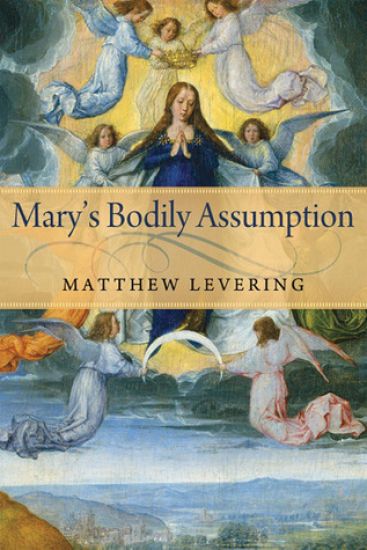
Mary's Bodily Assumption

Mary's Bodily Assumption

Matthew Levering

University of Notre Dame Press
2014
nidottu
In Mary's Bodily Assumption, Matthew Levering presents a contemporary explanation and defense of the Catholic doctrine of Mary's bodily Assumption. He asks: How does the Church justify a doctrine that does not have explicit biblical or first-century historical evidence to support it? With the goal of exploring this question more deeply, he divides his discussion into two sections, one historical and the other systematic. Levering's historical section aims to retrieve the rich Mariological doctrine of the mid-twentieth century. He introduces the development of Mariology in Catholic Magisterial documents, focusing on Pope Pius XII's encyclical Munificentissimus Deus of 1950, in which the bodily Assumption of Mary was dogmatically defined, and two later Magisterial documents, Vatican II's Lumen Gentium and Pope John Paul II's Redemptoris Mater. Levering addresses the work of the neo-scholastic theologians Joseph Duhr, Aloïs Janssens, and Réginald Garrigou-Lagrange before turning to the great theologians of the nouvelle théologie—Karl Rahner, Hans Urs von Balthasar, Louis Bouyer, Joseph Ratzinger—and their emphasis on biblical typology. Using John Henry Newman as a guide, Levering organizes his systematic section by the three pillars of the doctrine on which Mary's Assumption rests: biblical typology, the Church as authoritative interpreter of divine revelation under the guidance of the Holy Spirit, and the fittingness of Mary's Assumption in relation to the other mysteries of faith. Levering's ecumenical contribution is a significant engagement with Protestant biblical scholars and theologians; it is also a reclamation of Mariology as a central topic in Catholic theology.
Participatory Biblical Exegesis

Participatory Biblical Exegesis

Matthew Levering

University of Notre Dame Press
2008
sidottu
The interpretation of Scripture has depended largely on the view of history held by theologians and exegetes. In Participatory Biblical Exegesis, Matthew Levering examines the changing views of history that distinguish patristic and medieval biblical exegesis from modern historical-critical exegesis. Levering argues for a delicate interpretive balance, in which history is understood both as a process that participates in God's creative and redemptive presence and as a set of linear moments. He identifies a split between theological and historical interpretations of scripture beginning in the high Middle Ages, considerably earlier than the emergence of historical-critical methods in the seventeenth and eighteenth centuries. Instead, he offers a vision of Scripture that is rooted in the exegetical practice of St. Thomas Aquinas and his sources but embraces historical-critical research as well. Participatory Biblical Exegesis provides an original theological basis for critical exegesis. It integrates the work of contemporary exegetes, philosophers, theologians, and historians to provide a compelling vision of biblical interpretation.
Participatory Biblical Exegesis

Participatory Biblical Exegesis

Matthew Levering

University of Notre Dame Press
2008
nidottu
The interpretation of Scripture has depended largely on the view of history held by theologians and exegetes. In Participatory Biblical Exegesis, Matthew Levering examines the changing views of history that distinguish patristic and medieval biblical exegesis from modern historical-critical exegesis. Levering argues for a delicate interpretive balance, in which history is understood both as a process that participates in God's creative and redemptive presence and as a set of linear moments. He identifies a split between theological and historical interpretations of scripture beginning in the high Middle Ages, considerably earlier than the emergence of historical-critical methods in the seventeenth and eighteenth centuries. Instead, he offers a vision of Scripture that is rooted in the exegetical practice of St. Thomas Aquinas and his sources but embraces historical-critical research as well. Participatory Biblical Exegesis provides an original theological basis for critical exegesis. It integrates the work of contemporary exegetes, philosophers, theologians, and historians to provide a compelling vision of biblical interpretation.
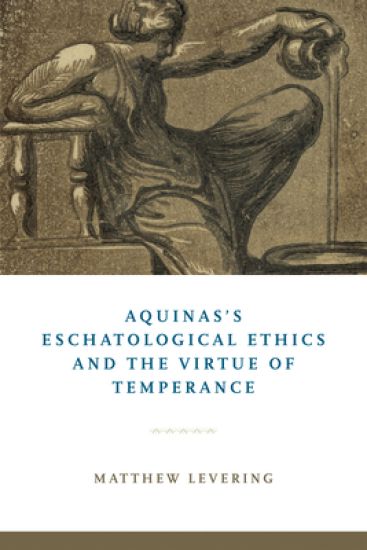
Aquinas's Eschatological Ethics and the Virtue of Temperance

Aquinas's Eschatological Ethics and the Virtue of Temperance

Matthew Levering

University of Notre Dame Press
2019
sidottu
Matthew Levering offers a biblical and Thomistic portrait of the cardinal virtue of temperance and its allied virtues, in dialogue with an ecumenical range of theologians and scholars. In Aquinas's Eschatological Ethics and the Virtue of Temperance, Levering argues that Catholic ethics make sense only in light of the biblical worldview that Jesus has inaugurated the kingdom of God by pouring out his spirit. Jesus has made it possible for us to know and obey God's law for human flourishing as individuals and communities. He has reoriented our lives toward the goal of beatific communion with him in charity, which affects the exercise of the moral virtues that pertain to human flourishing. Without the context of the inaugurated kingdom, Catholic ethics as traditionally conceived will seem like an effort to find a middle ground between legalistic rigorism and relativistic laxism, which is especially the case with the virtue of temperance, the focus of Levering's book. After an opening chapter on the eschatological/biblical character of Catholic ethics, the ensuing chapters engage Aquinas's theology of temperance in the Summa theologiae, which identifies and examines a number of virtues associated with temperance. Levering demonstrates that the theology of temperance is profoundly biblical, and that Aquinas's theology of temperance relies for its intelligibility upon Christ's inauguration of the kingdom of God as the graced fulfillment of our created nature. The book develops new vistas for scholars and students interested in moral theology.
Aquinas's Eschatological Ethics and the Virtue of Temperance

Aquinas's Eschatological Ethics and the Virtue of Temperance

Matthew Levering

UNIVERSITY OF NOTRE DAME PRESS
2025
nidottu
Matthew Levering offers a biblical and Thomistic portrait of the cardinal virtue of temperance and its allied virtues, in dialogue with an ecumenical range of theologians and scholars. In Aquinas's Eschatological Ethics and the Virtue of Temperance, Levering argues that Catholic ethics make sense only in light of the biblical worldview that Jesus has inaugurated the kingdom of God by pouring out his spirit. Jesus has made it possible for us to know and obey God's law for human flourishing as individuals and communities. He has reoriented our lives toward the goal of beatific communion with him in charity, which affects the exercise of the moral virtues that pertain to human flourishing. Without the context of the inaugurated kingdom, Catholic ethics as traditionally conceived will seem like an effort to find a middle ground between legalistic rigorism and relativistic laxism, which is especially the case with the virtue of temperance, the focus of Levering's book. After an opening chapter on the eschatological/biblical character of Catholic ethics, the ensuing chapters engage Aquinas's theology of temperance in the Summa theologiae, which identifies and examines a number of virtues associated with temperance. Levering demonstrates that the theology of temperance is profoundly biblical, and that Aquinas's theology of temperance relies for its intelligibility upon Christ's inauguration of the kingdom of God as the graced fulfillment of our created nature. The book develops new vistas for scholars and students interested in moral theology.
Mary's Bodily Assumption

Mary's Bodily Assumption

Matthew Levering

UNIVERSITY OF NOTRE DAME PRESS
2022
sidottu
In Mary's Bodily Assumption, Matthew Levering presents a contemporary explanation and defense of the Catholic doctrine of Mary's bodily Assumption. He asks: How does the Church justify a doctrine that does not have explicit biblical or first-century historical evidence to support it? With the goal of exploring this question more deeply, he divides his discussion into two sections, one historical and the other systematic. Levering's historical section aims to retrieve the rich Mariological doctrine of the mid-twentieth century. He introduces the development of Mariology in Catholic Magisterial documents, focusing on Pope Pius XII's encyclical Munificentissimus Deus of 1950, in which the bodily Assumption of Mary was dogmatically defined, and two later Magisterial documents, Vatican II's Lumen Gentium and Pope John Paul II's Redemptoris Mater. Levering addresses the work of the neo-scholastic theologians Joseph Duhr, Aloïs Janssens, and Réginald Garrigou-Lagrange before turning to the great theologians of the nouvelle théologie—Karl Rahner, Hans Urs von Balthasar, Louis Bouyer, Joseph Ratzinger—and their emphasis on biblical typology. Using John Henry Newman as a guide, Levering organizes his systematic section by the three pillars of the doctrine on which Mary's Assumption rests: biblical typology, the Church as authoritative interpreter of divine revelation under the guidance of the Holy Spirit, and the fittingness of Mary's Assumption in relation to the other mysteries of faith. Levering's ecumenical contribution is a significant engagement with Protestant biblical scholars and theologians; it is also a reclamation of Mariology as a central topic in Catholic theology.
Was the Reformation a Mistake?

Was the Reformation a Mistake?

Matthew Levering

Zondervan
2017
nidottu
Was the Reformation a mistake?In its actual historical context, it hardly seems fair to call the Reformation a "mistake." In 1517, the Church was in need of a spiritual and theological reform. The issues raised by Renaissance humanism - and by the profound corruption of the Church's leaders, the Avignon papacy, and the Great Schism in the fourteenth and fifteenth centuries - lingered unresolved. What were key theological problems that led to the Reformation?Theologian Matthew Levering helps readers see these questions from a Catholic perspective. Surveying nine key themes - Scripture, Mary, the Eucharist, the Seven Sacraments, monasticism, justification and merit, purgatory, saints, and papacy - he examines the positions of Martin Luther and makes a case that the Catholic position is biblically defensible once one allows for the variety of biblically warranted modes of interpreting Scripture. At the same time, Levering makes clear that he cannot "prove" the Catholic case.The book concludes with a spirited response by "mere Protestant" theologian Kevin J. Vanhoozer.
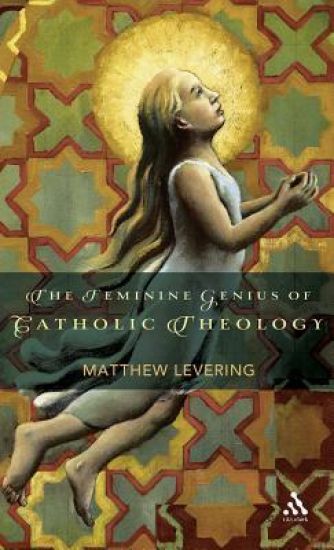
The Feminine Genius of Catholic Theology

The Feminine Genius of Catholic Theology

Matthew Levering

T. T.Clark Ltd
2012
nidottu
This book introduces Catholic doctrine through the crucible of the women mystics' reception of the gospel. The work of the great women theologians of the Church's second millennium has too often been neglected (or relegated to the category of 'mysticism') in textbooks on Catholic doctrine. This is a shame, because their work shows the interior conjunction of liturgical experience (broadly understood), scriptural exegesis, philosophical reflection, and doctrinal/creedal formulation. Drawing on their work, this book presents the tenets of Catholic faith in a clear and accessible manner, useful for introductory courses as well as for students and scholars interested in the contributions of women to Catholic theology. Women theologians in this book include Catherine of Siena, Theresa of Avila, Therese of Lisieux, Simone Weil and others.
The Feminine Genius of Catholic Theology

The Feminine Genius of Catholic Theology

Matthew Levering

T. T.Clark Ltd
2012
sidottu
This book introduces Catholic doctrine through the crucible of the women mystics' reception of the gospel. The work of the great women theologians of the Church's second millennium has too often been neglected (or relegated to the category of 'mysticism') in textbooks on Catholic doctrine. This is a shame, because their work shows the interior conjunction of liturgical experience (broadly understood), scriptural exegesis, philosophical reflection, and doctrinal/creedal formulation. Drawing on their work, this book presents the tenets of Catholic faith in a clear and accessible manner, useful for introductory courses as well as for students and scholars interested in the contributions of women to Catholic theology. Women theologians in this book include Catherine of Siena, Theresa of Avila, Therese of Lisieux, Simone Weil and others.
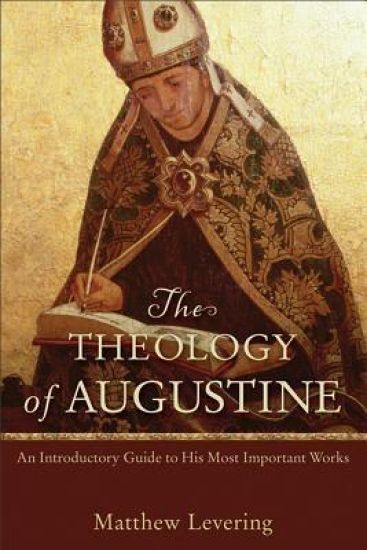
The Theology of Augustine – An Introductory Guide to His Most Important Works

The Theology of Augustine – An Introductory Guide to His Most Important Works

Matthew Levering

Baker Academic, Div of Baker Publishing Group
2013
nidottu
Most theology students realize Augustine is tremendously influential on the Christian tradition as a whole, but they generally lack real knowledge of his writings. This volume introduces Augustine's theology through seven of his most important works. Matthew Levering begins with a discussion of Augustine's life and times and then provides a full survey of the argument of each work with bibliographical references for those who wish to go further. Written in clear, accessible language, this book offers an essential introduction to major works of Augustine that all students of theology--and their professors!--need to know.
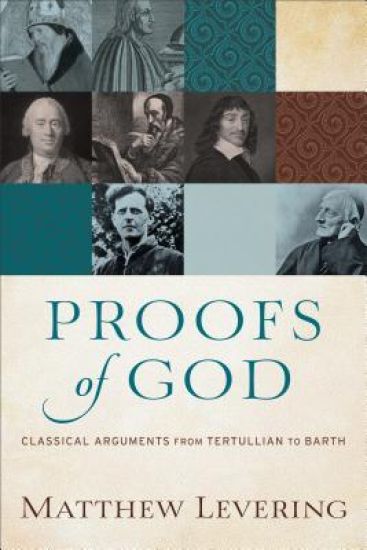
Proofs of God – Classical Arguments from Tertullian to Barth

Proofs of God – Classical Arguments from Tertullian to Barth

Matthew Levering

Baker Academic, Div of Baker Publishing Group
2016
nidottu
Leading theologian Matthew Levering presents a thoroughgoing critical survey of the proofs of God's existence for readers interested in traditional Christian responses to the problem of atheism. Beginning with Tertullian and ending with Karl Barth, Levering covers twenty-one theologians and philosophers from the early church to the modern period, examining how they answered the critics of their day. He also shows the relevance of the classical arguments to contemporary debates and challenges to Christianity. In addition to students, this book will appeal to readers of apologetics.
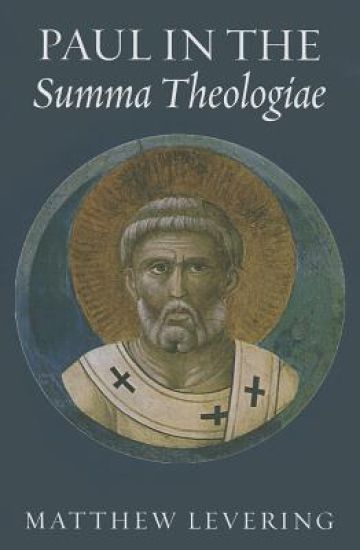
Paul in the Summa Theologiae

Paul in the Summa Theologiae

Matthew Levering

The Catholic University of America Press
2014
nidottu
Aquinas’s commentaries on St. Paul are well known and have received significant attention in the past few years. It is widely known, too, that Aquinas quotes Paul often in the Summa Theologiae. This aspect of the Summa, however, has not been studied in detail. This book seeks to fill that lacuna in scholarship.The book’s brief introduction treats Aquinas as a biblically erudite theologian, and offers some basic statistical data regarding his use of Paul in the Summa Theologiae. The book’s nine chapters track in detail Aquinas’s use of Pauline quotations in his theological argumentation. The first six chapters examine Paul in particular “treatises:” the triune God, grace, charity, the virtue of religion, the Passion of Christ, and baptism. The last three chapters investigate Pauline texts as they are used throughout the Summa: Romans 1:20, 1 Corinthians 13, and Philippians 2:5–11. Chapters 1–3 are organised by the order of the treatise; chapters 4–6 are organised by order of the Pauline letters. This multifaceted procedure provides a rich, detailed picture of Aquinas’s use of Paul in the Summa.The guiding question is whether, and if so how, we can describe Aquinas’s theology as Pauline or as deeply influenced by Paul. Aquinas does not seek to understand Paul’s theology in its Second Temple context, and Aquinas often uses Pauline texts in a way that takes them out of context or that uses them in response to a theological problem unknown to Paul. Levering argues that Aquinas’s theology is indeed deeply Pauline, offering ample evidence that Aquinas captures the central Pauline themes and gives them a central place in his own theology.
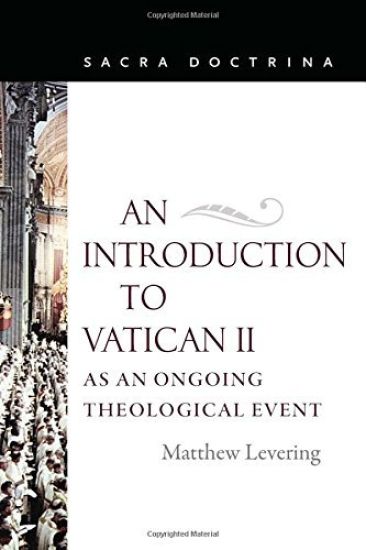
An Introduction to Vatican II as an Ongoing Theological Event

An Introduction to Vatican II as an Ongoing Theological Event

Matthew Levering

The Catholic University of America Press
2017
nidottu
Contemporary scholars often refer to “the event of Vatican II,” but what kind of an event was it? In this first book of the new CUA Press series Sacra Doctrina, Matthew Levering leads his readers to see the Council as a “theological event”—a period of confirming and continuing God’s self-revelation in Christ into a new historical era for the Church. This is an introduction to Vatican II with a detailed summary of each of its four central documents—the dogmatic constitutions—followed by explanations of how to interpret them. In contrast to other introductions, which pay little attention to the theological soil in which the documents of Vatican II germinated, Levering offers a reading of each conciliar Constitution in light of a key theological author from the era: René Latourelle, SJ for Dei Verbum (persons and propositions); Louis Bouyer, CO for Sacrosanctum Concilium (active participation); Yves Congar, OP for Lumen Gentium (true and false reform); and Henri de Lubac, SJ for Gaudium et Spes (nature and grace). This theological event is “ongoing,” Levering demonstrates, by tracing in each chapter the theological debates that have stretched from the close of the council till the present, and the difficulties the Church continues to encounter in encouraging an ever deeper participation in Jesus Christ on the part of all believers. In this light, the book’s final chapter compares the historicist (Massimo Faggioli) and Christological (Robert Imbelli) interpretations of Vatican II, arguing that historicism can undermine the Council’s fundamental desire for a reform and renewal rooted in Christ. The conclusion addresses the concerns about secularization and loss of faith raised after the Council by Henri de Lubac, Joseph Ratzinger, and Yves Congar, arguing that contemporary Vatican II scholarship needs to take these concerns more seriously.