Kirjojen hintavertailu. Mukana 11 244 527 kirjaa ja 12 kauppaa.

Kirjahaku

Etsi kirjoja tekijän nimen, kirjan nimen tai ISBN:n perusteella.

4 kirjaa tekijältä Matthew P. Fitzpatrick

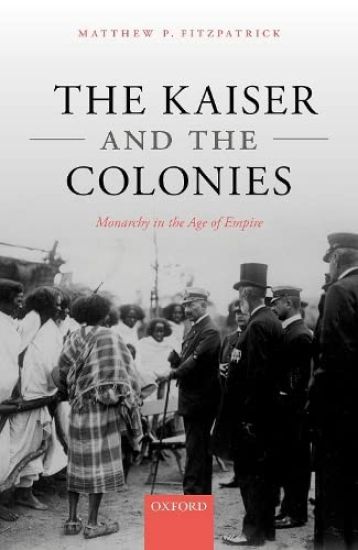
The Kaiser and the Colonies

The Kaiser and the Colonies

Matthew P. Fitzpatrick

Oxford University Press
2022
sidottu
Many have viewed Kaiser Wilhelm II as having personally ruled Germany, dominating its politics, and choreographing its ambitious leap to global power. But how accurate is this picture? As The Kaiser and the Colonies shows, Wilhelm II was a constitutional monarch like many other crowned heads of Europe. Rather than an expression of Wilhelm II's personal rule, Germany's global empire and its Weltpolitik had their origins in the political and economic changes undergone by the nation as German commerce and industry strained to globalise alongside other European nations. More central to Germany's imperial processes than an emperor who reigned but did not rule were the numerous monarchs around the world with whom the German Empire came into contact. In Africa, Asia, and the Pacific, kings, sultans and other paramount leaders both resisted and accommodated Germany's ambitions as they charted their own course through the era of European imperialism. The result was often violent suppression, but also complex diplomatic negotiation, attempts at manipulation, and even mutual cooperation. In vivid detail drawn from archival holdings, The Kaiser and the Colonies examines the surprisingly muted role played by Wilhelm II in the German Empire and contrasts it to the lively, varied, and innovative responses to German imperialism from monarchs around the world.
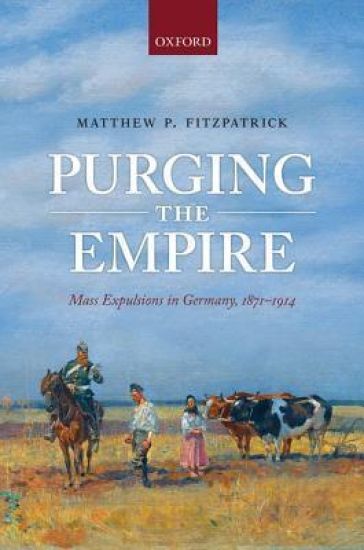
Purging the Empire

Purging the Empire

Matthew P. Fitzpatrick

Oxford University Press
2015
sidottu
While the fate of minorities under Nazism is well known, the earlier expulsions of Germany's unwanted residents are less well understood. Against a backdrop of raging public debate, and numerous claims of a 'state of exception', tens of thousands of vulnerable people living in the German Empire were the victims of mass expulsion orders between 1871 and 1914. Groups as diverse as Socialists, Jesuits, Danes, colonial subjects, French nationalists, Poles, and 'Gypsies' were all removed, under circumstances that varied from police actions undertaken by provincial governors through to laws authorising removals passed by the Reichstag. Purging the Empire examines the competing voices demanding the removal or the preservation of suspect communities, suggesting that these expulsions were enabled by the decentralised and participatory nature of German politics. In a surprisingly responsive political system, a range of players, including the Kaiser, the Reichstag, the bureaucracy, provincial officials, and local police authorities were all empowered to authorise the expulsion of unwanted residents. Added to this, the German press, civic associations, chambers of commerce, public intellectuals, religious societies, and the grassroots membership of political parties all played an important role in advocating or denouncing the measures before, during and after their implementation. Far from revealing the centrality of authoritarian caprice, Germany's mass expulsions point to the diffuse nature of coercive sovereign power and the role of public pressure in authorising or censuring the removals that took place in a modern, increasingly parliamentary Rechtsstaat.
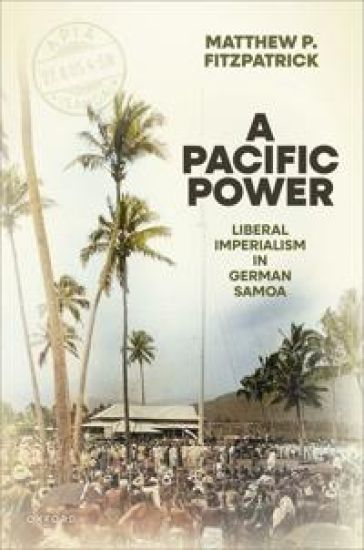
A Pacific Power

A Pacific Power

Matthew P. Fitzpatrick

Oxford University Press
2025
sidottu
Before the First World War Germany was a global empire with colonies in Africa, Asia, and the Pacific. Annexed to this empire in 1900 was Samoa, a thriving Polynesian trading hub which had previously been the site of conflict between Britain, Germany, and the United States. A Pacific Power brings to light an often-overlooked history of German imperialism in the Pacific. Focusing on Samoa, it shows the tension between German rulers and Samoan subjects, as well as the variety of ways the Germans sought to reshape the colony according to their own requirements. It looks at how Samoa became a colonial site that brought Germany into conflict not only with Britain and the United States, but also China, New Zealand, and the Vatican. At the same time, it uncovers the social and cultural experiments of a colony that treated matters of sexuality, race, and religion in often unexpected ways. Through a study of colonial conflicts and crises, A Pacific Power brings to light Germany's strategies of imperial rule and Samoan methods of resisting and co-opting German institutions. It investigates how German rule transformed Samoa and altered German culture and politics. It shows how Samoa brought Germany into conflict not only with Britain and the United States, but also China, New Zealand, and the Vatican. Laying bare the exploitative and racist nature of German colonial labour practices, it also uncovers the surprising social and cultural experiments of a colony that treated matters of sexuality, race, and religion in often unexpected ways. Through careful attention to archival sources and the personal recollections of those who colonised Samoa and those who were colonised, Matthew P. Fitzpatrick reorients German imperial history towards Polynesia, emphasising the too often overlooked importance of the Pacific to German attempts to globalise their economy, culture and military reach.
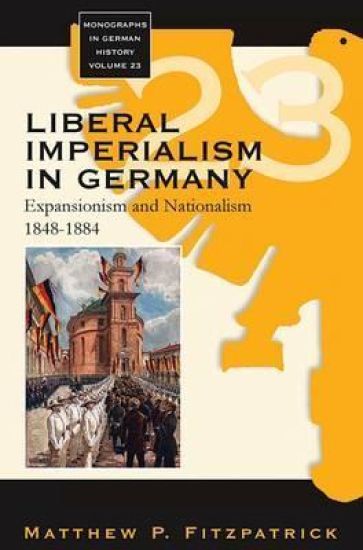
Liberal Imperialism in Germany

Liberal Imperialism in Germany

Matthew P. Fitzpatrick

Berghahn Books
2008
sidottu
In a work based on new archival, press, and literary sources, the author revises the picture of German imperialism as being the brainchild of a Machiavellian Bismarck or the "conservative revolutionaries" of the twentieth century. Instead, Fitzpatrick argues for the liberal origins of German imperialism, by demonstrating the links between nationalism and expansionism in a study that surveys the half century of imperialist agitation and activity leading up to the official founding of Germany’s colonial empire in 1884.