Kirjojen hintavertailu. Mukana 12 390 323 kirjaa ja 12 kauppaa.

Kirjahaku

Etsi kirjoja tekijän nimen, kirjan nimen tai ISBN:n perusteella.

5 kirjaa tekijältä Matthew Specktor, Sean Howe

The Sting

The Sting

Matthew Specktor; Sean Howe

Soft Skull Press
2011
nidottu
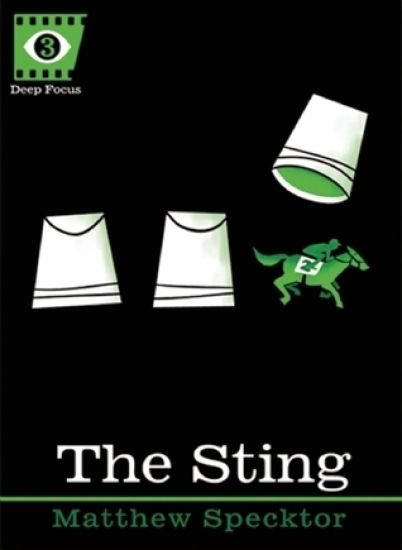
From Melville to Madoff, the Confidence Man is an essential American archetype. George Roy Hill's 1973 film The Sting treats this theme with a characteristic dexterity. The movie was warmly received in its time, winning seven Academy Awards, but there were some who thought the movie was nothing more than a slight throwback. Pauline Kael, among others, felt Hill's film was mechanical and contrived: a callow and manipulative attempt to recapture the box-office success of Robert Redford and Paul Newman's prior pairing, Butch Cassidy & The Sundance Kid. Matthew Specktor's passionate, lyric meditation turns The Sting on its head, on its side, and right-side-up in an effort to unpack the film's giddy complexity and secret, melancholic heart. Working off interviews with screenwriter David S. Ward and producer Tony Bill, and tacking from nuanced interpretation of its arching moods and themes to gimlet-eyed observation of its dizzying sleights-of-hand, Specktor opens The Sting up to disclose the subtle and stunning dimensions--sexual, political, and aesthetic--of Hill's best film.Through Specktor's lens, The Sting reveals itself as both an enduring human drama and a meditation on art-making itself, an ode to the necessary pleasure of being fooled at the movies.
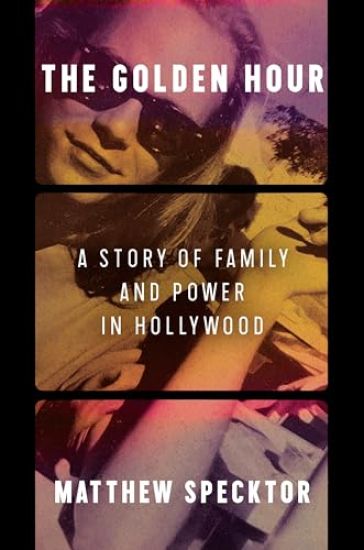
The Golden Hour

The Golden Hour

Matthew Specktor

HARPERCOLLINS PUBLISHERS INC
2025
sidottu
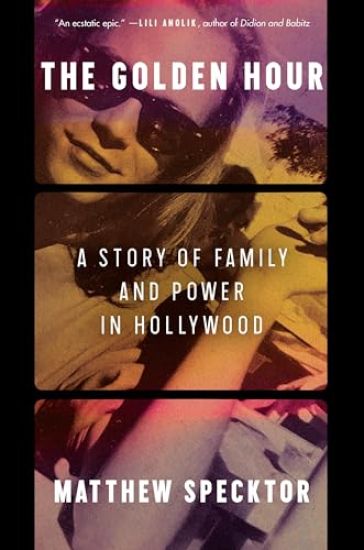
A personal and cultural exploration of the struggles between art and business at the heart of modern Hollywood, through the eyes of the talent that shaped itMatthew Specktor grew up in the film industry: the son of legendary CAA superagent Fred Specktor, his childhood was one where Beau Bridges came over for dinner, Martin Sheen’s daughter was his close friend, and Marlon Brando left long messages on the family answering machine. He would eventually spend time working in Hollywood himself, first as a reluctant studio executive and later as a screenwriter.Now, with The Golden Hour, Specktor blends memoir, cultural criticism, and narrative history to tell the story of the modern motion picture industry—illuminating the conflict between art and business that has played out over the last seventy-five years in Hollywood. Braiding his own story with that of his father, mother (a talented screenwriter whose career was cut short), and figures ranging from Jack Nicholson to CAA’s Michael Ovitz, Specktor reveals how Hollywood became a laboratory for the eternal struggle between art, labor, and capital.Beginning with the rise of Music Corporation of America in the 1950s, The Golden Hour lays out a series of clashes between fathers and sons, talent agents and studio heads, artists, activists, unions, and corporations. With vivid prose and immersive scenes, Specktor shows how Hollywood grew from the epicenter of American cultural life to a full-fledged multinational concern—and what this shift has meant for the nation’s place in the world. At once a book about the movie business and an intimate family drama, The Golden Hour is a sweeping portrait of the American Century.
The Golden Hour

The Golden Hour

Matthew Specktor

HARPERCOLLINS PUBLISHERS INC
2026
nidottu
A personal and cultural exploration of the struggles between art and business at the heart of modern Hollywood, through the eyes of the talent that shaped it Matthew Specktor grew up in the film industry: the son of legendary CAA superagent Fred Specktor, his childhood was one where Beau Bridges came over for dinner, Martin Sheen’s daughter was his close friend, and Marlon Brando left long messages on the family answering machine. He would eventually spend time working in Hollywood himself, first as a reluctant studio executive and later as a screenwriter. Now, with The Golden Hour, Specktor blends memoir, cultural criticism, and narrative history to tell the story of the modern motion picture industry—illuminating the conflict between art and business that has played out over the last seventy-five years in Hollywood. Braiding his own story with that of his father, mother (a talented screenwriter whose career was cut short), and figures ranging from Jack Nicholson to CAA’s Michael Ovitz, Specktor reveals how Hollywood became a laboratory for the eternal struggle between art, labor, and capital. Beginning with the rise of Music Corporation of America in the 1950s, The Golden Hour lays out a series of clashes between fathers and sons, talent agents and studio heads, artists, activists, unions, and corporations.With vivid prose and immersive scenes, Specktorshows how Hollywood grew from the epicenter of American cultural life to a full-fledged multinational concern—and what this shift has meant for the nation’s place in the world. At once a book about the movie business and an intimate family drama, The Golden Hour is a sweeping portrait of the American Century.
American Dream Machine

American Dream Machine

Matthew Specktor

Abacus
2014
pokkari
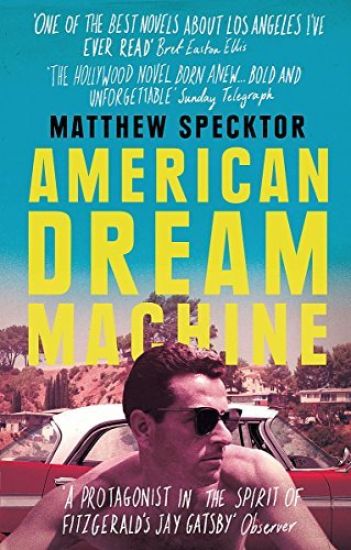
Beau Rosenwald - overweight, far from handsome, and improbably charismatic - arrives in Los Angles in 1962 with nothing but an ill-fitting suit and a pair of expensive brogues. By the late 1970s he has helped found the most successful agency in Hollywood. Through the eyes of his son, we watch Beau and his partner go to war, waging a battle that will reshape an entire industry. We watch Beau rise and fall and rise again, forging and damaging remarkable relationships. We watch Beau's partner, the enigmatic Williams Farquarsen, struggle to control himself and this oh-so-fickle world of movies. We watch two generations of men fumble and thrive across the LA landscape, revelling in their successes and learning the costs of their mistakes.
Always Crashing in the Same Car: On Art, Crisis, and Los Angeles, California
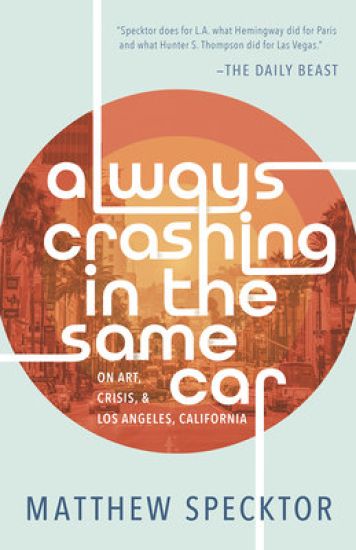
In 2006, Matthew Specktor moved into a crumbling Los Angeles apartment opposite the one in which F. Scott Fitzgerald spent the last moments of his life. Fitz had been Specktor's first literary idol, someone whose own passage through Hollywood had, allegedly, broken him. Freshly divorced, professionally flailing, and reeling from his mother's cancer diagnosis, Specktor was feeling unmoored. But rather than giving in or "cracking up," he embarked on an obsessive journey to make sense of the mythologies of "success" and "failure" that haunt the artist's life and the American imagination.Part memoir, part cultural history, part portrait of place, Always Crashing in the Same Car explores Hollywood through a certain kind of collapse. It's a vibrant and intimate inspection of failure told through the lives of iconic, if under-sung, artists--Carole Eastman, Eleanor Perry, Warren Zevon, Tuesday Weld, and Hal Ashby, among others--and the author's own family history. Through this constellation of Hollywood figures, he unearths a fascinating alternate history of the city that raised him and explores the ways in which curtailed ambition, insufficiency, and loss shape all our lives.At once deeply personal and broadly erudite, it is a story of an art form (the movies), a city (Los Angeles), and one person's attempt to create meaning out of both. Above all, Specktor creates a moving search for optimism alongside the inevitability of failure and reveals the still-resonant power of art to help us navigate the beautiful ruins that await us all.