Kirjojen hintavertailu. Mukana 12 016 292 kirjaa ja 12 kauppaa.

Kirjahaku

Etsi kirjoja tekijän nimen, kirjan nimen tai ISBN:n perusteella.

6 kirjaa tekijältä Matthew Steggle

Digital Humanities and the Lost Drama of Early Modern England
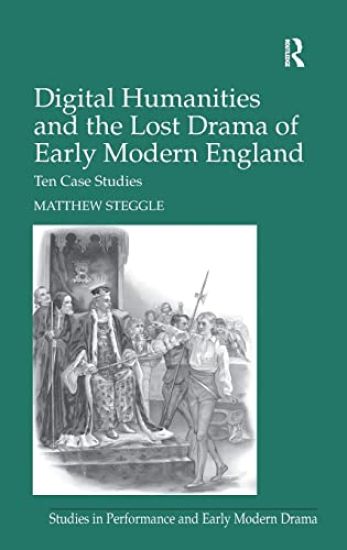
This book establishes new information about the likely content of ten lost plays from the period 1580-1642. These plays’ authors include Nashe, Heywood, and Dekker; and the plays themselves connect in direct ways to some of the most canonical dramas of English literature, including Hamlet, King Lear, The Changeling, and The Duchess of Malfi. The lost plays in question are: Terminus & Non Terminus (1586-8); Richard the Confessor (1593); Cutlack (1594); Bellendon (1594); Truth's Supplication to Candlelight (1600); Albere Galles (1602); Henry the Una (c. 1619); The Angel King (1624); The Duchess of Fernandina (c. 1630-42); and The Cardinal's Conspiracy (bef. 1639). From this list of bare titles, it is argued, can be reconstructed comedies, tragedies, and histories, whose leading characters included a saint, a robber, a Medici duchess, an impotent king, at least one pope, and an angel. In each case, newly-available digital research resources make it possible to interrogate the title and to identify the play's subject-matter, analogues, and likely genre. But these concrete examples raise wider theoretical problems: What is a lost play? What can, and cannot, be said about objects in this problematic category? Known lost plays from the early modern commercial theatre outnumber extant plays from that theatre: but how, in practice, can one investigate them? This book offers an innovative theoretical and practical frame for such work, putting digital humanities into action in the emerging field of lost play studies.
Richard Brome

Richard Brome

Matthew Steggle

Manchester University Press
2004
sidottu
Richard Brome was the leading comic playwright of 1630s London. Starting his career as a manservant to Ben Jonson, he wrote a string of highly successful comedies which were influential in British theatre long after Brome's own playwriting career was cut short by the closure of the theatres in 1642.This book offers the first full-length chronological account of Brome's life and works, drawing on a wide range of recently rediscovered manuscript sources. It traces the early hostility to Brome from those who wrote him off as a mere servant; his continuing struggles with plague closures, contract disputes and theatrical takeover bids; and his literary relationships with Jonson, Shakespeare and others. Each of the surviving plays is discussed in relation to its social and political context, and its sense of place. A final chapter reviews Brome's enduring stageworthiness into the eighteenth and nineteenth centuries, and the most recent Brome revivals.
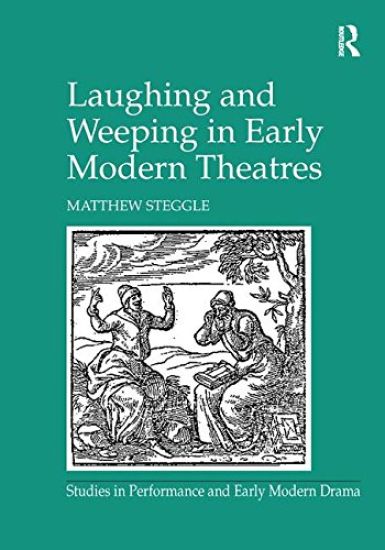
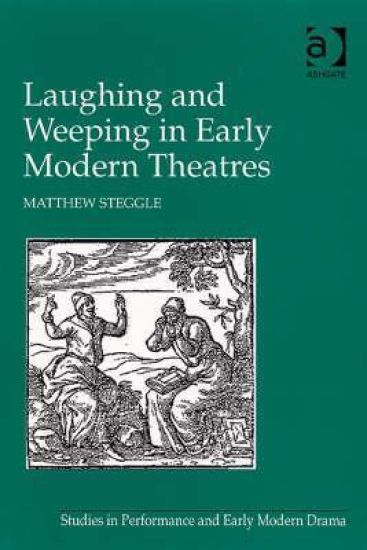
Laughing and Weeping in Early Modern Theatres

Laughing and Weeping in Early Modern Theatres

Matthew Steggle

Ashgate Publishing Limited
2007
sidottu
Did Shakespeare's original audiences weep? Equally, while it seems obvious that they must have laughed at plays performed in early modern theatres, can we say anything about what their laughter sounded like, about when it occurred, and about how, culturally, it was interpreted? Related to both of these problems of audience behaviour is that of the stage representation of laughing, and weeping, both actions performed with astonishing frequency in early modern drama. Each action is associated with a complex set of non-verbal noises, gestures, and cultural overtones, and each is linked to audience behaviour through one of the axioms of Renaissance dramatic theory: that weeping and laughter on stage cause, respectively, weeping and laughter in the audience. This book is a study of laughter and weeping in English theatres, broadly defined, from around 1550 until their closure in 1642. It is concerned both with the representation of these actions on the stage, and with what can be reconstructed about the laughter and weeping of theatrical audiences themselves, arguing that both actions have a peculiar importance in defining the early modern theatrical experience.
Laughing and Weeping in Early Modern Theatres
Did Shakespeare's original audiences weep? Equally, while it seems obvious that they must have laughed at plays performed in early modern theatres, can we say anything about what their laughter sounded like, about when it occurred, and about how, culturally, it was interpreted? Related to both of these problems of audience behaviour is that of the stage representation of laughing, and weeping, both actions performed with astonishing frequency in early modern drama. Each action is associated with a complex set of non-verbal noises, gestures, and cultural overtones, and each is linked to audience behaviour through one of the axioms of Renaissance dramatic theory: that weeping and laughter on stage cause, respectively, weeping and laughter in the audience. This book is a study of laughter and weeping in English theatres, broadly defined, from around 1550 until their closure in 1642. It is concerned both with the representation of these actions on the stage, and with what can be reconstructed about the laughter and weeping of theatrical audiences themselves, arguing that both actions have a peculiar importance in defining the early modern theatrical experience.
Digital Humanities and the Lost Drama of Early Modern England

Digital Humanities and the Lost Drama of Early Modern England

Matthew Steggle

Ashgate Publishing Limited
2015
sidottu
This book establishes new information about the likely content of ten lost plays from the period 1580-1642. These plays’ authors include Nashe, Heywood, and Dekker; and the plays themselves connect in direct ways to some of the most canonical dramas of English literature, including Hamlet, King Lear, The Changeling, and The Duchess of Malfi. The lost plays in question are: Terminus & Non Terminus (1586-8); Richard the Confessor (1593); Cutlack (1594); Bellendon (1594); Truth's Supplication to Candlelight (1600); Albere Galles (1602); Henry the Una (c. 1619); The Angel King (1624); The Duchess of Fernandina (c. 1630-42); and The Cardinal's Conspiracy (bef. 1639). From this list of bare titles, it is argued, can be reconstructed comedies, tragedies, and histories, whose leading characters included a saint, a robber, a Medici duchess, an impotent king, at least one pope, and an angel. In each case, newly-available digital research resources make it possible to interrogate the title and to identify the play's subject-matter, analogues, and likely genre. But these concrete examples raise wider theoretical problems: What is a lost play? What can, and cannot, be said about objects in this problematic category? Known lost plays from the early modern commercial theatre outnumber extant plays from that theatre: but how, in practice, can one investigate them? This book offers an innovative theoretical and practical frame for such work, putting digital humanities into action in the emerging field of lost play studies.
Speed and Flight in Shakespeare

Speed and Flight in Shakespeare

Matthew Steggle

Springer Nature Switzerland AG
2022
sidottu
Shakespeare's plays are fascinated by the problems of speed and flight. They are repeatedly interested in humans, spirits, and objects that move very fast; become airborne; and in some cases even travel into space. In Speed and Flight in Shakespeare, the first study of any kind on the subject, Steggle looks at how Shakespeare’s language explores ideas of speed and flight, and what theatrical resources his plays use to represent these states. Shakespeare has, this book argues, an aesthetic of speed and flight. Featuring chapters on The Comedy of Errors, A Midsummer Night’s Dream, Romeo and Juliet, Henry V, Macbeth and The Tempest, this study opens up a new field around the ‘historical phenomenology’ of early modern speed.