Kirjahaku
Etsi kirjoja tekijän nimen, kirjan nimen tai ISBN:n perusteella.
33 kirjaa tekijältä Matthew Wilson
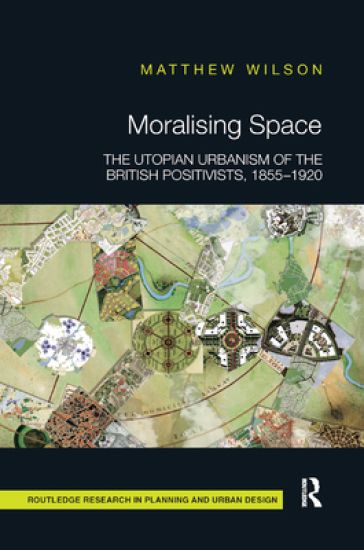
Amidst the soot, stink and splendour of Victorian London, a coterie of citizen-sociologists set out to break up the British Empire. They were the followers of the French philosopher Auguste Comte, a controversial figure who introduced the modern science of sociology and the republican Religion of Humanity. Moralising Space examines how from the 1850s Comte’s British followers practised this science and religion with the aim to create a global network of 500 utopian city-states. Curiously the British Positivists’ work has never been the focus of a full-length study on modern sociology and town planning. In this intellectual history, Matthew Wilson shows that through to the interwar period affiliates to the British Positivist Society – Richard Congreve, Frederic Harrison, Charles Booth, Patrick Geddes and Victor Branford – attempted to realise Comte’s vision. With scarcely used source material Wilson presents the Positivists as an organised resistance to imperialism, industrial exploitation, poverty and despondency. Much to the consternation of the church, state and landed aristocracy they organised urban interventions, led ad hoc sociological surveys and published programmes for realising idyllic city-communities. Effectively this book contributes to our understanding of how Positivism, as a utopian spatial design praxis, heavily influenced twentieth-century architecture and planning.
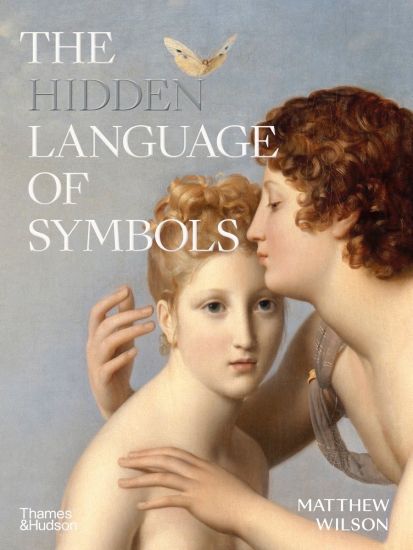
A stimulating narrative and reference resource that guides the reader through the most significant symbols from worldwide art history. Why do we reach for the red rose on Valentine’s day? Where did the owl gain its reputation for wisdom? Why should you never trust a fox? In this visual tour through art history, Matthew Wilson pieces together a global visual language enshrined in art: the language of symbols. Symbols exert a strong hold in the image-saturated 21st century, and have done so for thousands of years. From national emblems to corporate logos and emojis, our day-to-day lives abound with icons with roots in the distant past. Expert art historian Matthew Wilson traces the often surprising trajectories that symbols have taken through history, from their original purposes to their modern meanings, identifying the common themes and ideas that link seemingly disparate cultures. Thus we meet the falcon as a symbol of authority from the ancient Egyptian pharaohs to the medieval aristocracy; the dog as stalwart companion from the classical era to the Renaissance; and the mythical phoenix as a symbol of female power connecting a queen in England with a goddess in China. We also see moments of radical reinterpretation and change: the transformation of the swastika from an auspicious symbol of hope to one of hate. From Palaeolithic cave paintings to contemporary installations, Wilson deftly guides us through this world of symbols, showcasing their enduring ability to express power, hope, fear and faith, and to create and communicate identities, uniting – or dividing – the people that made them.
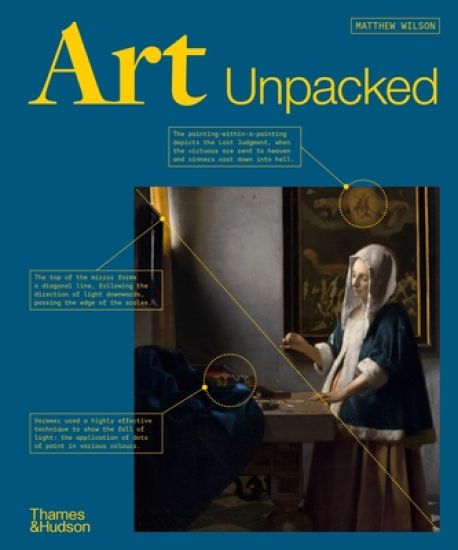
A down-to-earth, visual guidebook that shows how to ‘read’, understand and get the most out of art. For beginners, art history might seem a daunting subject with complex rules and impenetrable technical language. Even for more seasoned art lovers the question of how to think about art is a perennial riddle. Art Unpacked is the perfect resource for both audiences: an engaging, visual primer for the general reader, as well as educators. Designed like an instruction manual, fifty key artworks from around the world are deconstructed with pithy explanations, diagrams and close-ups, in order to reveal the elements that make up a masterpiece. Dating from the earliest times to the present, the artworks under analysis are drawn from many cultures, and cover all forms of visual media including: drawing, illustration, photography, prints and sculpture. Matthew Wilson’s simplicity of approach, using established art historical methods, enables the reader to discover the fundamentals of art history, from considerations of function, historical context, iconography and artists’ experience, to broader issues of identity including feminism, gender and postcolonialism. Whether it’s the mask of Tutankhamun or Dorothea Lange’s photograph of Migrant Mother, Hokusai’s Great Wave or Kara Walker’s Gone, each image is dissected on the page in a no-nonsense style, with explanatory notes detailing artists’ sources of inspiration, associated styles and movements, plus any relevant quotes, related visuals and other contextual and issue-led information with keywords for handy cross-referencing. The resulting book is a dynamic, visual resource that will inspire and spark enjoyment of art in all its forms.
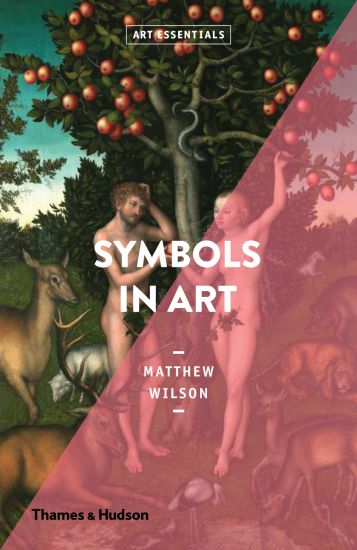
Iconography, the study of symbols – be they animals, artefacts, plants, shapes or gestures – is an essential element of art history. This guide unravels over fifty of the most common and intriguing visual symbols from across the globe from 2300 BCE to the present day. While symbols cross dialects and national boundaries, their meanings can vary and are often culturally specific. The snake, an object of fascination and mysticism in Aztec culture, usually represents sin in the west. Yinka Shonibare’s Last Supper (2013) plays on the grapevine’s historic associations to satiric and startling effect. Matt Wilson explores symbolism’s subtle implications and overt and covert meanings, providing an indispensable tool for interpretation. A reference section includes suggestions for further reading and a glossary of art and historical terms.

A product of the American Dream, Andrew Yang's philanthropist mindset and expert business-sense led him to become a successful entrepreneur - and now he's aiming to take that expertise to the White House.From his policies and proposals to the promises which have marked his presidential run, this biography offers an enlightening look into Yang's past, present, and the 2020 bid which is captivating the country. With reference to his best-known stances on automation, the economy, and his controversial "Freedom Dividend" plan, you'll learn about his stance and reasoning behind countless topical issues.Offering a detailed and comprehensive look into Yang's philosophies and background, Who is Andrew Yang? is a must-read for voters regardless of political association.
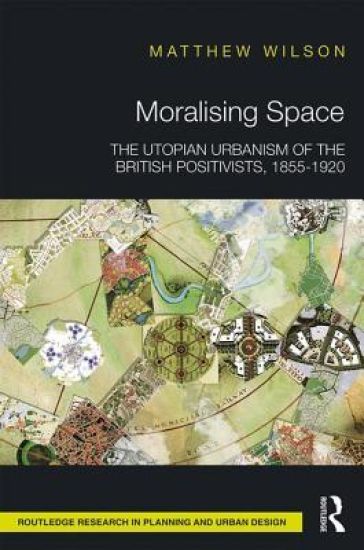
Amidst the soot, stink and splendour of Victorian London, a coterie of citizen-sociologists set out to break up the British Empire. They were the followers of the French philosopher Auguste Comte, a controversial figure who introduced the modern science of sociology and the republican Religion of Humanity. Moralising Space examines how from the 1850s Comte’s British followers practised this science and religion with the aim to create a global network of 500 utopian city-states. Curiously the British Positivists’ work has never been the focus of a full-length study on modern sociology and town planning. In this intellectual history, Matthew Wilson shows that through to the interwar period affiliates to the British Positivist Society – Richard Congreve, Frederic Harrison, Charles Booth, Patrick Geddes and Victor Branford – attempted to realise Comte’s vision. With scarcely used source material Wilson presents the Positivists as an organised resistance to imperialism, industrial exploitation, poverty and despondency. Much to the consternation of the church, state and landed aristocracy they organised urban interventions, led ad hoc sociological surveys and published programmes for realising idyllic city-communities. Effectively this book contributes to our understanding of how Positivism, as a utopian spatial design praxis, heavily influenced twentieth-century architecture and planning.
A Handful of Fears Held Together By A Few Joys is a small collections of poems and short stories created over the course of the last four years of my life. The themes mostly include tragedy, recollection, understanding, struggle, resentment, and (of course) a few joyful scenarios. This collection was mainly published as a facet of personal reflection, but I feel the themes covered in the book may be more universal and relatable to a wider audience.



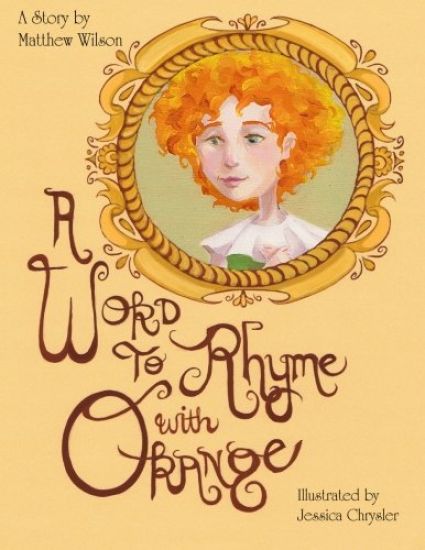
Suppose you live in a world where the only way to court a girl is to write her a rhyming poem, but the girl you're in love with has a name that doesn't rhyme with anything. What would you do if you had to find a new word? This is the plot of "A Word to Rhyme with Orange", a story told in rhyme with hand painted illustrations. A treat for fairy tale lovers of all ages.