Kirjojen hintavertailu. Mukana 11 244 527 kirjaa ja 12 kauppaa.

Kirjahaku

Etsi kirjoja tekijän nimen, kirjan nimen tai ISBN:n perusteella.

29 kirjaa tekijältä Matthew Wright

Euripides' Escape-Tragedies

Euripides' Escape-Tragedies

Matthew Wright

Oxford University Press
2005
sidottu
This is the first major critical study of three late plays of Euripides: Helen, Andromeda and Iphigenia among the Taurians. Matthew Wright offers a sustained reading of the plays, arguing that they are a thematically connected trilogy. He re-examines central themes such as myth, geography, cultural identity, philosophy, religion, and (crucially) genre. These are not separate topics, but are seen as being joined together to form an intricate nexus of ideas. The book has implications for our view of Euripides and the tragic genre as a whole.
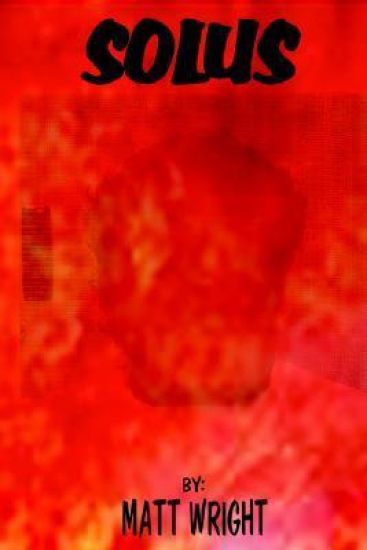
Solus

Solus

Matthew Wright

iUniverse
2005
pokkari
"HELP I live an empty life, but it's exciting I run around at night, so lonely When I scream for help, there's nothing But I'm happy, just so happy But I'm happy, just so happy I live an empty life, but it's exciting I run around at night, so lonely When I scream for help, there's nothing But I'm happy, just so happy Solus" is a poignant compilation of poems, lyrics, tales, and songs written over a period of time. The words within this thoughtful collection serve as windows into the life journey and trials of one young man. With titles such as 'Gave and Cried," 'Lost Eyes," and 'Puppet Master," Matt Wright's poems allow the reader to experience the vast range of emotions he has encountered throughout the years. Overflowing with sentiment, "Solus provides an introspective look into Wright's soul.
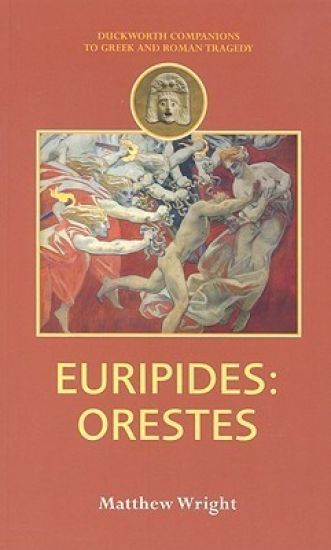
Euripides

Euripides

Matthew Wright

Bristol Classical Press
2008
nidottu
"Orestes" was one of Euripides' most popular plays in antiquity. Its plot, which centres on Orestes' murder of his mother Clytemnestra and its aftermath, is exciting as well as morally complex; its presentation of madness is unusually intense and disturbing; it deals with politics in a way which has resonances for both ancient and modern democracies; and, it has a brilliantly unexpected and ironic ending. Nevertheless, "Orestes" is not much read or performed in modern times. Why should this be so? Perhaps it is because "Orestes" does not conform to modern audiences' expectations of what a 'Greek tragedy' should be. This book makes "Orestes" accessible to modern readers and performers by explicitly acknowledging the gap between ancient and modern ideas of tragedy. If we are to appreciate what is unusual about the play, we have to think in terms of its impact on its original audience. What did they expect from a tragedy, and what would they have made of "Orestes"?
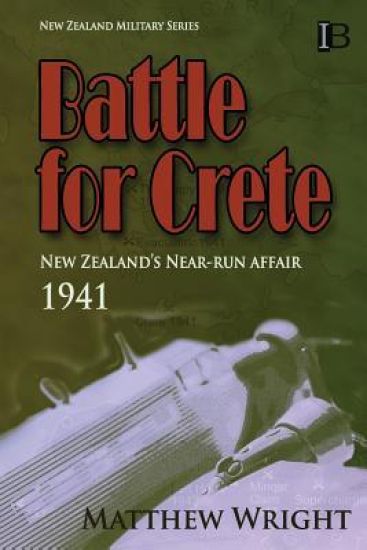
Battle for Crete: New Zealand's Near-Run Affair
Confronting the might of the Luftwaffe New Zealand soldiers arrived in Crete during early May 1941, short of equipment after a hasty evacuation from Greece. Three weeks later Germany invaded from the air, and the fate of New Zealand's primary armed force lay in the balance on an island half a world away from home. Exactly why the island fell to German paratroop assault has prompted intense debate then and since. In this gripping account of New Zealand's part in the battle for Crete, Matthew Wright draws on a wide range of archival sources to refute criticism both of the calibre of the New Zealand forces and of decisions made by the man in charge of the defence, Major-General Bernard Freyberg.
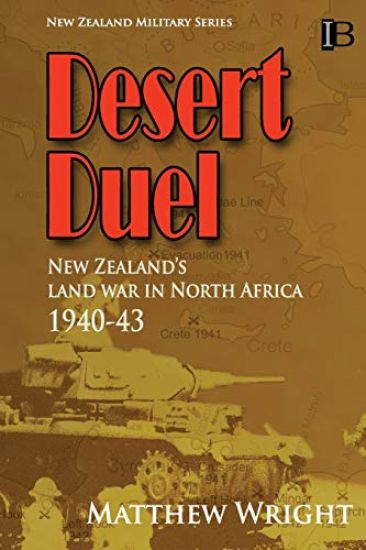
Desert Duel: New Zealand's Land War in North Africa, 1940-43
For three years from 1940 the Second New Zealand Division, led by Lieutenant-General Sir Bernard Freyberg, fought in the North African desert against a combined German-Italian army and its formidable leader, Field-Marshal Erwin Rommel.Rommel regarded the Kiwis as the elite of the British army, and their General was officially classified as a 'dangerous opponent.' During the desperate months of mid-1942, the New Zealand Division was almost all that stood between Rommel and Egypt.It was a hard-fought campaign. Yet the North African campaign was also a human story. Ordinary New Zealanders from civilian walks of life - accountants, lawyers, plumbers, labourers, teachers, musicians, even politicians - found unexpected strength within themselves to meet the demands of the war.Their battlegrounds - Sidi Rezegh, Ruweisat Ridge, Mingar Qaim, El Alamein, Tebaga Gap and Takrouna - are also part of New Zealand's history. 'In the battle which is sure to come within a few days, the] outcome depends almost entirely upon Freyburg's sic] division and air support. New Zealand Division is by far the best fighting unit in the Middle East. Freyburg sic] is a very great leader of men, possessed of tremendous courage and sound judgement.'- US Army Forces in Middle East, official report, 27 June 1942The New Zealanders...are trained and led by General Freyberg, a dangerous opponent. They are specialists in night fighting, they fight on a wide front, and...have learnt to follow up closely under the heavy artillery barrages which they use...They are also capable, in difficult country, of fighting without tank support...- German staff assessment of 2 NZ Division
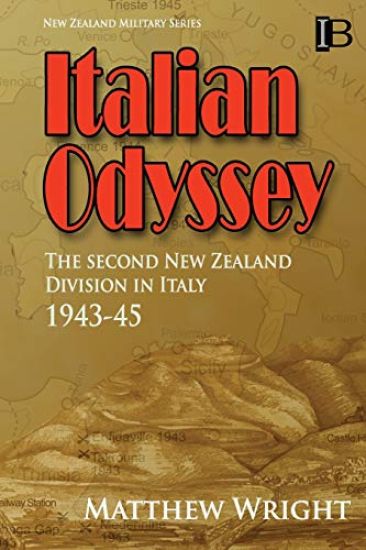
Italian Odyssey: The Second New Zealand Division in Italy 1943-45
"Wright is one who has been able to place himself within the culture and sense the history...This new book is a worthy contribution to our understanding..."- Frank Glen, 'The Southland Times', 14 June 2003."Author Matthew Wright... has brought the Italian campaign alive. The book is as important as it is highly readable - so much better than the standard military histories".- Graeme Hunt, 'The National Business Review', 17 October 2003. In September 1943, the Second New Zealand Division landed in Italy, beginning a twenty month ground campaign that took the New Zealanders from Taranto to Trieste. It was dominated by the two-month siege of Cassino, a bitter struggle in the depths of winter that remains controversial even seventy years on.In this short account of the New Zealand part in the Italian campaign of the Second World War, historian Matthew Wright argues that Cassino was not the defeat it is often claimed to be. Adverse weather, the politics of the Anglo-American alliance, and sheer lack of numbers on the ground made it a difficult fight. Ultimately the question is not whether New Zealand failed - but how they achieved as much as they did under the circumstance.The real strengths of the New Zealand force- mobility and speed - were finally put to use in the last weeks of the war, when the division led the charge that shattered German positions in the Lombardy plain. In a three week blitzkrieg the New Zealanders broke the German line and surged into Trieste, ending the campaign with a flourish - and the first confrontation of the Cold War.
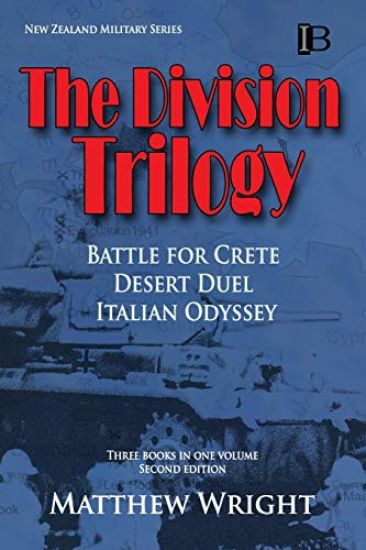
The Division Trilogy: The Second New Zealand Division 1940-45
This omnibus volume brings 'Battle for Crete', 'Desert Duel' and 'Italian Odyssey' together in one binding - a trilogy that traces the story of the Second New Zealand Division during the Second World War. Their journey took them from Greece and Crete to Egypt, the Western Desert, Libya and Tunisia. And then, with the Eighth Army, they landed in Italy, fighting in the bitter siege of Cassino, but ending their war with a flourish in the race to Trieste, where the New Zealanders were in the first confrontation of the Cold War."Wright is one who has been able to place himself within the culture and sense the history...This new book is a worthy contribution to our understanding..."- Frank Glen, The Southland Times, 14 June 2003."Author Matthew Wright... has brought the Italian campaign alive. The book is as important as it is highly readable - so much better than the standard military histories".- Graeme Hunt, The National Business Review, 17 October 2003.
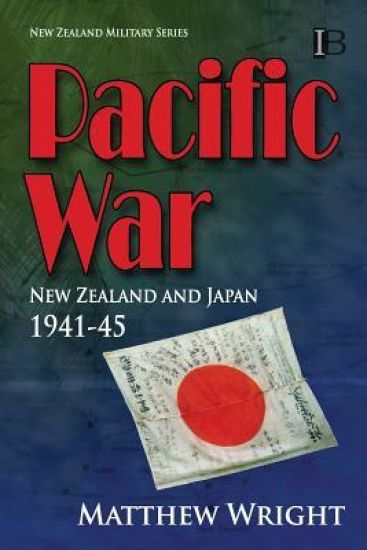
Pacific War: New Zealand and Japan 1941-45

Pacific War: New Zealand and Japan 1941-45

Matthew Wright

Intruder Books
2018
nidottu
In December 1941, Japan attacked the British Empire and the United States, turning the European war that had raged since 1939 into a global conflict. For a few desperate months during early 1942, the Kiwis faced crisis. Australia had its own threat to face. Britain was stretched to the utmost against Germany, and the United States - with millions still unemployed - took time to turn its huge industry to war production.Despite heavy commitment to the European war, New Zealanders eventually fought the Japanese on land, sea and air, from Malaya to the Solomons and, finally, in Japanese home waters. Kiwis contributed in many other ways, providing bases and recreation facilities for US forces, food for the whole campaign, even sending physicists to work on the atomic bomb project.This book is an essential summary of that far-reaching effort - New Zealand's Pacific war.
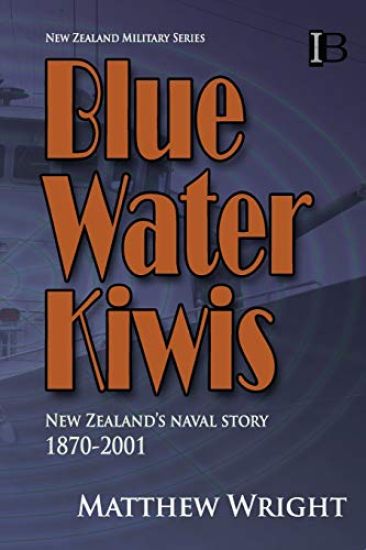
Blue Water Kiwis: New Zealand's Naval Story 1870-2001
In the summer of 1873, New Zealand was rocked by a scandal: Auckland newspaper editor David Leckie insisted that Russian terrorists had taken over a British warship in Auckland's Waitemata harbour and held the town to ransom. It was a hoax, of course, but he did it to highlight New Zealand's growing sense of vulnerability as one of Britain's furthest-flung colonies. So, in earnest, began New Zealand's naval story - one that extended through the highs and lows of the twentieth century: the First World War - when New Zealand naval forces and personnel fought from the North Sea to the Pacific - to the Second, when New Zealand's naval forces and personnel served in most of the major theatres, and finally the Cold War. It was a dramatic, exciting and ultimately human tale of people, politics, heroism and struggle, played out over more than 130 tumultuous years.
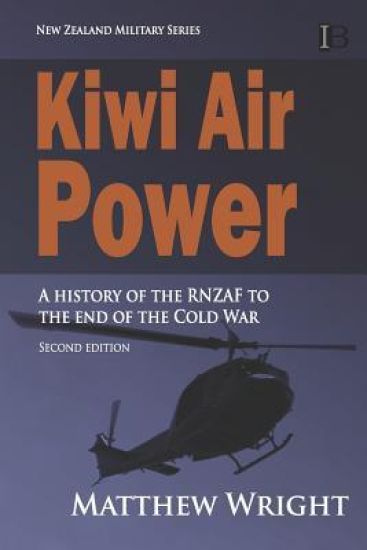
Kiwi Air Power: A history of the RNZAF to the end of the Cold War
This is the story of New Zealand's military aviation from its modest beginnings in 1914 to the formation of the Royal New Zealand Air Force in 1936, the struggles of the Second World War and then the gyrations of the Cold War, wrapping up with the transition to the very different post-Cold War world of the 1990s. It is a story of politics, of aircraft, and especially of people - of the everyday New Zealanders who fought the Second World War, who served with the RNZAF and the RAF, then and later; and who found strengths in themselves that, perhaps, they did not know they had.
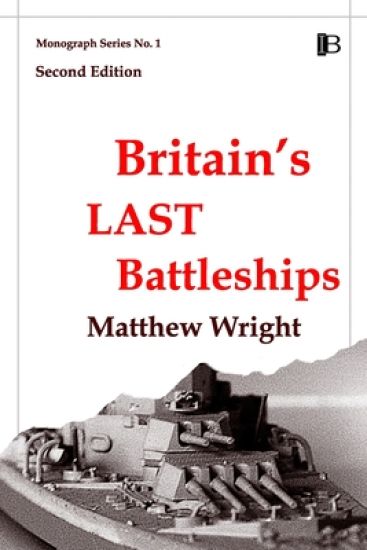
Britain's Last Battleships

Britain's Last Battleships

Matthew Wright

Intruder Books
2020
nidottu
Britain's last generation of battleships emerged in the 1930s to the backdrop of a fading Empire. Industrial production had fallen sharply since the First World War, and Britain's economic position was poor. These constraints shaped the nature of Britain's last battleships - a continuum of designs that culminated in HMS Vanguard, completed after the war when a near-bankrupt Britain had to confront the reality of a lost empire.This short book, a monograph, explores the way that British designers responded to this challenging framework, revealing the context within which the decisions that shaped Britain's last battleships were made.
Menander: Samia

Menander: Samia

Matthew Wright

Bloomsbury Academic
2020
nidottu
Matthew Wright brings Menander’s Samia to life by explaining how it achieves its comic effects and how it fits within the broader context of fourth-century Greek drama and society. He offers a scene-by-scene reading of the play, combining close attention to detail with broader consideration of major themes, in an approach designed to bring out the humour and nuance of each individual moment on stage, while also illuminating Menander’s comic art.The play dramatizes a tangled story of mistakes, mishaps and misapprehensions leading up to the marriage of Moschion and Plangon. For most of the action the characters are at odds with one another owing to accidental delusions or deliberate deceptions, and it seems as if the marriage will be cancelled or indefinitely postponed; but ultimately everyone’s problems are solved and the play ends happily. Samia is one of the best-preserved examples of fourth-century Greek comedy: celebrated within antiquity but subsequently lost for many years, it miraculously came back to light, in almost complete form, as a result of Egyptian papyrus finds during the 20th century.
Menander: Samia

Menander: Samia

Matthew Wright

Bloomsbury Academic
2020
sidottu
Matthew Wright brings Menander’s Samia to life by explaining how it achieves its comic effects and how it fits within the broader context of fourth-century Greek drama and society. He offers a scene-by-scene reading of the play, combining close attention to detail with broader consideration of major themes, in an approach designed to bring out the humour and nuance of each individual moment on stage, while also illuminating Menander’s comic art.The play dramatizes a tangled story of mistakes, mishaps and misapprehensions leading up to the marriage of Moschion and Plangon. For most of the action the characters are at odds with one another owing to accidental delusions or deliberate deceptions, and it seems as if the marriage will be cancelled or indefinitely postponed; but ultimately everyone’s problems are solved and the play ends happily. Samia is one of the best-preserved examples of fourth-century Greek comedy: celebrated within antiquity but subsequently lost for many years, it miraculously came back to light, in almost complete form, as a result of Egyptian papyrus finds during the 20th century.
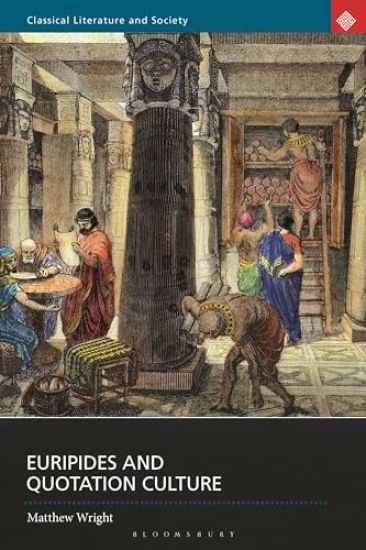
Euripides and Quotation Culture

Euripides and Quotation Culture

Matthew Wright

BLOOMSBURY PUBLISHING PLC
2024
sidottu
Presenting a new approach to Euripides’ plays, this book explores the playwright’s ancient tragedies in relation to quotation culture. Treating extant works and lost works side-by-side, Matthew Wright presents a selective survey of ways in which Euripidean tragedy was quoted within antiquity, both in social contexts (on the comic stage, at symposia, in law courts, in education) and in different literary genres (drama, biography, oratory, philosophy, literary scholarship, history and anthologies). There is also a discussion of the connection between quotability and classic status, where Wright asks what quotations can tell us about ancient reading habits. The implication is that Euripides actively participated in quotation culture by deliberately making certain portions of his plays stand out as especially quotable. Within classical antiquity, Euripides was the most widely quoted author apart from Homer. His plays are full of ‘quotable quotes’, which were repeated so often that they acquired a life of their own. Hundreds of famous verses from Euripidean drama circulated widely within the ancient world, even after the plays in which they originally featured became forgotten or vanished completely. Indeed, the majority of Euripides’ tragedies now survive only in the form of scattered quotations, otherwise known to us as ‘fragments’. It is this corpus of fragmentary quotations, along with his extant plays, that makes Euripides such an interesting case study in the world of quotation culture. This book is the first of its kind to understand Euripides’ work through this lens, as well as opening up quotation culture as a major theme of interest within classical scholarship.
Euripides and Quotation Culture

Euripides and Quotation Culture

Matthew Wright

BLOOMSBURY PUBLISHING PLC
2026
nidottu
Presenting a new approach to Euripides’ plays, this book explores the playwright’s ancient tragedies in relation to quotation culture. Treating extant works and lost works side-by-side, Matthew Wright presents a selective survey of ways in which Euripidean tragedy was quoted within antiquity, both in social contexts (on the comic stage, at symposia, in law courts, in education) and in different literary genres (drama, biography, oratory, philosophy, literary scholarship, history and anthologies). There is also a discussion of the connection between quotability and classic status, where Wright asks what quotations can tell us about ancient reading habits. The implication is that Euripides actively participated in quotation culture by deliberately making certain portions of his plays stand out as especially quotable. Within classical antiquity, Euripides was the most widely quoted author apart from Homer. His plays are full of ‘quotable quotes’, which were repeated so often that they acquired a life of their own. Hundreds of famous verses from Euripidean drama circulated widely within the ancient world, even after the plays in which they originally featured became forgotten or vanished completely. Indeed, the majority of Euripides’ tragedies now survive only in the form of scattered quotations, otherwise known to us as ‘fragments’. It is this corpus of fragmentary quotations, along with his extant plays, that makes Euripides such an interesting case study in the world of quotation culture. This book is the first of its kind to understand Euripides’ work through this lens, as well as opening up quotation culture as a major theme of interest within classical scholarship.
The Comedian as Critic

The Comedian as Critic

Matthew Wright

Bloomsbury Academic
2014
nidottu
Some of the best evidence for the early development of literary criticism before Plato and Aristotle comes from Athenian Old Comedy. Playwrights such as Eupolis, Cratinus, Aristophanes and others wrote numerous comedies on literary themes, commented on their own poetry and that of their rivals, and played around with ideas and theories from the contemporary intellectual scene. How can we make use of the evidence of comedy? Why were the comic poets so preoccupied with questions of poetics? What criteria emerge from comedy for the evaluation of literature? What do the ancient comedians' jokes say about their own literary tastes and those of their audience? How do different types of readers in antiquity evaluate texts, and what are the similarities and differences between 'popular' and 'professional' literary criticism? Does Greek comedy have anything serious to say about the authors and texts it criticizes? How can the comedians be related to the later literary-critical tradition represented by Plato, Aristotle and subsequent writers? This book attempts to answer these questions by examining comedy in its social and intellectual context, and by using approaches from modern literary theory to cast light on the ancient material.
The Lost Plays of Greek Tragedy (Volume 1)

The Lost Plays of Greek Tragedy (Volume 1)

Matthew Wright

Bloomsbury Academic
2016
nidottu
Numerous books have been written about Greek tragedy, but almost all of them are concerned with the 32 plays that still survive. This book, by contrast, concentrates on the plays that no longer exist. Hundreds of tragedies were performed in Athens and further afield during the classical period, and even though nearly all are lost, a certain amount is known about them through fragments and other types of evidence. Matthew Wright offers an authoritative two-volume critical introduction and guide to the lost tragedies. This first volume examines the remains of works by playwrights such as Phrynichus, Agathon, Neophron, Critias, Astydamas, Chaeremon, and many others who have been forgotten or neglected. (Volume 2 explores the lost works of Aeschylus, Sophocles and Euripides.)What types of evidence exist for lost tragedies, and how might we approach this evidence? How did these plays become lost or incompletely preserved? How can we explain why all tragedians except Aeschylus, Sophocles and Euripides became neglected or relegated to the status of ‘minor’ poets? What changes and continuities can be detected in tragedy after the fifth century BC? Can the study of lost works and neglected authors change our views of Greek tragedy as a genre? This book answers such questions through a detailed study of the fragments in their historical and literary context. Including English versions of previously untranslated fragments as well as in-depth discussion of their significance, The Lost Plays of Greek Tragedy makes these works accessible for the first time.