Kirjojen hintavertailu. Mukana 12 029 943 kirjaa ja 12 kauppaa.

Kirjahaku

Etsi kirjoja tekijän nimen, kirjan nimen tai ISBN:n perusteella.

3 kirjaa tekijältä Matthias Fritsch

The Promise of Memory

The Promise of Memory

Matthias Fritsch

State University of New York Press
2005
sidottu
Argues for a closer connection between memories of injustice and promises of justice as a means to overcome violence.Rereading Marx through Walter Benjamin and Jacques Derrida, The Promise of Memory attempts to establish a philosophy of liberation. Matthias Fritsch explores how memories of injustice relate to the promises of justice that democratic societies have inherited from the Enlightenment. Focusing on the Marxist promise for a classless society, since it contains a political promise whose institutionalization led to totalitarian outcomes, Fritsch argues that both memories and promises, if taken by themselves, are one-sided and potentially justify violence if they do not reflect on the implicit relation between them. He examines Benjamin's reinterpretation of Marxism after the disappointment of the Russian and German revolutions and Derrida's "messianic" inheritance of Marx after the breakdown of the Soviet Union. The book also contributes to contemporary political philosophy by relating Marxist social goals and German critical theory to debates about deconstructive ethics and politics.

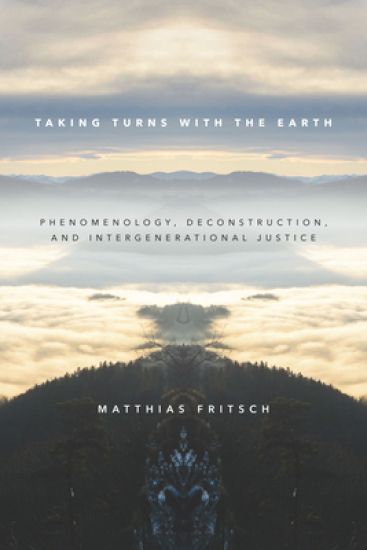
Taking Turns with the Earth

Taking Turns with the Earth

Matthias Fritsch

STANFORD UNIVERSITY PRESS
2018
sidottu
The environmental crisis, one of the great challenges of our time, tends to disenfranchise those who come after us. Arguing that as temporary inhabitants of the earth, we cannot be indifferent to future generations, this book draws on the resources of phenomenology and poststructuralism to help us conceive of moral relations in connection with human temporality. Demonstrating that moral and political normativity emerge with generational time, the time of birth and death, this book proposes two related models of intergenerational and environmental justice. The first entails a form of indirect reciprocity, in which we owe future people both because of their needs and interests and because we ourselves have been the beneficiaries of peoples past; the second posits a generational taking of turns that Matthias Fritsch applies to both our institutions and our natural environment, in other words, to the earth as a whole. Offering new readings of key philosophers, and emphasizing the work of Emmanuel Levinas and Jacques Derrida in particular, Taking Turns with the Earth disrupts human-centered notions of terrestrial appropriation and sharing to give us a new continental philosophical account of future-oriented justice.
Taking Turns with the Earth

Taking Turns with the Earth

Matthias Fritsch

Stanford University Press
2018
pokkari
The environmental crisis, one of the great challenges of our time, tends to disenfranchise those who come after us. Arguing that as temporary inhabitants of the earth, we cannot be indifferent to future generations, this book draws on the resources of phenomenology and poststructuralism to help us conceive of moral relations in connection with human temporality. Demonstrating that moral and political normativity emerge with generational time, the time of birth and death, this book proposes two related models of intergenerational and environmental justice. The first entails a form of indirect reciprocity, in which we owe future people both because of their needs and interests and because we ourselves have been the beneficiaries of peoples past; the second posits a generational taking of turns that Matthias Fritsch applies to both our institutions and our natural environment, in other words, to the earth as a whole. Offering new readings of key philosophers, and emphasizing the work of Emmanuel Levinas and Jacques Derrida in particular, Taking Turns with the Earth disrupts human-centered notions of terrestrial appropriation and sharing to give us a new continental philosophical account of future-oriented justice.