Kirjojen hintavertailu. Mukana 11 244 527 kirjaa ja 12 kauppaa.

Kirjahaku

Etsi kirjoja tekijän nimen, kirjan nimen tai ISBN:n perusteella.

11 kirjaa tekijältä Maud Ellmann

The Nets of Modernism

The Nets of Modernism

Maud Ellmann

Cambridge University Press
2010
pokkari
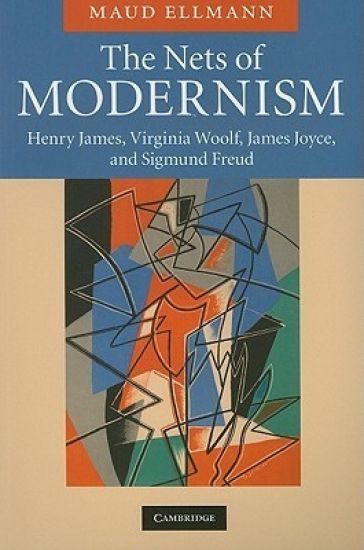
One of the finest literary critics of her generation, Maud Ellmann synthesises her work on modernism, psychoanalysis and Irish literature in this important new book. In sinuous readings of Henry James, James Joyce and Virginia Woolf, she examines the interconnections between developing technological networks in modernity and the structures of modernist fiction, linking both to Freudian psychoanalysis. The Nets of Modernism examines the significance of images of bodily violation and exchange - scar, bite, wound, and their psychic equivalents - showing how these images correspond to 'vampirism' and related obsessions in early twentieth-century culture. Subtle, original and a pleasure to read, this 2010 book offers a fresh perspective on the inter-implications of Freudian psychoanalysis and Anglophone modernism that will influence the field for years to come.
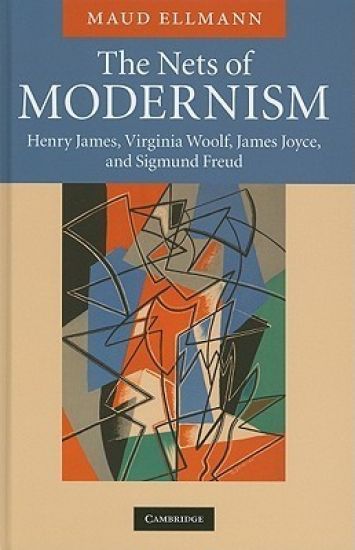
The Nets of Modernism

The Nets of Modernism

Maud Ellmann

Cambridge University Press
2010
sidottu
One of the finest literary critics of her generation, Maud Ellmann synthesises her work on modernism, psychoanalysis and Irish literature in this important new book. In sinuous readings of Henry James, James Joyce and Virginia Woolf, she examines the interconnections between developing technological networks in modernity and the structures of modernist fiction, linking both to Freudian psychoanalysis. The Nets of Modernism examines the significance of images of bodily violation and exchange - scar, bite, wound, and their psychic equivalents - showing how these images correspond to 'vampirism' and related obsessions in early twentieth-century culture. Subtle, original and a pleasure to read, this 2010 book offers a fresh perspective on the inter-implications of Freudian psychoanalysis and Anglophone modernism that will influence the field for years to come.
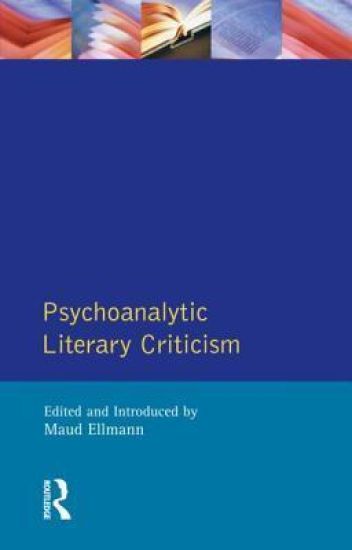
Psychoanalytic Literary Criticism
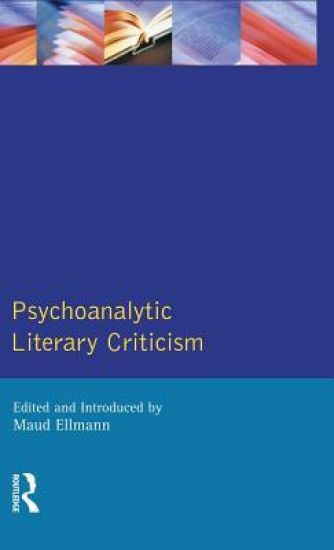
This collection of essays provides students of literary critical theory with an introduction to Freudian methods of interpretation, and shows how those methods have been transformed by recent developments in French psychoanalysis, particularly by the influence of Jacques Lacan. It explains how classical Freudian criticism tended to focus on the thematic content of the literary text, whereas Lacanian criticism focuses on its linguistic structure, redirecting the reader to the words themselves. Concepts and methods are defined by tracing the role played by the drama of Oedipus in the development of psychoanalytic theory and criticism. The essays cover a wide generic scope and are divided into three parts: drama, narrative and poetry. Each is accompanied by explanatory headnotes giving clear definitions of complex terms.
Poetics of Impersonality

Poetics of Impersonality

Maud Ellmann

Harvard University Press
1987
sidottu
T.S. Eliot and Ezra Pound dominated English poetry and criticism in the first half of the twentieth century. At the center of their practice is what Maud Ellmann calls the poetics of impersonality. Ellmann's examination yields a set of superb readings of the major poems of the modernist canon.
Elizabeth Bowen

Elizabeth Bowen

Maud Ellmann

Edinburgh University Press
2003
sidottu
WINNER of the British Academy's Rose Mary Crawshay Literary Prize This study offers an authoritative introduction to Elizabeth Bowen's works, revealing both their pleasures for the fiction-addict and their fascinations for the literary critic, theorist, and historian. It also provides a lucid introduction - by demonstration - to psychoanalytic modes of reading, and shows how such readings are enriched by an understanding of the writer's life and times. Elizabeth Bowen is one of the finest writers of fiction in English in the twentieth century. She is also one of the strangest. Born in 1899 into the Anglo-Irish Protestant ascendancy, she saw herself as the same age as her war-torn century. Her historical vision extends from the Irish Troubles of the 1920s to the London Blitz and the technological revolution of the post-war years. Her fiction is always entertaining - funny, moving, and suspenseful - but it is also profoundly disconcerting. Maud Ellmann teases out Bowen's strangeness through close readings informed by historical, psychoanalytic, and deconstructive methods of interpretation. She contextualises Bowen's work in the Irish and modernist traditions to investigate connections between her life and writing; her conflicts and complicities with other Irish, British, and European writers; her negotiations with contemporary history, and with the long decline of the Anglo-Irish Protestant ascendancy; her peculiar take on gender and sexuality; her hallucinatory treatment of objects, particularly furniture and telephones; and the surprising ways in which her writing pre-empts and in some cases confounds the literary theories brought to bear upon it. Bowen's writing is demonstrated to reach from a Dickensian comprehensiveness to an uncanny premonition of postmodernism.
Elizabeth Bowen

Elizabeth Bowen

Maud Ellmann

Edinburgh University Press
2004
nidottu
Winner of the Rose Mary Crawshay Award for 2004 Shortlisted for the 2004 British Academy Book Prize Elizabeth Bowen is one of the finest writers of the twentieth century. She is also one of the strangest. In this authoritative introduction to her life and work, Maud Ellmann teases out Bowen's strangeness through close readings informed by historical, psychoanalytic, and deconstructive methods of interpretation. She contextualises Bowen's work in the Irish and modernist traditions to investigate connections between her life and writing; her conflicts and complicities with other Irish, British, and European writers; her negotiations with contemporary history, and with the long decline of the Anglo-Irish Protestant ascendancy; her peculiar take on gender and sexuality; her hallucinatory treatment of objects, particularly furniture and telephones; and the surprising ways in which her writing pre-empts and in some cases confounds the literary theories brought to bear upon it. Features: *Maud Ellmann is a distinguished critic who writes with great elegance and critical insight. *Provides a lucid demonstration of psychoanalytic modes of reading and an enriched understanding of Bowen's life and times. *Provides original readings of all the main novels and short stories. *Identifies the key motifs associated with Bowen's strange fiction, for example, her preoccupation with houses and furniture. *Suitable background reading not only for those interested in twentieth-century fiction and women's writing, but for the literary critic, theorist and historian.
The Poetics of Impersonality

The Poetics of Impersonality

Maud Ellmann

Edinburgh University Press
2013
nidottu
This book features original readings of Pound and Eliot from a major literary critic. In this classic work, Maud Ellmann examines T. S. Eliot's and Ezra Pound's criticism in terms of what she calls the 'poetics of impersonality'. She convincingly shows that Eliot's and Pound's attempts to overcome personality merely reinstated it in a new guise: her superb and entirely original readings of the major poems of the modernist canon have earned a lasting place in criticism. Stylish and perceptive, this book marked the debut of a major literary critic, and it has as much resonance today as it did on first publication. Ellmann analyses Eliot's relation to Bergson, then his 'Tradition and the Individual Talent' and the later After Strange Gods, the early poems, The Waste Land, and Four Quartets. She then turns to Pound's Personae, particularly 'Mauberley', and the Cantos. Ellmann looks for the contradictions inherent in modernist literary ideology and deftly teases out their implications.
Psychoanalytic Literary Criticism
This collection of essays provides students of literary critical theory with an introduction to Freudian methods of interpretation, and shows how those methods have been transformed by recent developments in French psychoanalysis, particularly by the influence of Jacques Lacan. It explains how classical Freudian criticism tended to focus on the thematic content of the literary text, whereas Lacanian criticism focuses on its linguistic structure, redirecting the reader to the words themselves. Concepts and methods are defined by tracing the role played by the drama of Oedipus in the development of psychoanalytic theory and criticism. The essays cover a wide generic scope and are divided into three parts: drama, narrative and poetry. Each is accompanied by explanatory headnotes giving clear definitions of complex terms.
The Vacuum Cleaner

The Vacuum Cleaner

Maud Ellmann

Springer International Publishing AG
2024
nidottu
This book offers an entertaining study of the facts and fantasies associated with the vacuum cleaner as it evolved from a luxury gimmick to a household necessity. The iconic appliance of twentieth-century domestic revolution, the vacuum cleaner stands at the forefront of radical changes in technology, automation, finance, marketing, hygiene, infrastructure, time-management, domestic labour, and the history of dirt. This appliance also insinuates itself into the dominant phobias of the period, including totalitarianism and nuclear war. Maud Ellmann shows how modern literature, art, and other media have transformed this humble domestic mod con into a curmudgeon, windbag, cannibal, vampire, dictator, infanticidal mother, freedom fighter, mantrap, and lothario.
The Vacuum Cleaner

The Vacuum Cleaner

Maud Ellmann

Springer International Publishing AG
2024
sidottu
This book offers an entertaining study of the facts and fantasies associated with the vacuum cleaner as it evolved from a luxury gimmick to a household necessity. The iconic appliance of twentieth-century domestic revolution, the vacuum cleaner stands at the forefront of radical changes in technology, automation, finance, marketing, hygiene, infrastructure, time-management, domestic labour, and the history of dirt. This appliance also insinuates itself into the dominant phobias of the period, including totalitarianism and nuclear war. Maud Ellmann shows how modern literature, art, and other media have transformed this humble domestic mod con into a curmudgeon, windbag, cannibal, vampire, dictator, infanticidal mother, freedom fighter, mantrap, and lothario.