Kirjojen hintavertailu. Mukana 11 530 227 kirjaa ja 12 kauppaa.

Kirjahaku

Etsi kirjoja tekijän nimen, kirjan nimen tai ISBN:n perusteella.

11 kirjaa tekijältä Maurice Bloch

Marxism and Anthropology

Marxism and Anthropology

Maurice Bloch

Routledge
2004
sidottu
This book examines the uses made of anthropology by Marx and Engels, and the uses made of Marxism by anthropologists. Looking at the writings of Marx and Engels on primitive societies, the book evaluates their views in the light of present knowledge and draws attention to inconsistencies in their analysis of pre-capitalist societies. These inconsistencies can be traced to the influence of contemporary anthropologists who regarded primitive societies as classless. As Marxist theory was built around the idea of class, without this concept the conventional Marxist analysis foundered. First published in 1983.
Marxism and Anthropology

Marxism and Anthropology

Maurice Bloch

Routledge
2010
nidottu
This book examines the uses made of anthropology by Marx and Engels, and the uses made of Marxism by anthropologists. Looking at the writings of Marx and Engels on primitive societies, the book evaluates their views in the light of present knowledge and draws attention to inconsistencies in their analysis of pre-capitalist societies. These inconsistencies can be traced to the influence of contemporary anthropologists who regarded primitive societies as classless. As Marxist theory was built around the idea of class, without this concept the conventional Marxist analysis foundered. First published in 1983.
Anthropology and the Cognitive Challenge

Anthropology and the Cognitive Challenge

Maurice Bloch

Cambridge University Press
2012
pokkari
This provocative new study one of the world's most distinguished anthropologists proposes that an understanding of cognitive science enriches, rather than threatens, the work of social scientists. Maurice Bloch argues for a naturalist approach to social and cultural anthropology, introducing developments in cognitive sciences such as psychology and neurology and exploring the relevance of these developments for central anthropological concerns: the person or the self, cosmology, kinship, memory and globalisation. Opening with an exploration of the history of anthropology, Bloch shows why and how naturalist approaches were abandoned and argues that these once valid reasons are no longer relevant. Bloch then shows how such subjects as the self, memory and the conceptualisation of time benefit from being simultaneously approached with the tools of social and cognitive science. Anthropology and the Cognitive Challenge will stimulate fresh debate among scholars and students across a wide range of disciplines.
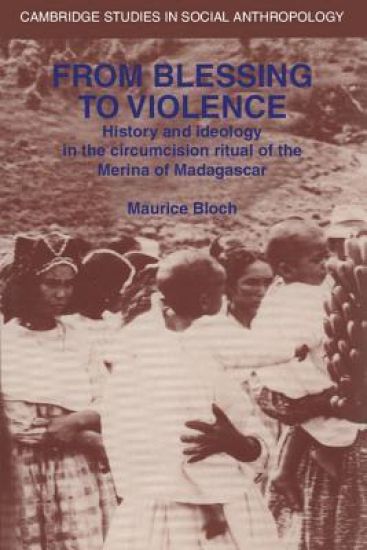
From Blessing to Violence

From Blessing to Violence

Maurice Bloch

Cambridge University Press
1986
pokkari
The circumcision ritual of the Merina of Madagascar is seen by them primarily as a blessing, involving the transfer of the love and concern of the ancestors of their descendants. Yet the ritual ends in an act of ciolent wounding of the child. Similarily, while the ritual involves a symbolic assault on women, it is nonetheless welcomed by them as a mark of receiving the blessing of the ancestors. In this book, Maurice Bloch provides a detailed description and analysis of the Merina circumcision ritual today, offers an account of its history, and discusses the significance of his analysis for anthropological theories of ritual in general. Pursuing the theme of the combination of religious joy and illumination with violence, Professor Bloch explains how, at various times, the circumcision ceremony can be a familial ritual as well as glorification of a militarist and expansionist state, or associated with anti-colonial nationalism. Describing changes that have occurred in the form of the ritual over two centuries, Professor Bloch argues that in order to understand the properties of ritual in general, it is necessary to view it over a longer time scale than anthropologists have tended to do previously. Adopting such an historical perspective enables him to identify the stability of the Merina ritual’s symbolic content, despite changes in its organisation, and dramatically changing politico-economic contexts. As well as presenting an original historical approach to the anthropological study of ritua;, Professor Bloch discusses a range of general theoretical issues, including the nature of ideology, and the relationship between images created in ritual and other types of knowledge. The book will appeal widely to scholars and students of anthropology, history, African studies, and comparative religion.
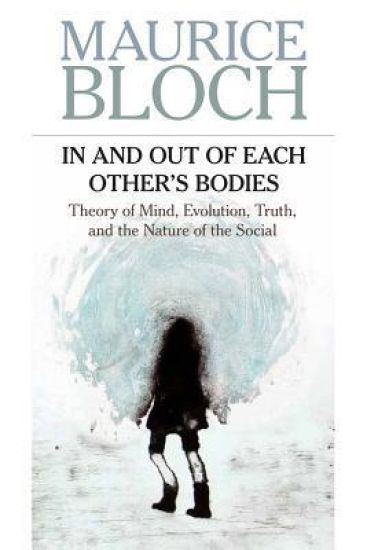
In and Out of Each Other's Bodies
What is human sociality? How are universals such as truth and doubt variously demonstrated and negotiated in different cultures? This book offers an accessible introduction to these and other fundamental human questions. Bloch shows that the social consists of two very different things. One is a matter of continual adjustments between individuals who read each others' minds and thus, as in sex and birth, "go in and out of each other's minds and bodies." The other is a time defying system of roles and groups. Interaction at this level is created by ritual and is unique to humans. What is referred to by the word "religion" is a part of this, but it is not separate. The study of "religion" as such is therefore theoretically misleading. A second major theme is the way truth is established in different cultures. Bloch's arguments go against recent approaches in anthropology which have sought to relativize ideas of the social and religion.
In and Out of Each Other's Bodies
What is human sociality? How are universals such as truth and doubt variously demonstrated and negotiated in different cultures? This book offers an accessible introduction to these and other fundamental human questions. Bloch shows that the social consists of two very different things. One is a matter of continual adjustments between individuals who read each others' minds and thus, as in sex and birth, "go in and out of each other's minds and bodies." The other is a time defying system of roles and groups. Interaction at this level is created by ritual and is unique to humans. What is referred to by the word "religion" is a part of this, but it is not separate. The study of "religion" as such is therefore theoretically misleading. A second major theme is the way truth is established in different cultures. Bloch's arguments go against recent approaches in anthropology which have sought to relativize ideas of the social and religion.