Kirjojen hintavertailu. Mukana 11 717 486 kirjaa ja 12 kauppaa.

Kirjahaku

Etsi kirjoja tekijän nimen, kirjan nimen tai ISBN:n perusteella.

32 kirjaa tekijältä Maurice Merleau-Ponty

The World of Perception

The World of Perception

Maurice Merleau-Ponty

Routledge
2004
sidottu
'Painting does not imitate the world, but is a world of its own.'In 1948, Maurice Merleau-Ponty wrote and delivered on French radio a series of seven lectures on the theme of perception. Translated here into English for the first time, they offer a lucid and concise insight into one of the great philosophical minds of the twentieth-century.These lectures explore themes central not only to Merleau-Ponty's philosophy but phenomenology as a whole. He begins by rejecting the idea - inherited from Descartes and influential within science - that perception is unreliable and prone to distort the world around us. Merleau-Ponty instead argues that perception is inseparable from our senses and it is how we make sense of the world. Merleau-Ponty explores this guiding theme through a brilliant series of reflections on science, space, our relationships with others, animal life and art. Throughout, he argues that perception is never something learned and then applied to the world. As creatures with embodied minds, he reminds us that we are born perceiving and share with other animals and infants a state of constant, raw, unpredictable contact with the world. He provides vivid examples with the help of Kafka, animal behaviour and above all modern art, particularly the work of Cezanne.A thought-provoking and crystalline exploration of consciousness and the senses, The World of Perception is essential reading for anyone interested in the work of Merleau-Ponty, twentieth-century philosophy and art.
The World of Perception

The World of Perception

Maurice Merleau-Ponty

Routledge
2015
nidottu
'Painting does not imitate the world, but is a world of its own.'In 1948, Maurice Merleau-Ponty wrote and delivered on French radio a series of seven lectures on the theme of perception. Translated here into English for the first time, they offer a lucid and concise insight into one of the great philosophical minds of the twentieth-century.These lectures explore themes central not only to Merleau-Ponty's philosophy but phenomenology as a whole. He begins by rejecting the idea - inherited from Descartes and influential within science - that perception is unreliable and prone to distort the world around us. Merleau-Ponty instead argues that perception is inseparable from our senses and it is how we make sense of the world. Merleau-Ponty explores this guiding theme through a brilliant series of reflections on science, space, our relationships with others, animal life and art. Throughout, he argues that perception is never something learned and then applied to the world. As creatures with embodied minds, he reminds us that we are born perceiving and share with other animals and infants a state of constant, raw, unpredictable contact with the world. He provides vivid examples with the help of Kafka, animal behaviour and above all modern art, particularly the work of Cezanne.A thought-provoking and crystalline exploration of consciousness and the senses, The World of Perception is essential reading for anyone interested in the work of Merleau-Ponty, twentieth-century philosophy and art.
The World of Perception

The World of Perception

Maurice Merleau-Ponty

Routledge
2008
nidottu
'In simple prose Merleau-Ponty touches on his principle themes. He speaks about the body and the world, the coexistence of space and things, the unfortunate optimism of science – and also the insidious stickiness of honey, and the mystery of anger.' - James ElkinsMaurice Merleau-Ponty was one of the most important thinkers of the post-war era. Central to his thought was the idea that human understanding comes from our bodily experience of the world that we perceive: a deceptively simple argument, perhaps, but one that he felt had to be made in the wake of attacks from contemporary science and the philosophy of Descartes on the reliability of human perception.From this starting point, Merleau-Ponty presented these seven lectures on The World of Perception to French radio listeners in 1948. Available in a paperback English translation for the first time in the Routledge Classics series to mark the centenary of Merleau-Ponty’s birth, this is a dazzling and accessible guide to a whole universe of experience, from the pursuit of scientific knowledge, through the psychic life of animals to the glories of the art of Paul Cézanne.
Humanism and Terror

Humanism and Terror

Maurice Merleau-Ponty

Transaction Publishers
2000
nidottu
Raymond Aron called Merleau-Ponty "the most influential French philosopher of his generation." First published in France in 1947, Humanism and Terror was in part a response to Arthur Koestler's Darkness at Noon, and in a larger sense a contribution to the political and moral debates of a postwar world suddenly divided into two ideological armed camps. For Merleau-Ponty, the central question was: could Communism transcend its violence and intentions?The value of a society is the value it places upon man's relation to man, Merleau-Ponty examines not only the Moscow trials of the late thirties but also Koestler's re-creation of them. He argues that violence in general in the Communist world can be understood only in the context of revolutionary activism. He demonstrates that it is pointless to ask whether Communism respects the rules of liberal society; it is evident that Communism does not.In post-Communist Europe, when many are addressing similar questions throughout the world, Merleau-Ponty's discourse is of prime importance; it stands as a major and provocative contribution to limits on the use of violence. The argument is placed in its current context in a brilliant new introduction by John O'Neill. His remarks extend the line of argument originally developed by the great French political philosopher. This is a major contribution to political theory and philosophy.
Humanism and Terror: An Essay on the Communist Problem
First published in France In 1947, Merleau-Ponty's essay was in part a response to Arthur Koestler's novel, Darkness at Noon, and in a larger sense a contribution to the political and moral debates of a postwar world suddenly divided into two armed camps. For Merleau-Ponty, the basic question was: given the violence in Communism, is Communism still equal to its humanist intentions? Starting with the assumption that a society is not a "temple of value-idols that figure on the front of its monuments or in its constitutional scrolls; the value of a society is the value It places upon man's relation to man," Merleau-ponty examines not only the Moscow trials of the late thirties but also Koestler's re-creation of them. And Merleau-Ponty makes it clear that the Moscow trials--and violence in general in the Communist world--can be understood only In the context of revolutionary violence. He demonstrates that it is pointless to begin an examination of Communist violence by asking whether Communism respects the rules of liberal thought; it is evident that Communism does not. The question that should be asked is whether the violence Communism exercises is revolutionary violence, capable of building humane relations among men. At a time when many are addressing similar questions to societies both in the East and in the West, Merleau-Ponty's investigations and speculations are of prime importance; they stand as a major and provocative contribution to the argument surrounding the use of violence.
Signs

Signs

Maurice Merleau-Ponty

Northwestern University Press
1964
nidottu
Speech is a way of tearing out a meaning from an undivided whole."Thus does Maurice Merleau-Ponty describe speech in this collection of his important writings on the philosophy of expression, composed during the last decade of his life. For him, expression is a category of human behavior and existence much broader than language alone. He maintains that man is essentially expressive, even prior to speaking: in his silence, gestures, and lived behavior.
The Visible and the Invisible

The Visible and the Invisible

Maurice Merleau-Ponty

Northwestern University Press
1969
nidottu
The Visible and the Invisible contains the unfinished manuscript and working notes of the book Merleau-Ponty was writing when he died. The text is devoted to a critical examination of Kantian, Husserlian, Bergsonian, and Sartrean method, followed by the extraordinary "The Intertwining - The Chiasm", that reveals the central pattern of Merleau-Ponty's own thought. The working notes for the book provide the reader with a truly exciting insight into the mind of the philosopher at work as he refines and develops new pivotal concepts.
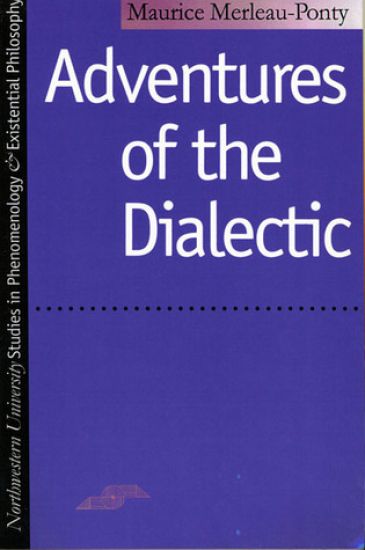
Adventures of the Dialectic

Adventures of the Dialectic

Maurice Merleau-Ponty

Northwestern University Press
1973
nidottu
We need a philosophy of both history and spirit to deal with the problems we touch upon here. Yet we would be unduly rigorous if we were to wait for perfectly elaborated principles before speaking philosophically of politics." Thus Merleau-Ponty introduces Adventures of the Dialectic, his study of Marxist philosophy and thought. In this study, containing chapters on Weber, Lukacs, Lenin, Sartre, and Marx himself, Merleau-Ponty investigates and attempts to go beyond the dialectic.
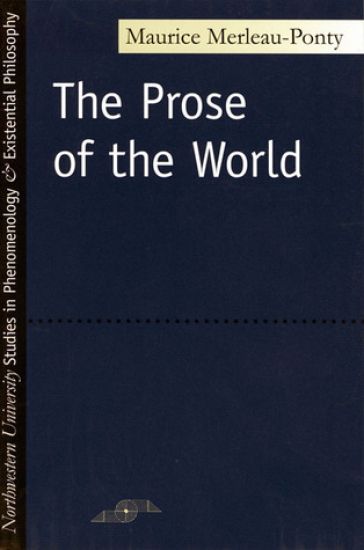
Prose of the World

Prose of the World

Maurice Merleau-Ponty

Northwestern University Press
1973
nidottu
The work that Maurice Merleau-Ponty planned to call The Prose of the World, or Introduction to the Prose of the World, was unfinished at the time of his death. The book was to constitute the first section of a two-part work whose aim was to offer, as an extension of his Phenomenology of Perception, a theory of truth. This edition's editor, Claude Lefort, has interpreted and transcribed the surviving typescript, reproducing Merleau-Ponty's own notes and adding documentation and commentary.
La Nature

La Nature

Maurice Merleau-Ponty

Northwestern University Press
2003
sidottu
Collected here are the written traces of courses on the concept of nature given by Maurice Merleau-Ponty at the Collège de France in the 1950s-notes that provide a window on the thinking of one of the most influential philosophers of the twentieth century. In two courses distilled by a student and in a third composed of Merleau-Ponty's own notes, the ideas that animated the philosopher's lectures and that informed his later publications emerge in an early, fluid form in the process of being elaborated, negotiated, critiqued, and reconsidered.Merleau-Ponty's project in these courses is an interrogation of nature, a task at the center of his investigation of perception, truth, and subjectivity. The first course, a survey of the historical elements in our concept of nature, examines first the Cartesian concept of nature and then historical and contemporary responses to Descartes, all with an eye toward developing a vision of nature more consistent with the findings of contemporary science. In the second course, Merleau-Ponty takes up the problem of the relation of nature to ontology in general. Here, the key question is how the animal finds itself in its world. Because the human body is ultimately "an animal of movements and perceptions," humanity is intertwined with animality.In the third course, "Nature and Logos: The Human Body," Merleau-Ponty assesses his previous findings and examines the emergence of the human body at the intersection of nature and Logos. This course, contemporaneous with the working notes for The Visible and the Invisible, allows us to observe the evolution of that work as well as to revisit the research he had begun in Primacy of Perception.In these traces: a new reading of Descartes; a measured appreciation of Schelling; an assessment of recent developments in the sciences (both physical and biological) that leads to the notion of the body as a "system of equivalencies"; and an examination of the phenomenon of life. We have a wealth of material that allows us to reconsider Merleau-Ponty's thinking and to engage his philosophical project anew.Before his death in 1961, Maurice Merleau-Ponty was chair in philosophy at the Collège de France.Robert Vallier is completing his doctoral work on Merleau-Ponty and Schelling at DePaul University. He has also taught at the Universite de Paris-X (Nanterre) and at the College Internationale de Philosophie.
La Nature

La Nature

Maurice Merleau-Ponty

Northwestern University Press
2003
nidottu
Collected here are the written traces of courses on the concept of nature given by Maurice Merleau-Ponty at the Collège de France in the 1950s-notes that provide a window on the thinking of one of the most influential philosophers of the twentieth century. In two courses distilled by a student and in a third composed of Merleau-Ponty's own notes, the ideas that animated the philosopher's lectures and that informed his later publications emerge in an early, fluid form in the process of being elaborated, negotiated, critiqued, and reconsidered.Merleau-Ponty's project in these courses is an interrogation of nature, a task at the center of his investigation of perception, truth, and subjectivity. The first course, a survey of the historical elements in our concept of nature, examines first the Cartesian concept of nature and then historical and contemporary responses to Descartes, all with an eye toward developing a vision of nature more consistent with the findings of contemporary science. In the second course, Merleau-Ponty takes up the problem of the relation of nature to ontology in general. Here, the key question is how the animal finds itself in its world. Because the human body is ultimately "an animal of movements and perceptions," humanity is intertwined with animality.In the third course, "Nature and Logos: The Human Body," Merleau-Ponty assesses his previous findings and examines the emergence of the human body at the intersection of nature and Logos. This course, contemporaneous with the working notes for The Visible and the Invisible, allows us to observe the evolution of that work as well as to revisit the research he had begun in Primacy of Perception.In these traces: a new reading of Descartes; a measured appreciation of Schelling; an assessment of recent developments in the sciences (both physical and biological) that leads to the notion of the body as a "system of equivalencies"; and an examination of the phenomenon of life. We have a wealth of material that allows us to reconsider Merleau-Ponty's thinking and to engage his philosophical project anew.
Institution and Passivity

Institution and Passivity

Maurice Merleau-Ponty

Northwestern University Press
2010
sidottu
Institution and Passivity is based on course notes for classes taught at the Bibliothèque Nationale de Paris. Philosophically, this collection connects the issue of passive constitution of meaning with the dimension of history, furthering discussions and completing arguments started in The Visible and the Invisible and Signs (both published by Northwestern). Leonard Lawlor and Heath Massey’s translation makes available to an English-speaking readership a critical transitional text in the history of phenomenology.
Institution and Passivity

Institution and Passivity

Maurice Merleau-Ponty

Northwestern University Press
2010
nidottu
Institution and Passivity is based on course notes for classes taught at the Bibliothèque Nationale de Paris. Philosophically, this collection connects the issue of passive constitution of meaning with the dimension of history, furthering discussions and completing arguments started in The Visible and the Invisible and Signs (both published by Northwestern). Leonard Lawlor and Heath Massey’s translation makes available to an English-speaking readership a critical transitional text in the history of phenomenology.
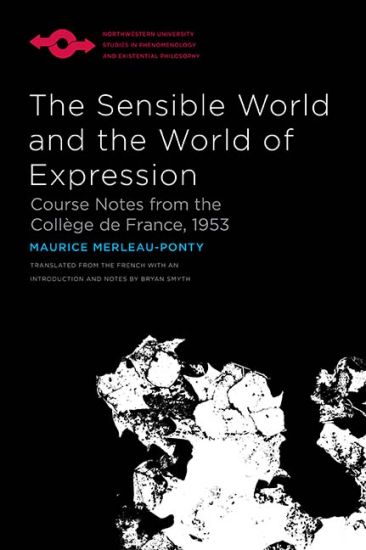
The Sensible World and the World of Expression

The Sensible World and the World of Expression

Maurice Merleau-Ponty

Northwestern University Press
2020
nidottu
The Sensible World and the World of Expression was a course of lectures that Merleau-Ponty gave at the College de France after his election to the chair of philosophy in 1952. The publication and translation of Merleau-Ponty's notes from this course provide an exceptional view into the evolution of his thought at an important point in his career. In these notes, we see that Merleau-Ponty's consideration of the problem of the perception of movement leads him to make a self-critical return to Phenomenology of Perception in order to rethink the perceptual encounter with the sensible world as essentially expressive, and hence to revise his understanding of the body schema accordingly in terms of praxical motor possibilities. Sketching out an embodied dialectic of expressive praxis that would link perception with art, language, and other cultural and intersubjective phenomena, up to and including truth, Merleau-Ponty's notes for these lectures thus afford an exciting glimpse of how he aspired to overcome the impasse of ontological dualism. Situated midway between Phenomenology of Perception and The Visible and the Invisible, these notes mark a juncture of crucial importance with regard to Merleau-Ponty's later efforts to work out the ontological underpinnings of phenomenology in terms of a new dialectical conception of nature and history.
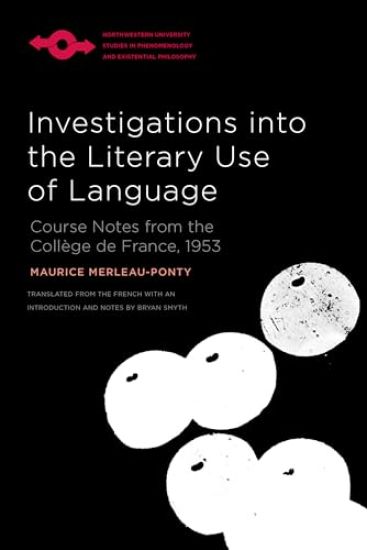
Investigations Into the Literary Use of Language

Investigations Into the Literary Use of Language

Maurice Merleau-Ponty

NORTHWESTERN UNIVERSITY PRESS
2026
nidottu
A closely annotated translation of Merleau-Ponty's lecture notes on literary language Investigations into the Literary Use of Language presents an annotated translation of Maurice Merleau-Ponty's lecture notes from one of the two courses that he gave during his inaugural year teaching at the Collège de France. In his notes from the concurrent course, The Sensible World and the World of Expression, Merleau-Ponty contends that our embodied perceptual engagement with the sensible world already involves the same spontaneity that underlies cultural expression. Approaching it from the other side, he revisits here the analysis of language that he had undertaken in the unfinished manuscript The Prose of the World. Focusing on the work of Paul Valéry (1871–1945) and Stendhal (Marie-Henri Beyle, 1783–1842), Merleau-Ponty explores how the spontaneity of literary language sheds light on the relation between lived experience and language more broadly, and how cultural expression remains grounded in embodied perceptual experience in a way that is homologous yet irreducible to it. Specifically, Merleau-Ponty shows how Stendhal had already overcome Valéry's skepticism concerning literary sincerity by effectively incorporating what the latter called the linguistic "implex"—in effect, language as institution—and thus achieving a "total style" of improvisational spontaneity in which the "conquering function" characteristic of the literary use of language gives shape to an immanent model of political engagement.
Investigations Into the Literary Use of Language

Investigations Into the Literary Use of Language

Maurice Merleau-Ponty

NORTHWESTERN UNIVERSITY PRESS
2026
sidottu
A closely annotated translation of Merleau-Ponty's lecture notes on literary language Investigations into the Literary Use of Language presents an annotated translation of Maurice Merleau-Ponty's lecture notes from one of the two courses that he gave during his inaugural year teaching at the Collège de France. In his notes from the concurrent course, The Sensible World and the World of Expression, Merleau-Ponty contends that our embodied perceptual engagement with the sensible world already involves the same spontaneity that underlies cultural expression. Approaching it from the other side, he revisits here the analysis of language that he had undertaken in the unfinished manuscript The Prose of the World. Focusing on the work of Paul Valéry (1871–1945) and Stendhal (Marie-Henri Beyle, 1783–1842), Merleau-Ponty explores how the spontaneity of literary language sheds light on the relation between lived experience and language more broadly, and how cultural expression remains grounded in embodied perceptual experience in a way that is homologous yet irreducible to it. Specifically, Merleau-Ponty shows how Stendhal had already overcome Valéry's skepticism concerning literary sincerity by effectively incorporating what the latter called the linguistic "implex"—in effect, language as institution—and thus achieving a "total style" of improvisational spontaneity in which the "conquering function" characteristic of the literary use of language gives shape to an immanent model of political engagement.
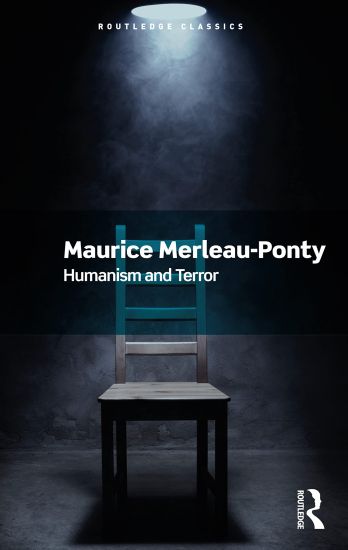
Humanism and Terror

Humanism and Terror

Maurice Merleau-Ponty

TAYLOR FRANCIS LTD
2022
nidottu
First published in France in 1947, Humanism and Terror is a vital work of political philosophy by one of the leading French philosophers of the twentieth century. Attempting to understand what he called the "dislocated world" that followed immediately after the Second World War—including his own, divided France—Merleau-Ponty asks a fundamental question: how did Marxism and humanism come apart?Through a fascinating reading of Arthur Koestler's famous novel, Darkness at Noon, an allegory of the Stalinist show trials and purges of the 1930s, Merleau-Ponty weighs up the costs of a regime of permanent revolution and false confessions. His profound and controversial point, however, is that the purges were the inevitable outcome of abandoning crucial subjective elements of Marx’s theory of history, with the result that "humanism is suspended and government is terror."As we again confront the reality of authoritarianism, political polarisation and curtailing of human freedom, the dislocated world brilliantly depicted by Merleau-Ponty in Humanism and Terror sends a powerful and articulate message that continues to resonate today.This Routledge Classics edition includes a new Foreword by William McBride.
Humanism and Terror

Humanism and Terror

Maurice Merleau-Ponty

TAYLOR FRANCIS LTD
2022
sidottu
First published in France in 1947, Humanism and Terror is a vital work of political philosophy by one of the leading French philosophers of the twentieth century. Attempting to understand what he called the "dislocated world" that followed immediately after the Second World War—including his own, divided France—Merleau-Ponty asks a fundamental question: how did Marxism and humanism come apart?Through a fascinating reading of Arthur Koestler's famous novel, Darkness at Noon, an allegory of the Stalinist show trials and purges of the 1930s, Merleau-Ponty weighs up the costs of a regime of permanent revolution and false confessions. His profound and controversial point, however, is that the purges were the inevitable outcome of abandoning crucial subjective elements of Marx’s theory of history, with the result that "humanism is suspended and government is terror."As we again confront the reality of authoritarianism, political polarisation and curtailing of human freedom, the dislocated world brilliantly depicted by Merleau-Ponty in Humanism and Terror sends a powerful and articulate message that continues to resonate today.This Routledge Classics edition includes a new Foreword by William McBride.