Kirjojen hintavertailu. Mukana 11 244 527 kirjaa ja 12 kauppaa.

Kirjahaku

Etsi kirjoja tekijän nimen, kirjan nimen tai ISBN:n perusteella.

2 kirjaa tekijältä Maurice St. Pierre

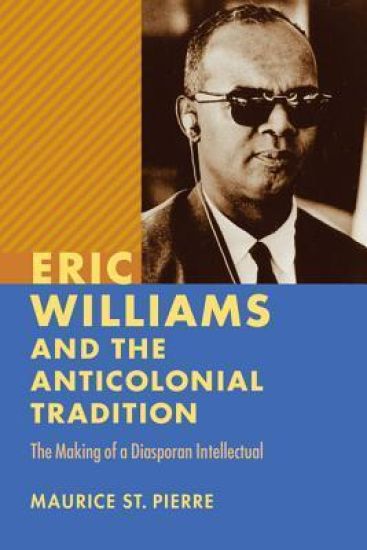
Eric Williams and the Anticolonial Tradition

Eric Williams and the Anticolonial Tradition

Maurice St. Pierre

University of Virginia Press
2015
nidottu
A leader in the social movement that achieved Trinidad and Tobago’s independence from Britain in 1962, Eric Williams (1911–1981) served as its first prime minister. Although much has been written about Williams as a historian and a politician, Maurice St. Pierre is the first to offer a full-length treatment of him as an intellectual. St. Pierre focuses on Williams's role not only in challenging the colonial exploitation of Trinbagonians but also in seeking to educate and mobilize them in an effort to generate a collective identity in the struggle for independence. Drawing on extensive archival research and using a conflated theoretical framework, the author offers a portrait of Williams that shows how his experiences in Trinidad, England, and America radicalized him and how his relationships with other Caribbean intellectuals—along with Aimé Césaire in Martinique, Juan Bosch in the Dominican Republic, George Lamming of Barbados, and Frantz Fanon from Martinique—enabled him to seize opportunities for social change and make a significant contribution to Caribbean epistemology.
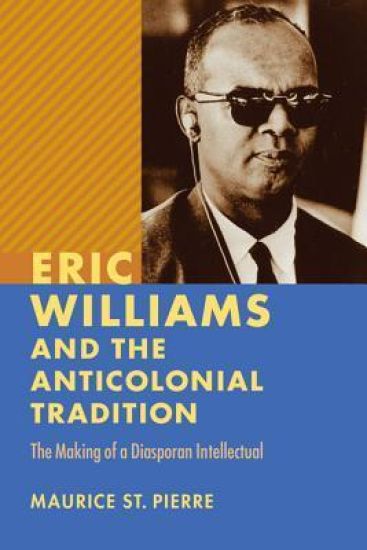
Eric Williams and the Anticolonial Tradition

Eric Williams and the Anticolonial Tradition

Maurice St. Pierre

University of Virginia Press
2015
sidottu
A leader in the social movement that achieved Trinidad and Tobago’s independence from Britain in 1962, Eric Williams (1911–1981) served as its first prime minister. Although much has been written about Williams as a historian and a politician, Maurice St. Pierre is the first to offer a full-length treatment of him as an intellectual. St. Pierre focuses on Williams's role not only in challenging the colonial exploitation of Trinbagonians but also in seeking to educate and mobilize them in an effort to generate a collective identity in the struggle for independence. Drawing on extensive archival research and using a conflated theoretical framework, the author offers a portrait of Williams that shows how his experiences in Trinidad, England, and America radicalized him and how his relationships with other Caribbean intellectuals—along with Aimé Césaire in Martinique, Juan Bosch in the Dominican Republic, George Lamming of Barbados, and Frantz Fanon from Martinique—enabled him to seize opportunities for social change and make a significant contribution to Caribbean epistemology.