Kirjojen hintavertailu. Mukana 12 083 983 kirjaa ja 12 kauppaa.

Kirjahaku

Etsi kirjoja tekijän nimen, kirjan nimen tai ISBN:n perusteella.

8 kirjaa tekijältä Mauricio Tenorio-Trillo

I Speak of the City

I Speak of the City

Mauricio Tenorio-Trillo

University of Chicago Press
2015
nidottu
In this dazzling multidisciplinary tour of Mexico City, Mauricio Tenorio-Trillo focuses on the period 1880 to 1940, the decisive decades that shaped the city into what it is today. Through a kaleidoscope of expository forms, I Speak of the City connects the realms of literature, architecture, music, popular language, art, and public health to investigate the city in a variety of contexts: as a living history textbook, as an expression of the state, as a modernist capital, as a laboratory, and as language. Tenorio-Trillo's formal imagination allows the reader to revel in the free-flowing richness of his narratives, opening startling new vistas onto the urban experience. From art to city planning, from epidemiology to poetry, this book challenges the conventional wisdom about both Mexico City and the turn-of-the-century world to which it belonged. And by engaging directly with the rise of modernism and the cultural experiences of such personalities as Hart Crane, Mina Loy, and Diego Rivera, I Speak of the City will find an enthusiastic audience across the disciplines.
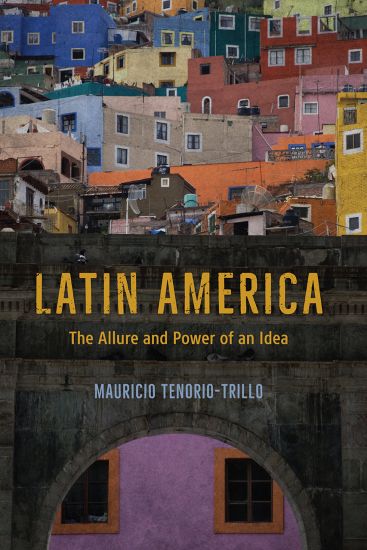
Latin America

Latin America

Mauricio Tenorio-Trillo

University of Chicago Press
2017
sidottu
Latin America is a concept firmly entrenched in its philosophical, moral, and historical meanings. And yet, Mauricio Tenorio-Trillo argues in this landmark book, it is an obsolescent racial-cultural idea that ought to have vanished long ago with the banishment of racial theory. Latin America: The Allure and Power of an Idea makes this case persuasively. Tenorio-Trillo builds the book on three interlocking steps: first, an intellectual history of the concept of Latin America in its natural historical habitat mid-nineteenth-century redefinitions of empire and the cultural, political, and economic intellectualism; second, a serious and uncompromising critique of the current "Latin Americanism" which circulates in United States based humanities and social sciences; and, third, accepting that we might actually be stuck with "Latin America," Tenorio-Trillo charts a path forward for the writing and teaching of Latin American history. Accessible and forceful, rich in historical research and specificity, the book offers a distinctive, conceptual history of Latin America and its many connections and intersections of political and intellectual significance. Tenorio-Trillo's book is a masterpiece of interdisciplinary scholarship.
Latin America

Latin America

Mauricio Tenorio-Trillo

University of Chicago Press
2020
pokkari
"Latin America" is a concept firmly entrenched in its philosophical, moral, and historical meanings. And yet, Mauricio Tenorio-Trillo argues in this landmark book, it is an obsolescent racial-cultural idea that ought to have vanished long ago with the banishment of racial theory. Latin America: The Allure and Power of an Idea makes this case persuasively. Tenorio-Trillo builds the book on three interlocking steps: first, an intellectual history of the concept of Latin America in its natural historical habitat--mid-nineteenth-century redefinitions of empire and the cultural, political, and economic intellectualism; second, a serious and uncompromising critique of the current "Latin Americanism"--which circulates in United States-based humanities and social sciences; and, third, accepting that we might actually be stuck with "Latin America," Tenorio-Trillo charts a path forward for the writing and teaching of Latin American history. Accessible and forceful, rich in historical research and specificity, the book offers a distinctive, conceptual history of Latin America and its many connections and intersections of political and intellectual significance. Tenorio-Trillo's book is a masterpiece of interdisciplinary scholarship.
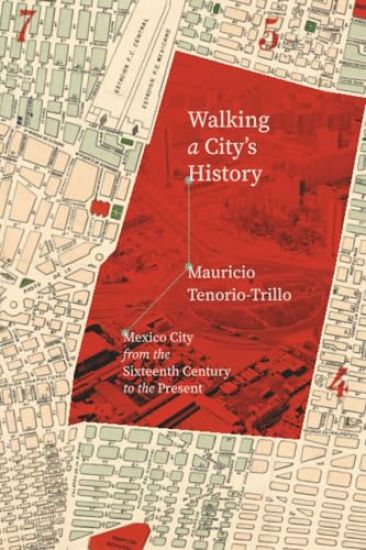
Walking a City's History

Walking a City's History

Mauricio Tenorio-Trillo

THE UNIVERSITY OF CHICAGO PRESS
2026
sidottu
Take a street-level tour of Mexico’s capital and learn how one of the world’s most extraordinary cities has transformed over the centuries. Walking a City’sHistory is both a richly documented panoramic view of Mexico City’s long history and an intimate essay on its social and cultural fabric. In this book, Mauricio Tenorio-Trillo uses his expertise as a historian and his talents as a storyteller to bring the city to life. Using influential moments in Mexico City’s history from the Battle of Tenochtitlán in 1521 to the present, Tenorio-Trillo illustrates the capital’s transformations against a national and global background. Walking a City’s History offers an original, unique perspective on the social, architectural, artistic, and political dimensions of Mexico City, guided by chronicles, literary works, historical accounts, and the author’s own lifetime of walks through the city.
Walking a City's History

Walking a City's History

Mauricio Tenorio-Trillo

THE UNIVERSITY OF CHICAGO PRESS
2026
nidottu
Take a street-level tour of Mexico’s capital and learn how one of the world’s most extraordinary cities has transformed over the centuries. Walking a City’sHistory is both a richly documented panoramic view of Mexico City’s long history and an intimate essay on its social and cultural fabric. In this book, Mauricio Tenorio-Trillo uses his expertise as a historian and his talents as a storyteller to bring the city to life. Using influential moments in Mexico City’s history from the Battle of Tenochtitlán in 1521 to the present, Tenorio-Trillo illustrates the capital’s transformations against a national and global background. Walking a City’s History offers an original, unique perspective on the social, architectural, artistic, and political dimensions of Mexico City, guided by chronicles, literary works, historical accounts, and the author’s own lifetime of walks through the city.
Mexico at the World's Fairs

Mexico at the World's Fairs

Mauricio Tenorio-Trillo

University of California Press
2018
pokkari
This intriguing study of Mexico's participation in world's fairs from 1889 to 1929 explores Mexico's self-presentation at these fairs as a reflection of the country's drive toward nationalization and a modernized image. Mauricio Tenorio-Trillo contrasts Mexico's presence at the 1889 Paris fair—where its display was the largest and most expensive Mexico has ever mounted—with Mexico's presence after the 1910 Mexican Revolution at fairs in Rio de Janeiro in 1922 and Seville in 1929. Rather than seeing the revolution as a sharp break, Tenorio-Trillo points to important continuities between the pre- and post-revolution periods. He also discusses how, internationally, the character of world's fairs was radically transformed during this time, from the Eiffel Tower prototype, encapsulating a wondrous symbolic universe, to the Disneyland model of commodified entertainment. Drawing on cultural, intellectual, urban, literary, social, and art histories, Tenorio-Trillo's thorough and imaginative study presents a broad cultural history of Mexico from 1880 to 1930, set within the context of the origins of Western nationalism, cosmopolitanism, and modernism.This title is part of UC Press's Voices Revived program, which commemorates University of California Press’s mission to seek out and cultivate the brightest minds and give them voice, reach, and impact. Drawing on a backlist dating to 1893, Voices Revived makes high-quality, peer-reviewed scholarship accessible once again using print-on-demand technology. This title was originally published in 1997.
Mexico at the World's Fairs

Mexico at the World's Fairs

Mauricio Tenorio-Trillo

University of California Press
2024
sidottu
This intriguing study of Mexico's participation in world's fairs from 1889 to 1929 explores Mexico's self-presentation at these fairs as a reflection of the country's drive toward nationalization and a modernized image. Mauricio Tenorio-Trillo contrasts Mexico's presence at the 1889 Paris fair—where its display was the largest and most expensive Mexico has ever mounted—with Mexico's presence after the 1910 Mexican Revolution at fairs in Rio de Janeiro in 1922 and Seville in 1929. Rather than seeing the revolution as a sharp break, Tenorio-Trillo points to important continuities between the pre- and post-revolution periods. He also discusses how, internationally, the character of world's fairs was radically transformed during this time, from the Eiffel Tower prototype, encapsulating a wondrous symbolic universe, to the Disneyland model of commodified entertainment. Drawing on cultural, intellectual, urban, literary, social, and art histories, Tenorio-Trillo's thorough and imaginative study presents a broad cultural history of Mexico from 1880 to 1930, set within the context of the origins of Western nationalism, cosmopolitanism, and modernism.This title is part of UC Press's Voices Revived program, which commemorates University of California Press’s mission to seek out and cultivate the brightest minds and give them voice, reach, and impact. Drawing on a backlist dating to 1893, Voices Revived makes high-quality, peer-reviewed scholarship accessible once again using print-on-demand technology. This title was originally published in 1997.
Clio's Laws

Clio's Laws

Mauricio Tenorio-Trillo

University of Texas Press
2019
sidottu
Offering a unique perspective on the very notions and practices of storytelling, history, memory, and language, Clio’s Laws collects ten essays (some new and some previously published in Spanish) by a revered voice in global history. Taking its title from the Greek muse of history, this opus considers issues related to the historian’s craft, including nationalism and identity, and draws on Tenorio-Trillo’s own lifetime of experiences as a historian with deep roots in both Mexico and the United States. By turns deeply ironic, provocative, and experimental, and covering topics both lowbrow and highbrow, the essays form a dialogue with Clio about idiosyncratic yet profound matters.Tenorio-Trillo presents his own version of an ars historica (what history is, why we write it, and how we abuse it) alongside a very personal essay on the relationship between poetry and history. Other selections include an exploration of the effects of a historian’s autobiography, a critique of history’s celebratory obsession, and a guide to reading history in an era of internet searches and too many books. A self-described exile, Tenorio-Trillo has produced a singular tour of the historical imagination and its universal traits.