Kirjahaku
Etsi kirjoja tekijän nimen, kirjan nimen tai ISBN:n perusteella.
370 kirjaa tekijältä Max Brand

The Untamed. by: Max Brand ( Westerns )
Max Brand
Createspace Independent Publishing Platform
2016
nidottu
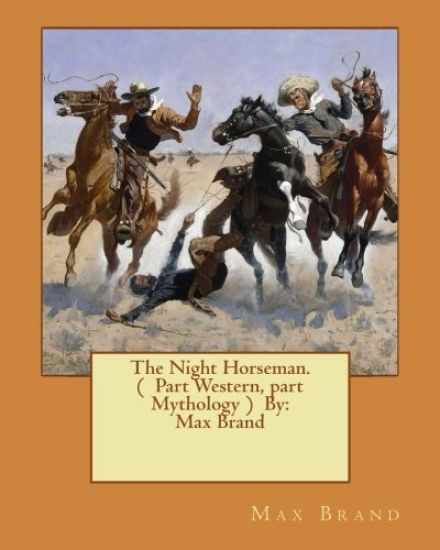
The Night Horseman. ( Part Western, part Mythology ) By: Max Brand
Max Brand
Createspace Independent Publishing Platform
2016
nidottu
Dan Barry is a gentle, caring man with a deep sense of fairness. After six years of a peaceful life in their mountain cabin Dan, sets out to revenge an injustice by killing seven men. Ultimately, it is his devotion to his daughter and Kate's love for the child that brings about the climax of the tale .Don't look for a typical cowboy story here - it's far deeper and stronger than that. Robert Keiper
At the age of six Randall Byrne could name and bound every state in the Union and give the date of its admission; at nine he was conversant with Homeric Greek and Caesar; at twelve he read Aristophanes with perfect understanding of the allusions of the day and divided his leisure between Ovid and Horace; at fifteen, wearied by the simplicity of Old English and Thirteenth Century Italian, he dipped into the history of Philosophy and passed from that, naturally, into calculus and the higher mathematics; at eighteen he took an A.B. from Harvard and while idling away a pleasant summer with Hebrew and Sanscrit he delved lightly into biology and its kindred sciences, having reached the conclusion that Truth is greater than Goodness or Beauty, because it comprises both, and the whole is greater than any of its parts; at twenty-one he pocketed his Ph.D. and was touched with the fever of his first practical enthusiasm-surgery. At twenty-four he was an M.D. and a distinguished
The Untamed (1919). By: Max Brand: Frederick Schiller Faust (May 29, 1892 - May 12, 1944) was an American author known primarily for his thoug
Max Brand
Createspace Independent Publishing Platform
2018
nidottu
Frederick Schiller Faust (May 29, 1892 - May 12, 1944) was an American author known primarily for his thoughtful and literary Westerns under the pen name Max Brand. Faust (as Max Brand) also created the popular fictional character of young medical intern Dr. James Kildare in a series of pulp fiction stories. Faust's Kildare character was subsequently featured over several decades in other media, including a series of American theatrical films by Paramount Pictures and Metro-Goldwyn-Mayer (MGM), a radio series, two television series, and comics. Faust's other pseudonyms include George Owen Baxter, Evan Evans, George Evans, David Manning, John Frederick, Peter Morland, George Challis, Peter Ward and Frederick Frost. Biography: Faust was born in Seattle to Gilbert Leander Faust and Louisa Elizabeth (Uriel) Faust, both of whom died when Faust was still a boy. He grew up in central California, and later worked as a cowhand on one of the many ranches of the San Joaquin Valley. Faust attended the University of California, Berkeley, where he began to write for student publications, poetry magazines, and newspapers. Failing to graduate, Faust joined the Canadian Army in 1915, but deserted the next year and moved to New York City. During the 1910s, Faust sold stories to the pulp magazines of Frank Munsey, including All-Story Weekly and Argosy Magazine. When the United States entered World War I in 1917, Faust tried to enlist but was rejected. He married Dorothy Schillig in 1917, and the couple had three children.In the 1920s, Faust wrote extensively for pulp magazines, especially Street & Smith's Western Story Magazine, a weekly for which he would write over a million words a year under various pen names, often seeing two serials and a short novel published in a single issue. In 1921, he suffered a severe heart attack, and for the rest of his life suffered from chronic heart disease. His love for mythology was a constant source of inspiration for his fiction, and it has been speculated that these classical influences accounted in some part for his success as a popular writer. Many of his stories would later inspire films. He created the Western character Destry, featured in several cinematic versions of Destry Rides Again, and his character Dr. Kildare was adapted to motion pictures, radio, television, and comic books. In 1934 Faust began to write for upscale, slick magazines, often writing from a villa in Italy. In 1938, due to political events in Europe, he returned with his family to the United States and settled in Hollywood where he worked as a screenwriter for a number of film studios. At one point, Warner Brothers paid him $3,000 a week (a year's salary for an average worker at the time), and he made a fortune from MGM's Dr. Kildare adaptations. Faust became one of the highest paid writers of his day. Ironically, Faust disparaged his commercial success and used his real name only for the poetry that he regarded as his literary calling. In 1943, author Frank Gruber met Faust and wrote about him in his book The Pulp Jungle (1967). Faust he said was six feet three inches tall and weighed about 200 lbs (of which there was not an ounce of fat) and had enormous hands. He was shy and somewhat aloof. He liked to be called "Heinie" by friends and he was an alcoholic. Amongst other drinks, he put away two quarts of whiskey during an eight-hour day. When he went home at five thirty, he had a light supper then got down to "some serious drinking". Faust maintained that the alcohol transported him away to a fantasy world where he could write. He was never "drunk" and was open about his drinkingFaust had trained himself to write exactly 14 pages of work a day, every day. ...
The Night Horseman (1920). By: Max Brand (Frederick Schiller Faust): This book is sequel to The Untamed: the second book in the Dan Barry series.
Max Brand
Createspace Independent Publishing Platform
2018
nidottu
Part Western, part Mythology, this book is sequel to The Untamed: the second book in the Dan Barry series. ........... Frederick Schiller Faust (May 29, 1892 - May 12, 1944) was an American author known primarily for his thoughtful and literary Westerns under the pen name Max Brand. Faust (as Max Brand) also created the popular fictional character of young medical intern Dr. James Kildare in a series of pulp fiction stories. Faust's Kildare character was subsequently featured over several decades in other media, including a series of American theatrical films by Paramount Pictures and Metro-Goldwyn-Mayer (MGM), a radio series, two television series, and comics. Faust's other pseudonyms include George Owen Baxter, Evan Evans, George Evans, David Manning, John Frederick, Peter Morland, George Challis, Peter Ward and Frederick Frost. Biography: Faust was born in Seattle to Gilbert Leander Faust and Louisa Elizabeth (Uriel) Faust, both of whom died when Faust was still a boy. He grew up in central California, and later worked as a cowhand on one of the many ranches of the San Joaquin Valley. Faust attended the University of California, Berkeley, where he began to write for student publications, poetry magazines, and newspapers. Failing to graduate, Faust joined the Canadian Army in 1915, but deserted the next year and moved to New York City. During the 1910s, Faust sold stories to the pulp magazines of Frank Munsey, including All-Story Weekly and Argosy Magazine. When the United States entered World War I in 1917, Faust tried to enlist but was rejected. He married Dorothy Schillig in 1917, and the couple had three children.In the 1920s, Faust wrote extensively for pulp magazines, especially Street & Smith's Western Story Magazine, a weekly for which he would write over a million words a year under various pen names, often seeing two serials and a short novel published in a single issue. In 1921, he suffered a severe heart attack, and for the rest of his life suffered from chronic heart disease. His love for mythology was a constant source of inspiration for his fiction, and it has been speculated that these classical influences accounted in some part for his success as a popular writer. Many of his stories would later inspire films. He created the Western character Destry, featured in several cinematic versions of Destry Rides Again, and his character Dr. Kildare was adapted to motion pictures, radio, television, and comic books. In 1934 Faust began to write for upscale, slick magazines, often writing from a villa in Italy. In 1938, due to political events in Europe, he returned with his family to the United States and settled in Hollywood where he worked as a screenwriter for a number of film studios. At one point, Warner Brothers paid him $3,000 a week (a year's salary for an average worker at the time), and he made a fortune from MGM's Dr. Kildare adaptations. Faust became one of the highest paid writers of his day. Ironically, Faust disparaged his commercial success and used his real name only for the poetry that he regarded as his literary calling....
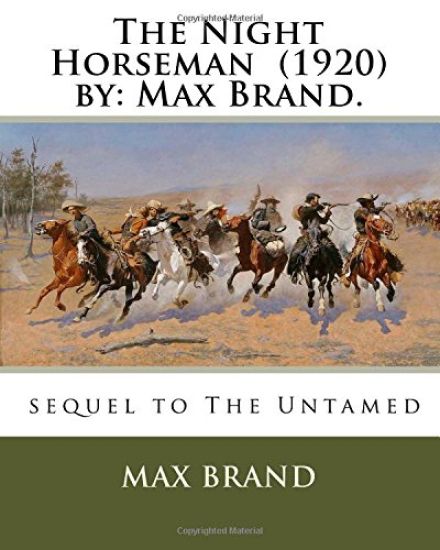
The Night Horseman (1920) by: Max Brand.
Max Brand
Createspace Independent Publishing Platform
2018
nidottu
Frederick Schiller Faust (May 29, 1892 - May 12, 1944) was an American author known primarily for his thoughtful and literary Westerns under the pen name Max Brand. Faust (as Max Brand) also created the popular fictional character of young medical intern Dr. James Kildare in a series of pulp fiction stories. Faust's Kildare character was subsequently featured over several decades in other media, including a series of American theatrical films by Paramount Pictures and Metro-Goldwyn-Mayer (MGM), a radio series, two television series, and comics. Faust's other pseudonyms include George Owen Baxter, Evan Evans, George Evans, David Manning, John Frederick, Peter Morland, George Challis, Peter Ward and Frederick Frost.Faust was born in Seattle to Gilbert Leander Faust and Louisa Elizabeth (Uriel) Faust, both of whom died when Faust was still a boy. He grew up in central California, and later worked as a cowhand on one of the many ranches of the San Joaquin Valley. Faust attended the University of California, Berkeley, where he began to write for student publications, poetry magazines, and newspapers. Failing to graduate, Faust joined the Canadian Army in 1915, but deserted the next year and moved to New York City. During the 1910s, Faust sold stories to the pulp magazines of Frank Munsey, including All-Story Weekly and Argosy Magazine. When the United States entered World War I in 1917, Faust tried to enlist but was rejected. He married Dorothy Schillig in 1917, and the couple had three children
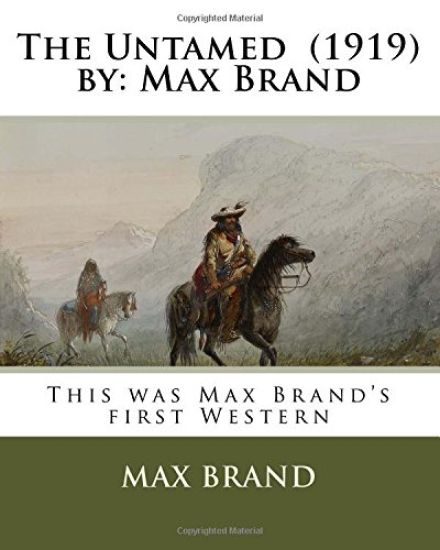
Frederick Schiller Faust (May 29, 1892 - May 12, 1944) was an American author known primarily for his thoughtful and literary Westerns under the pen name Max Brand. Faust (as Max Brand) also created the popular fictional character of young medical intern Dr. James Kildare in a series of pulp fiction stories. Faust's Kildare character was subsequently featured over several decades in other media, including a series of American theatrical films by Paramount Pictures and Metro-Goldwyn-Mayer (MGM), a radio series, two television series, and comics. Faust's other pseudonyms include George Owen Baxter, Evan Evans, George Evans, David Manning, John Frederick, Peter Morland, George Challis, Peter Ward and Frederick Frost.Faust was born in Seattle to Gilbert Leander Faust and Louisa Elizabeth (Uriel) Faust, both of whom died when Faust was still a boy. He grew up in central California, and later worked as a cowhand on one of the many ranches of the San Joaquin Valley. Faust attended the University of California, Berkeley, where he began to write for student publications, poetry magazines, and newspapers. Failing to graduate, Faust joined the Canadian Army in 1915, but deserted the next year and moved to New York City. During the 1910s, Faust sold stories to the pulp magazines of Frank Munsey, including All-Story Weekly and Argosy Magazine. When the United States entered World War I in 1917, Faust tried to enlist but was rejected. He married Dorothy Schillig in 1917, and the couple had three children
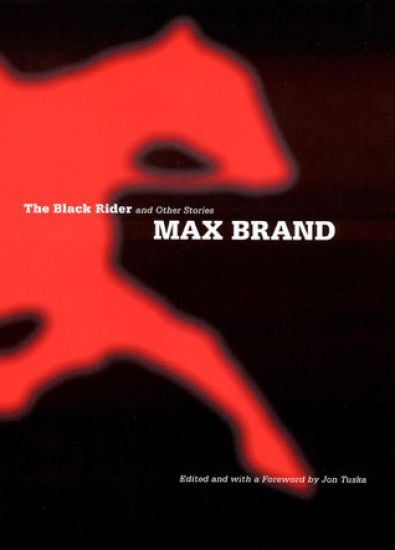
The Black Rider and Other Stories collects three short novels and one short story by Max Brand originally published in magazines and never reprinted before; they appear here for the first time in book form. At first publication the stories often suffered from editors’ cuts to make them fit available page space. Editor Jon Tuska has returned to the original manuscripts to restore Brand’s full texts. The stories are set in that land Brand called the “mountain desert,” a timeless and magical place for him. In addition to mapping a geographic region, these stories show the extent to which Brand was exploring the corridors of the human spirit. The story of Lucia d’Arquista’s confrontation with her own soul, “The Black Rider,” originally published in 1925, is set in Spanish California at the time when the eastern colonies of this country were still ruled by Great Britain. The feud between Red Macdonald and the Gregory clan disrupts the quiet town of Sudeth in “The Dream of Macdonald” (1923). As this short novel progresses, Macdonald’s dream increasingly takes possession of his very being. In a few deft pages, Brand takes up the challenge of the most demanding form of fiction in “Partners,” a 1938 short short story that sketches a murderous relationship between two men. “The Power of Prayer,” which first appeared in the 1922 Christmas issue of Western Story Magazine, concerns Gerald Kern, a real gentleman who is also a gunman. His tale is not unlike that of the true and imperishable gentleman of darkness from the Book of Job.
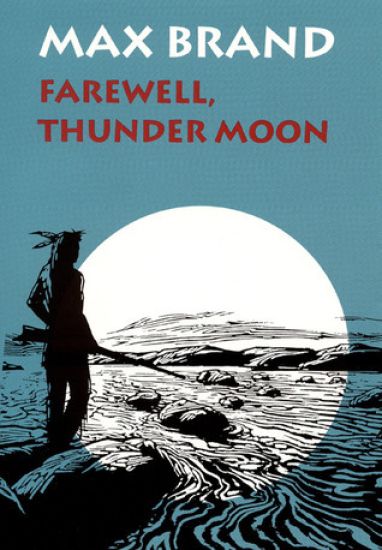
The Thunder Moon series represents some of Max Brand's best work, originally published in 1927–28 as a series of interlocking stories. The University of Nebraska Press is now republishing these stories uncut and in the sequence Faust intended, with careful reference to the original typescripts. In order, the works appear in four volumes as The Legend of Thunder Moon, Red Wind and Thunder Moon, Thunder Moon and the Sky People, and Farewell, Thunder Moon. Farewell, Thunder Moon originally appeared in 1928 in Western Story Magazine. In this work, Thunder Moon is betrayed yet again and forced to flee his newly found home among those from whom he was abducted as a child. Returning to the plains that have been the scene of his greatest exploits, he finds the shadows of the encroaching whites lengthening on the lodges of his people.Forced, in order to preserve his people, to make choices that they cannot understand, Thunder Moon must again confront his hereditary enemy, the Pawnees, as well as the oncoming whites. But soon Thunder Moon's greatest test draws nigh, and he must find where his heart truly lies.
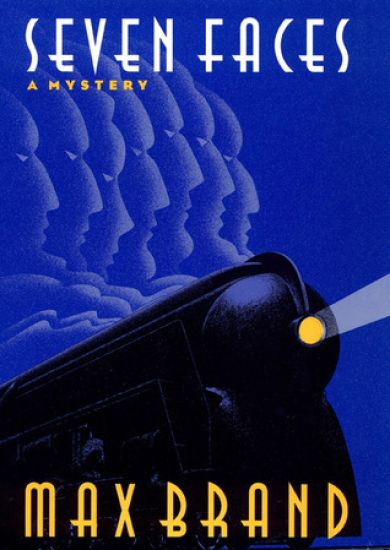
Police detective Angus Campbell, a dour and methodical Scottish American policeman, cordially disliked his partner, the ebullient and overweight Irish cop Patrick O'Rourke. And the feeling was cordially reciprocated by O'Rourke. Both were annoyed—but not really concerned—about orders to guard the frantic millionaire John Cobb on a late-night journey on the New York–Chicago train. After locking Cobb in his compartment, they would look forward to the pleasure of antagonizing each other in the club car. That is, until Cobb turned up missing. Whoever was responsible—and there were several possibilities among the passengers, including an incomparably strong and handsome man, a breathtakingly beautiful woman, and an improbably villainous stranger—had perhaps discounted each detective individually, and perhaps justly so. But what the malefactor could not know was the insight of their superior, Inspector Corrigan: "Separate they're not much, but, when they're together, they hate each other so much that they grind one another sharp as razors." Seven Faces originally appeared as six installments in Detective Fiction Weekly during October and November 1936. This edition—the first to collect the installments in book form, uncut and as the author intended—introduces today's readers to a most memorable detective duo.