
Kirjahaku
Etsi kirjoja tekijän nimen, kirjan nimen tai ISBN:n perusteella.
65 kirjaa tekijältä Max Frisch

Three contentious and enduring plays about the clash of the individual and society Fire Raisers (1958) tells the tale of a respectable bourgeois whose house is one day visited by three strangers. It "is successful on every level; the story is as gripping as an adventure story; each line is fraught with several meanings: as an allegory it is unique" (Edna O'Brien); Andorra is based on the author's own experience of anti-semitism in Switzerland and is about Andri, a young man who is believed to be a Jew and who is persecuted by his community as a result; Triptych is a portrait of a writer grappling with his own mortality. The flexible and contemporary translations by Michael Bullock (The Fire Raisers, Andorra) and Geoffrey Skelton (Triptych) are here complemented by an introduction by Peter Loeffler.
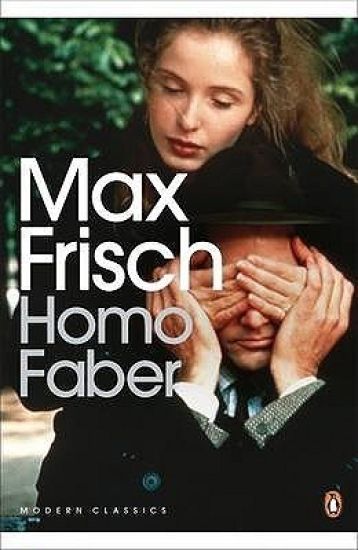
The novel tells the story of a middle-class UNESCO engineer called Walter Faber, who believes in rational, calculated world. Strange events undermine his security - an emergency landing in a Mexican desert against all odds, his friend Joachim hangs himself in the Mexican jungle, and he falls in love with a woman who dies of a concussion, he has an incestuous affair. Finally Faber becomes ill with stomach cancer, but it is too late for him to change his life.
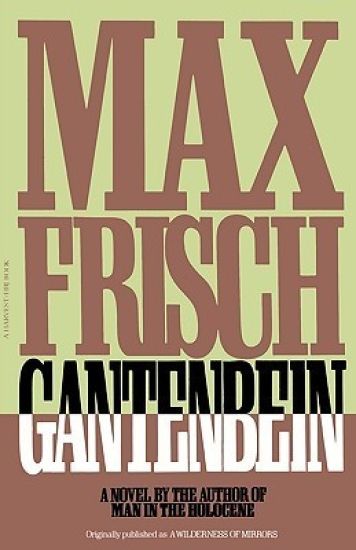
A stranger walks out of a bar an is later found dead at the wheel of his car. The narrator creates the story of this man-or, rather, two stories, based on the two personae that he has imagined. One of these is named Enderlin; the other, Gantenbein. Originally published as A Wilderness of Mirrors. Translated by Michael Bullock. A Helen and Kurt Wolff Book.

Walter Faber is an emotionally detached engineer forced by a string of coincidences to embark on a journey through his past. The basis for director Volker Schlsndorff's movie Voyager. Translated by Michael Bullock. A Helen and Kurt Wolff Book

Stories, authobiography, impressions, interviews, and reflections on a variety of topics from politics to women, marriage, friendship, and death. Translated by Geoffrey Skelton. A Helen and Kurt Wolff Book.

The unabridged version of a haunting story of a man in prison. His wife, brother, and mistress recognize him and call him by his name, Anatol Ludwig Stiller. But he rejects them, repeatedly insisting that he's not Stiller. Could he possibly be right-or is he deliberately trying to shake off his old identity and assume a new one? Translated by Michael Bullock. A Helen and Kurt Wolff Book

Reissue of this Methuen classic to tie in with a major new productionThe republic of Andorra is invaded by totalitarian forces. The populace capitulates to the anti-Semitism of the aggressor and betrays Andri, the foundling son of the local schoolmaster. But Andri it seems, is not a Jew at all.Andorra explores the mechanism of racism with the story of a non-Jew brought up as a Jew, who falls victim to anti-Semitic hostility.
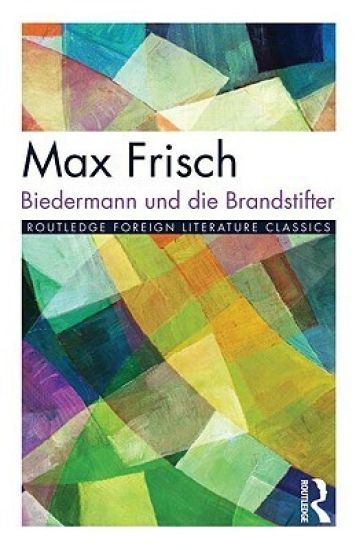
Includes the full German text, accompanied by German-English vocabulary. Notes and a detailed introduction in English put the work in its social and historical context.

Walter Faber is an emotionally detached engineer forced by a string of coincidences to embark on a journey through his past. The basis for director Volker Schlsndorff's movie Voyager. Translated by Michael Bullock. A Helen and Kurt Wolff Book

New York...I HATE IT...I LOVE IT...I DON'T KNOW...". These are the reflections of Max Frisch, writing from his apartment in the Big Apple near the end of the twentieth century. Beginning in 1946 and continuing until his death at the age of eighty, the man whom many see as Switzerland's greatest writer kept a series of sketchbooks to record his reactions to events of the time and people he encountered in his daily life. Neither a commonplace book nor a diary, these volumes contain the seeds for many of Frisch's most famous works - including Homo Faber, I'm Not Stiller, and Man in the Holocene - as well as his cynical meditations, fictions, incidents, conversations, meetings, newspaper headlines, and dark fantasies - anything, in short, that the author found significant. Drafts for a Third Sketchbook treats the reader to an even more personal document. Unpublished at the time of Frisch's death, this collection was edited by Peter von Matt, president of the Max Frisch Foundation, with an eye toward expanding our knowledge of this legendary writer's last days. Ranging from a couple of sentences to several pages, the sketches collected in this volume recall the United States of the Reagan years and the author's own growing sense of age as both the threat of nuclear war and some of his most treasured friendships pass on. Representing an unusually personal vista onto the world as Frisch knew it, this is a wonderful self-portrait of an extraordinary intelligence.
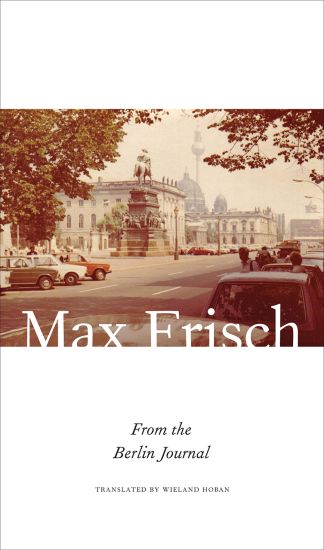
Max Frisch (1911 91) was a giant of twentieth-century German literature. When Frisch moved into a new apartment in Berlin's Sarrazinstrasse, he began keeping a journal, which he came to call the Berlin Journal. A few years later, he emphasized in an interview that this was by no means a "scribbling book," but rather a book "fully composed." The journal is one of the great treasures of Frisch's literary estate, but the author imposed a retention period of twenty years from the date of his death because of the "private things" he noted in it. From the Berlin Journal now marks the first publication of excerpts from Frisch's journal. Here, the unmistakable Frisch is back, full of doubt, with no illusions, and with a playfully sharp eye for the world. From the Berlin Journal pulls from the years 1946 49 and 1966 71. Observations about the writer's everyday life stand alongside narrative and essayistic texts, as well as finely-drawn portraits of colleagues like Gunter Grass, Uwe Johnson, Wolf Biermann, and Christa Wolf, among others. Its foremost quality, though, is the extraordinary acuity with which Frisch observed political and social conditions in East Germany while living in West Berlin.
This novel by esteemed Swiss writer Max Frisch is an exploration of the question: “Why don’t we live when we know we’re here just this one time, just one single, unrepeatable time in this unutterably magnificent world?!” This outcry against the emptiness of ordinary everyday life uttered by the hero of Frisch’s book is countered by “an answer from the silence” he meets when face-to-face with death. When An Answer from the Silence begins, the protagonist has just turned thirty and is engaged to be married and about to start work as a teacher. Frightened by the idea of settling down, he journeys to the Alps in a do-or-die effort to climb the unclimbed North Ridge, and by doing so prove he is not ordinary. But having reached the top he returns not in triumph, but in frostbitten shock, having come dangerously close to death. This highly personal early novel reflects a crisis in Frisch’s own life, and perhaps because of this intimate connection, he refused to allow it to be included in his Collected Works in the 1970s. Now available in English, this distinctive book will thrill fans of Frisch’s other works.
This screenplay by Swiss playwright and novelist Max Frisch was developed from an episode in his 1964 novel Gantenbein, or A Wilderness of Mirrors. At the center of both works is Theo Ehrismann, a man who cannot seem to change his life no matter how many times he resolves to do so. Chance comes to Theo one day upon returning from a trip abroad—he arrives home to read his own obituary in the paper. He shows up just on time for his own funeral and observes the attending mourners, and yet he is not able to reveal himself to them, and especially not to his wife. “How does one say that he is alive,” wonders Theo.Life, as Frisch said, “is the sum of events that happen by chance, and it always could as well have turned out differently; there is not a single action or omission that does not allow for variables in the future.” Zurich Transit presents Frisch at the height of his dramatic powers and exemplifies his ardent believe in a dramaturgy of coincidence rather than causality.

A new translation of one of the earliest volumes of Max Frisch's innovative notebooks. Throughout his life, the great Swiss playwright and novelist Max Frisch (1911-1991) kept a series of diaries, or sketchbooks, as they came to be known in English. First published in English translation in the 1970s, these sketchbooks played a major role in establishing Frisch as, according to the New York Times, "the most innovative, varied and hard-to-categorize of all major contemporary authors." His diaries, said the Times, "read like novels and his best novels are written like diaries." Now Seagull Books presents the first unabridged English translation of Sketchbooks, 1946-1949 in a new translation by Simon Pare. This edition reinstates material omitted from the 1977 edition, including a screenplay for an unmade film. In this first volume, which covers the years 1946 to 1949, Frisch chronicles the intellectual and material situation in postwar Europe from the vantage point of a citizen of a neutral, German-speaking country. His notes on travels to the scarred cities of Germany, to Austria, France, Italy, Prague, Wroclaw, and Warsaw paint a complex and stimulating picture of a continent emerging from the rubble as new fault lines are drawn between East and West. As Frisch completes his final architectural projects and garners early success as a writer, he reflects on theater, language, and writing, and he sketches the outlines of plays, including The Fire Raisers and Count OEderland. Whatever experience he chronicles in the sketchbook-whether it's a Bastille Day party, an Italian fish market, or a tightrope display amid the ruins of Frankfurt or an afternoon by Lake Zurich with Bertolt Brecht, to take just a few examples-his keen dramatist's eye immerses the reader in the setting while also probing the deeper significance and motivations underlying the scene. This new translation will serve to draw out the immediacy and contemporary quality of Frisch's observations from the shadow of his status as a classic author, bringing his work to life for a new audience.

Includes the full German text, accompanied by German-English vocabulary. Notes and a detailed introduction in English put the work in its social and historical context.
But the best disguise, I find, is always the absolute bollock naked truth. It’s really strange. Nobody believes it.This is an amoral morality play. It’s also got songs in it.Fires keep starting. All across the city, arsonists worm their way into respectable people’s homes only to burn them all down. It’s a plague. And we don’t know why.But Trueman is no fool. He can spot an arsonist from a mile away. These two strangers with troubled pasts who turn up on his doorstep asking for a spare room can’t be arsonists. They’re too polite. Like him. Everybody is far too respectable to act on their suspicions. Even when they fill his attic with barrels of petrol and ask him to help measure the fuse.In a new version by Simon Stephens, with songs by Chris Thorpe, Trueman and the Arsonists explores how moral lethargy can invite evil in – even encouraging you to give it a warm blanket and a nice dinner.This edition was published to coincide with the world premiere at the Roundhouse in London, in October 2023.
A renowned novel of self-deceit and self-acceptance. Arrested and imprisoned in a small Swiss town, a prisoner begins this book with an exclamation: “I'm not Stiller!” He claims that his name is Jim White, and that he has been jailed under false charges and under the wrong identity. To prove he is who he claims to be, he confesses to three unsolved murders and recalls in great detail an adventuresome life in America and Mexico among cowboys and peasants, in back alleys and docks. He is consumed by “the morbid impulse to convince,” but no one believes him. This is a harrowing account—part Kafka, part Camus—of the power of self-deception and the freedom that ultimately lies in self-acceptance. Simultaneously haunting and humorous, I'm Not Stiller has come to be recognized as one of the major post-war works of fiction and a masterpiece of German literature.
This novel by esteemed Swiss writer Max Frisch is an exploration of the question: 'Why don't we live when we know we're here just this one time, just one single, unrepeatable time in this unutterably magnificent world?!' This outcry against the emptiness of ordinary, everyday life uttered by the hero of Frisch's book is countered by 'an answer from the silence' he meets when face to face with death. "When An Answer from the Silence" begins, the protagonist has just turned thirty and is engaged to be married and about to start work as a teacher. Frightened by the idea of settling down, he journeys to the Alps in a do-or-die effort to climb the unclimbed North Ridge, and by doing so prove he is not ordinary. But having reached the top he returns not in triumph, but in frostbitten shock, having come dangerously close to death. This highly personal early novel reflects a crisis in Frisch's own life, and perhaps because of this intimate connection, he refused to allow it to be included in his 'Collected Works in the 1970s'. Now available in English, this distinctive book will thrill fans of Frisch's other works.
Casting himself as both subject and observer, Frisch reflects on his marriages, children, friendships, and careers; a holiday weekend in Long Island is a trigger to recount and question events and aspects of his own life, along with creeping fears of mortality. He paints a bittersweet portrait that is sometimes painful and sometimes humorous, but always affecting. Emotionally raw and formally innovative, Frisch's novel collapses the distinction between art and life, but leaves the reader with a richer understanding of both.