Kirjojen hintavertailu. Mukana 11 244 527 kirjaa ja 12 kauppaa.

Kirjahaku

Etsi kirjoja tekijän nimen, kirjan nimen tai ISBN:n perusteella.

4 kirjaa tekijältä Max Sharp

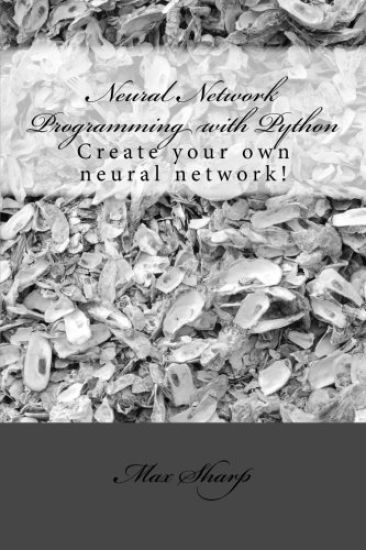
Neural Network Programming with Python: Create your own neural network!

Neural Network Programming with Python: Create your own neural network!

Max Sharp

Createspace Independent Publishing Platform
2016
nidottu
This book is a guide on how to implement a neural network in the Python programming language. It begins by giving you a brief overview of neural networks so as to know what they are, where they are used, and how they are implemented. The next step is an exploration of the backpropagation algorithm. This is the algorithm behind the functionality of neural networks, and it involves a forward and backward pass. Numby is a Python library which can be used for the purpose of implementation of a neural network. This library is discussed in this book, and you are guided on how to use it for that purpose. The functionality of neural networks has to be improved. The various ways to improve how a neural network works is also explored. You are then guided on how to implement neural networks with Neupy, another Python library.The following topics are discussed in this book: - A Brief Overview of Neural Networks- Backpropagation Algorithm- Neural Networks with Numpy- Improving a Neural Network in Python- Neupy - Models in Neural Networks
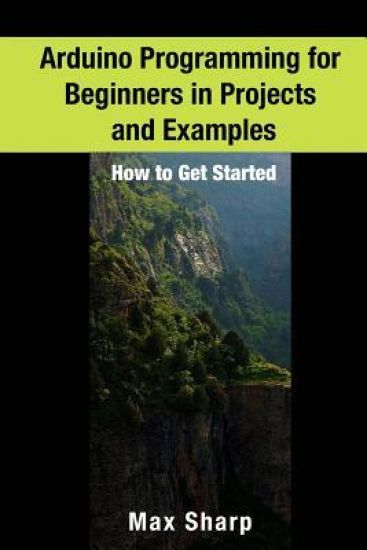
Arduino Programming for Beginners in Projects and Examples: How to Get Started

Arduino Programming for Beginners in Projects and Examples: How to Get Started

Max Sharp

Createspace Independent Publishing Platform
2016
nidottu
This book is an exploration of Arduino programming. The first part of the book guides you in understanding what Arduino is and how it is used. The process of installation in Arduino has is also discussed. Arduino programs are made up of various parts. This book explains to you the structure of Arduino programs so as to understand its various parts. The Arduino programming language supports the use of variables and constants. This book guides you on how to declare and use them in your Arduino programs. Operators, which enable us to perform both mathematical and logical operations in a programming language, are of great help. This book guides you on how to use the various operators supported in Arduino. Control statements allow us to control how the logic flows in our programs. You are guided on how to implement flow control in your Arduino programs. Loops, which are a good mechanism for the implementation of iteration, are covered in detail. Functions, as well as the I/O functions are also explored. The book provides you with sample projects in Arduino which can help you learn how to create applications. You will learn how to blink the LED, fade the LED, read the analog voltage, control the mouse button, create a LED bar graph, and logout your keyboard. The following topics are discussed in this book: - What is Arduino?- Installation- Structure of Arduino Programs- Variables and Constants- Operators- Control Statements- Loops in Arduino- Functions- Inter Integrated Circuit- I/O Functions- Sample Arduino Projects- Mouse Button Contro
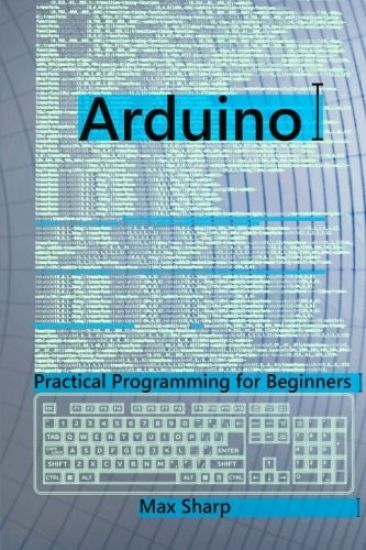
Arduino: Practical Programming for Beginners

Arduino: Practical Programming for Beginners

Max Sharp

Createspace Independent Publishing Platform
2017
nidottu
This book is an exploration of programming in Arduino. The first part of the book helps you get started with Arduino. You will learn what Arduino is, and for what purposes it is used. You are then guided on how to setup the Arduino software on your system. Steps for Windows, Mac OS X, and Linux are given. Sketches, variables, and procedures are discussed, and thus you will know how to use these when programming your Arduino boards. You are guided on how to use the Serial Library and Binary Data in Arduino. You are also guided on how to setup buttons, switches, resistors, and get digital inputs in Arduino. You will also learn how to program these so that they can provide a number of functionalities. A number of Arduino projects are also explored in this book. The book also guides you on how to come up with a keyless door lock system. This is a system which will grant and deny access to users who need to open the door and gain entrance. The user will be required to enter the pin on a keyboard, and this will be compared to the keys stored in EEPROM. This will determine if the user is granted or denied access. You are also guided on how to control access by use of Arduino and RFID (Radio Frequency Identifier Device). In this case, we will not use the keyboard to type the pin, but we will be using the RFID.The following topics are examined in this book: -Getting Started with Arduino-Sketches, Variables, and Procedures-Serial Library and Binary Data-Buttons, Switches, Digital Inputs, and Resistors-Keyless Door Lock System in Arduino-Access Control with RFID and Arduino-Weighing Plat
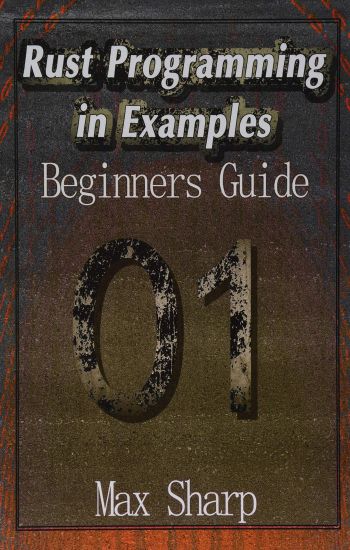
Rust Programming in Examples: Beginners Guide

Rust Programming in Examples: Beginners Guide

Max Sharp

Createspace Independent Publishing Platform
2017
nidottu
This book is a guide for you to learn the Rust Programming Language. The first part of the book is a guide for you on how to get started with the Rust programming language. The author takes you through the initial steps of setting up the environment and writing your "Hello Word " program. The various primitive data types supported in Rust have been discussed, hence you will know how to use them when programming. You are also guided on how to work with Rust variables. Conversion of types through casting has been discussed in detail; hence, you will know how to convert one type to another. The control of the flow of execution has been discussed. You will learn how to use the various flow control statements in Rust. Loops have also been explored in detail to help you learn how to perform Rust task repeatedly. The author guides you on how to match patterns in Rust. The storage of data by use of vectors has also been explored. Closures and Traits are also popular Rust features. The author has discussed them in detail. The following topics have been discussed in this book: - Getting Started with Rust- Primitives-Variables- Type Casting- Flow Control- Loops- Functions- Traits- Pattern Matching- Vectors- Generics- Closures