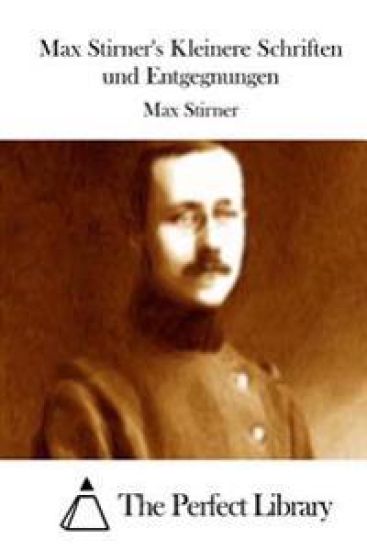
Max Stirners kleinere Schriften und seine Entgegnungen - auf die Kritik seines Werkes - Der Einzige und sein Eigenthum ist ein unver nderter, hochwertiger Nachdruck der Originalausgabe aus dem Jahr 1898. Hansebooks ist Herausgeber von Literatur zu unterschiedlichen Themengebieten wie Forschung und Wissenschaft, Reisen und Expeditionen, Kochen und Ern hrung, Medizin und weiteren Genres. Der Schwerpunkt des Verlages liegt auf dem Erhalt historischer Literatur. Viele Werke historischer Schriftsteller und Wissenschaftler sind heute nur noch als Antiquit ten erh ltlich. Hansebooks verlegt diese B cher neu und tr gt damit zum Erhalt selten gewordener Literatur und historischem Wissen auch f r die Zukunft bei.
Max Stirner's The Ego and Its Own is striking and distinctive in both style and content. First published in 1844, Stirner's distinctive and powerful polemic sounded the death-knell of left Hegelianism, with its attack on Ludwig Feuerbach, Bruno and Edgar Bauer, Moses Hess and others. It also constitutes an enduring critique of both liberalism and socialism from the perspective of an extreme eccentric individualism. Karl Marx was only one of many contemporaries provoked into a lengthy rebuttal of Stirner's argument. Stirner has been portrayed, variously, as a precursor of Nietzsche (both stylistically and substantively), a forerunner of existentialism and as an individualist anarchist. This edition of his work comprises a revised version of Steven Byington's much praised translation, together with an introduction and notes on the historical background to Stirner's text.
Max Stirner’s The Ego and Its Own is striking and distinctive in both style and content. First published in 1844, Stirner's distinctive and powerful polemic sounded the death-knell of left Hegelianism, with its attack on Ludwig Feuerbach, Bruno and Edgar Bauer, Moses Hess and others. It also constitutes an enduring critique of both liberalism and socialism from the perspective of an extreme eccentric individualism. Karl Marx was only one of many contemporaries provoked into a lengthy rebuttal of Stirner’s argument. Stirner has been portrayed, variously, as a precursor of Nietzsche (both stylistically and substantively), a forerunner of existentialism and as an individualist anarchist. This edition of his work comprises a revised version of Steven Byington’s much praised translation, together with an introduction and notes on the historical background to Stirner’s text.
Originally published in German in 1844, philosopher Max Stirner's "The Ego and Its Own" is an important and influential work that harshly criticizes Christianity and nationalism as well as the emerging movements of liberalism and socialism. Stirner's work is viewed by historians as essential to the development of modern theories of anarchism, existentialism, and nihilism. Stirner viewed with contempt the enslavement of the mind of the individual by the rigid dogma of religion and nationalism. These ideas robbed the individual of free thought and autonomy and prevented people from realizing their true potential. The solution to this enslavement and control is the application of an egoism that rejects all religious rules, laws of the state, traditional morality, the concerns of family and friends, and even one's own desires. Stirner argues that people must seek true freedom in the form of a new social structure that is essentially temporary and where no one is subjected to the self-interest of anyone else. This enduring and spirited defense of individual freedom against the control of the state and church remains required reading for students of politics and for all who value personal liberty. This edition is printed on premium acid-free paper and follows the translation of Steven T. Byington.
"The Ego and His Own," the seminal defence of individualism, coloured the thinking of Friedrich Nietzsche, Max Ernst, Henrik Ibsen and Victor Serge, among many others, some of whom would vigorously deny any such influence in later years. Less reticent was Marcel Duchamp, who described Max Stirner as the philosopher most important to his work. Challenging the religious, philosophical and political constraints on personal freedom, Stirner criticizes all doctrines and beliefs that place the interests of God, the state, humanity or society over those of the individual. Anticipating the later work of nihilists, existentialists, and anarchists, "The Ego and His Own" upholds personal autonomy against all that might oppose it.
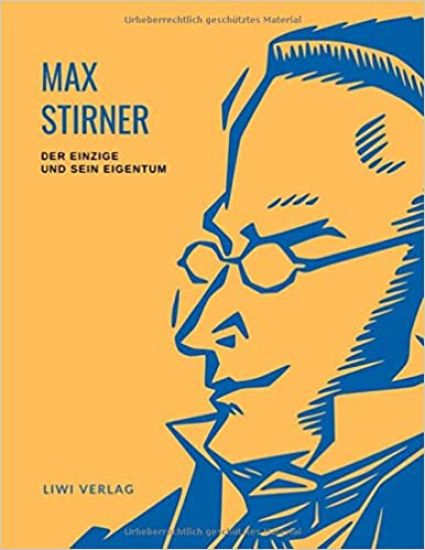
Johann Kaspar Schmidt (Bayreuth, 25 de octubre de 1806 - 26 de junio de 1856), m s conocido como Max Stirner, fue un educador y fil sofo alem n cuyas posturas profundizan en el ego smo o solipsismo moral. Sus reflexiones filos fico-pol ticas sobre el individuo soberano sirven de base para al menos una parte importante del anarquismo.
This work has been selected by scholars as being culturally important, and is part of the knowledge base of civilization as we know it. This work was reproduced from the original artifact, and remains as true to the original work as possible. Therefore, you will see the original copyright references, library stamps (as most of these works have been housed in our most important libraries around the world), and other notations in the work.This work is in the public domain in the United States of America, and possibly other nations. Within the United States, you may freely copy and distribute this work, as no entity (individual or corporate) has a copyright on the body of the work.As a reproduction of a historical artifact, this work may contain missing or blurred pages, poor pictures, errant marks, etc. Scholars believe, and we concur, that this work is important enough to be preserved, reproduced, and made generally available to the public. We appreciate your support of the preservation process, and thank you for being an important part of keeping this knowledge alive and relevant.
The Ego and His Own, the seminal defence of individualism, coloured the thinking of Friedrich Nietzsche, Max Ernst, Henrik Ibsen and Victor Serge, among many others, some of whom would vigorously deny any such influence in later years. Less reticent was Marcel Duchamp, who described Max Stirner as the philosopher most important to his work.Challenging the religious, philosophical and political constraints on personal freedom, Stirner criticizes all doctrines and beliefs that place the interests of God, the state, humanity or society over those of the individual. Anticipating the later work of nihilists, existentialists, and anarchists, The Ego and His Own upholds personal autonomy against all that might oppose it.